Here’s The AMD Data Center Number Investors Need to Know

This post may contain links from our sponsors and affiliates, and Flywheel Publishing may receive compensation for actions taken through them.
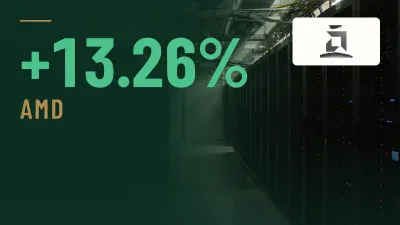
Advanced Micro Devices (NASDAQ:AMD | AMD Price Prediction) trades at $508.58, and its Data Center segment now accounts for most of the company’s earnings power. The stock rose 13.26% in the latest session after a sharp monthly decline, so investors have to decide again whether to own the AI story.
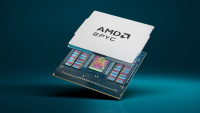
AMD sells EPYC server CPUs, Instinct AI GPUs, Ryzen PC chips and embedded silicon. In the third quarter, Data Center revenue reached $8.546B, up 97%. That was 64% of total revenue, compared with 47% just 1 year ago. Fresh bullish calls from Oppenheimer and Barron’s helped drive the rebound this week.
Data Center Mix Heading Past 80% Powers the Bull Case
On earnings, the stock is cheaper than it looks. The trailing P/E is 96, but the forward multiple is just 27, and the PEG ratio is 0.404. Management guided fourth-quarter revenue to ~$17.0B. That means approximately 66% year-over-year revenue growth, with Data Center expected to grow approximately 50% sequentially.
For 2027, AMD expects revenue to grow more than 80%, with Data Center at more than 80% of total revenue. Analysts are raising their numbers too. The 2027 EPS consensus rose to $17.6419 from $15.9387 a week earlier, with 10 upward revisions against 1 cut over 30 days.
Cash Burn and Cost Inflation Threaten the Rally
Free cash flow fell to $554M, down 71%. Over the same stretch, inventory rose 35% sequentially to $11,463M. The price-to-free-cash-flow ratio of 124.55 leaves no room for a stumble. Neither does a beta of 2.542.
The CFO said data-center AI is somewhat dilutive to corporate gross margin, and HBM costs are climbing. Customer warrants produced a $1,097M charge that cut GAAP EPS to $1.46. Management expects those charges to grow. Gaming revenue fell 40%, and AMD expects a double-digit PC market decline in 2027.
Helios Ramp Sets Up a Decisive Fourth Quarter
Helios and Venice are still early in their ramps, and Lisa Su admitted “demand is higher than supply.” The fourth quarter will be the first quarter in which the data center AI business surpasses the server business. That makes it the first clean test of how the new mix affects margins. Gross margin near ~55%, a rebound in free cash flow and the warrant terms AMD plans to clarify in 2027 would tip the call either way.
Wall Street Sees Nearly 30% Upside From Here
The average analyst target of $659.77 points to potential gains near 29.7%. That target sits just above the 52-week high of $658.52. Targets are estimates and can change. Here is how the 55 analysts split:
- Strong Buy: 5
- Buy: 39
- Hold: 11
- Sell: 0
AMD gained 117.77% over the past year, compared with 12.17% for the S&P 500. Over the past month, it lost 16.37% while the index fell 3.33%.
Why Data Center Dominance Matters With AMD Below the 50-Day Average
At $508.58, the data points toward the bull case.
The thesis rests on Data Center reaching above 80% of total revenue. That’s the metric to keep in mind. At that mix, AI momentum outweighs the PC slump, with margins in that segment already at 34%, up from 25%.
The decline put shares below the $546.81 50-day average, even as estimates moved higher. The next two quarters matter most. Investors will see whether Q4 revenue lands near guidance and whether Helios shipments extend across Hewlett Packard Enterprise (NYSE:HPE), Dell Technologies (NYSE:DELL) and Lenovo. The server OEMs and the power and cooling vendors behind them keep showing up in our free report on seven AI infrastructure suppliers that aren’t chipmakers.
Gross margin falling well below 55%, or another inventory build without cash-flow recovery, would break the thesis. At this price, investors pay 27 times forward earnings for a business whose largest segment nearly doubled.
Contact [email protected] for any questions or corrections.
Alex Sirois is a financial writer with experience spanning both retail and institutional investing. He has written for InvestorPlace and held roles at BNY Mellon and Bernstein, giving him a perspective that bridges Main Street portfolios and Wall Street analysis.
Alex holds an MBA from George Washington University and has built his career across multiple industries, including e-commerce, education, and translation — a breadth of experience that informs how he breaks down complex financial topics for everyday investors. His writing is conversational, actionable, and grounded in long-term, buy-and-hold investing principles.
At 247 Wall St., Alex focuses on delivering analysis that is both accessible and useful, with a clear emphasis on helping readers make more informed decisions with their money.