Jensen Huang Just Lost More Than $6 Billion on His Own Nvidia Shares in One Day. Wall Street Cut Its Targets the Next Morning

This post may contain links from our sponsors and affiliates, and Flywheel Publishing may receive compensation for actions taken through them.

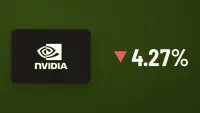
Jensen Huang lost more than $6 billion on his own Nvidia shares on Monday, and by Tuesday morning two of Wall Street’s biggest banks had cut their price targets on the stock. Nvidia closed at $178.67, down $7.97, or 4.3%, one day after its board opened an independent investigation into reports that its founder was the target of a foreign intelligence effort. Across all 24.1 billion Nvidia shares the drop erased about $192 billion of market value. Huang’s 811,521,160 shares, the count in his most recent Form 4, lost $6.47 billion of it.
A founder losing more than $6 billion in a day, and Citi and Wells Fargo trimming their targets the next morning, are a signal that Wall Street has started to price the chance that Nvidia has to run without him. The limit of that reading is that both banks still see the stock 60% to 68% above Monday’s close, and analyst Dan Ives wrote that the Street is factoring in about an 85% chance that Huang stays.
If you hold Nvidia (NASDAQ: NVDA), the question is what to do with a position that is probably the biggest gain you have ever had. Below: what changed overnight, what Huang’s own stake is worth now, how three other stocks behaved after a board looked at the man running them, and what a retiree with 3,000 shares would pay in tax to trim.
What changed Tuesday morning
Citi cut its Nvidia target to $285 from $315 at 5:32 AM ET, according to MT Newswires. Its analyst Atif Malik, in a note Yahoo Finance quoted, listed the open questions: “potential governance implications, increased regulatory scrutiny and export-control compliance of the flow of H200 chips into China (<1% of DC sales) and routed through other intermediaries, and longer-term impact on leadership stability. The company has stated that Mr. Huang will remain CEO while the investigation proceeds.” Wells Fargo cut its target to $300 from $315 about 40 minutes later. The new targets sit 60% and 68% above Monday’s close, so the cuts are a trim, and the first since the board’s statement.
Morningstar kept its $310 fair value and added “investigations and espionage” to the risks behind its “very high” uncertainty rating. Its analyst Brian Colello wrote that Huang’s departure “could lead to less AI dealmaking and financing, greater regulation, and more political backlash around artificial intelligence,” and that demand for AI computing still runs ahead of supply, so the firm expects no effect on revenue in the near or medium term.
The rest of the record since Monday’s close: President Trump told reporters the FBI “is looking into” Huang, that he had asked Huang whether he knew the woman was a spy, and that Huang “said I had no idea.” A shareholder filed a proposed class action in federal court in San Francisco on Monday over Nvidia’s statements about its dealings with Megaspeed, the Singapore customer where the woman was an executive. The Information reported Tuesday, citing two people who know her, that the relationship helped at least $7.5 billion of Nvidia chips reach China; Reuters said it could not verify the report and Nvidia did not immediately comment. Ives wrote on X that the Street is “factoring in ~15% chance Jensen gone from Nvidia, 85% he stays as CEO.” Jim Cramer said investors “are going to have to consider owning shares in a Jensen-less Nvidia.” The stock traded near $182 before Tuesday’s open, up about 1.8%, according to Barron’s.
What Huang's own stake lost
Huang’s Form 4 filed Sept. 18 lists 70,100,666 shares held directly, 467,693,547 in the Jen-Hsun and Lori Huang Living Trust, 140,461,613 in two irrevocable trusts and 133,265,334 in six LLCs the living trust owns: 811,521,160 shares, about 3.4% of the company. Nvidia’s proxy puts his beneficial ownership at 870,604,104, but 58,683,830 of those belong to the family foundation, in which the proxy says he has no financial interest.
At Monday’s close the stake was worth $145.0 billion, down from $151.5 billion on Friday and $194.1 billion at the record close of $239.24 on Oct. 6. Monday cost him $6.47 billion. Since the record the stake has lost $49.2 billion. The size of the holding is also the reason Morningstar gives for thinking he may stay: a founder who owns 3.4% of a $4.3 trillion company is hard to push out, and the board has said it has confidence in him.
Three boards, three stocks
Three times in the last eight years a board reviewed the personal conduct of the man running a big company, and each time he left. Intel said before the open on June 21, 2018 that Brian Krzanich had resigned; from the prior close of $53.46 the stock fell 2.4% the first day, 2.9% after a month and 14.8% after six months. McDonald’s removed Steve Easterbrook on Nov. 3, 2019; from $193.94 the stock fell 2.7% the first day, was up 0.2% a month later and down 6.2% after six months, a window that ended in the pandemic crash of 2020. Wynn Resorts formed a special committee the day The Wall Street Journal published allegations against Steve Wynn, Jan. 26, 2018; from $200.60 the stock fell 10.1% that day, 16.7% in a month and 18.5% in six months.
Nvidia’s board kept Huang in the job while it looks and has said it has confidence in him, so the cases are a guide, not a forecast. What they share is the shape of the loss: the first day was the small part, and the months after the executive left were where the money went.
A retiree with 3,000 shares
Say you are a 67-year-old retired engineer who bought 300 Nvidia shares on Jan. 3, 2023 at $143.15, for $42,945, in a taxable brokerage account. The 10-for-1 split in June 2024 made that 3,000 shares with a cost basis of $14.32 each. At the record close they were worth $717,720. On Friday they were worth $559,920, and on Monday $536,010. Monday cost you $23,910. Since Oct. 6 the position has given back $181,710, and you are still up $493,065 on what you paid.
You and your wife have $2,400,000 in all, so Nvidia is 22.3% of it. If the stock followed Intel’s six-month path from here, your position would be worth $456,601, another $79,409 gone; on Wynn’s path, $436,584, another $99,426. That is key-person risk in dollars you can picture: more than a fifth of your retirement riding on one investigation.
Trimming to 10% of your portfolio means keeping 1,343 shares and selling 1,657 for $296,056. The long-term gain on those shares is $272,336. With about $110,000 of other income, your taxable income stays under the $613,700 line where the 20% capital gains rate starts, so the federal tax on the gain is 15%, or $40,850. The 3.8% net investment income tax applies to the part of your income above $250,000, which is $132,336, adding $5,029. The total is $45,879, and the trim nets you $250,177 after tax.
Selling half in December and half in January changes one line. Each year’s gain is $136,168, your income stays under $250,000, and the net investment income tax disappears. The two-year tax is $40,850, a saving of $5,029 for a four-week wait. Either way the return Medicare reads two years from now will show the gain, so one year of a Part B surcharge is part of the price.
The bottom line
Huang’s own stake lost $6.47 billion on Monday, and target cuts followed Tuesday morning, from Citi to $285 and Wells Fargo to $300. Both still sit far above the price, and the Street’s own guess is an 85% chance he stays. If you hold the stock, your decision is about concentration, not prediction. If your 3,000 shares are 22% of $2,400,000, you can bring that to 10% for $45,879 in federal tax this year, or $40,850 across two tax years, and keep 1,343 shares for whatever the board decides.
Contact [email protected] for any questions or corrections.
I've been writing about stocks and personal finance for 20+ years. I believe all great companies are tech companies in the long run, and I invest accordingly.