Mark Cuban Says the CVS Breakup Is ‘Great for Shareholders.’ Here’s What It Means for a 67-Year-Old Who Bought 1,000 Shares the Day the Aetna Deal Closed

Mark Cuban called the CVS Health breakup "great for shareholders" on the day it was announced, and by that day’s close those shareholders were about $15 billion poorer. CVS Health (NYSE: CVS) fell 12.5% on Nov. 4, from $91.41 to $79.96, as it reported a strong quarter and said it would split in two by 2028. Across 1,279,474,188 shares, the $11.45 drop took $14.65 billion off a company worth $117 billion the night before.
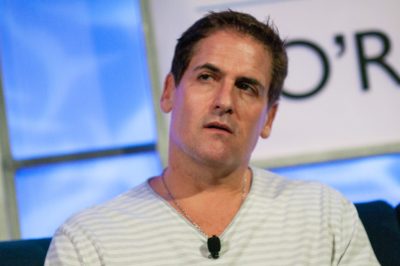
Cuban, the Cost Plus Drugs co-founder, wrote the line on X after CEO David Joyner’s CNBC interview that morning. "That’s pretty funny," his post read. "He is a genius financial engineer. The split is great for shareholders. Changes nothing for patients or anyone who pays for insurance or care." He went on: "He is posturing to be able to say ‘See, we broke up our company.’ Don’t fall for it." Joyner, on CNBC, said "We’re doing it out of a position of strength."
The $15 billion that vanished on announcement day reads as a warning that investors saw costs they could count and benefits they could not; it is also a drop that has partly reversed, with the stock up three sessions in a row since and 25 of the 27 analysts who cover CVS still rating it a buy. Part of the fall also came with the same morning’s results, in which management called 2027 a trough year for the pharmacy benefits side. CVS closed Monday at $85.25, $5.29 above its Nov. 4 close and still 6.7% below where it stood before the news. For someone who owns the stock, what matters sits in the numbers CVS has published and the four it has not.
What CVS announced
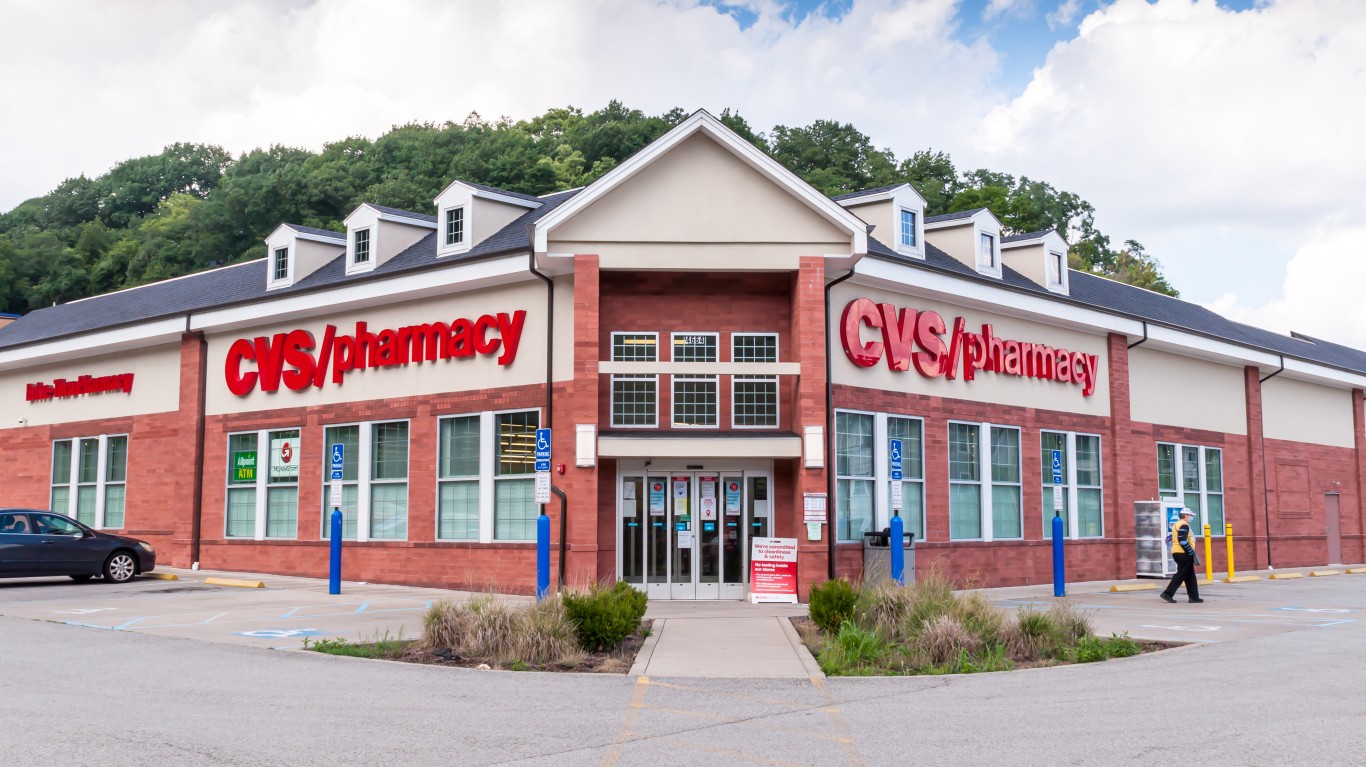
CVS Health will separate into two publicly traded companies in the first half of 2028. The company keeping the CVS Health name holds Aetna, the CVS Caremark pharmacy benefit manager, CVS Specialty, Oak Street Health and Signify Health, with Joyner as chairman and CEO. The other, CVS Pharmacy, gets about 9,000 drugstores, the mail pharmacy, MinuteClinic and the Health100 technology business, under Prem Shah.
The release says the separation is "intended to be structured as tax-free to CVS Health and its shareholders for U.S. federal income tax purposes," that both companies "are expected to have a solid investment grade rating," and that each is expected to "pay an attractive dividend." The same morning CVS reported third-quarter revenue of $108.4 billion, up 5.4%, adjusted earnings of $2.09 a share, and raised its 2026 guidance to at least $8.20 a share from $7.90 to $8.10. The plan unwinds the 2007 Caremark and 2018 Aetna purchases.
Cuban’s objection, in plain terms
Cuban’s point is about what stays together. The company keeping the CVS Health name would still own an insurer (Aetna), a pharmacy benefit manager (Caremark), a specialty pharmacy and primary care clinics under one roof. The Senate bill he tagged, the Break Up Big Medicine Act from Elizabeth Warren and Josh Hawley, would bar a company from owning health care providers alongside an insurer or a pharmacy benefit manager. The drugstores leave; the parts the bill targets stay. Pharmacy benefit managers decide which drugs a plan covers and what pharmacies are paid. Cuban’s own company sells generics at cost plus a 15% markup, so he competes with the system he describes. Joyner’s answer, at a Wolfe Research conference on Monday, was that regulation was one factor among several and that both businesses can stand alone.
A retiree’s 1,000 shares
Take a 67-year-old retired engineer who bought 1,000 CVS shares at $80.27 on Nov. 28, 2018, the day CVS closed the Aetna deal, and holds them in a taxable brokerage account. He bought the conglomerate thesis and is now being handed its reversal.
| Value | |
|---|---|
| Cost of 1,000 shares, Nov. 28, 2018 | $80,270 |
| Value at the Nov. 3 close, before the news | $91,410 |
| Value at the Nov. 4 close | $79,960 (down $11,450 in a day) |
| Value at Monday’s close | $85,250 (back $5,290, still $6,160 below Nov. 3) |
| Dividends collected since 2018 (32 quarters) | $18,600 |
| Total return over 8 years | $23,580, or 29.4% |
The share price has gained $4,980, or 6.2%, in eight years. The dividends, $18.60 a share, make up 79% of his total return. CVS has paid him for waiting, and the split touches the dividend most of all.
What the split does to those shares
On the separation date he keeps his CVS Health shares and receives CVS Pharmacy shares in proportion to his stake. CVS has set no ratio. When 3M spun off Solventum in April 2024, holders got one Solventum share for every four 3M shares; the same ratio would mean 250 new shares for his 1,000, an illustration rather than a forecast.
On the day it happens the two positions together are worth what the one was worth the moment before. Because the deal is designed to be tax-free, his $80,270 cost basis is divided between the two stocks by their relative market value after the split (CVS will publish the percentages on IRS Form 8937), and his 2018 holding period carries over to both. In an IRA none of this matters until withdrawal. Index fund holders get both stocks automatically.
The dividend
CVS has paid $0.665 a quarter for 12 straight quarters, $2.66 a share a year. On 1,000 shares that is $2,660 a year, a 3.12% yield at Monday’s close and 3.31% on his 2018 cost. At $8.20 of adjusted earnings the payout is 32.4% of profit, about $3.40 billion a year in total.
The release promises "an attractive dividend" from each company and gives no figure. The precedent to know is 3M, which reset its quarterly dividend from $1.51 to $0.70 after Solventum left, a 53.6% cut, when the spun-off business had produced about a quarter of its revenue. The same reset at CVS would take his $2,660 to $1,233, $1,427 a year less. CVS has given no sign of that, and two dividends could add up to more. CVS usually declares its first-quarter dividend in December or early January, so the next declaration is the first place to look.
The cost of running two companies
At the Wolfe conference Joyner pushed back on investor estimates that the separation would cost more than $1 billion a year in lost synergies. When analyst Justin Lake suggested about $500 million of recurring cost, Joyner said that figure was "much closer" to CVS’s own models, with one-time costs on top. Spread across the shares, $1 billion is $0.78 a share and $500 million is $0.39, or 9.5% and 4.8% of this year’s $8.20 guidance: $782 or $391 of pre-tax earnings a year on 1,000 shares.
The bigger unknown is the debt. CVS carried $60.68 billion of long-term debt at the end of September, $47.43 a share, against $11.74 billion of cash, $9.17 a share, and Joyner confirmed about $35 billion of deployable capital across the two companies, $27.35 a share, with the allocation undecided. Which company carries which debt will decide what each can pay out.
What a holder can do now
Nothing is required before 2028. The Form 10 will carry the ratio, the debt split and the dividend policies. A holder who sells now is selling ahead of the numbers that matter.
Check the concentration. His $85,250 position is 5.7% of a $1.5 million portfolio. If it is a larger share than that, the split is a reason to look at the size: he will soon own two companies with two sets of risks.
If trimming, the tax cost is small. His whole long-term gain is $4,980, so selling all 1,000 shares would cost about $747 of federal tax at the 15% rate, or $1,185 at 20% plus the 3.8% net investment income tax.
Know what the Street says. The consensus target is $110.32, 29.4% above Monday’s close, with 25 of 27 analysts at buy or strong buy, and the stock trades at 10.4 times this year’s guidance. Those targets were set for one company; the Nov. 4 drop is the market’s first vote on two.
The bottom line
Cuban’s claim and the market’s reaction can both be true. The split may be "great for shareholders" in 2028, when two focused companies carry their own debt and pay their own dividends; on the day it was announced, shareholders lost $15 billion and a retiree with 1,000 shares lost $11,450. He has $5,290 of it back. He does not yet have a share ratio, a debt split or a dividend figure, and until those arrive there is no reason to act before the numbers do.
Contact [email protected] for any questions or corrections.
I've spent more than 15 years inside enterprise software, working alongside the finance, sales operations, and HR leaders who run the revenue engines at some of the largest tech companies in the country.
My day job is helping enterprise executives make smarter decisions about retention, compensation, and growth. These are the same operational levers that show up in every earnings report investors actually read. That perspective shapes my writing for 24/7 Wall St.
The headline numbers are easy. The interesting stuff is underneath: how companies make money, what executives are worried about, and what any of it means for the person checking their 401(k) on a Sunday afternoon. I write about personal finance and business as someone who has spent her career inside the rooms where these decisions get made.