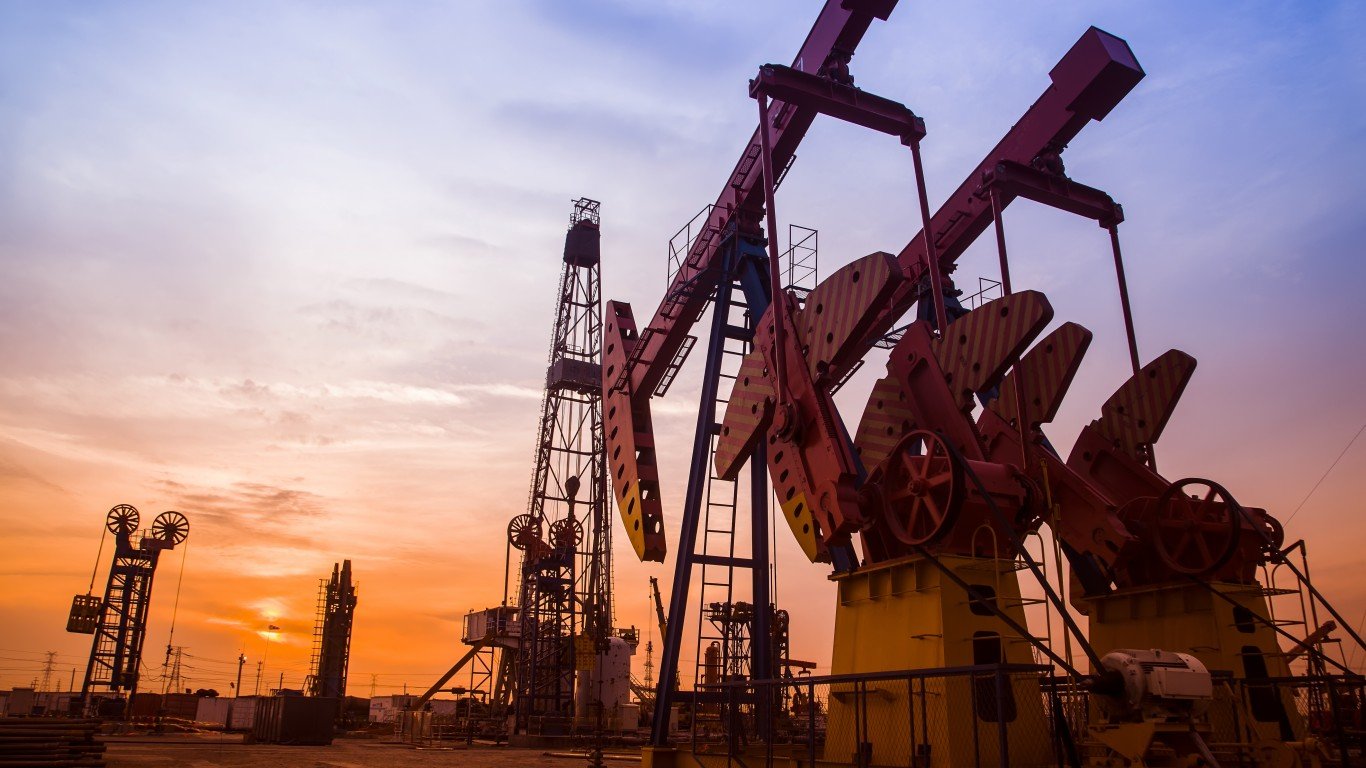
Inflation Is Running Above 3%. These 3 Energy Dividend Stocks Can Keep Up.

This post may contain links from our sponsors and affiliates, and Flywheel Publishing may receive compensation for actions taken through them.
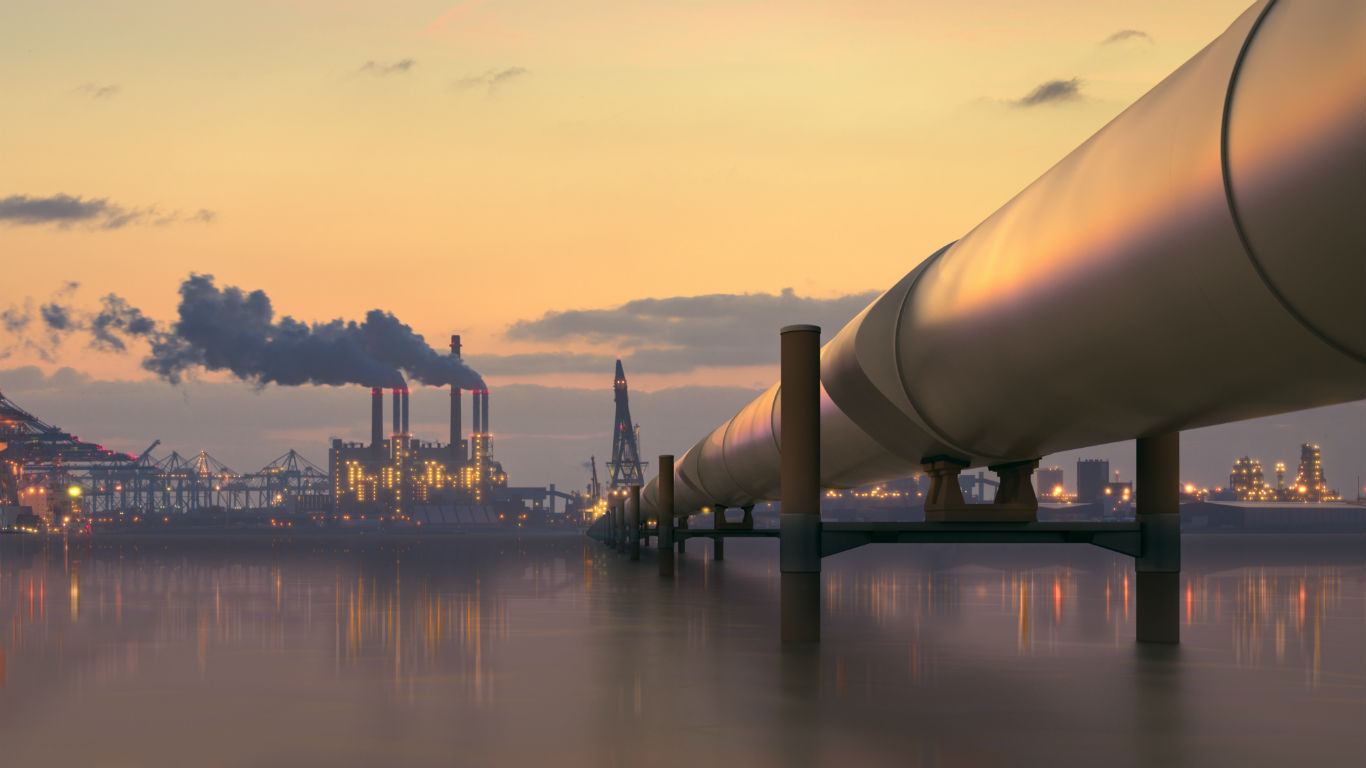
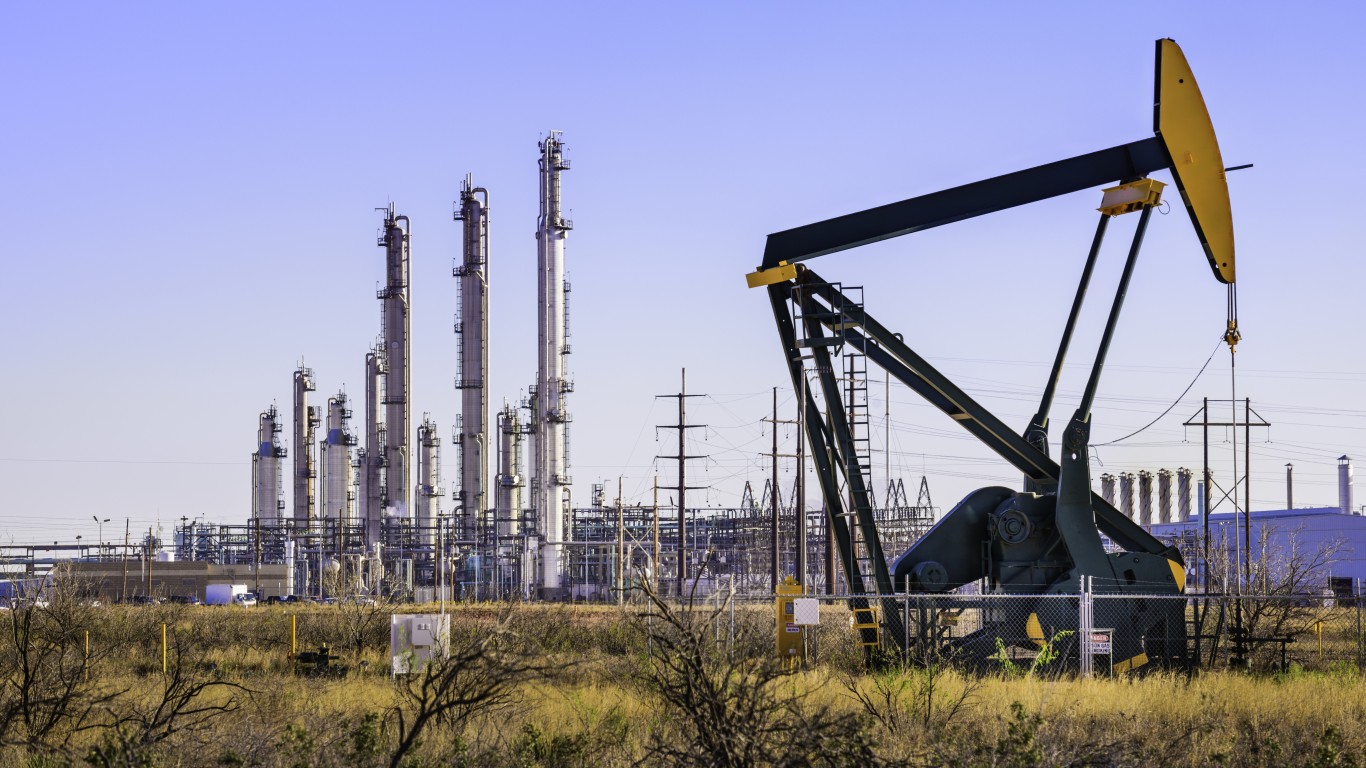
Energy feeds straight into the price readings consumers feel: gasoline, home heating and the freight costs built into nearly everything on a store shelf. When energy prices rise, inflation usually rise with them, and so does revenue for the companies that produce and move that energy. The federal data is missing a figure for October of last year, so September is the latest month with a full year-over-year comparison. It showed consumer prices up 3.74% from a year earlier. But the commodity link that makes energy a hedge also makes it cyclical, and energy dividends have been cut in past downturns. The three names below sit at different points in the energy chain: fee-based pipelines, a pure producer and an integrated supermajor. They share a sector label but carry very different risks.
Enterprise Products Partners: Fee-Based Pipelines Backing a 6% Yield
Enterprise Products Partners (NYSE:EPD | EPD Price Prediction) is a midstream partnership. It collects, processes, carries, stores and exports natural gas, natural gas liquids, crude oil, refined products and petrochemicals. Its network includes more than 50,000 miles of pipelines and over 300 million barrels of liquids storage. Most of its revenue comes from fees, with marketing margins on top, so cash flow follows the volume moving through the system more than the price of each barrel. That gives it the steadiest income profile in this group.
At a recent unit price of $37.13, the $2.24 annualized distribution yields 6.03%. That makes Enterprise an ultra-high-yield payer, and the payout is well covered. In the third quarter, operational distributable cash flow of about $2.3 billion covered the $0.56 quarterly distribution 1.9 times. That left $1.1 billion to reinvest, buy back units and pay down debt. Over the 12 months ended September 30, distributions and buybacks took 54% of adjusted cash flow from operations, just under management’s 55%-60% framework.
The balance sheet carries modest leverage. Total debt stood at about $33.7 billion. About 96% of it carries a fixed rate, at a weighted average cost of 4.7%, and net leverage of 2.9x sits inside the 2.7x to 3.25x target. That matters when inflation runs hot, because rising rates barely touch the partnership’s interest bill. Distribution records show the quarterly payout climbing from $0.37 in early 2015 to $0.56 today with no reductions along the way. The current rate is up 2.8% year over year.
Enterprise has $6.3 billion of projects under construction that come online through 2028. Permian processing volumes hit a record 4.6 Bcf/d, and about 90% of its LPG export capacity is contracted through the end of the decade. On the earnings call, Randy Fowler said, "We believe with these opportunities and solid execution, our team can continue to deliver cash flow per unit growth that will increase the value of our partnership over time."
Caveat: Enterprise is a master limited partnership, so unitholders get a Schedule K-1 instead of the Form 1099-DIV most dividend payers send. K-1s often arrive late and make tax filing more complicated. Holding units in an IRA can still lead to a tax bill. Federal law requires a tax-exempt holder to count its share of a partnership’s income from an unrelated business toward its unrelated business taxable income (26 U.S.C. § 512(c)(1)), and that can force a tax filing inside the account.
Devon Energy: Commodity-Linked Cash Flow and Heavy Buybacks
Devon Energy (NYSE:DVN) fills the other end of the chain. It is a U.S. oil and gas producer anchored in the Delaware Basin, with more acreage in the Rockies and the Anadarko Basin, Eagle Ford assets it has agreed to sell, and Marcellus gas from its merger with Coterra. Its revenue rises and falls directly with commodity prices. WTI averaged $85.63 per barrel in the third quarter, up from $64.92 a year earlier. That price jump and the merger raised revenue 61.4%.
The fixed quarterly dividend is $0.32, or $1.28 annualized. At a recent price of $43.41, that works out to a 2.95% yield, the lowest base yield of the three. Whether Devon keeps pace with rising prices depends on raising that payout and shrinking its share count.
At today’s oil prices, the dividend is easily covered. Devon generated $2.01 billion of adjusted free cash flow in the third quarter, and the $366 million dividend used about 18% of it. Management plans to send up to 70% of annual free cash flow to dividends, buybacks and debt repayment. Net debt was $10.2 billion. The company paid off the last $750 million of its term loan in the quarter and plans to pay down another $1.5 billion to reach a $9 billion gross debt target.
Income investors should look closely at the dividend record. Devon cut its quarterly payout from $0.26 to $0.11 in 2020. Later, its variable payouts swung from $1.55 per share in 2022 to $0.20 in 2023. After the merger, the fixed rate rose from $0.24 to $0.32, a 33% increase, and has stayed there for three straight payments.
What makes Devon attractive is the cash it can return. It has $7.4 billion left on its $8.0 billion buyback authorization and expects fourth-quarter repurchases to top $1 billion. It is also aiming at least $1.0 billion in annual merger synergies by the end of 2027. Management expects free cash flow per share to grow 5% to 10% a year, and CFO Shane Young said Devon is focused on "buybacks, future dividend increases and debt reduction."
Risk: Devon’s cash flow moves directly with oil and gas prices. Third-quarter results took a $914 million derivatives loss, $729 million of it from non-cash valuation changes. A long price slump would shrink the free cash flow that pays for both the dividend and the buybacks, as happened in 2020.
Chevron: 39 Years of Dividend Raises Backed by $12 Billion in Quarterly Free Cash Flow
Chevron (NYSE:CVX) sits between the other two as an integrated supermajor. Its upstream business produced about 3.98 million barrels of oil equivalent per day in the third quarter. Its U.S. refineries processed a record 1.09 million barrels per day at nearly 98% utilization. Revenue still depends on commodities, but owning both production and refining cushions the swings, because refining margins can hold up when crude prices fall.
Chevron yields 3.09% on its $1.78 quarterly dividend, or $7.12 annualized. Third-quarter operating cash flow of $16.014 billion against $4.011 billion of capital spending produced $12.003 billion of free cash flow. At the current share count, one quarter’s dividend equals about 29% of that. Chevron cut debt by $3.5 billion and net debt by $7.8 billion in the quarter. The debt-to-equity ratio is 0.22, net debt to EBITDA is 0.94, and interest coverage is 13.70 times.
Chevron has the longest track record of the three. On the earnings call, CFO Eimear Bonner said, "The first priority within that is to grow the dividend consistently. We’ve done that for 39 consecutive years. We’ll continue to do that." Dividend records confirm the recent run: the quarterly payout has gone up every year, from $1.29 in 2020 to $1.78 now. Chevron is one of a short list of companies with raise streaks that long, and we ranked ten of the cheapest Dividend Kings by valuation in a free report here.
For income investors, the appeal is a growing dividend from a company that keeps cutting costs. Chevron reached its $3 billion structural cost savings aiming six months early and delivered $1.5 billion in Hess synergies. It plans to keep buying back $2.5 billion-$3 billion of stock at its current pace. Its Venezuela joint ventures plan to invest $7 billion over five years, with the potential to more than double production there.
Risk: Chevron’s global reach comes with geopolitical risk. Its latest results cite the Middle East conflict, which has interrupted production and international refined product sales. They also flag political and regulatory uncertainty in Venezuela, where a growing share of its expansion plans is located.
Matching Each Link in the Energy Chain to Your Income Goals
All three names tie an income portfolio to the inflation driver consumers feel most, each with a different level of risk. Enterprise Products Partners offers the biggest current payout of the three, supported by fee-based cash flow, though it issues a K-1. Chevron offers a 39-year record of dividend growth and a low-leverage balance sheet. Devon pairs a dividend that moves with the commodity cycle with heavy buybacks and room to raise the payout.
Contact [email protected] for any questions or corrections.
Lee Jackson has covered Wall Street analysts' equity and debt research and equity strategy daily for 24/7 Wall St. since 2012. His broad, diverse career, including a stint as creative services director at an NBC affiliate in Austin, Texas, gives him unique insight into the financial industry.
Lee Jackson's journey in the financial industry spans more than 30 years, including nearly two decades as an institutional equity salesperson at Bear Stearns, Lehman Brothers, and Morgan Stanley. His career spanned pivotal sell-side Wall Street events, from the dot-com rise and bubble to the Long-Term Capital Management debacle, 9/11, and the Great Recession of 2008. This reflects his resilience and adaptability amid market volatility.
Lee Jackson’s practical financial industry experience, gained through a career at some of the biggest banks and brokerage firms, is complemented by a lifetime of writing across various platforms. This unique combination allows him to shed light on the intricacies of Wall Street in a way only someone with deep insider experience and knowledge can. Moreover, his extensive network across Wall Street continues to provide direct access for him and 24/7 Wall St., a privilege few firms enjoy.
Since 2012, Jackson’s work for 24/7 Wall St. has been featured in Barron’s, Yahoo Finance, MarketWatch, Business Insider, TradingView, Real Money, The Street, Seeking Alpha, Benzinga, and other media outlets. He attended the prestigious Cranbrook Schools in Bloomfield Hills, Michigan, and has a degree in broadcasting from the Specs Howard School of Media Arts.