These 3 Pipeline Stocks Collect Fees on Everything They Move, and $120,000 Pays $8,791 a Year

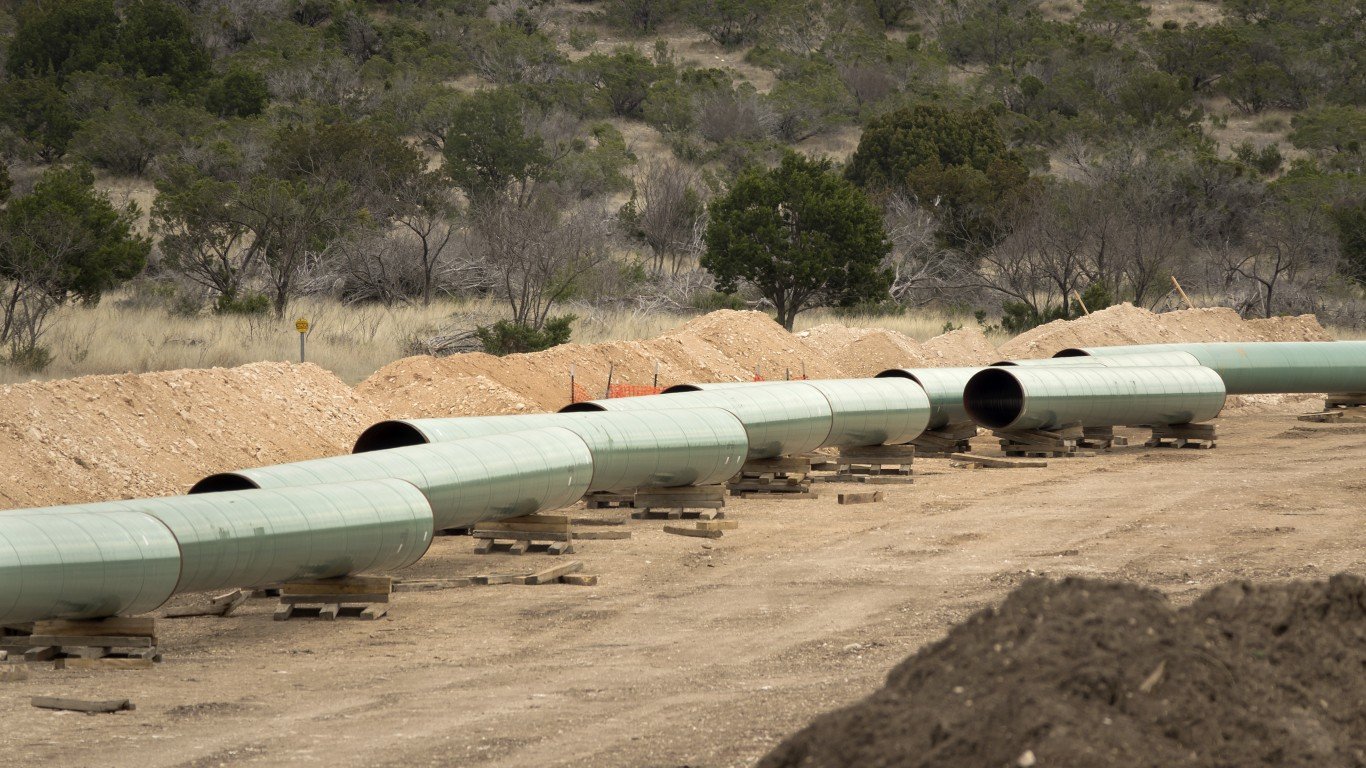
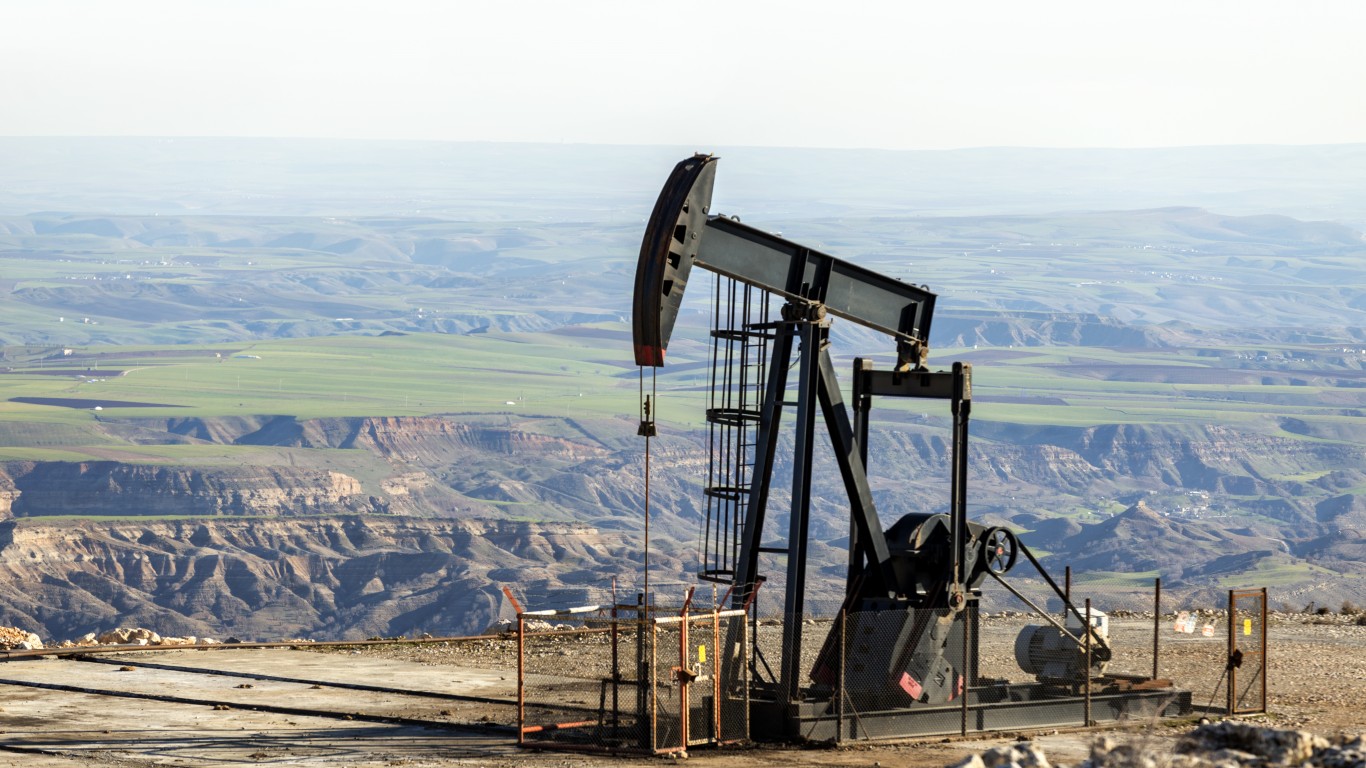
Pipeline companies get paid a lot, like toll roads. A producer pulls oil, natural gas, or wastewater from the ground, and a midstream company charges a fee to gather, process, store, or ship it. That fee depends mostly on how much moves through the system, so these payouts can hold up when oil prices swing. Our recent pipeline pieces covered K-1 tax forms and how MLPs respond to oil prices. This one follows the fee model and the cash it produces.
Splitting $120,000 equally puts $40,000 into each of three pipeline names, and together they would pay about $8,791 a year. Two are master limited partnerships (MLPs). A partnership passes most of its cash straight to its owners, called unitholders, and sends them a K-1 tax form. The third is a corporation that issues a regular 1099. Prices below are delayed quotes pulled on Nov. 9, 2026.
Enbridge
- Stock #3: Enbridge (NYSE:ENB | ENB Price Prediction)
- Yield: 5.85% (forward, in U.S. dollars)
- Shares for $40,000: 841.8 at $47.52
- Annual Passive Income: ~$2,341
Enbridge runs the Mainline crude oil system, natural gas pipelines such as Texas Eastern, four gas utilities and a renewable power business. The company says “most earnings come from contracted, cost-of-service or rate-regulated assets,” meaning long contracts or regulators set what it charges. That mature, regulated asset base generates steady cash, and Enbridge pays out a large share of it, making it a high-yield payer.
Management confirmed 2026 DCF per-share guidance of $5.70 to $6.10 and notes “31 consecutive years of dividend increases.” Enbridge declares its dividend in Canadian dollars, with the quarterly payment remaining at C$0.97 throughout 2026. The amount US investors receive varies with the exchange rate.
In taxable accounts, Canada generally withholds tax on the dividend, which can often be claimed as a U.S. foreign tax credit, while the U.S.-Canada tax treaty generally exempts dividends paid into U.S. retirement accounts. The plain risk is debt: debt-to-EBITDA was 5.1 times against a 4.5 to 5 times target, which management says it meets on a currency-adjusted basis.
Plains All American Pipeline
- Stock #2: Plains All American Pipeline (NASDAQ:PAA)
- Distribution Yield: 7.11% (forward)
- Units for $40,000: 1,702.9 at $23.49
- Annual Passive Income: ~$2,844
Plains gathers, ships, and stores crude oil, grounded by a large Permian Basin network that now includes the Cactus III Pipeline. It earns pipeline tariffs (shipping fees) and gathering fees, and it also buys and sells crude, which adds some commodity exposure. Its chief executive, Willie Chiang, described the business after its NGL sale as having a “more durable and predictable cash flow stream.”
The partnership structure drives the ultra-high yield. Plains raised its quarterly distribution to $0.4175 per unit in 2026 from $0.38 in 2025. Plains reported a third-quarter distribution coverage ratio of 1.61x and projects about $1.9 billion in distributable cash flow available to common unitholders for 2026. It’s preferred-unit refinancing should add about $60 million annually to that cash flow.
The plain risk: management warned that market opportunities captured in the second and third quarters may not repeat in 2027. MLP income held in an IRA can generate unrelated business taxable income (UBTI), and an IRA generally must file Form 99-T when it has $1,000 or more in gross income from an unrelated business.
Western Midstream Partners
- Stock #1: Western Midstream Partners (NYSE:WES)
- Distribution Yield: 9.02% (forward)
- Units for $40,000: 969.5 at $41.26
- Annual Passive Income: ~$3,606
Western Midstream gathers and processes natural gas, moves crude oil and natural gas liquids such as propane, and handles produced water, the salty water that comes up with oil. It operates in the Delaware, DJ and Powder River basins, and says a substantial majority of its cash flows come from fee-based contracts. Third-quarter gas throughput hit a record 5.9 Bcf/d.
Its partnership structure drives the yield into ultra-high territory. The distribution rose from $0.91 to $0.93 per unit in 2026. CEO Oscar Brown put coverage at “roughly 1.4,” meaning distributable cash flow runs about 1.4 times the payout, with 2026 DCF guidance of $2.05 billion to $2.25 billion. The plain risk: DJ Basin crude volumes are expected to decline, and each $10 move in WTI changes results in about $50 million. The same UBTI and Form 990-T rules apply to IRA holders.
What $120,000 Produces Across All Three
| Name | Yield or Distribution Rate | Annual Dividend Income |
|---|---|---|
| Enbridge | 5.85% | $2,341 |
| Plains All American | 7.11% | $2,844 |
| Western Midstream | 9.02% | $3,606 |
| Total | 7.33% | $8,791 |
Together, these three holdings produce $8,791 of passive income each year on a $120,000 investment, a combined yield of 7.33%. Western Midstream contributes $3,606, Plains All American adds $2,844, and Enbridge brings in $2,341.
Distribution coverage is the number to check each quarter. It shows whether cash coming in still exceeds cash going out, and no payout is guaranteed. Fee-based cash flow tends to arrive on a steady quarterly rhythm, and that consistency lets income investors plan spending around a predictable deposit schedule.
Contact [email protected] for any questions or corrections.
David Beren has been a Flywheel Publishing contributor since 2022. Writing for 24/7 Wall St. since 2023, David loves to write about topics of all shapes and sizes. As a technology expert, David focuses heavily on consumer electronics brands, automobiles, and general technology. He has previously written for LifeWire, formerly About.com. As a part-time freelance writer, David’s “day job” has been working on and leading social media for multiple Fortune 100 brands. David loves the flexibility of this field and its ability to reach customers exactly where they like to spend their time. Additionally, David previously published his own blog, TmoNews.com, which reached 3 million readers in its first year. In addition to freelance and social media work, David loves to spend time with his family and children and relive the glory days of video game consoles by playing any retro game console he can get his hands on.