Musk’s Companies Will Face Intense Democrat Scrutiny, But One is Under More Heat

This post may contain links from our sponsors and affiliates, and Flywheel Publishing may receive compensation for actions taken through them.
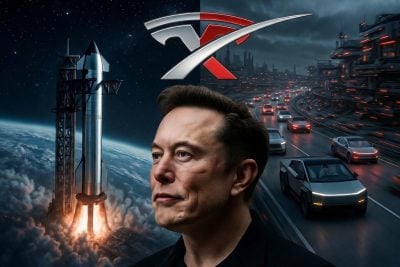
Tesla (NASDAQ:TSLA | TSLA Price Prediction) and SpaceX (NASDAQ:SPCX) reported third-quarter results a day apart, on October 20 and October 21. Then Democrats won the midterms, giving Congress subpoena power over Elon Musk. The two earnings reports show why one company sits much closer to the political fire.
Robotaxis Carry Tesla While Grok and Starlink Power SpaceX
Tesla’s revenue came in at $28.046 billion, roughly flat year over year, so the growth story shifted to software. Active Full Self-Driving (FSD) subscriptions rose to 1.74 million from 1.04 million. Buyers are paying for autonomy even while vehicle revenue stays stuck. Musk called FSD “the biggest driver for demand.” Deliveries of 486,532 ran into battery supply limits, which tells me demand exceeded the factories.
SpaceX revenue of $14.60 billion beat the $13.02 billion estimate, and SpaceX shifted to $4.40 billion in net income. Its Super Intelligence unit, which includes Grok, Cursor and cloud compute, brought in $7.60 billion, up 830%. At this point SpaceX is as much an AI landlord as a rocket maker.
| Business Driver | Tesla | SpaceX |
|---|---|---|
| Main Growth Engine | FSD and Robotaxi | AI compute and Starlink |
| Key Customer | Retail car buyers | NASA, defense, enterprises |
| Political Pressure Point | Autonomy rules, subsidies | Federal contracts, Ukraine |
Washington Holds More Levers Over Tesla’s Core Business
Tesla’s autonomy plan has to clear federal regulators first. Analysts on the call pressed management about the National Highway Traffic Safety Administration’s (NHTSA) Open Safety Review, and Ashok Elluswamy, who runs Autopilot software, said regulatory issues could intensify “perhaps in Q1 or Q2 time frames.” Musk raised the risk himself: “Unless we are stopped by governments, which is certainly a possibility…” The consumer product also clashes with federal subsidies and labor politics.
SpaceX’s launch backlog includes 18 National Security Space Launch missions, which makes it an indispensable national security utility. Democrats still want answers on contracts awarded while Musk led DOGE and on the Starlink restrictions placed on Ukraine. Going after SpaceX also means disrupting Pentagon launch schedules, which gives the company a strong defense, though an imperfect one.
Robotaxi Permits and a Possible Merger Are the Next Flashpoints
Musk expects EU-wide FSD approval and said, “I would be surprised if it takes longer than Q1.” I’ll be monitoring whether congressional oversight slows down the U.S. Cybercab launch. SpaceX needs its 800 MHz spectrum deal to close in the first half of 2027, and that review is one Democrats could delay. A Tesla-SpaceX merger now faces new obstacles. “The problem is timing and scrutiny,” GLJ Research’s Gordon Johnson told Business Insider.
Why I See SpaceX as the Sturdier Musk Stock Into 2027
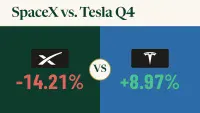
I see SpaceX as better insulated from political risk. Tesla trades near 396 times earnings with a 4.6% operating margin. Most of that valuation depends on robotaxi and Optimus approvals that a hostile Congress can delay. Tesla shares are down 15.55% this year, which suggests investors already see the risk. SpaceX has fallen 11.98% over the past month, but its revenue comes from the Pentagon, NASA, airlines and AI clients.
Patient growth investors can still make a case for Tesla because the FSD momentum is real. I would change my view if Cybercab expands across several cities without federal opposition by mid-2027.
Contact [email protected] for any questions or corrections.
Alex Sirois is a financial writer with experience spanning both retail and institutional investing. He has written for InvestorPlace and held roles at BNY Mellon and Bernstein, giving him a perspective that bridges Main Street portfolios and Wall Street analysis.
Alex holds an MBA from George Washington University and has built his career across multiple industries, including e-commerce, education, and translation — a breadth of experience that informs how he breaks down complex financial topics for everyday investors. His writing is conversational, actionable, and grounded in long-term, buy-and-hold investing principles.
At 247 Wall St., Alex focuses on delivering analysis that is both accessible and useful, with a clear emphasis on helping readers make more informed decisions with their money.