Caterpillar Has Fallen 44% From Its June High, but $1,000 Invested Ten Years Ago Is Still Worth $7,785

This post may contain links from our sponsors and affiliates, and Flywheel Publishing may receive compensation for actions taken through them.
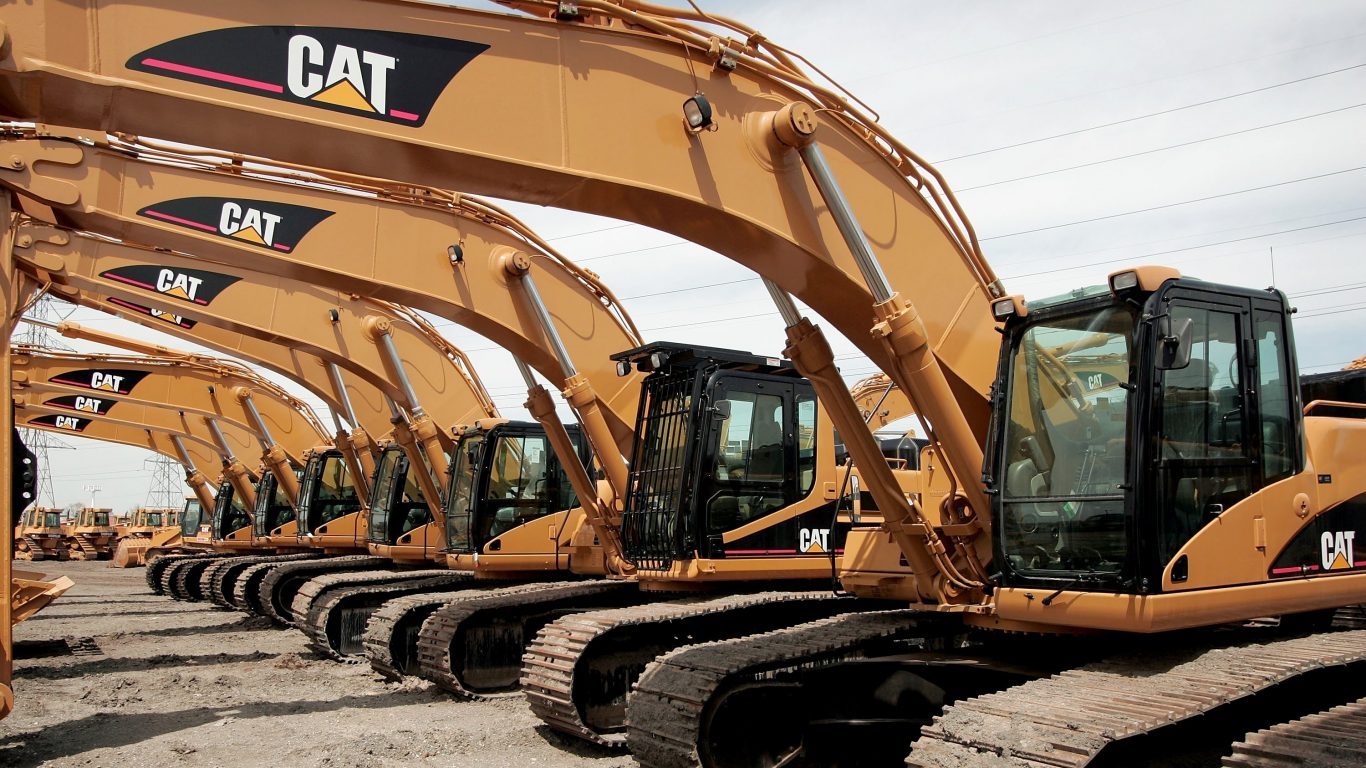
Caterpillar (NYSE:CAT | CAT Price Prediction) has slipped far from its summer high, but long-term shareholders still have collected plenty along the way, and here’s what that looks like. In June 2026, the shares reached an intra-month high of $1,073.46, and closed at $601.61 on Nov. 11, down 44%. Even so, $1,000 invested at the Nov. 30, 2016 close with dividends reinvested was worth $7,785 at that same close.

AI Data Center Power Demand Pushed Caterpillar to a Record
For anyone unfamiliar, Caterpillar is the world’s largest maker of construction and mining equipment. Over the last decade, it went through infrastructure spending, oil and gas cycles, and the pandemic slump and recovery. More recently, it became a major supplier of turbines and large reciprocating engines (big engines that generate electricity) to AI data centers. Power Generation sales rose 41% in the first quarter of 2026. Second-quarter revenue of $20.54 billion was the company’s first quarter above $20 billion. By the third quarter, management put the backlog at a record $78 billion.
Oil, Bond Yields and AI Worries Erased the Summer Gains
On Oct. 14, Bloomberg reported that the shares were on track for a large fall from their record high, citing concerns about oil prices, bond yields, and the future of the AI trade. XTB reported in early October that the stock was down 30% from its record high. The slide continued after that, and from the June 30 close of $1,064.90, the stock has now lost 43.5%.

Caterpillar Beat the Market Over Five and 10 Years
1-Year Return
- Initial Investment: $1,000
- Current Value: $1,068.40
- Total Return: 6.84%
- S&P 500 (same period): $1,112.50 (11.25%)
5-Year Return
- Initial Investment: $1,000
- Current Value: $3,380
- Total Return: 238%
- Annualized Return: 27.6%
- S&P 500 (same period): $1,626.10 (62.61%)
10-Year Return
- Initial Investment: $1,000
- Current Value: $7,785
- Total Return: 678.5%
- Annualized Return: 22.8%
- S&P 500 (same period): $3,510.80 (251.08%)
The S&P 500 figures are price-only returns for the SPDR S&P 500 ETF Trust (NYSEARCA:SPY), measured from mid-November starting dates. Caterpillar trailed the index over one year after the fall, and shares bought near the June high are below their purchase price. The longer-term returns came alongside heavy buybacks and a dividend that management says will have risen for 33 consecutive years in 2026. The quarterly payout is $1.63, and the dividend yield is listed at 1.05%.
Caterpillar’s Record Backlog Faces Tariff and Capacity Pressures
The stock trades at about 23 times trailing earnings and 19 times forward earnings. Analysts have an average price target of $823.41, with ratings split across 2 Strong Buy, 15 Buy, 11 Hold and 1 Sell.

Future returns depend partly on whether the backlog becomes sales on schedule. Management expects 58% of it to ship within 12 months, and turbine orders already stretch into 2030. Higher costs could narrow margins. Caterpillar expects 2026 tariff costs of about $2.2 billion, and its chief executive described production as having “no slack in the system.”

For shareholders, the reality is that further volatility is possible, and long-term returns vary depending on the investment start date.
Contact [email protected] for any questions or corrections.
David Beren has been a Flywheel Publishing contributor since 2022. Writing for 24/7 Wall St. since 2023, David loves to write about topics of all shapes and sizes. As a technology expert, David focuses heavily on consumer electronics brands, automobiles, and general technology. He has previously written for LifeWire, formerly About.com. As a part-time freelance writer, David’s “day job” has been working on and leading social media for multiple Fortune 100 brands. David loves the flexibility of this field and its ability to reach customers exactly where they like to spend their time. Additionally, David previously published his own blog, TmoNews.com, which reached 3 million readers in its first year. In addition to freelance and social media work, David loves to spend time with his family and children and relive the glory days of video game consoles by playing any retro game console he can get his hands on.