Jensen Huang Just Resigned From Nvidia. If You Have $5,000, These Are the 3 Tech Stocks to Buy

This post may contain links from our sponsors and affiliates, and Flywheel Publishing may receive compensation for actions taken through them.
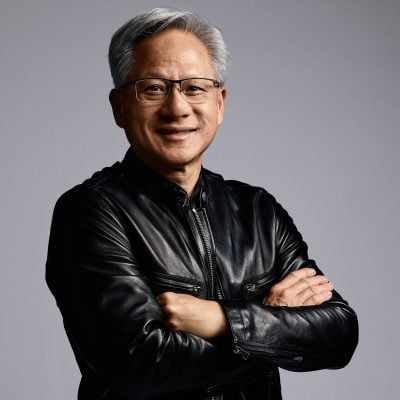
Jensen Huang resigned as president, CEO and a director of Nvidia (NASDAQ: NVDA) on Thursday morning, effective immediately, ending a run that began when he co-founded the company in 1993. The board named Chief Financial Officer Colette Kress interim CEO, a job she will hold alongside her CFO role, and appointed Harvey C. Jones, a former CEO and executive chairman of Synopsys, as its first-ever chair. It will consider internal and external candidates for the permanent job. Nvidia was at $160.66 in Thursday morning trading, down 7.5% from Wednesday’s close and 32.8% below its October record. For a reader with $5,000 to put to work, the question is which companies gain from an Nvidia without its founder. Eric Bleeker’s three picks are Broadcom (NASDAQ: AVGO), AMD (NASDAQ: AMD) and Anthropic, which is expected to price its IPO next week. Here is the case for each, and how $5,000 splits among them.
Nvidia announced the change in a release Thursday morning. It followed a week of reports. The Wall Street Journal reported Wednesday evening that directors were preparing to remove Huang, Reuters reported the board met late Wednesday, and Semafor reported Thursday that some directors favored Kress as interim CEO. The pressure followed Huang telling employees he had been unfaithful to his wife after reports linked him to a Singapore data center executive whom U.S. officials suspect of working for China, and a second report this week of a relationship with an Nvidia executive.
The market had already placed its bet before the announcement. Since the close on November 5, the last session before the first report, AMD is up 42.8% to $577.47 and Broadcom is up 24.9% to $363.98 in Thursday morning trading, while Nvidia is down 13.9% from its November 6 close. Those moves read as a bet that an Nvidia without Huang moves slower, and that Broadcom and AMD pick up what it drops; the limit is that Kress has been Huang’s CFO since 2013 and Nvidia has already laid out its public chip road map, so a steady handover could hand some of that back.
How $5,000 splits three ways
Three equal slices of $1,667 each. At $363.98, Broadcom takes 4 whole shares for $1,455.92, or 4.58 shares at a broker that sells fractions. At $577.47, AMD takes 2 whole shares for $1,154.94, or 2.89 fractional shares. The third slice stays in cash, because Anthropic is not a stock yet. It is expected to price on November 18 and begin trading on the Nasdaq on November 19 as ANT, at a range of $70 to $78 a share. At $78, $1,667 buys 21 shares for $1,638; at $70, 23 shares for $1,610. With whole shares in the two listed names, $2,389.14 of the $5,000 is still cash on Thursday.
You cannot buy Anthropic until it lists, and an allocation at the offer price is never guaranteed: CNBC reported the deal targets about 20% of shares for retail investors, generous for an IPO and still a lottery, and the first public trade can land well above the range. If you would rather not wait, the two-stock version is 6 Broadcom shares for $2,183.88 and 4 AMD shares for $2,309.88.
1. Broadcom: the nearest thing to Nvidia, run by Hock Tan
Broadcom competes with Nvidia on both fronts: the accelerators, through custom chips it designs for Google, Meta, Anthropic and OpenAI, and the Ethernet networking silicon that ties AI clusters together. Its AI semiconductor revenue was $16.7 billion in the fiscal third quarter, up 221% from a year earlier, and it guided $21.7 billion for the fourth, which puts fiscal 2026 AI revenue near $58 billion. Tan has told investors to expect $115 billion in fiscal 2027, a 2.0x step in one year, and has said Anthropic is on track to become Broadcom’s largest custom-chip customer in 2027.
Then there is the man. Tan has run the company since 2006, when it was Avago, and the board extended his tenure through at least fiscal 2030 with a stock award that pays only if AI revenue reaches $90 billion in a rolling 12 months between fiscal 2028 and 2030 and he is still CEO. Eric’s point: the customers deciding multi-year chip programs this winter are choosing between a supplier whose founder just left and one whose chief has a signed reason to stay four more years. The caveat is the chart. Broadcom is still 24% below its June record close and up 5.2% for the year.
2. Anthropic: the IPO that lists next week
Anthropic is selling 825 million shares at $70 to $78, raising up to $64.35 billion at a valuation of as much as $1.4 trillion, alongside a $26 billion private placement at the IPO price from AMD, Broadcom, Google, Micron, Microsoft, Nvidia and Taiwan Semiconductor. Revenue was $33.24 billion for the nine months through September, against a $104 billion net loss that is mostly accounting changes on convertible notes rather than cash.
The reason it belongs on this list is written into its prospectus. Anthropic says it is “shifting from sourcing compute solely through fixed-term cloud agreements to a hybrid model that also includes leasing chips directly and hosting them in dedicated facilities operated on our behalf,” a plan it calls Anthropic Direct and “believes will provide long-term economic advantages.” The chips in that plan are Amazon’s Trainium, Google TPUs supplied through Broadcom, and AMD’s Helios systems. OpenAI is on the same road with chips it designs with Broadcom, which Tan summed up as “if you do your own chips, you control your destiny.”
Here is Eric’s logic. Both labs have told investors their edge will come from owning more of their own compute stack, and that edge is only as big as the gap between their chips and what anyone can rent. If Nvidia keeps shipping a better part every year to every rival, including SpaceX, which bought Grok’s maker xAI in February and rents Nvidia-based capacity to Anthropic from its Colossus data centers, then owning your chips buys less. If Huang’s departure slows the pace that made Nvidia Nvidia, the labs that own the stack gain. Three honest limits: Nvidia is itself a buyer in this IPO, Anthropic still runs much of Claude on Nvidia GPUs, and none of this is on sale until November 19.
3. AMD: Lisa Su, and a contest that has turned into execution
AMD reported third-quarter revenue of $13.38 billion on November 3, up 45%, with data center revenue of $8.5 billion, up 97%, on the first volume shipments of the MI450 series. The company guided about $17 billion for the fourth quarter, a +27% step from the third, and told investors to expect more than 80% revenue growth in 2027. OpenAI alone has agreed to deploy 6 gigawatts of AMD accelerators. Su has run the company since 2014 and was named Yahoo Finance’s CEO of the Year on Thursday.
The CUDA argument is Eric’s view and ours, so take it as analysis. For a decade the reason to pay Nvidia’s price was its software: code written for Nvidia chips did not run anywhere else without months of work. AI coding tools have cut that porting work down, and the big buyers now run the same models on four kinds of chips, which is what Anthropic’s filing describes. Once the software wall is lower, the race between Nvidia and AMD is about who ships the next part on time, and that is the contest Su has been winning. With Huang gone, we would expect money that has to stay in AI chips to rotate here first. The price of that expectation: AMD is up 170% this year and 42.8% since November 5, so it gives back the most if Nvidia’s handover goes smoothly.
What breaks the thesis
Kress keeps the machine running. She has been Nvidia’s CFO since 2013, Nvidia’s next chips are already on its public road map, and a quiet quarter under an interim CEO would take the urgency out of this trade for a week or a month. Dan Ives of Yorkville had put Nvidia’s value at about 25% less without Huang, the mirror of this story. The quieter risk: Nvidia is still the largest supplier to Anthropic, OpenAI and every hyperscaler named here. These three are a way to own the shift at the margin, not a bet against Nvidia itself.
The bottom line
With $5,000: 4 Broadcom shares at $363.98, 2 AMD shares at $577.47, and $1,667 held in cash for 21 to 23 Anthropic shares at $70 to $78 on November 19 if you get an allocation, or an open-market buy after. If you already hold a large Nvidia position from the run that began in 2023, the better use of this week has little to do with who runs the company: a stake that has grown past a third of a portfolio is a concentration problem whoever the CEO is, and the three names above are where Nvidia’s own customers are spreading their orders. Prices here are from Thursday morning trading and will move.
Contact [email protected] for any questions or corrections.
I've been writing about stocks and personal finance for 20+ years. I believe all great companies are tech companies in the long run, and I invest accordingly.