Retail Landlords Are Nearly Full, and $120,000 Across These 3 REITs Pays $4,997 a Year

This post may contain links from our sponsors and affiliates, and Flywheel Publishing may receive compensation for actions taken through them.

Three big U.S. shopping center landlords just reported third-quarter 2026 results, and all three show properties that are close to full. Each one also raised its dividend this year. A $40,000 stake in each, $120,000 total, would produce about $4,997 a year in dividend income. To dive deeper, a quick reminder that all prices below are from the Nov. 11, 2026 close.
As it stands, two measures are driving this analysis: occupancy and leased rate. Occupancy is the share of a landlord’s space with a tenant actually in it. Leased rate also includes space where a lease is signed, but the tenant hasn’t opened or started paying rent yet. When both figures sit in the mid-to-high 90s, a landlord has little empty space and more leverage when leases come up for renewal.
That leverage translates into higher rent, and rent is the cash REITs use to pay dividends, since they must distribute most of their taxable income to shareholders. 24/7 Wall St. has covered net lease and retail REITs recently, including a recent mall REIT dividend raise, so this piece sticks to occupancy and the income math.
Simon Property Group
- Stock #3: Simon Property Group (NYSE:SPG)
- Yield: 3.92%
- Shares for $40,000: 170.39
- Annual Passive Income: ~$1,568
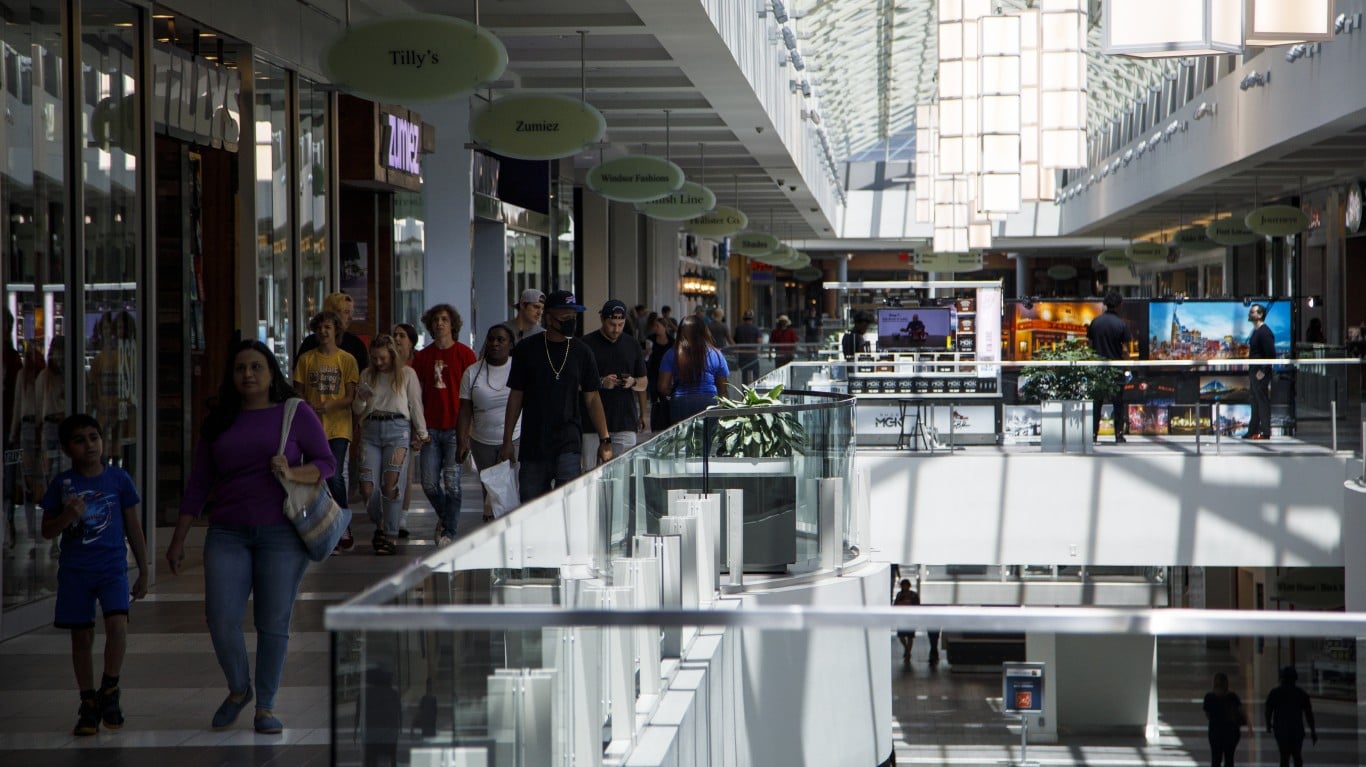
Simon owns malls, Premium Outlets and The Mills, with interests in 254 properties as of June 30, 2026. BigGo Finance reported the company’s CFO said mall and Premium Outlets occupancy reached 96.5%, which “ties our highest combined occupancy level since 2016.”
Simon raised its quarterly dividend to $2.30 from $2.25, or $9.20 a year. That payout sits below its raised 2026 real estate FFO guidance of $13.30 to $13.40 per share. FFO is the standard REIT cash earnings measure. Quarterly payouts go back to 1999. The main risk here is retailer bankruptcies, which would leave empty stores in the malls.
Regency Centers
- Stock #2: Regency Centers (NASDAQ:REG)
- Yield: 4.2%
- Shares for $40,000: 525.07
- Annual Passive Income: ~$1,680
Regency owns grocery-anchored neighborhood shopping centers in suburban areas, with tenants such as Publix, Amazon/Whole Foods, and Kroger. Its same-property portfolio was a record 97.0% leased, and started occupancy, meaning tenants that are open and paying, hit 95.1%.
The quarterly dividend rose 6% to $0.80 from $0.755, or $3.20 a year. Nareit FFO guidance of $4.86 to $4.88 per share covers it with room to spare. The main risk is a slowdown in consumer spending, which would squeeze the restaurants and service shops that fill its smaller spaces.
Kimco Realty
- Stock #1: Kimco Realty (NYSE:KIM)
- Yield: 4.37%
- Shares for $40,000: 1,561.28
- Annual Passive Income: ~$1,749
Kimco owns open-air, grocery-anchored centers, 561 of them as of September 30, 2026, anchored by names like Publix, Walmart, and Costco. Leased occupancy hit a record 96.6%. Another $76M of annual rent is signed but hasn’t started yet.
Kimco raised its quarterly dividend to $0.28 from $0.26 this year, or $1.12 annually, against FFO guidance of $1.84 to $1.86 per share. It also bought back 6.3M shares in the third quarter. The main risk is interest rates: Kimco has $466 million of debt maturing in 2027 at a 4% weighted average coupon, and refinancing at higher rates would eat into cash flow.
Income From Nearly Full Retail Landlords
| Name | Yield | Annual Dividend Income |
|---|---|---|
| Simon Property Group | 3.92% | $1,568 |
| Regency Centers | 4.2% | $1,680 |
| Kimco Realty | 4.37% | $1,749 |
| Total | 4.16% | $4,997 |
Together, these three positions generate $4,997 in annual passive income on a $120,000 investment, a combined yield of 4.16%. Simon contributes $1,568, Regency adds $1,680, and Kimco rounds out the group with $1,749.
Taxes reduce what ends up in hand. Under federal law, REIT dividends are subject to special limits on the lower qualified-dividend rate (26 U.S.C. § 1(h)(11)(D)(iii)), so most of this income is taxed at regular income rates. Nothing guarantees these payouts will hold, either. The number to check each quarter is occupancy. If it starts slipping, rent growth and dividend growth tend to follow.
The appeal here is steady cash flow. Rent from hundreds of grocery stores, outlets, and malls comes in every month, and these dividends turn that rent into quarterly checks that don’t depend on the share price.
Contact [email protected] for any questions or corrections.
David Beren has been a Flywheel Publishing contributor since 2022. Writing for 24/7 Wall St. since 2023, David loves to write about topics of all shapes and sizes. As a technology expert, David focuses heavily on consumer electronics brands, automobiles, and general technology. He has previously written for LifeWire, formerly About.com. As a part-time freelance writer, David’s “day job” has been working on and leading social media for multiple Fortune 100 brands. David loves the flexibility of this field and its ability to reach customers exactly where they like to spend their time. Additionally, David previously published his own blog, TmoNews.com, which reached 3 million readers in its first year. In addition to freelance and social media work, David loves to spend time with his family and children and relive the glory days of video game consoles by playing any retro game console he can get his hands on.