Smaller AI Spending Forecasts, Sold-Out Computing Power: Both Can Be True

This post may contain links from our sponsors and affiliates, and Flywheel Publishing may receive compensation for actions taken through them.
On November 11, 2026, Stephanie Link of Hightower told CNBC, “Maybe we’re not going to spend $7 trillion on data centers between now and 2030. That was what we were projecting. Maybe it’s 3 to 4 trillion. That’s still a lot of money.”
The last line of that quote is the one investors should remember. Even the lower forecast is measured in trillions of dollars, and the companies renting out AI computing power say they are sold out. Recent results from CoreWeave (NASDAQ:CRWV), Oracle (NYSE:ORCL | ORCL Price Prediction), and Vertiv (NYSE:VRT) show how both statements can hold at once.
CoreWeave Says Buyers Are Waiting in Line
CoreWeave’s results set off a rally in AI cloud stocks that also raised Nvidia (NASDAQ:NVDA), as the numbers eased bubble fears. That evening on Mad Money, Jim Cramer said CoreWeave’s CEO told him, “They are 10 times oversubscribed for 2027 and the added demand for 2028 is also multiples of what he can provide.” Cramer also relayed that “starting next year he’ll begin earning more on Nvidia chips that he bought four years ago than he has been for any of the past four years.”
CoreWeave’s reported figures line up with what Cramer described. Third-quarter revenue rose 168.3% year over year to $3.66 billion, beating the $3.54 billion consensus. The loss of $1.27 per share was smaller than the expected loss of $1.55. Revenue backlog reached about $132.5 billion, and the company’s third-quarter release raised full-year revenue guidance to $13.0 billion to $13.3 billion. On the earnings call, CEO Michael Intrator said, “We are largely sold out through 2027.” Prices for older Ampere and Hopper chips rose 30% to 50% quarter over quarter.

Investors are still focused on how CoreWeave pays for all of this. The company plans to raise at least $4 billion through a high-grade loan. Shares are down 23.4% year to date, even after a 30.8% gain over the past week.
Oracle Prices Like a Seller’s Market
In Oracle’s fiscal first quarter, cloud infrastructure revenue rose 121% to $7.39 billion, and remaining performance obligations reached $664 billion. Oracle booked more than $30 billion in new AI contracts, ran its GPUs at 97.9% usage and renewed expiring capacity at a 20% premium. On the September 10 call, co-CEO Clayton Magouyrk said, “Prices in a world where demand exceeds supply typically do not go down. They do go up.” Oracle expects fiscal 2027 revenue of at least $90 billion, but shares are down 34.4% year to date.


Usable Capacity Takes Months to Unlock
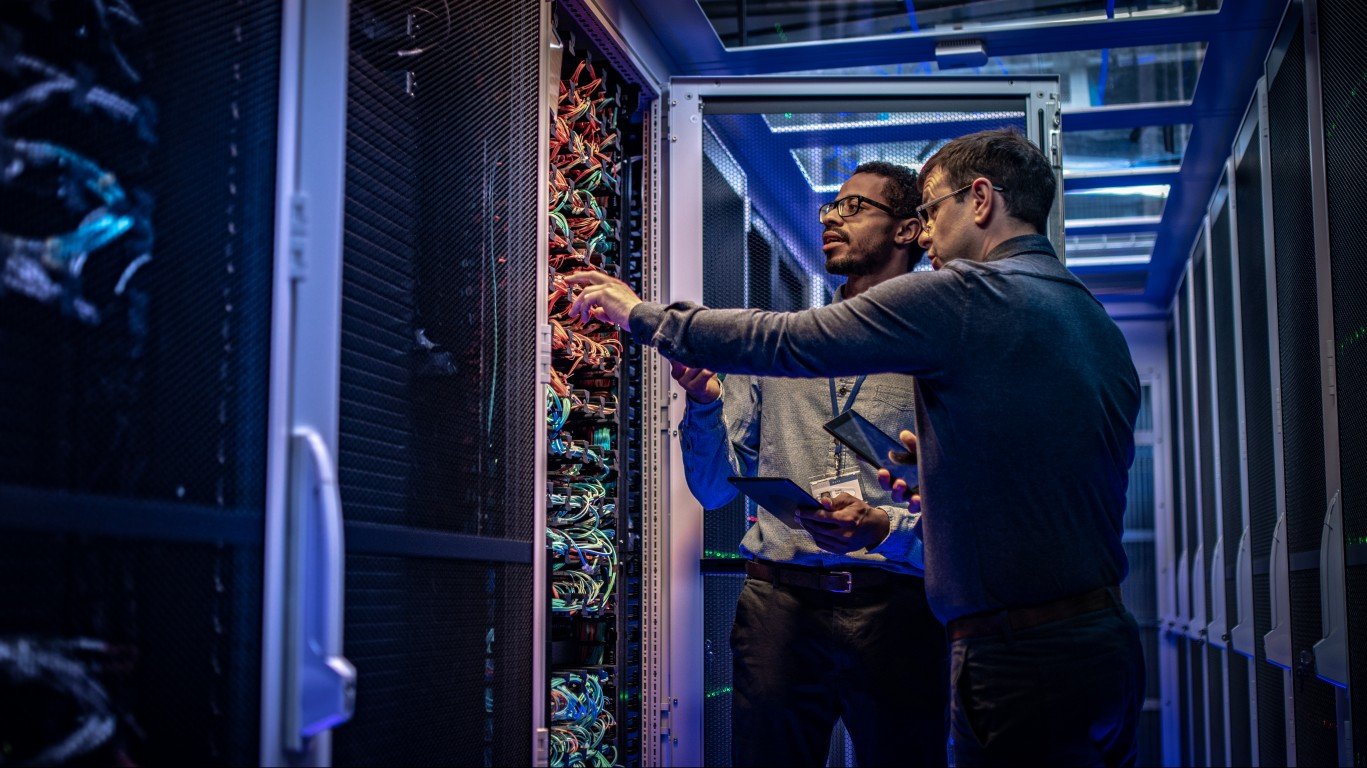
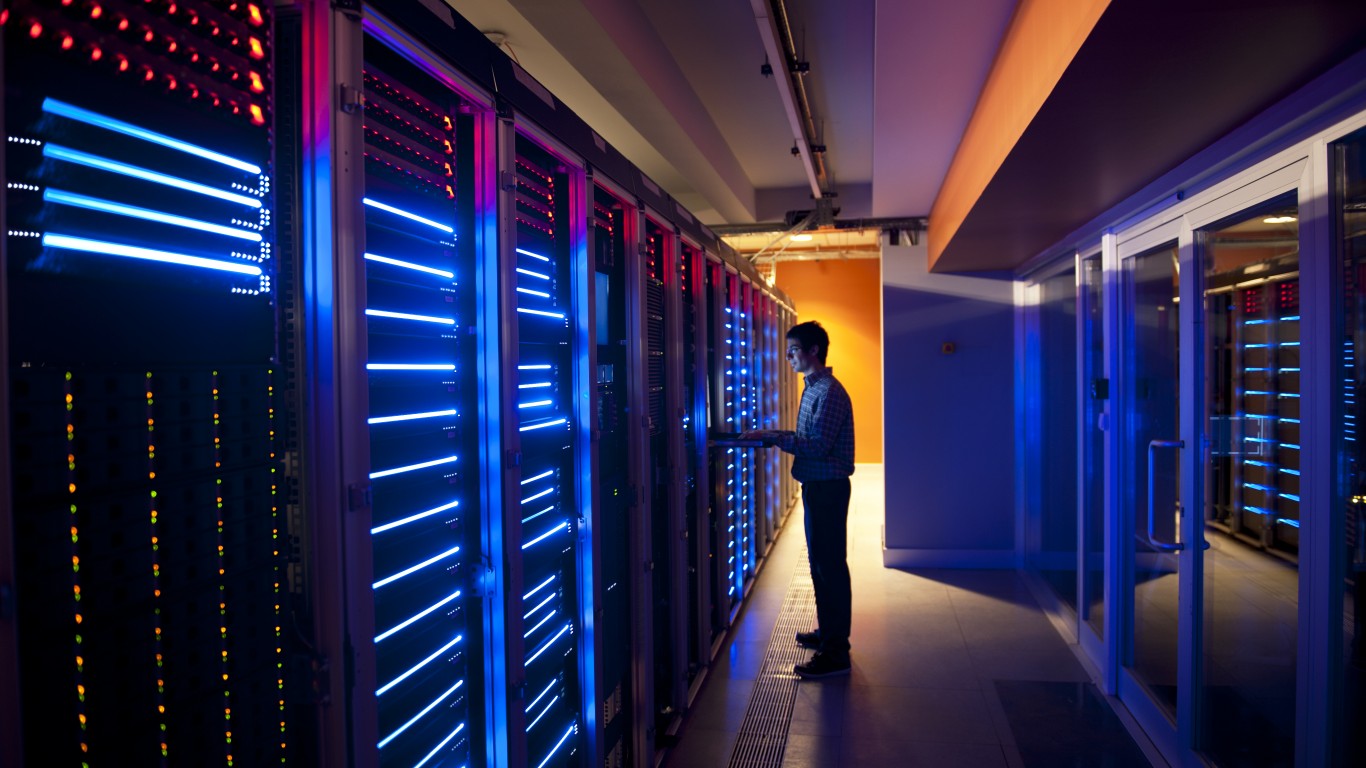
Elon Musk posted on X on November 11, “‘Actually usable’ is an important metric. It takes us ~2 months working 24/7 to get a large compute cluster working reliably. I’d guess closer to 6 months for others.” Money spent on buildings and working computing power are two different measures, and the time it takes to turn one into the other keeps capacity tight.
Vertiv sells the power and cooling equipment that helps close that gap. Third-quarter revenue rose 61.2% to $4.31 billion, and organic orders grew over 100% year over year. Full-year guidance now calls for net sales of $14.45 billion to $14.85 billion and adjusted EPS of $7.10 to $7.20. CEO Giordano Albertazzi said, “Time to first token matters a lot to our customers.” He listed power availability, permitting, and skilled labor as constraints. Vertiv shares are up 26.62% this year.

Vertiv is one of the picks-and-shovels names cashing in on the expansion rather than the chips themselves. We covered seven of them, spanning power, cooling and networking, in a free report: 7 Stocks Powering the AI Boom (That Aren’t Chipmakers).


Chambers Sees an Early Inning
Former Cisco (NASDAQ:CSCO) CEO John Chambers took the long view on CNBC on November 11: “AI is here to stay. We are in the second inning of it.”


What Will Decide Which Story Wins
Spending forecasts can come down as financing costs rise and as customers pay for hardware themselves. Oracle says the vast majority of its new contracts use prepayment or bring-your-own-hardware terms. At the same time, power, permits, and months of cluster tuning limit how fast any dollar becomes working compute.
Three signals will show which story is winning:
- For CoreWeave, track whether it reaches its target of more than 1.85 GW of active power by year-end and how its new loan is priced.
- For Oracle, track whether about half of its backlog turns into revenue within 36 months, as the company expects.
- For Vertiv, compare actual results with its fourth-quarter sales guidance of $4.31 billion to $4.51 billion. If GPU renewal prices keep rising, it means capacity is still sold out.
Contact [email protected] for any questions or corrections.
Trey has been an editor and author at 24/7 Wall St. for more than a decade, where he has published thousands of articles analyzing corporate earnings, dividend stocks, short interest, insider buying, private equity, and market trends. His comprehensive coverage spans the full spectrum of financial markets, from blue-chip stalwarts to emerging growth companies.
Beyond 24/7 Wall St., Trey has created and edited financial content for Benzinga and AOL's BloggingStocks, contributing additional hundreds of articles to the investment community.
Trey's editorial expertise extends across multiple publishing environments. He served as production editor at Dearborn Financial Publishing and development editor at Kaplan, where he helped shape financial education materials. Earlier in his career, he worked as a writer-producer at SVE. His freelance editing portfolio includes work for prestigious clients such as Sage Publications, Rand McNally, the Institute for Supply Management, the American Library Association, Eggplant Literary Productions, and Spiegel.
Outside of financial journalism, Trey writes fiction and has been an active member of the writing community for years, moderating workshop sessions at regional conventions.