Ray Dalio Keeps Telling Investors to Hold Gold. Gold Just Lost 28% From Its Record. Here’s His Rule for a 66-Year-Old With $800,000 in an IRA and $2,800 a Month in Social Security

This post may contain links from our sponsors and affiliates, and Flywheel Publishing may receive compensation for actions taken through them.
Ray Dalio has told investors, over and over, to keep 10% to 15% of their money in gold, and this week the Treasury reported that Washington ran a $404 billion deficit in October, the largest October shortfall on record, spending about $2.10 for every dollar it collected. Here is what that rule means for a 66-year-old with $800,000 in an IRA and $2,800 a month from Social Security, on the weekend gold handed the rule its first hard test in years. SPDR Gold Shares (GLD), the largest fund that holds gold bullion, closed Thursday at its lowest price in more than a year and finished the week down 4.6%, its worst week since June. It is 28% below the record it set on January 29 and down 10.3% this year.
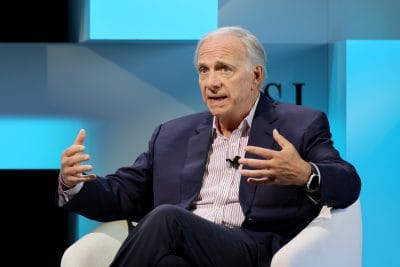
Dalio has not changed his mind. The Bridgewater Associates founder wrote on X in August that a portfolio should hold “maybe 10-15 percent” in gold and underweight bonds, because a U.S. debt crisis could arrive within five years. On the Money Rehab podcast last November he put it this way: “If you have a traditional portfolio and you have about 10 or 15% in gold and that kind of bad time happens, you’ll be well diversified.”
The retiree stopped working this spring, keeps the $800,000 in a traditional IRA, and has to decide this weekend whether a sleeve of gold belongs in that account at all. Gold’s fall reads as a test of Dalio’s rule rather than a verdict on it: he makes the case for gold as insurance against a debt crisis, and insurance costs money in the years nothing burns. In plain terms, the sleeve is a bet that Washington’s debt problem lands on bonds and the dollar, and that gold holds its value when they do not. Its limit is just as plain: a sleeve that lost 28% in ten months is a real loss for a retiree who has to sell shares to live, however the next decade turns out.
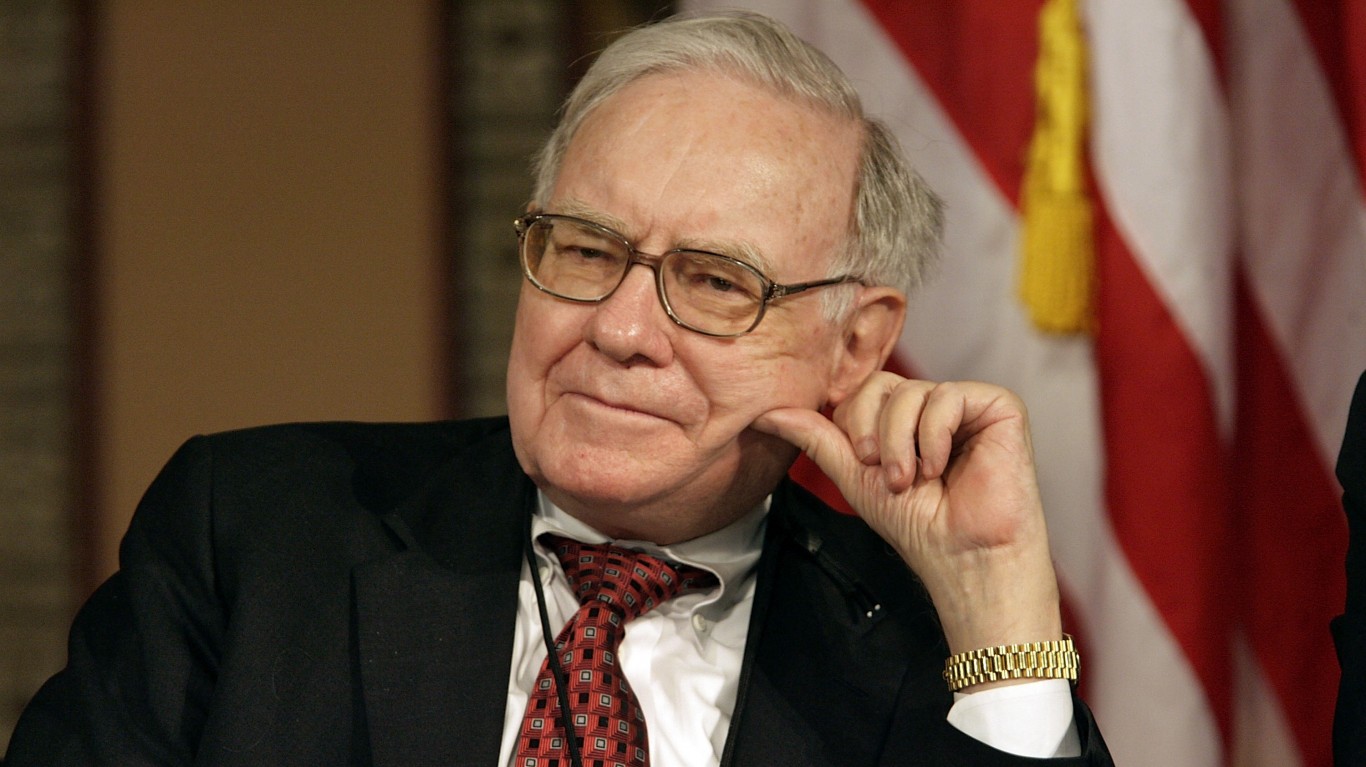
Warren Buffett made the other case in his 2011 letter to Berkshire Hathaway shareholders. All the gold in the world, he wrote, would form a cube about 68 feet on a side, worth about $9.6 trillion at the time, and for that money an investor could own every acre of American cropland plus 16 Exxon Mobils and still have a trillion dollars of walking-around money. The cube would never produce anything. A retiree who agrees with Buffett keeps the gold sleeve small or skips it; one who agrees with Dalio treats it as the one holding that does not depend on anyone paying a debt.
What the rule means in dollars
Ten percent of $800,000 is $80,000. Fifteen percent is $120,000. At Friday’s close, $80,000 buys about 225 shares of GLD and $120,000 buys about 338. The fund holds bullion in a vault, charges 0.40% a year, and pays no dividend, so the only return is the price of gold.
That price has been generous until this year. GLD has doubled in five years, so a $120,000 sleeve bought in November 2021 is worth about $245,000 today, even after the fall. The same sleeve bought on January 29, the day of the record, is worth about $86,000, a loss of about $34,000. Bought on the first trading day of 2026, it is worth about $107,600, down $12,400, while $120,000 left in an S&P 500 index fund gained about $12,700 over the same stretch. Following the rule from New Year’s Day has cost this retiree about $25,100 so far in 2026. That is the price of the insurance in a year the fire did not come.
What the rule is for
Dalio’s case is the bad year, and the record on that is strong. In 2008 the S&P 500 fund lost 38.3% and GLD gained 4.9%. In 2020 the S&P fund gained 16.2% and GLD gained 24.8%. In 2022, the year inflation and rising rates sank stocks and bonds together, the S&P fund lost 19.5% and GLD lost 0.8%.
Run those years through your IRA with $680,000 in the S&P 500 fund and $120,000 in GLD. A repeat of 2008 takes the account down about $254,000 instead of the $306,000 an all-stock account loses, a difference of about $52,000. A repeat of 2022 costs about $133,000 instead of $156,000, a difference of about $22,000. Those are the years a retiree in his first five years of withdrawals fears most, because he is selling shares at the bottom to pay the bills, and the gold sleeve is what he sells instead.
The record cuts the other way too, and you should see it before you buy. GLD peaked in August 2011 and then fell 46% to its December 2015 low, including a 28% drop in 2013 alone. It did not close above the 2011 peak until July 2020, almost nine years later. A 66-year-old who bought the sleeve in 2011 would have been 75 before it was whole again. Dalio’s rule is built for the decade, not the quarter, and the decade can run long.
What it costs to hold
Gold pays you nothing while it waits. The 0.40% fee on a $120,000 sleeve is about $480 a year. The bigger cost is what the money could earn elsewhere: three-month Treasury bills yielded 4.32% on Thursday, so $120,000 in bills pays about $5,200 a year, about $430 a month, with no price risk. The 10-year Treasury yields 5.1%. Dalio’s answer is that the gold comes out of the bond side, since he expects the debt problem to land on bonds and the dollar, so the trade is a sure check for a hedge that has, in the right years, been worth far more than the check.
The spending plan and the tax bill
The gold decision does not change the withdrawal math, and that math is where the IRS comes in. Take the 4% starting withdrawal most planners use: $32,000 a year from the $800,000, or $2,667 a month. With the $2,800 Social Security check that is $5,467 a month, $65,600 a year.
The IRS decides how much of the Social Security is taxed by adding the IRA withdrawal to half the benefit: $32,000 plus half of $33,600 comes to $48,800, above the $34,000 line for a single filer, so the worksheet puts $17,080 of the $33,600 benefit into taxable income and leaves $16,520 tax free. Income for federal purposes is $49,080. The 2026 standard deduction is $16,100, the extra deduction at 65 or older is $2,050, and the senior deduction passed in 2025 adds $6,000 for anyone with income under $75,000, which he is. Those three come to $24,150.
Taxable income is $24,930. The first $12,400 is taxed at 10% and the rest at 12%, so your federal bill is about $2,744 for the year, about $2,700, or 4.2% of what you spend. Inside the IRA, gold is taxed like everything else: every dollar withdrawn is ordinary income, whether it came from GLD or from a stock fund. That is a point in the IRA’s favor for gold, because in a regular brokerage account the IRS taxes long-term gains on gold and gold funds as collectibles, at a top rate of 28% instead of the 20% that applies to stocks. He was born in 1960, so his first required withdrawal comes at 75, in 2035, and the gold sleeve counts in that balance like any other holding.
How much gold, then
The honest answer for this retiree sits at the low end of Dalio’s range. Ten percent, $80,000 and about 225 shares of GLD, is enough to blunt a 2008 or a 2022 and small enough that a repeat of 2011 to 2015 costs him about $37,000 over nine years rather than $55,000. Buy it in two or three pieces over the coming months, because a fund that fell 4.6% in a week can keep falling, and rebalance once a year: when gold runs, sell back to 10%; when it falls, as it has, buy back up.
The bottom line
For a 66-year-old with $800,000 in an IRA and $2,800 a month from Social Security, Dalio’s rule means $80,000 to $120,000 in SPDR Gold Shares, a sleeve that has cost about $25,100 this year against an S&P 500 fund, would have saved about $52,000 in a repeat of 2008, and gives up about $430 a month of Treasury bill interest while it waits. The spending plan pays $5,467 a month and sends the IRS about $2,700 whatever he decides. Gold at a one-year low is a cheaper entry than January’s record by 28%. It is still insurance, and the only reason to buy it is that you expect to need it.
Contact [email protected] for any questions or corrections.
I've spent more than 15 years inside enterprise software, working alongside the finance, sales operations, and HR leaders who run the revenue engines at some of the largest tech companies in the country.
My day job is helping enterprise executives make smarter decisions about retention, compensation, and growth. These are the same operational levers that show up in every earnings report investors actually read. That perspective shapes my writing for 24/7 Wall St.
The headline numbers are easy. The interesting stuff is underneath: how companies make money, what executives are worried about, and what any of it means for the person checking their 401(k) on a Sunday afternoon. I write about personal finance and business as someone who has spent her career inside the rooms where these decisions get made.