Stanley Black & Decker Just Raised Its Cash Flow Outlook. Its 59-Year Dividend Streak Looks Stronger

This post may contain links from our sponsors and affiliates, and Flywheel Publishing may receive compensation for actions taken through them.
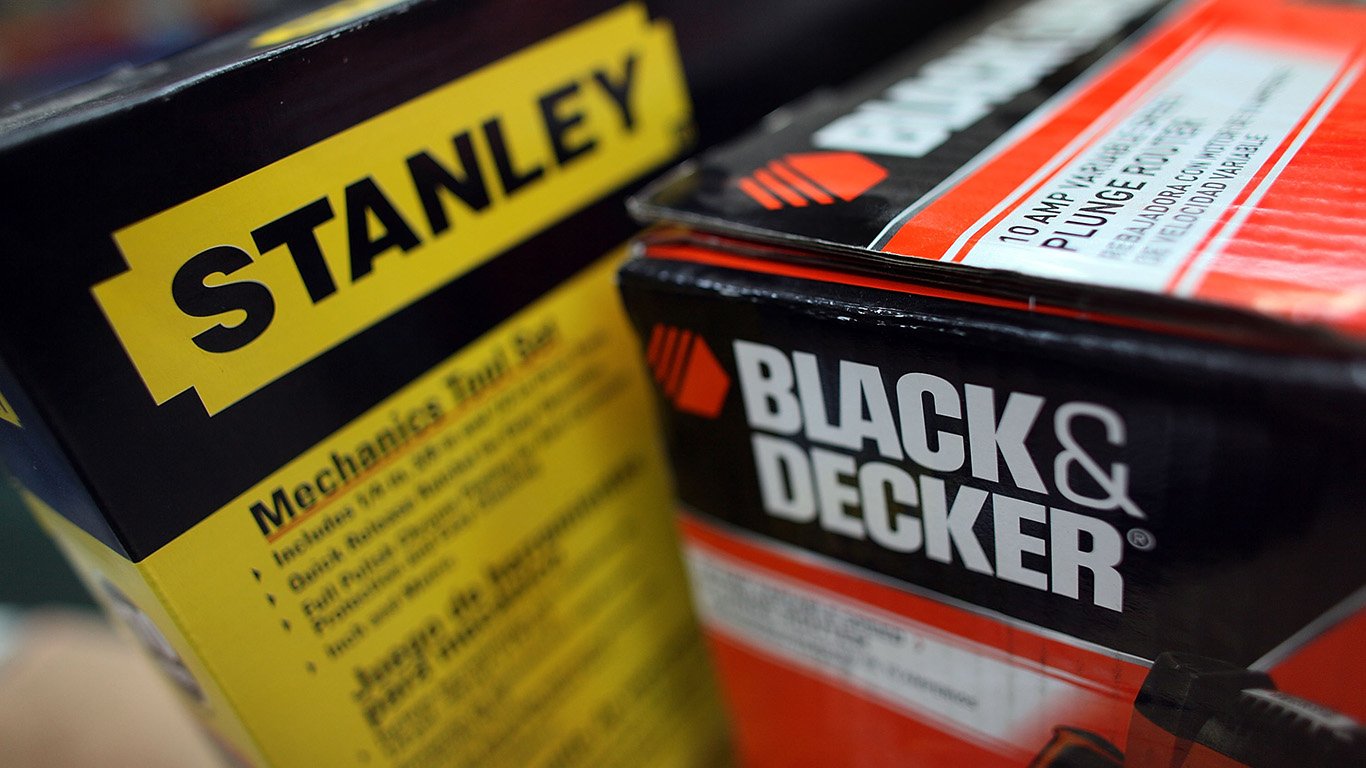
Stanley Black & Decker (NYSE:SWK | SWK Price Prediction) just gave income investors the number they needed. On November 4, 2026, the toolmaker raised its 2026 free cash flow guidance to $1.0 to $1.2 billion, up from $600 to $800 million. The dividend costs about $500 million a year. On its investor relations site, the company states it has paid dividends for 150 consecutive years and has “increased dividends in each of the past 59 years.”

The run looks safe, though the raises themselves are tiny.
A Penny Raise Keeps the Streak Alive
The board lifted the quarterly dividend to $0.84 from $0.83, a 1.2% increase. The December 22 payment stays at $0.84. At $110.18, the $3.36 annualized payout yields about 3.0%. Illinois Tool Works (NYSE:ITW) raised its dividend 7% to $1.72 a quarter. That was its 63rd consecutive year of increases.
Coverage Got Much Better in 2026
In 2025, Stanley paid $500.6 million in dividends. That ate up about 73% of its $687.9 million in free cash flow, which is a thin buffer. This year, free cash flow reached about $836 million[1] through three quarters. Dividends over the same period cost $373.2 million, so cash covered the payout about 2.2 times. At the guided range, dividends would use just 42% to 50% of free cash flow.

“We are increasing our forecast for free cash flow by $400 million at the midpoint. We now expect to be in the range of $1 billion to $1.2 billion,”[1] said CFO Patrick Hallinan.
Tariff Refunds Make 2026 Look Better Than It Is
Third-quarter adjusted EPS came in at $2.31, well ahead of the $1.56 consensus. But net tariff refunds added about $0.67 of that. The full-year adjusted EPS guide of $5.95 to $6.25 includes $0.60[1] from refunds. Against the full guide, the dividend is a 54% to 56% payout. Strip out the refunds, and the low end rises to about 63%.
Tools & Outdoor drives the business. It includes DEWALT and CRAFTSMAN and brought in $3.34 billion last quarter. Power Tools organic revenue rose 10%[1], while Outdoor fell 12% because of weather. Housing and DIY demand still matter: first-quarter volume fell 3%[2] on soft North American retail. Management also expects meaningful inflation in 2027[1] in steel and electrical components, and a price increase is likely around year-end.
Debt Reduction and Buybacks Come Ahead of Bigger Raises
Stanley used the $1.8 billion sale of its CAM aerospace business to retire $1.7 billion of debt. It expects net debt to adjusted EBITDA at or around 2.5 times[1] at year-end. It also spent about $250 million on buybacks in each of the last two quarters, and the board added a $1 billion authorization.
“Together, these actions underscore our confidence in the outlook for the business and our commitment to balanced, shareholder-focused capital allocation,”[1] said CEO Chris Nelson.
Snap-on (NYSE:SNA) shows what a more conservative balance sheet looks like. It held $1.67 billion in cash against $2.54 billion in total liabilities, compared with Stanley’s $741.2 million in cash. Even after third-quarter EPS of $4.64 missed expectations, Snap-on kept buying back stock.
One Signal Will Confirm or Threaten the Streak
The run looks secure. Stanley has made about 113 dividend payments on record without a cut, and coverage is the strongest in years. Watch 2027 free cash flow guidance when fourth-quarter results come. A target that stays near $1 billion without tariff refunds would confirm the dividend is safe. A drop back toward 2025’s $687.9 million would bring back the thin coverage, and penny raises could become the limit.
Contact [email protected] for any questions or corrections.
Chris Lange is a financial and geopolitical writer with more than a decade of experience covering a myriad of topics. He has published thousands of articles for 24/7 Wall St., with past coverage focused heavily on stocks, IPOs, healthcare, defense, global affairs, and technology.
His work has been quoted, or referenced by a number of outlets including Business Insider, USA Today, Yahoo Finance, MSN, The Motley Fool, and many other publications. A graduate of Southwestern University, he studied business with a focus on investments and has previous experience in banking and startups.
When not reading or writing the news, he is following his passion for Lacrosse, playing chess, or building solar projects with his dad.