General Mills vs. Kraft Heinz: Which Food Dividend Is Better for Retirees?

This post may contain links from our sponsors and affiliates, and Flywheel Publishing may receive compensation for actions taken through them.
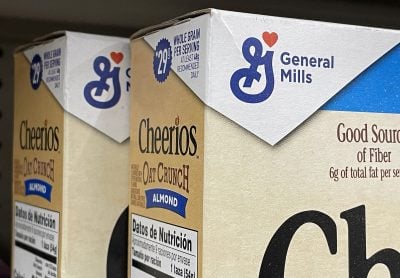
General Mills (NYSE:GIS | GIS Price Prediction) or Kraft Heinz (NASDAQ:KHC): which food dividend holds up better for retirement-focused income? Both yield more than 6%, both face weak U.S. volumes, and their stocks have gone in opposite directions this year. General Mills trades at $35.74, down 17.87% year to date. Kraft Heinz is at $25.42, up 10.04%.
Dividend Track Record: General Mills Has the Pedigree
General Mills pays $0.61 a quarter, or $2.44 a year at today’s price, for a 6.8% yield. The July declaration marked its 127th consecutive year[1] of continuous dividends. The per-share drop from $0.49 to $0.28 in 2010 came from a stock split. Growth has stalled, though. The last raise added a cent, from $0.60 to $0.61 in mid-2025, and the rate has stayed there since.
Kraft Heinz pays $0.40 a quarter, for a 6.29% yield. In 2019, it cut the payout from $0.625 to $0.40. The cut came after it disclosed a federal investigation and a $15.4 billion write-down of its Kraft and Oscar Mayer brands. Every payment since has been $0.40, so retirees have gone seven years without a raise while inflation chipped away at their income. General Mills wins this round.
Dividend Safety: Kraft Heinz Has More Room to Spare
Kraft Heinz generated $3.66 billion[2] in free cash flow in 2025 and paid about $1.9 billion in dividends. That’s only 52% of free cash flow. It has also paid down $3.98 billion[3] of long-term debt this year, and total debt fell to $18.0 billion from $21.2 billion at the end of 2025. The dividend takes about 76% of the midpoint of its raised adjusted EPS guidance of $2.07 to $2.13[3].
The cushion is thinner at General Mills. Its current dividend rate of $330.5 million[4] a quarter would use about 81% of fiscal 2026 free cash flow of $1.63 billion[1]. Fiscal 2027 adjusted EPS guidance of $3.00 to $3.20[1] is down from $3.55, which sets the payout near 79% of earnings. Debt stands at $13.6 billion against just $433.1 million in cash. Buybacks also fell to $500 million from $1.2 billion. Kraft Heinz wins.
Business Momentum: Kraft Heinz Is Gaining as General Mills Slips
Kraft Heinz has beaten EPS estimates for six straight quarters. Its third-quarter adjusted EPS came in at $0.53[3], against a $0.4235 consensus. Emerging markets organic sales grew 15.6%[3]. The main risk is the brands themselves. The company took a $7.4 billion[5] impairment this year after $9.3 billion[2] in 2025, and North America sales still fell 3.4%[3].
General Mills beat estimates last quarter with adjusted EPS of $0.75[4]. Even so, adjusted gross margin contracted 90 bps[4], North America Retail sales fell 7%, and the company expects adjusted operating profit to drop 8% to 13% this year. Its main risk is shoppers switching to store brands as volumes slow, and that pressure lands hardest on cereal and baking staples. Kraft Heinz wins.


Verdict: Kraft Heinz Is the Stronger Income Holding for Retirees


Kraft Heinz takes two of the three rounds. For a retiree, the key question is whether the business can keep paying the dividend. Kraft Heinz pays out about half its free cash flow, its debt is falling, and it keeps raising guidance. General Mills has the better history and a slightly higher yield. But it’s paying out roughly four-fifths of free cash flow while it guides profit lower, and that’s how a dividend that has stopped growing becomes one that’s at risk (we laid out the seven warning signs a big yield is about to be cut in a free report here).
General Mills’ main appeal is its 127-year run, matched with a flat payout. On payout coverage, debt reduction, and guidance, Kraft Heinz has the stronger dividend profile today. Watch General Mills’ next earnings report for signs that its margins are holding up.
Contact [email protected] for any questions or corrections.
Chris Lange is a financial and geopolitical writer with more than a decade of experience covering a myriad of topics. He has published thousands of articles for 24/7 Wall St., with past coverage focused heavily on stocks, IPOs, healthcare, defense, global affairs, and technology.
His work has been quoted, or referenced by a number of outlets including Business Insider, USA Today, Yahoo Finance, MSN, The Motley Fool, and many other publications. A graduate of Southwestern University, he studied business with a focus on investments and has previous experience in banking and startups.
When not reading or writing the news, he is following his passion for Lacrosse, playing chess, or building solar projects with his dad.