Cereal, Mac and Cheese and Bacon Are in Almost Every Pantry. $60,000 in Each of the Companies Behind Them Pays $11,282 a Year

The cereal box, the blue box of macaroni, and the package of bacon sit in most American kitchens, and the companies behind them pay quarterly dividends to shareholders. For retirees who live on portfolio cash flow, that matters. People keep buying these basics in strong economies and weak ones, so the companies keep collecting revenue to fund those checks.
A $60,000 stake in each of these three high-yield food names would generate the following. That’s $180,000 in total, producing $11,282 in annual passive income. All prices are from the Nov. 9, 2026 close. We recently compared dividend safety at two of these food companies. This piece follows the income brands from lowest yield to highest.
Hormel Foods
- Stock #3: Hormel Foods (NYSE:HRL | HRL Price Prediction)
- Yield: 5.26%
- Shares for $60,000: 2,695.4
- Annual Passive Income: ~$3,154
Hormel Black Label bacon is the household link, alongside SPAM, Skippy, Planters, Applegate, and Jennie-O. The company sells to grocery stores, restaurants, and overseas buyers. Its Foodservice unit logged its 12th straight quarter of organic growth, meaning growth that excludes acquisitions and business sales.
The yield is high because the stock has slid 38.63% over five years, even after a 6.86% gain over the past year. Hormel raised its quarterly payout to $0.2925 from $0.29, with the first higher dividend paid on February 17, 2026. It is part of the S&P 500 Dividend Aristocrats, and the August quarter marked its 392nd consecutive quarterly payout. The $1.17 annual dividend matches about 81% of the low end of fiscal 2026 adjusted EPS guidance of $1.45 to $1.51. One risk: net sales guidance was reduced to $12.1 billion to $12.2 billion while a CEO transition is underway.
Kraft Heinz
- Stock #2: Kraft Heinz (NASDAQ:KHC)
- Yield: 6.55%
- Shares for $60,000: 2,457.0
- Annual Passive Income: ~$3,931
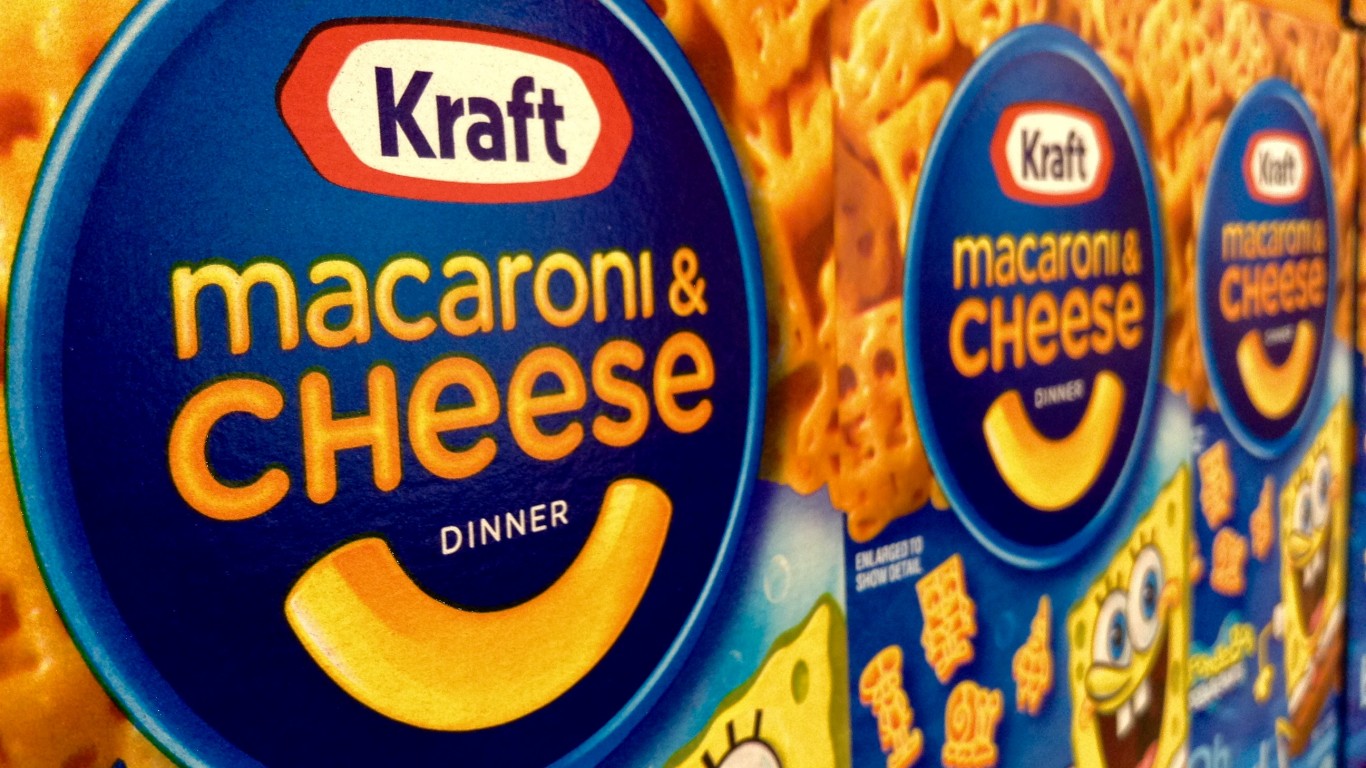
Kraft Mac & Cheese, Heinz ketchup, Philadelphia cream cheese, and Lunchables support this ultra-high-yield name. Shares rose 8.11% over the past year but remain down 51.49% over ten years, which keeps the yield high. Volumes are still soft: third-quarter organic sales fell 1.1%. CEO Steve Cahillane said, “The consumer is in a fragile state.”
The quarterly dividend has been $0.40 since the March 7, 2019 ex-dividend date, when it was cut from $0.625. The $1.60 annual payout is about 77% of the low end of 2026 adjusted EPS guidance of $2.07 to $2.13, with free cash flow conversion guided near 110%. One risk: the planned split into two companies is paused, and management expects 2027 inflation “slightly above 5%.”
General Mills
- Stock #1: General Mills (NYSE:GIS)
- Yield: 7%
- Shares for $60,000: 1,720.2
- Annual Passive Income: ~$4,197
Cheerios is the cereal behind the report, joined by Pillsbury, Betty Crocker, and Blue Buffalo pet food. Shares fell 19.84% over the past year after a $1.75B pet impairment and a 7% drop in North America Retail sales. Management said shoppers “are still waiting to buy products on sale.”
General Mills is in its 127th consecutive year of continuous dividends. Its last raise came on the July 10, 2025 ex-date, to $0.61 from $0.60, and it has held there since. The $2.44 annual payout is about 81% of the low end of fiscal 2027 adjusted EPS guidance of $3.00 to $3.20. One risk: leverage sits slightly above four times net debt to EBITDA, and returning to the three-times target will take “at least a couple of years.”
Household Income at a Glance
| Name | Yield | Annual Dividend Income |
|---|---|---|
| Hormel Foods | 5.26% | $3,154 |
| Kraft Heinz | 6.55% | $3,931 |
| General Mills | 7% | $4,197 |
| Total | 6.27% | $11,282 |
What Three Grocery Staples Pay Each Year
Together, these three positions produce $11,282 in annual passive income from a $180,000 investment, with a combined yield of 6.27%. General Mills contributes $4,197, Kraft Heinz adds $3,931, and Hormel rounds out the group with $3,154.
The figure to watch at each company is the share of free cash flow that goes out as dividends. Our earlier analysis found General Mills’ fiscal 2026 free cash flow covered its dividend about 1.24 times, compared with about 1.93 times at Kraft Heinz in 2025. Boards can change payouts at any time, and none of these three dividends is guaranteed.
The appeal of this kind of income comes from its rhythm. Checks land every quarter on a set schedule, tied to products shoppers replace every week, which makes spending easier to plan around than gains from selling shares (we laid out a full dividend ladder built to produce lifelong income without ever selling a share in a free guide here).
Contact [email protected] for any questions or corrections.
David Beren has been a Flywheel Publishing contributor since 2022. Writing for 24/7 Wall St. since 2023, David loves to write about topics of all shapes and sizes. As a technology expert, David focuses heavily on consumer electronics brands, automobiles, and general technology. He has previously written for LifeWire, formerly About.com. As a part-time freelance writer, David’s “day job” has been working on and leading social media for multiple Fortune 100 brands. David loves the flexibility of this field and its ability to reach customers exactly where they like to spend their time. Additionally, David previously published his own blog, TmoNews.com, which reached 3 million readers in its first year. In addition to freelance and social media work, David loves to spend time with his family and children and relive the glory days of video game consoles by playing any retro game console he can get his hands on.