Jensen Huang’s Return Just Added About $500 Billion to Micron, Dell, TSMC and the AI Stocks That Depend on Nvidia

This post may contain links from our sponsors and affiliates, and Flywheel Publishing may receive compensation for actions taken through them.

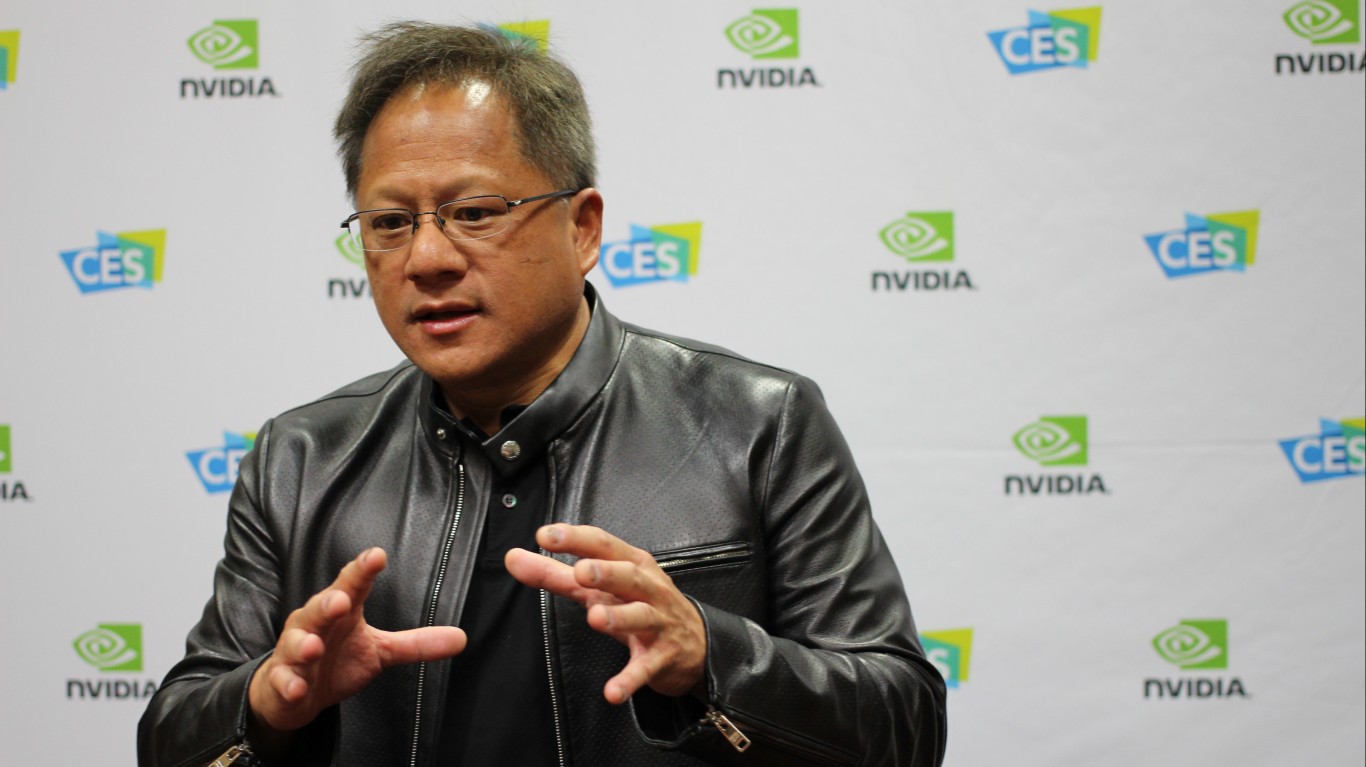
Jensen Huang’s return as chief executive of Nvidia (NASDAQ: NVDA) added about $500 billion on Monday to the market value of 10 companies that make Nvidia’s chips, build its servers or count it as a shareholder. Nvidia itself rose 31% and gained about $940 billion. Its two largest rivals in AI chips got far less of the lift: Broadcom (NASDAQ: AVGO) rose 2% and AMD (NASDAQ: AMD) rose 7%. All prices here are at 1:39 p.m. ET on Monday.
Nvidia’s board reinstated Huang at 8:55 a.m. ET, 12 days after it accepted his resignation. Chair Harvey C. Jones said in the release that the move was “in the best interests of our stockholders, employees, partners and customers.” By 1:39 p.m. ET, the market had put a price on the partners’ part of that sentence.
The split reads as a message about which AI stocks depend on Nvidia: the companies that sell to it or are funded by it got the biggest lift, and the companies that compete with it got the smallest. That reading has limits: it rests on two trading days, the whole market rose on Monday, and several of these stocks had news of their own.
Where the money went
The 10 partners were worth about $3 trillion combined at Friday’s close, and they gained 16% as a group on Monday. That is about half of the dollars Nvidia added, from companies Huang does not run. Each one’s move and the market value it added:
- Taiwan Semiconductor, which makes Nvidia’s chips: up 15%, about $248 billion
- Micron, which supplies the memory in Nvidia’s AI chips: up 18%, about $123 billion
- Dell, a major seller of servers built on Nvidia’s chips: up 21%, about $36 billion
- Intel, in which Nvidia is a shareholder: up 13%, about $36 billion
- Marvell, a networking partner: up 17%, about $19 billion
- Lumentum, an optical supplier: up 17%, about $7 billion
- Coherent, an optical supplier in which Nvidia is a shareholder: up 15%, about $5 billion
- Nebius, an AI cloud company in which Nvidia is a shareholder: up 21%, about $5 billion
- CoreWeave, an AI cloud company in which Nvidia is a shareholder: up 21%, about $5 billion
- Super Micro, which builds servers around Nvidia’s chips: up 14%, about $2 billion
Taiwan Semiconductor and Micron account for about 76% of the total. Taiwan Semiconductor’s figure values the whole company at the price of its U.S.-listed shares; its shares in Taipei had finished trading for the day before Nvidia’s announcement.
The rivals moved the other way, twice
Broadcom and AMD design the chips that compete with Nvidia’s for AI data center budgets. Monday was the second time this month the market set them apart from Nvidia’s partners.
The first was Nov. 12, the day Nvidia announced Huang’s resignation. Nvidia fell 4% that day. Broadcom and AMD each rose about 6%, and all 10 of the partners above closed lower. We wrote that morning that the buying in Broadcom and AMD read as a bet that an Nvidia without Huang moves slower and that the two rivals pick up what it drops, and we listed both among three tech stocks to buy.
Monday reversed that trade. Broadcom’s 2% gain added about $28 billion, a small part of the roughly $200 billion it lost on Friday, a drop we covered that day. AMD added about $47 billion. Together the two rivals gained 3%, against 16% for the partners.
The bet on Nvidia’s rivals has lost money over the whole stretch. From the close on Nov. 11, the last one before the resignation, Broadcom is down 10% and AMD is down 18%. Nvidia is down 5%.
What else moved these stocks
Huang’s return was the largest news of the day, and there was more of it. The S&P 500 fund SPY rose 5% and the Nasdaq-100 fund QQQ rose 7%, so nearly every technology stock went up. Some partners had help of their own. Citi published an estimate of memory demand that favored Micron, and the Financial Times reported that Dell, Super Micro and other server makers are asking 25% to 45% more for AI servers already ordered.
Broadcom had a problem of its own that Huang cannot fix. Friday’s drop followed an analyst’s report that Google cut its 2027 plans for the AI chips Broadcom designs for it. Broadcom reports results on Dec. 9.
What a holder got back
The rally repaired part of last week’s damage and left the rest. Nvidia won back all of last week’s loss. Dell won back 86% of its loss, Micron 59% and Taiwan Semiconductor 60%. Broadcom won back 14%.
In dollars, $10,000 of Nvidia at Friday’s close was worth about $13,100 on Monday. The same amount of Micron was worth about $11,800, and of Broadcom about $10,200.
All 13 stocks in this story, Nvidia included, are still below where they closed on Nov. 11. Micron is 13% below that mark, Taiwan Semiconductor 11% and Nebius 36%. The sell-off of the past two weeks was about more than one CEO, and one CEO’s return has not reversed it.
Which of these 13 stocks sit in Eric Bleeker’s $1 million AI Investor Portfolio, and whether Huang’s return changes any of them, is something this story can’t answer. That goes out in The Daily Profit, our free weekday email, and this week’s issues will cover it. Sign up free here and you also get our Top 10 Stocks to Buy Right Now report.
The bottom line
Huang’s return was worth about $940 billion to Nvidia’s shareholders on Monday and about $500 billion to the shareholders of 10 companies tied to it. Broadcom and AMD rose on the day his exit was announced and trailed on the day he came back. For anyone who owns these stocks, the lesson of the past 12 days is how much of the AI trade now moves with one company and the person who runs it. The next tests are Dell’s results on Tuesday and Broadcom’s on Dec. 9.
Contact [email protected] for any questions or corrections.
I've been writing about stocks and personal finance for 20+ years. I believe all great companies are tech companies in the long run, and I invest accordingly.