The New York Fed’s John Williams Won’t Rule Out Back-to-Back Rate Hikes

This post may contain links from our sponsors and affiliates, and Flywheel Publishing may receive compensation for actions taken through them.

The S&P 500 rose 4.73% to 7,237.17 on Monday, November 23. That same day, New York Fed President John Williams told reporters he would not rule out raising rates at back-to-back Fed meetings if needed.
He added that he has no particular timing in mind for the next move and has not set a policy path. Williams has led the New York Fed since June 2018. He is also vice chair of the FOMC with a permanent vote, and his views tend to sit near the committee’s center.
The Fed raised its target range to 3.75% to 4.00% in September. On Monday, futures priced the odds of a quarter-point hike at the December 9 decision at about 98%, up from about 88% on Friday.
A higher rate path matters most if you own the iShares 20+ Year Treasury Bond ETF (NASDAQ:TLT), which has lost 33.26% over five years. The iShares 1-3 Year Treasury Bond ETF (NASDAQ:SHY) sits at the calmer end of the yield curve.
Williams’ Speech Ran Calmer Than His Comments to Reporters
His speech, titled The Economic Mixdown, never mentioned December or straight meetings. It put PCE inflation at about 3.5%, which he called “simply too high” against the Fed’s 2% goal.
He forecast inflation just above 2% in 2027 and 2% in 2028. He also expects real GDP growth of about 2.75% this year, with unemployment edging down from the low-4% range to about 4%.
The stronger language came in his remarks to reporters after the speech, where he said policymakers would not want to sit and wait if the economy remains strong while inflation fails to ease.
One wire report read his comments as favoring a December hike. Another outlet noted that he did not directly address December. It called the speech likely the last major policy statement from a Fed official before the decision.
A week earlier, on November 17, Williams said December required no dramatic action. That steered away from the half-point hike Governor Christopher Waller had floated.
A Strong Economy Gives the Fed No Reason to Stop
Hiking cycles usually end when growth weakens. But unemployment was 4.1%[1] in October, and Williams expects growth to remain near this year’s pace in 2027.
That leaves one condition that would push him toward back-to-back hikes: inflation that declines to ease. The core PCE index rose 0.3%[2] in September, so relief has yet to show up.
October PCE inflation and the second estimate of third-quarter GDP both come out Wednesday, November 25, at 8:30 a.m. ET. Those reports will show whether inflation is easing. Treasury Secretary Scott Bessent and Bill Ackman both warned Sunday that further tightening could be a mistake.
Long Bonds Carry the Price Risk While Short Bonds Reset
A 20-year Treasury pays the same coupon for decades, so its price falls further when rate expectations rise, while a one-to-three-year note matures quickly, and the money gets reinvested at higher yields.
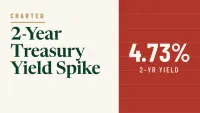
At Monday’s close, the two-year yield stood at 4.63% and the ten-year at 4.92%, both unchanged from Friday. TLT closed at $81.69, up 0.29%, while SHY closed at $81.57, down 0.05%. Long yields likely held still because a Fed willing to hike to defend its inflation goal can limit long-term inflation fears. Still, TLT is down 2.6% this year and 4.43% over one year.
The SPDR S&P 500 ETF Trust (NYSEARCA:SPY) is up 5.92% this year, although it is still down 4.96% over the past month even after Monday’s gain. Higher rates raise the discount rate applied to future earnings, which hits growth companies most. SPY’s largest weights are in big technology names. Its top holding made up 7.58% of assets as of March.
What Could Change the Outlook for TLT Before December
TLT likely faces more pressure. Williams has tied further hikes to inflation that remains near 3.5% in a strong economy, and with no recession in view, nothing forces the Fed to stop.
TLT’s five-year loss shows how much damage a rate-hiking cycle can do to retired people and income investors who own long bonds (the same sequence-of-returns problem we walked through in a free early retirement defense guide: here). SHY has held up better as a place for cash. It barely moved Monday, has gained 1.45% this year, and reinvests quickly as short-term yields rise. The case for TLT would improve if Wednesday’s PCE report shows inflation easing and the Fed signals a pause after December.
Contact [email protected] for any questions or corrections.
Omor Ibne Ehsan is a writer at 24/7 Wall St. He is a self-taught investor with a focus on growth, cyclical, and dividend equities that have strong fundamentals, value, and long-term potential. He also has an interest in high-risk, high-reward investments such as penny stocks.