If the Fed Hikes on Dec. 9, These 4 Dividend Stocks Are Built to Handle It

This post may contain links from our sponsors and affiliates, and Flywheel Publishing may receive compensation for actions taken through them.
A rate rise exposes dividends that depend on cheap borrowing and saves the ones paid out of surplus cash. That difference matters now. As of Nov. 22, Kalshi traders priced the probability of a 25-basis-point rise at the Federal Reserve’s Dec. 8-9[1] meeting at about 90%. That is a market-implied probability, and it still leaves room for the Fed to hold.
The four names below have one thing in common that suits this setup: Each pays its dividend from cash it generates itself, with room to save, and each has a balance sheet that can handle more expensive credit.
Enterprise Products Partners: An Ultra-High Yield Covered 1.9x
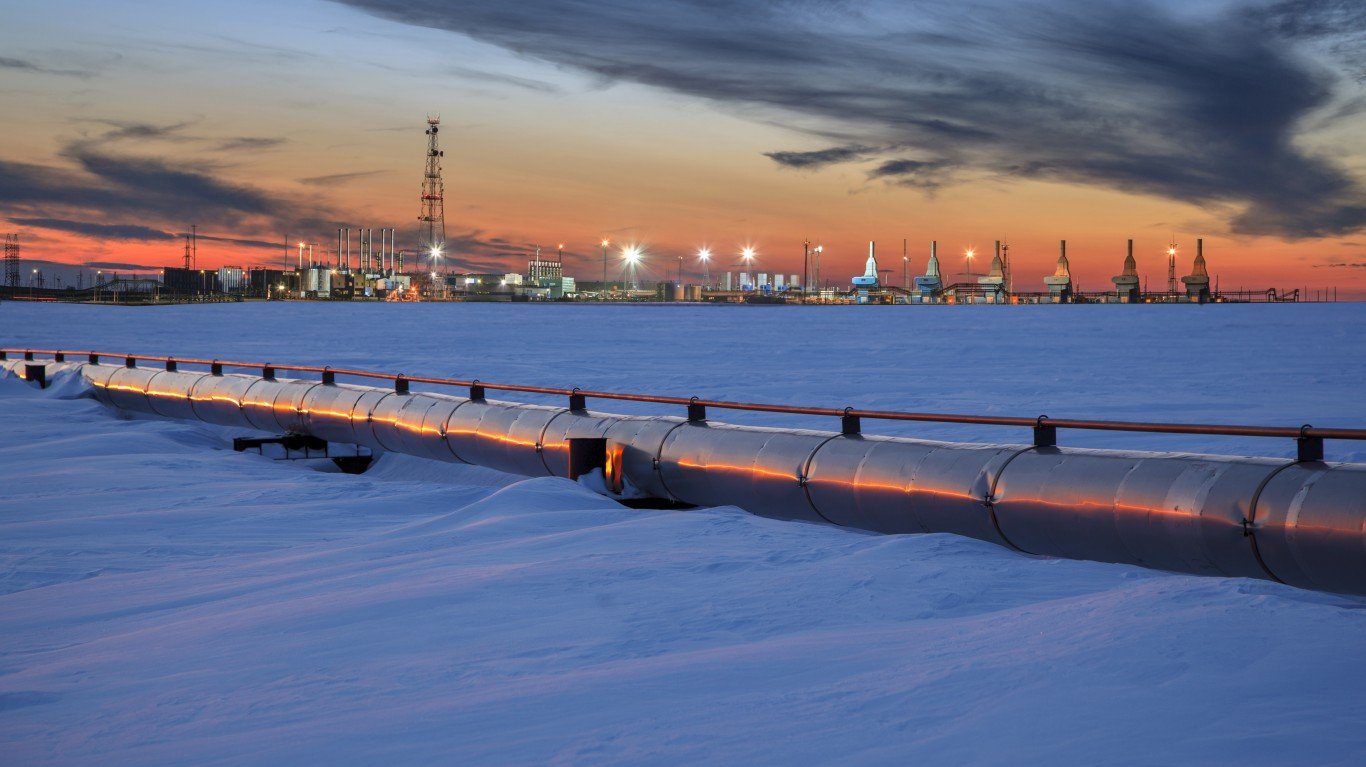
Enterprise Products Partners (NYSE:EPD | EPD Price Prediction) yields 6.22% at a recent price of $36, which makes it the only ultra-high-yield name in this group. Coverage is where the safety case starts. Third-quarter operational distributable cash flow of about $2.3 billion[2] covered the distribution 1.9x, and the partnership kept $1.1 billion for growth, buybacks and debt reduction.
That retained cash is why a rate rise matters less here. Because Enterprise pays for much of its expansion from internal cash flow, it has less need to borrow at higher rates. It has an investment-grade balance sheet and bought back $437 million[2] of units over the trailing 12 months. The quarterly distribution now stands at $0.56[2] per unit ($2.24 annualized), up 2.8% from a year ago. It has risen in steady steps from 51.5 cents in early 2024, and quarterly records go back to 1999.
For income investors, the bull case is visibility. Enterprise has $6.3 billion[2] of growth projects under construction through 2028. Its Permian processing plants took in a record 4.6 Bcf/d[2], and the units trade at about 11x forward earnings with a beta of 0.459. If tighter money slows the economy, fee-based volumes moving through pipelines should hold up better than earnings that depend on commodity prices.
The caveat: Enterprise is a master limited partnership. Its distributions come with a K-1 tax form and are not qualified dividends, which makes tax filing more complicated, especially in retirement accounts.
Main Street Capital: Monthly Income That Grows When Rates Rise
Main Street Capital (NYSE:MAIN) yields 5.6% at $56.81. It pays that high-yield income every month and adds supplemental dividends on top. Coverage is solid. Third-quarter adjusted distributable net investment income came in at 96 cents per share, ahead of the $0.92 estimate. The three regular monthly dividends declared for the fourth quarter add up to 79.5 cents, or about 83% of that quarterly income. The rest helps fund the 30-cent December supplemental.
A rise helps Main Street on the income side. Much of its loan book is floating rate, so higher benchmark rates raise the interest it takes in. The fed funds upper bound is already 4.00%[3], up from 3.75% earlier this year. On the funding side, Main Street issued $500 million of 6.55% unsecured notes due January 2030, which sets the rate on that debt, and raised its SBIC capacity to $425 million. Chief executive Dwayne L. Hyzak points to conservative leverage and strong liquidity, and operating expenses run at just 1.2% of assets.
The monthly check rests on a long track record. Main Street has raised its regular monthly dividend 13 times since Q4 2021, paid 21 straight quarterly supplementals and set the monthly rate at $0.27 for the first quarter of 2027. Net asset value per share rose to $34.22, and annualized return on equity was 14.7%. The bull case is simple: higher rates mean more income, and more income supports the supplementals. Main Street is one of a short list of names that pay on a 30-day cycle (we rounded up seven of our favorite monthly payers in a free report here).
The caveat: credit quality. Loans on non-accrual make up 3.5% of the portfolio at cost, and higher rates raise interest bills for the lower middle-market companies Main Street lends to. If that share rises, the supplementals would take the hit first.
Johnson & Johnson: AAA Balance Sheet and 64 Straight Years of Raises
Johnson & Johnson (NYSE:JNJ) yields 1.94% at $276.46. That is the lowest yield in this group, coupled with the strongest balance sheet. J&J is one of only two U.S.-based companies with a AAA credit rating, so higher rates add less to its borrowing costs than to almost any other corporate borrower’s.
The payout is easy to cover. The annual dividend of $5.28 was about 45% of the midpoint of the adjusted EPS guidance J&J issued with its second-quarter fiscal 2026 results, $11.60 to $11.75[4]. That report’s revenue guidance of $100.8 billion to $101.4 billion[4] pointed to the company exceeding $100 billion for the first time. In April, the board raised the quarterly dividend to $1.34[5], the 64th consecutive year of increases, which ensures its Dividend King status. The next payment goes out December 8 to shareholders of record on November 24, one day before the Fed announces its decision.
For income investors, the bull case is growth on top of safety. Second-quarter oncology sales rose 17.3%[4] to $7.41 billion, and TREMFYA rose 72.5%. Adjusted EPS of $2.90[4] came in ahead of the $2.85 estimate. The shares trade at about 23x forward earnings with a beta of 0.2.
The caveat: litigation. Q1 free cash flow fell 55.4%[5] to $1.5 billion because of litigation payments. If payouts of that size keep coming, they will eat into the cash cushion behind the dividend.
Procter & Gamble: 70 Years of Raises Backed by $15.84 Billion in Free Cash Flow
Procter & Gamble (NYSE:PG) yields 2.52% at $172.47. The annual dividend of $4.291 equals about 61% of the midpoint of fiscal 2027 core EPS guidance, which is $6.89 to $7.11[6]. Fiscal 2026 free cash flow reached $15.84 billion[7], up 12.74%. That more than covers the plan to pay over $10 billion[6] in dividends this fiscal year alongside about $5 billion of buybacks.
Few companies have a longer record. The current quarterly dividend of $1.0885[7] marked P&G’s 70th consecutive year of increases and 136th consecutive year of payments. People keep buying detergent and diapers whatever the Fed does. In the first quarter, organic sales grew 4%[6] with all five segments growing, and core EPS of $2.00 came in ahead of the $1.89 estimate.
The bull case is predictability. With a beta of 0.361 and Q1 free cash flow of $4.40 billion[6], P&G can keep raising its dividend through slower growth and higher rates. The stock trades at about 24x forward earnings.
The caveat: Profits are getting harder to grow. Barron’s linked P&G’s job cuts to that pressure, and the company has flagged a commodity cost headwind for fiscal 2027. If costs outrun price increases, future dividend raises could get smaller.
Rate-Resilient Income Across 4 Sectors
A December rise will show which dividends are funded by surplus cash and which depend on borrowing. All four of these are funded by surplus cash. Enterprise covers its distribution 1.9x[2] from fee-based pipelines, and Main Street’s floating-rate loans earn more as rates rise. Johnson & Johnson brings a AAA balance sheet, and Procter & Gamble brings 70 straight years of raises. Together they cover energy infrastructure, private credit, healthcare and consumer staples, with yields from 1.98% to 6.14%, a rate-resilient income base whatever the Fed decides on Dec. 9.
Contact [email protected] for any questions or corrections.
Joel South covers large-cap stocks, dividend investing, and major market trends, with a focus on earnings analysis, valuation, and turning complex data into actionable insights for investors.
He brings more than 15 years of experience as an investor and financial journalist, including 12 years at The Motley Fool, where he served as an investment analyst, Bureau Chief, and later led the Fool.com investing news desk. He has also co-hosted an investing podcast and appeared across TV and radio discussing market trends.