Rivian Is Down 41% This Year. Can RIVN Stock Get Back to $20 in 2027?

This post may contain links from our sponsors and affiliates, and Flywheel Publishing may receive compensation for actions taken through them.
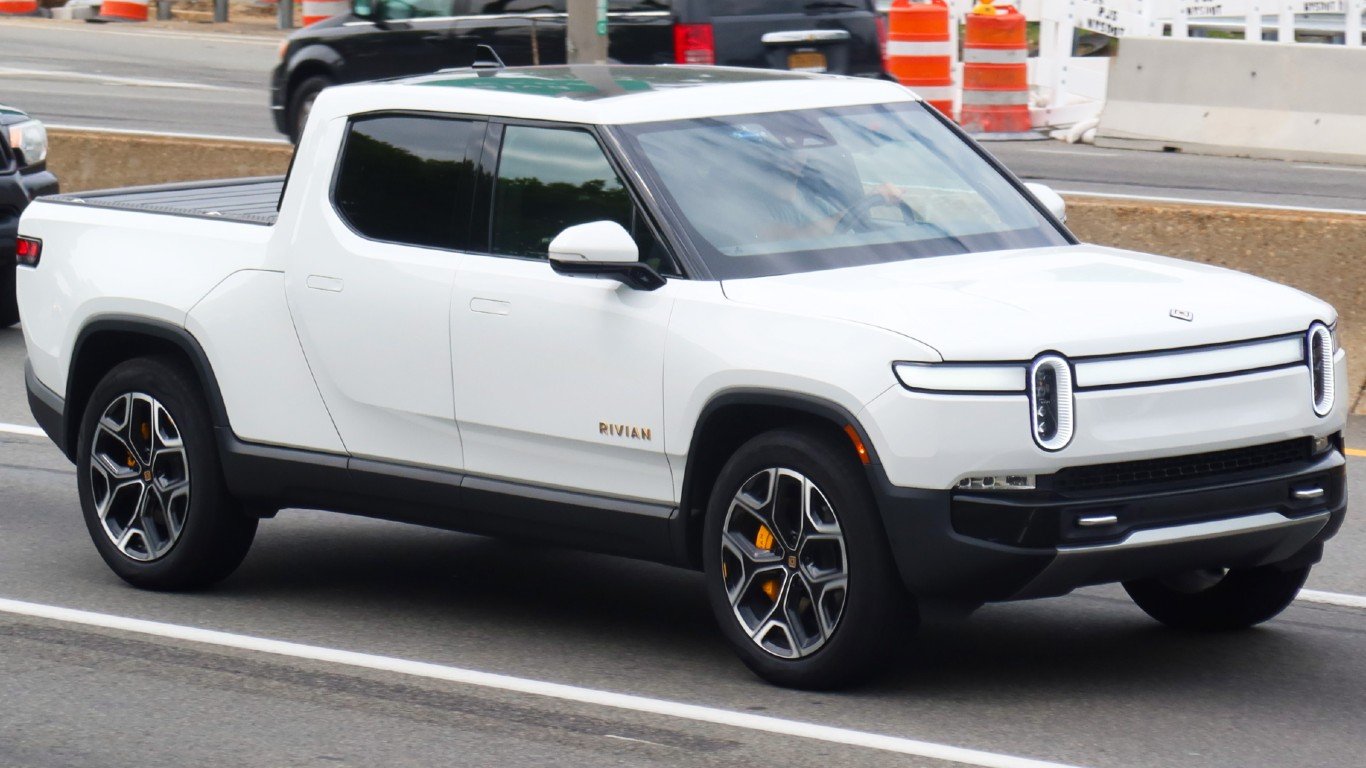
Few electric vehicle (EV) makers have made more progress on the factory floor in 2026 than Rivian Automotive (NASDAQ:RIVN | RIVN Price Prediction), but the stock hasn’t followed. Rivian stock was down 41% year to date (YTD) to $11.71 as of Wednesday. That’s a steep drop for a stock that began the year at $19.71 and traded at $20 in January and again in July.
Over the past month, RIVN shares have barely moved, sliding 1%. Getting back to $20 would require a 71% gain from Wednesday’s close. Whether Rivian can manage that in 2027 comes down to its R2 ramp, its margins, and its autonomy plans.

Rivian’s R2 Ramp Fuels the Bull Case
The bull case starts with the R2, which became Rivian’s best-selling vehicle by volume in Q3 2026[1]. Rivian disclosed on October 29 that its revenue rose 38.3%[1] year over year (YoY) to $2.15 billion, while deliveries grew 46% to a record 19,248. Its adjusted loss of $0.48[1] per share beat the consensus estimate of a $0.72 loss. An International Emergency Economic Powers Act (IEEPA) tariff refund receivable helped the automotive line, though management noted that automotive gross profit was positive on a cash basis even excluding regulatory credits[2].

CEO RJ Scaringe stated on November 10 that “2027 is really an inflection year for us,” pointing to the R2 and autonomy. Management expects the R2 to make up the majority of Rivian’s Q4 2026[2] deliveries and raised its full-year delivery guidance to 67,000 to 70,000[1] vehicles. A general release of Rivian’s Point to Point driver-assistance feature is planned for 2027[2].
Wall Street is warming to the story as well. Seaport Global Securities initiated coverage of Rivian with a Buy rating on November 23, citing the R2 launch outlook.
Why Rivian Stock Has Struggled Despite R2
Losses remain the core problem for the bears. In Q3, the company posted an operating loss of $881 million[1], a net loss of $913 million and negative free cash flow of $1.12 billion. Even after its raised outlook, Rivian still expects a 2026 loss in adjusted earnings before interest, taxes, depreciation and amortization (EBITDA) of $1.85 billion to $1.75 billion[1].
Capital spending at Rivian should rise notably in 2027 as construction ramps at its Georgia plant, and management expects research and development costs to grow faster than in 2026. The company has also warned risks from potential cuts to EV incentives and from tariffs.
Demand across the EV group remains uncertain. EV stocks came under pressure on Wednesday. The slide came after the European Union postponed a discussion on approving the assisted self-driving system from Tesla (NASDAQ:TSLA) until December 15, though Rivian finished the session higher.
How Rivian Compares With Tesla, Lucid and Ford
Checking in on the peers, Tesla stock is down 15% YTD to $380.14 as of Wednesday’s close. Unlike Rivian, the EV leader is profitable at scale and makes money from energy storage, Full Self-Driving (FSD) subscriptions and a robotaxi service in Austin.
At the far end of the group sits Lucid Group (NASDAQ:LCID); Lucid stock is down 76% YTD to $2.56. The luxury EV pure-play runs at a much smaller scale than Rivian and leans on backing from Saudi Arabia’s Public Investment Fund.
Ford Motor (NYSE:F) stock is down 3% YTD to $12.17, close to flat. Profits from trucks, commercial vans and the Ford Credit finance arm help the legacy automaker absorb losses in its Model e EV unit.
In terms of share-price moves, Rivian sits between Lucid’s steep decline and Tesla’s smaller one, while Ford has barely moved. Among the four, only Tesla and Ford can lean on established businesses to fund their EV ambitions.
What It Would Take for Rivian to Reach $20 in 2027

On the macro side, the Federal Reserve’s most recent Beige Book pointed to a hot U.S. economy with modest price growth and rising wage pressure. For Rivian, a strong consumer could support R2 demand, while rising wages could add to its costs.
One open question for Rivian is whether the R2 ramp delivers the positive automotive gross profit exit rate management targeted for the end of 2026[2]. Autonomy milestones matter too, starting with Rivian’s Autonomy and AI Day on December 9[2] and the broader Point to Point launch. Its upcoming earnings report will be the next check on both fronts.
For their part, the RIVN stock bulls can point to record deliveries, a cheaper vehicle reaching more buyers and fresh capital from partners. On the other hand, heavy losses and a costlier 2027 give the bears their argument. A cautious investment approach could make sense until Rivian’s R2 margin progress resolves.
Contact [email protected] for any questions or corrections.
David Moadel is financial writer specializing in stocks, ETFs, options, precious metals, and Bitcoin. David has written well over 1,000 articles for leading online publications, helping investors understand markets, income strategies, and risk. His work has appeared in 24/7 Wall St., The Motley Fool, InvestorPlace, U.S. News & World Report, TipRanks, ValueWalk, Benzinga, Market Realist, MarketScreener, TalkMarkets, Finmasters, and others. With a master’s degree in education, David has taught at the elementary, high school, and college levels. That teaching background shapes his writing style: clear, educational, and practical. David has also built a loyal social-media audience by providing trustworthy financial content on YouTube, X/Twitter, and StockTwits.