Monero Is Closer to Its All-Time High Than Bitcoin Is. What Is a Privacy Coin Doing Right?
A privacy coin built for anonymity is outperforming Bitcoin against its own all-time high, and the reasons behind that resilience reveal something unexpected about who actually holds Monero and why they refuse to sell.

This post may contain links from our sponsors and affiliates, and Flywheel Publishing may receive compensation for actions taken through them.

Monero (CRYPTO:XMR) is trading about 30.6% below its all-time high, roughly at $554. In contrast, Bitcoin (CRYPTO:BTC) is at about $83,382, 33.9% below its peak. This means that while Monero is a coin designed to keep transactions private, it is closer to its historic high than Bitcoin, the leading cryptocurrency.
Over the last 24 hours, Monero has gained 2.3%. Although it fell 2.2% over the past week, it is up 8.4% over the last 30 days. Meanwhile, Zcash (CRYPTO:ZEC), another prominent privacy coin, can also mask the sender, receiver, and amount of any transaction. Zcash rose by 2.2% in 24 hours and is up 8.9% over the past month.
These gains in Monero and Zcash stand out against most of the other 25 largest cryptocurrencies, which have mostly remained stagnant or declined. So what is Monero doing right that Bitcoin seems to be missing, or is this comparison simply skewed?
Monero’s Decline Is Less Severe Than Bitcoin’s

When we measure how far a coin has fallen from its peak, we get a sense of its resilience. This distance doesn’t necessarily reflect a coin’s quality, adoption, or future potential; sometimes, a coin stays close to its high simply because that high was lower initially.
Market size can also explain part of the difference. Monero’s market cap is around $10.4 billion, while Bitcoin’s market cap sits at about $1.67 trillion, making Bitcoin roughly 160 times larger. Therefore, more capital needs to exit Bitcoin to affect its price than Monero.
Despite this, Monero’s holders have sustained a smaller decline—30.6% as opposed to Bitcoin’s 33.9%. This gap may reflect the different investor profiles in each coin.
Bitcoin’s investors include those investing through exchange-traded funds (ETFs), corporate treasuries, and leveraged traders, many of whom might sell off their holdings during market downturns. In contrast, Monero lacks a U.S. spot ETF and has far less institutional ownership; its users tend to be individuals seeking private transaction capabilities, which may explain their tendency to hold through market declines.
Monero and Zcash Rose While Most Coins Stalled
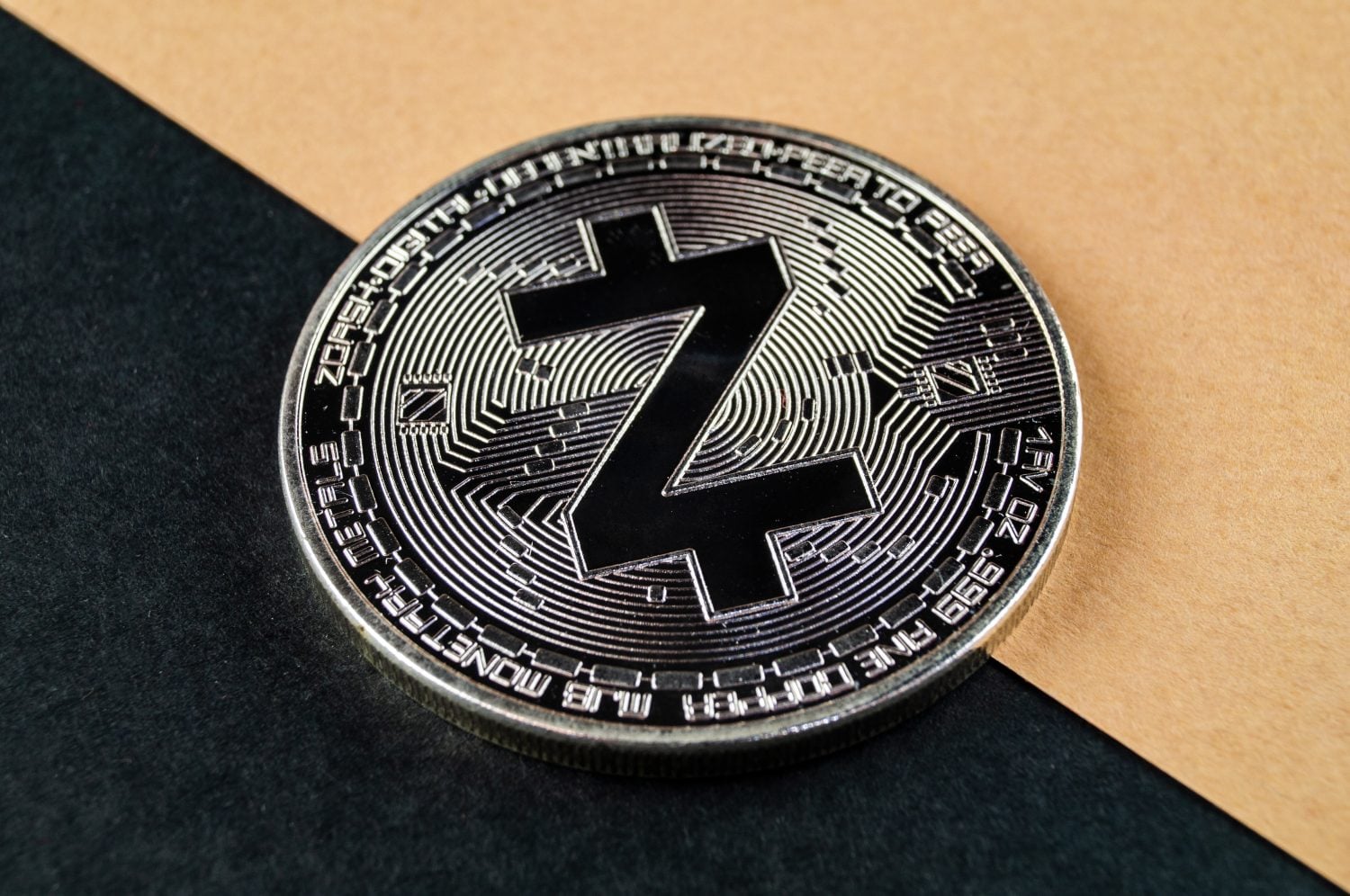
Interestingly, both Monero and Zcash recorded gains without major upgrades, announcements, or regulatory news to drive them. Instead, price action has been the clearest indicator of market sentiment.
In the last 24 hours, Monero rose by 2.3%, while Zcash gained 2.2%, with both coins up 8.4% and 8.9%, respectively, over the past 30 days. When two privacy coins rise similarly in a market where most large cryptocurrencies have stagnated, a broader trend toward privacy is likely at play. This has put Zcash in the spotlight as one of the best trades of 2026.
Monero’s Supply Schedule and Thin Market Cut Both Ways

Monero has a unique supply model known as “tail emission,” where it provides miners with a small, consistent block reward indefinitely, unlike Bitcoin, which halves its reward on a fixed schedule until new issuance eventually stops altogether.
Some investors view Monero’s ongoing issuance as a drawback since it adds to the total supply year after year. Thus, this factor does not necessarily clarify why Monero has held up better than Bitcoin.
A more compelling argument lies in Monero’s thinner market. Over the years, many exchanges have delisted privacy coins due to stricter compliance regulations, which limits where they can be traded. A thinner market means fewer participants, leading to larger price swings from smaller trading volumes. Thus, while Monero has demonstrated relative resilience, the same market conditions could amplify its decline if selling pressure arises.
Is Monero’s Proximity to Its All-Time High a Sign of Strength?
Partly yes. Monero’s stability stems from its unique position in a privacy-focused market with dedicated holders, while external news and supply factors play only a minor role. However, there’s also fragility; the smaller drop mainly reflects the limited number of sellers willing to act in this niche market, and that can shift quickly.
If the market narrative changes, we may first notice a divergence between Monero and Zcash. If Monero’s decline from its all-time high surpasses Bitcoin’s 33.9% while Zcash continues to rise, it could weaken the case for Monero maintaining its lead over Bitcoin.
Contact [email protected] for any questions or corrections.
Sam Daodu is a crypto analyst who's spent nearly a decade making blockchain understandable—no easy task when most whitepapers read like fever dreams. He writes for 24/7 Wall St., covering Bitcoin, altcoins, and crypto market analysis for investors. Before crypto, he was a tech writer (back when explaining "the cloud" was peak innovation). Since 2018, he's written for CoinTelegraph, Yahoo Finance, The Block, Cryptonews, Zypto, Rain, and more—basically anywhere people want crypto news without the headache. Sam runs MacLabs Marketing, a content agency for crypto brands tired of sounding like AI wrote their website. He also publishes free crypto education on his site for Web3 enthusiasts who think "gas fees" is a typo. When he's not writing or staring at charts, Sam's either: - Watching anime (currently convinced One Piece has better tokenomics than most altcoins) - At the gym sculpting himself into a Greek god - Listening to the music your mum warned you only bad boys listen to Connect: LinkedIn | Email | MacLabs Marketing