Bitcoin Mining Just Got 6% Harder While BTC Fell. Could Miners Start Selling?
Bitcoin miners are getting squeezed from both sides as computing demands surge and prices slip, raising fears that desperate operators could start dumping coins and accelerating the very downturn they are trying to survive.

This post may contain links from our sponsors and affiliates, and Flywheel Publishing may receive compensation for actions taken through them.

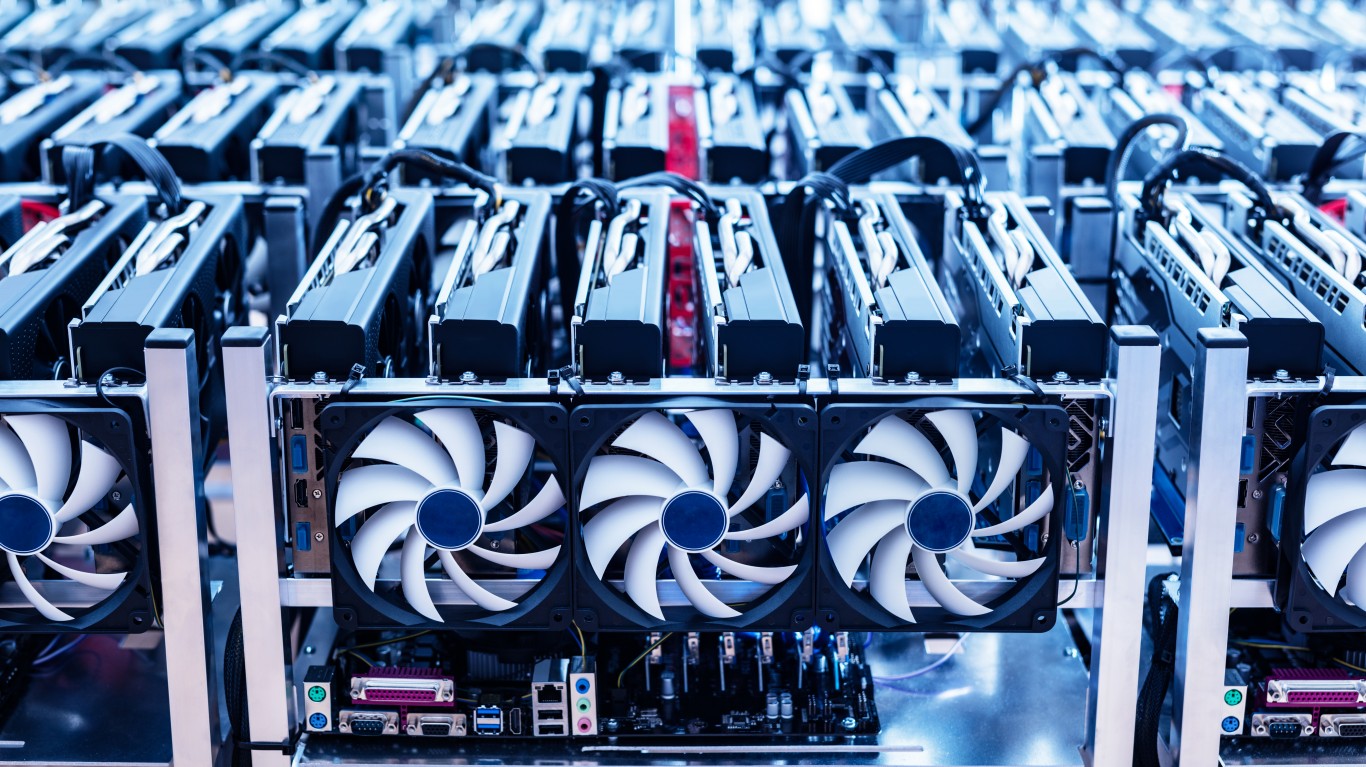
Bitcoin (CRYPTO:BTC) miners are experiencing a double blow to their earnings. Recently, Bitcoin mining difficulty—the measure of how much computing power is needed to mine a new block—increased by 5.9%, according to data from the block explorer mempool.space. At the same time, Bitcoin’s price fell roughly 4% over the two weeks leading up to October 18, 2026.
This means miners need more computing power to earn the same amount of BTC, and each coin is also worth less in dollars. Bitcoin hit a low of $79,676 on October 15, its lowest price since September 20, and is trading around $82,820 as of October 19.
Shareholders in publicly traded mining companies are already reacting to this tough situation. Over the past month, shares of MARA Holdings (NASDAQ:MARA) have plummeted by 31.8%, Riot Platforms (NASDAQ:RIOT) have fallen by 32.6%, and CleanSpark (NASDAQ:CLSK | CLSK Price Prediction) has seen a 34.3% drop— all while Bitcoin managed to rise by 6.8% during the same period. This raises the question: will higher difficulty and lower profitability push miners to sell Bitcoin in a shaky market?
Increased Difficulty Reduces Profits for Miners as BTC Price Falls

Bitcoin adjusts its mining difficulty about every two weeks to keep new blocks coming every 10 minutes, regardless of how many miners participate. If more computing power (or hashrate) joins the network, the network increases difficulty accordingly. The block reward remains fixed at 3.125 BTC plus transaction fees, so individual miners receive a smaller share of that reward when difficulty rises.
In a growing market, greater difficulty might indicate that miners are confident enough to invest in new equipment. However, falling prices can signal distress. Miners must cover their electricity costs in dollars, so those whose expenses exceed their income may need to sell some Bitcoin to pay the bills.
Relief may be on the horizon. Mempool.space projects the next difficulty adjustment at around 0.5%, suggesting new computing power is joining the network more slowly. However, this estimate can change with each new block mined.
Historically, miner sell-offs have contributed to price declines, particularly when Bitcoin fell below the operational cost of older mining equipment, leading weaker miners to run out of funds. While a 4% price drop does pressure miner margins, it doesn’t automatically force them to sell.
Why the Miner-Selling Signal Is Weaker Than It Looks

Difficulty reflects competition among miners and illustrates how much hardware is active, but it doesn’t show which miners are struggling the most. Older mining equipment faces the biggest challenges, while larger operators introducing newer, more efficient machines may still earn more coins overall.
A better measure might be hash price, which tracks daily earnings based on computing power, usually reported per petahash (a quadrillion guesses per second). Still, hash price doesn’t account for electricity costs, so the same figure could mean profits for one miner on cheap energy and losses for another with higher costs.
Tracking Bitcoin’s flow from miners to exchanges offers more direct insight. Analytics companies like CryptoQuant identify wallets believed to belong to miners and monitor the coins being moved to exchanges. However, these tags are educated estimates, and transfers can sometimes represent loan collateral or custody changes rather than outright sales. Additionally, many miners sell Bitcoin through over-the-counter transactions, which don’t register as exchange deposits.
Mining companies’ stock prices reflect different dynamics altogether. They reflect investor sentiment about profit margins and the industry’s shift toward leasing data centers to AI firms—a trend met with increasing skepticism. Thus, falling share prices don’t necessarily indicate that miners are offloading their coins.
ETF Flows Impact Bitcoin Prices More Than Miner Sales

While miners contribute a steady influx of new Bitcoin to the market, block rewards cap this supply. In contrast, US spot Bitcoin funds—including BlackRock’s iShares Bitcoin Trust (NASDAQ:IBIT)—can see significant shifts in their holdings, which can impact market prices more sharply.
For example, these funds recorded a net outflow of $82.4 million on October 16, after a staggering $261.5 million outflow just two days earlier. The largest single-day outflow since mid-September occurred on October 7, totaling $487.1 million. Conversely, funds saw a remarkable $999 million inflow on September 21 alone.
Despite recent sell-offs, cumulative net inflows still stand at $56.88 billion, indicating that ETF investors remain invested in Bitcoin, although their buying has slowed. Bitcoin has fluctuated between $79,676 and $84,262 since October 8. If it breaks below this range, miner revenue could face further pressure as miners adjust to greater difficulty.
Could Rising Bitcoin Mining Difficulty Push Miners to Sell?
In conclusion, while rising Bitcoin mining difficulty poses a limited risk of miner selling at current price levels, ETF flows in and out wield a more significant influence on market dynamics. The recent 5.9% difficulty jump, combined with the two-week price decline, certainly presents challenges, but miners don’t seem pressured to sell yet.
Contact [email protected] for any questions or corrections.
Sam Daodu is a crypto analyst and the editor of 24/7 Wall St.'s Crypto Desk, where he covers Bitcoin, XRP, Ethereum, Solana and the altcoins investors search for most. His work focuses on price levels, spot ETF flows, on-chain data and the regulatory decisions that move crypto markets, written so a first-time buyer and a seasoned trader can both use it.
Sam has written about crypto professionally since 2019 and has published more than 2,000 articles. Before joining 24/7 Wall St., he wrote for crypto media outlets and Web3 companies and ghostwrote for crypto founders and token launches. His analysis is syndicated on Yahoo Finance, MSN and AOL and has been cited by other crypto news sites. He also founded MacLabs Marketing, a content and personal branding agency for crypto founders and executives.
When he isn't reading charts, Sam is usually at the gym or watching One Piece, a series he maintains has better tokenomics than most altcoins.