Securitize, Archax and Pontoro Are All Building on Stellar. Could That Help XLM Catch Up With XRP?
Securitize, Archax, and Pontoro are all building on Stellar, but institutional activity on a blockchain does not automatically translate into token demand. Whether XLM can close any ground on XRP depends on one specific detail Securitize has yet to reveal.

This post may contain links from our sponsors and affiliates, and Flywheel Publishing may receive compensation for actions taken through them.
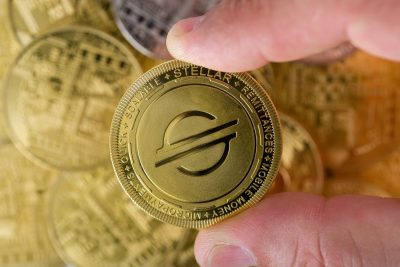
Securitize (NYSE: SECZ), Archax, and Pontoro are all developing projects on the Stellar network, yet these efforts appear to generate little direct demand for the Stellar XLM token. Securitize has announced its plans to integrate with Stellar to issue and manage tokenized financial assets. The initiative involves converting traditional assets, such as fund shares, into digital tokens.
Securitize made the announcement at the Stellar Development Foundation’s Meridian 2026 conference in Lisbon. However, Securitize’s release did not specify which funds will be involved, any dollar figures, or a launch date. As of September 30, Securitize had approximately $5 billion in tokenized securities on its platform, and Stellar is now the 17th ledger it supports. The company plans to share more details on the assets it will bring to Stellar.
Pontoro has also debuted its first Pontoro Automated Liquidity Pool on the Stellar network. Archax, a regulated digital asset exchange and custodian based in London, issues interests in this liquidity pool as permissioned tokens, meaning only approved wallets can hold them. The Stellar Development Foundation, a nonprofit organization that supports the Stellar network, collaborated with both companies on this launch and has invested in them.
Stellar (CRYPTO: XLM) shows minimal movement, trading at $0.17, up 1.0% over 24 hours. However, XLM has declined 7.6% over the past week and 26.9% over the last 30 days, while XRP (CRYPTO: XRP) trades at $1.32.
Securitize Brings the Licenses, but Its Revenue Fell 5% in the Second Quarter

Securitize’s broker-dealer arm, Securitize Markets, is registered with the SEC and is a member of FINRA. It operates an Alternative Trading System, which matches buy and sell orders in a regulated marketplace. The company also serves as a transfer agent, maintains records of security ownership, and is a registered investment adviser in the U.S., authorized under the EU’s DLT Pilot Regime.
Securitize Fund Services administers 663 active funds with a total of $24 billion in assets. Major asset managers pay Securitize for these licenses, which Stellar does not have.
In the second quarter, Securitize reported revenue of $14.4 million, down 5% from the same period last year. Tokenization revenue fell 12% to $7.8 million, while Asset Servicing, which includes fund administration, rose 3% to $6.6 million. The company posted a net loss of $21.7 million and an adjusted EBITDA loss of $5.5 million, a profit measure that excludes interest, taxes, and depreciation.
As it entered the third quarter, Securitize had around $350 million in cash and no debt. However, the company does not disclose revenue figures by blockchain.
Stablecoin Settlement Means Tokenized Funds Need Little XLM

In its release, Securitize did not specify a settlement asset, the token used to exchange tokenized fund shares. Tokenized funds on public blockchains can settle using dollar stablecoins, letting issuers operate on Stellar without buying significant amounts of XLM beyond the network’s nominal costs.
Securitize’s previous collaboration with Ripple illustrates this trend: they developed an off-ramp that let holders of certain tokenized Treasury funds, managed by BlackRock (NYSE: BLK | BLK Price Prediction) and VanEck, cash out their shares using Ripple’s U.S. dollar stablecoin. Because the transaction settled in a stablecoin, it did not prompt direct purchases of XRP.
Securitize has reasons to promote every blockchain it partners with. According to CEO Carlos Domingo, Stellar has become the fourth-largest ecosystem for tokenizing traditional assets, based on rwa.xyz data as of October 22, which shows only three networks surpass Stellar in this regard.
While Stellar has seen some institutional activity—Franklin Templeton (NYSE: BEN) operates a tokenized money market fund on the network, and MoneyGram uses the network for transactions daily—DTCC, the primary clearing and settlement organization in the U.S., plans to implement tokenized assets on Stellar, with DTC-settled assets expected in 2027. However, Franklin Templeton, MoneyGram, and DTCC have not indicated any plans to buy or hold XLM outside of network operations.
Stellar charges minimal amounts in XLM for transactions, and every account must maintain a small minimum balance, known as a reserve, to remain active. A billion-dollar fund operating on Stellar requires only a small amount of XLM, resulting in minimal direct demand for the token. Similarly, Pontoro’s liquidity pool generates even less demand because only approved wallets can hold the tokens, and no secondary market exists.
XRP Leads XLM by Size, and XLM Trades Below Its Averages

XRP’s advantage over XLM largely stems from its size. XRP’s market cap is about $83 billion, while XLM’s is around $6 billion, placing XRP fifth and XLM twentieth in market-cap rankings. This year, XLM is down 15.6% versus XRP’s 28.3% drop, suggesting XLM has fared slightly better but still lags significantly in overall value.
XLM trades below its 20-day average of $0.18, its 50-day average of $0.19, and its 200-day average of $0.18.
Can Stellar XLM Catch Up With XRP After the Securitize Integration?
These announcements benefit Securitize, Archax, and Pontoro first, and they help XLM demand only indirectly. XLM gets a stronger profile and a small boost in fee and reserve demand, so these announcements alone are unlikely to close the gap with XRP.
If Securitize’s first Stellar asset announcement names XLM as a settlement or collateral asset, or if Securitize starts reporting tokenized assets by chain in its third-quarter results, the news could move XLM’s price. If the first fund settles in stablecoins and XLM keeps closing below its 50-day average of $0.19, the integration shows no measurable lift for XLM.
Contact [email protected] for any questions or corrections.
Sam Daodu is a crypto analyst and the editor of 24/7 Wall St.'s Crypto Desk, where he covers Bitcoin, XRP, Ethereum, Solana and the altcoins investors search for most. His work focuses on price levels, spot ETF flows, on-chain data and the regulatory decisions that move crypto markets, written so a first-time buyer and a seasoned trader can both use it.
Sam has written about crypto professionally since 2019 and has published more than 2,000 articles. Before joining 24/7 Wall St., he wrote for crypto media outlets and Web3 companies and ghostwrote for crypto founders and token launches. His analysis is syndicated on Yahoo Finance, MSN and AOL and has been cited by other crypto news sites. He also founded MacLabs Marketing, a content and personal branding agency for crypto founders and executives.
When he isn't reading charts, Sam is usually at the gym or watching One Piece, a series he maintains has better tokenomics than most altcoins.