You Earn $400K and Hand the IRS 35%. These 3 ETFs Help You Keep More
Congratulations, you cleared $400,000 this year. Now meet your silent partner: the IRS, who is taking 35% of every dollar you earn above the top-bracket threshold, plus a slice of your interest income, your short-term gains, and your non-qualified dividends.…

This post may contain links from our sponsors and affiliates, and Flywheel Publishing may receive compensation for actions taken through them.
Congratulations, you cleared $400,000 this year. Now meet your silent partner: the IRS, who is taking 35% of every dollar you earn above the top-bracket threshold, plus a slice of your interest income, your short-term gains, and your non-qualified dividends. At your income level, where you park your money matters almost as much as what you earn on it.
Three exchange-traded funds stand out for high-bracket investors building a taxable brokerage account: the iShares National Muni Bond ETF (NYSEARCA:MUB), the Vanguard Tax-Exempt Bond ETF (NYSEARCA:VTEB), and the Vanguard S&P 500 ETF (NYSEARCA:VOO). Together they give you tax-free income, tax-free income at a rock-bottom cost, and tax-efficient equity growth, in that order.
The Tax Math That Should Keep You Up at Night
For tax year 2026, the top federal rate of 37% kicks in once a single filer crosses $640,600 in taxable income, or $768,700 for married couples filing jointly. Even if you sit a bracket lower, the 35% layer starts at $256,225 single. A 10-year Treasury currently pays roughly 4.40%. After federal tax, you keep barely more than two-thirds of that. The pitch for the funds below is brutally simple: reduce the interest income flowing to the federal government.
MUB: The Anchor of a Tax-Aware Bond Sleeve
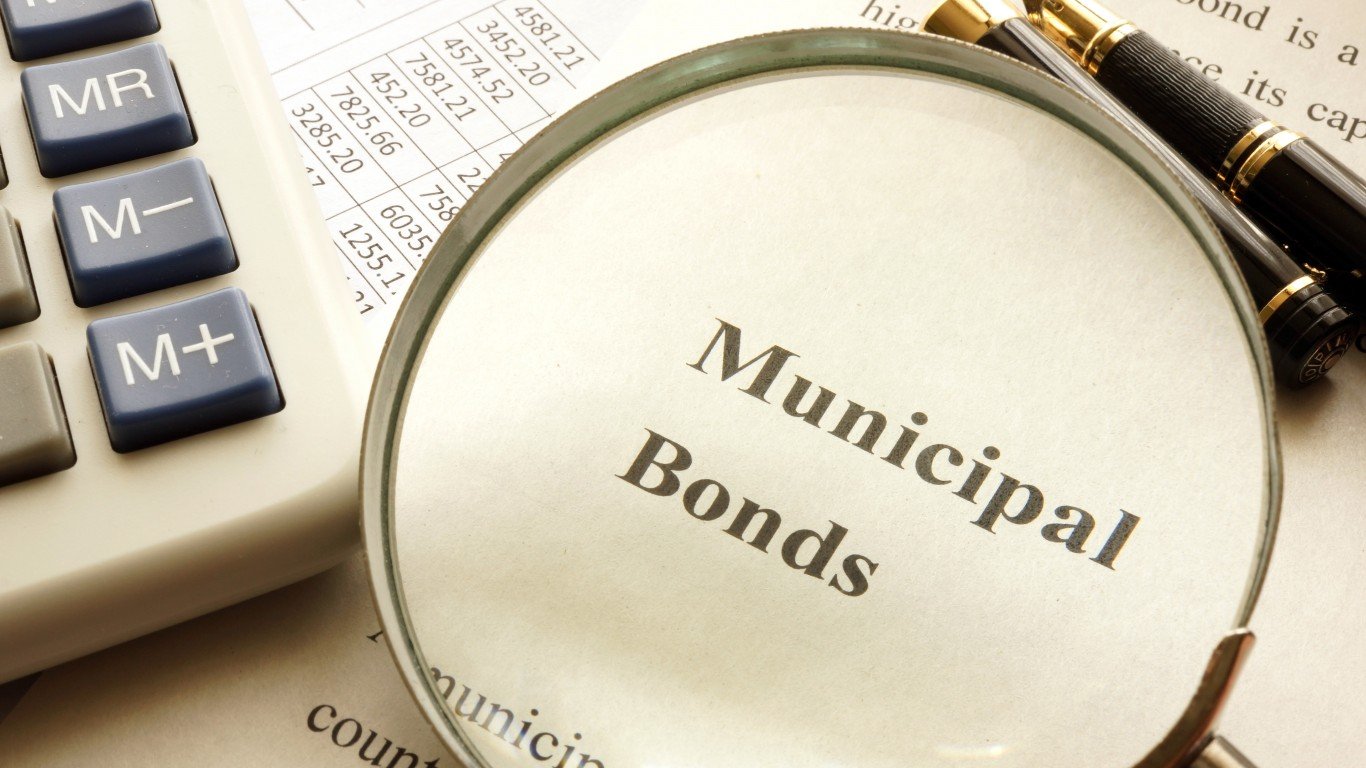
MUB is the largest national municipal bond ETF on the market. It holds investment-grade munis issued by states, cities, school districts, and authorities across the country, tracking the ICE AMT-Free US National Municipal Index. Income from those bonds is generally exempt from federal tax, which is exactly the leverage point a 35% earner needs.
The expense ratio is 0.05%. That means $9,995 of every $10,000 you invest is actually working for you, with $5 going to BlackRock. MUB pays monthly, and 2026 distributions have clustered tightly between $0.279049 and $0.29222 per share, a predictable income stream you can pencil into your budget. The fund trades at $107.71 and has returned 6.59% over the past year on a total-return basis, with a 1.89% gain year to date.
VTEB: Vanguard’s Cheaper Mirror Image
VTEB does the same job from the other side of the index aisle. It is Vanguard’s broad national tax-exempt bond ETF, holding thousands of investment-grade munis and distributing federally tax-free interest monthly. The fund changes hands near $50.64 and has actually edged MUB on total return, up 6.96% over the past year and 2.12% year to date.
Why own both? Diversification of index methodology and issuer weighting, and the option to harvest tax losses by swapping between two near-identical funds without triggering a wash sale. If you are deploying a six-figure bond allocation, splitting it across MUB and VTEB is a cleaner setup than putting it all in one ticker.
VOO: Tax-Efficient Growth You Already Wanted
Munis address the income side. VOO addresses the wealth-building side. The fund tracks the S&P 500, charges a published expense ratio of 0.03%, and is structurally one of the most tax-efficient vehicles in retail finance. The ETF wrapper lets Vanguard wash out embedded capital gains through in-kind redemptions, so unlike an actively managed fund, VOO rarely pumps year-end capital gains distributions into your 1099. Its dividends are largely qualified, which means they are taxed at long-term capital gains rates, not your ordinary 35%.
Performance has been the reward for that patience. VOO trades at $681.01, up 21.9% over the past year and 316.86% over the past decade.
The Trade-Off You Need to Accept
None of this is free. Munis carry interest-rate risk and credit risk, and their tax-equivalent yields look less compelling if your state already exempts Treasury interest or if you drop into a lower bracket. VOO is fully exposed to the S&P 500, and the same structure that limits capital gains distributions does nothing to limit drawdowns. At 37%, the cost of ignoring tax location is far higher than the cost of accepting the tax, market, and duration risks these three funds carry. For investors who structure a taxable account around these vehicles, the IRS becomes a smaller partner in the year.
Contact [email protected] for any questions or corrections.
I am a long time investor and student of business, and believe finding good companies that can become great investments is the best game on earth. After 20 years of writing and researching the public markets it is clear that individuals have never had more tools and information to take control of their financial lives. From ETFs and $0 commissions to cryptos and prediction markets there has never been a greater democratization of access to investing.
I write to help people understand the investments available to them so they can make the best choice for their portfolio, whether they're starting out or looking for income in retirement.