Vanguard’s Dividend ETF Is Beating Its Growth ETF by 8 Points. VUG Holders Picked the Wrong Vanguard Fund.
Vanguard's quietest fund is quietly outperforming its most popular one, and the reason comes down to a style bet most investors never realized they were making.

This post may contain links from our sponsors and affiliates, and Flywheel Publishing may receive compensation for actions taken through them.

VUG has spent 2026 losing a quiet race to the Vanguard fund most of its holders barely think about. The Vanguard Growth ETF (NYSEARCA:VUG) is up roughly 10% year to date, while the Vanguard Dividend Appreciation ETF (NYSEARCA:VIG) has returned about 12%, a gap that would have felt unimaginable in any of the past ten calendar years.
The gap is smaller than the eight points some headlines have suggested, but the direction is what matters. VUG holders are living through the first stretch in a decade in which the growth style has cost them measurable returns relative to a boring dividend index within the same fund family.
Most of them never chose the style. They chose Vanguard and growth because growth had won every argument for a decade running.
The Style Bet You Never Made
VUG’s top ten positions are roughly 65% of the fund, with NVIDIA (NASDAQ:NVDA | NVDA Price Prediction) at 13.3% and Apple (NASDAQ:AAPL) at 12.3%. Technology and adjacent growth sectors account for the overwhelming majority of the portfolio.
That concentration is the whole explanation for the fund’s decade of outperformance and for this year’s shortfall. There is no separate stock-picking story to tell.
When an investor bought VUG, they were making a bet that long-duration earnings would continue to be rewarded relative to near-term cash flows. Nothing on the fact sheet frames the purchase that way.
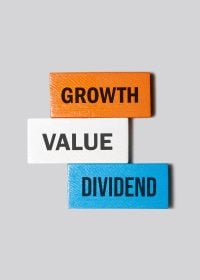
The Dividend Appreciation ETF sits at the other end of the same shelf, screening for mature businesses paying rising dividends today (the same 50-year-streak profile we ranked by valuation in a free Dividend Kings report). Owning one instead of the other is a style decision worth several points of annual return, and most holders never made it consciously.
Why the Rotation Happened
Sovereign bond yields have pushed toward multidecade highs, compressing the multiple the market will pay for earnings that arrive far in the future.
VUG owns almost nothing but long-duration earnings. The megacap technology names that dominate the fund derive most of their present value from cash flows expected years out, which is precisely the profile a higher discount rate punishes hardest.
The Dividend Appreciation ETF holds the opposite profile: businesses whose value lies mostly in a near-term dividend stream, backed by decades of payout history. Higher rates barely touch that math.
This dynamic persists as long as rates stay where they are, which has been the base case for most of the year, with no recession or tech blowup required.
Who Should Still Hold VUG
VUG remains the right holding for an investor who genuinely wants concentrated exposure to American growth leaders and has a horizon long enough to ride out multi-year style droughts. The 0.03% expense ratio is close to free, and the ten-year record of roughly 412% still speaks for itself.
It is the wrong holding for anyone who bought it thinking it was a diversified US equity fund. A portfolio already heavy in company stock, tech-tilted 401(k) options, or individual mega-cap positions is doubling down every time it adds to VUG.
The practical move for a drifted holder is to stop adding to VUG rather than to sell it. New contributions can be routed into VIG, a total-market fund, or a high-dividend cousin like VYM until the style tilt across the whole portfolio evens out. Handled that way, the choice becomes a rebalancing decision rather than a market call, which is the only version of it a long-term investor should be willing to make.
Contact [email protected] for any questions or corrections.
Omor Ibne Ehsan is a writer at 24/7 Wall St. He is a self-taught investor with a focus on growth, cyclical, and dividend equities that have strong fundamentals, value, and long-term potential. He also has an interest in high-risk, high-reward investments such as penny stocks.