VOO’s $1 Trillion Problem: Why SpaceX Stays Out Until 2027
SpaceX is now publicly traded and sitting just outside the reach of the world's largest ETF, and the rulebook keeping it out raises real questions about what VOO holders should do while they wait.

Vanguard’s S&P 500 ETF (NYSEARCA:VOO) crossed $1 trillion in assets earlier this year, the first ETF ever to do so. None of that capital can own SpaceX today, and won’t be able to for many more months.
The reason is a rulebook. VOO tracks the S&P 500, and that index is overseen by a committee at S&P Dow Jones Indices that decides which US companies qualify.
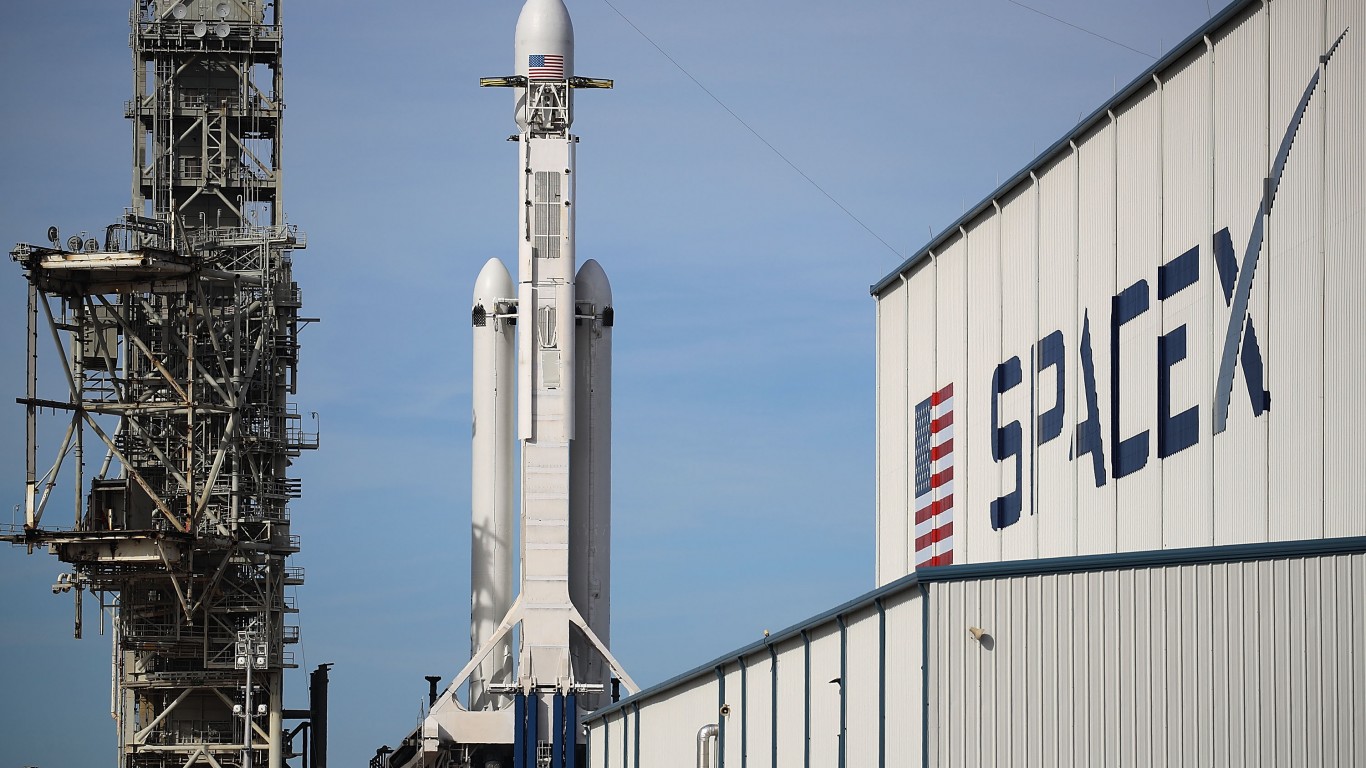
SpaceX began trading on June 12, 2026, and now sits outside every mainstream index fund by design. VOO holders have zero exposure despite the fund’s scale.
The question is whether that gap matters, and if so, what to do. The delay likely protects VOO holders, though the mechanics deserve scrutiny.
Rulebook Keeping SpaceX Out of the Index
The S&P 500 uses hard eligibility gates. A candidate must trade publicly for at least 12 months, report a GAAP profit in its latest quarter and across the previous four quarters combined.
It also needs at least 10% of its shares available to public investors. A committee then decides at its discretion among eligible names.
S&P consulted the industry on relaxing those thresholds for enormous new listings and ultimately refused to change them, so the gate stays where it is even for a name of SpaceX’s scale.
Because SpaceX started trading in June, it cannot become eligible before June 2027. That is the earliest possible date.
Even then, admission is discretionary. VOO owns the same holdings as the index, so the fund cannot front-run the committee.
Where SpaceX Fails Two of Three Tests
Seasoning resolves with time. Profitability and float are structural, and both currently disqualify SpaceX.
The company reported a $4.94 billion net loss in 2025. That figure alone bars inclusion under the current earnings test.
The float problem is thornier. Roughly 3% to 4% of its equity was publicly available at the IPO, well under the 10% minimum.
Elon Musk controls a large block, and existing investors sold sparingly. Unless secondary offerings expand the float, the hurdle stays regardless of earnings.
Both problems are fixable, although neither will be resolved on the market’s timetable, which is why 2027 is the earliest realistic timeline for conversation.
What VOO Holders Should Actually Do
One option is to buy SpaceX directly and treat it as a satellite around a VOO core. That accepts single-stock risk on a company trading near a multitrillion valuation on roughly $18 billion in trailing sales.
A second option is a rules-lighter index fund. Some total-market and growth ETFs admit new names faster than the S&P 500 committee does, though most still require reasonable float.
The third is patience. VOO owns the eligible US large-cap market cheaply at a 0.03% expense ratio while returning about 20% over the past year and 83% over five years.
Reddit sentiment on VOO has drifted toward bearish readings amid low activity, and one active thread asks where the next trillion-dollar company will come from. Fair question, though VOO is built to answer it late.
For most long-term index holders, staying put and sizing any SpaceX exposure separately is consistent with how VOO is designed to work.
Why the Delay Is Worth Owning
The rules exist because index funds are default portfolios for millions of Americans, and defaults should be conservative. Profitability, float, and seasoning filter out companies that have yet to prove they belong in a trillion-dollar vehicle.
Relaxing thresholds for SpaceX would create precedent for every large private company that lists next. The committee’s refusal preserves the index’s meaning.
VOO holders effectively hire that committee to enforce discipline they might not enforce on their own, which is part of what makes a default portfolio a default in the first place.
When SpaceX earns its way in, VOO will hold it at whatever float-adjusted weight the methodology assigns. That weight will represent a small slice of the fund, and it may start modest.
Owning SpaceX through VOO in 2028 at a methodology-assigned weight is a cleaner outcome for a core index holder than reaching for it today at any weight, because the position will reflect the same discipline that governs every other name in the fund.
Contact [email protected] for any questions or corrections.
Omor Ibne Ehsan is a writer at 24/7 Wall St. He is a self-taught investor with a focus on growth, cyclical, and dividend equities that have strong fundamentals, value, and long-term potential. He also has an interest in high-risk, high-reward investments such as penny stocks.