The Fed Held Rates. Here’s What That Means for the Yield on Your T-Bill ETF

This post may contain links from our sponsors and affiliates, and Flywheel Publishing may receive compensation for actions taken through them.
The Federal Reserve left interest rates unchanged at its October 28, 2026 meeting. If you keep cash in a Treasury bill ETF, that means your income remains about where it is. Per Federal Reserve data via FRED, the federal funds target range is 3.75% to 4.00% as of November 9, 2026. BlackRock iShares reports a 30-day SEC yield of 3.83% as of November 5, 2026 for its main T-bill fund.
CNBC, Reuters, and Bloomberg all reported the hold. The federal funds rate is what banks charge each other to borrow overnight, and it sets almost every short-term yield in the country, including what T-bill ETFs pay.
Rates Are on Hold Right After a Hike
The Fed’s most recent move was a rate increase. Effective September 17, 2026, the range rose from 3.50% to 3.75% up to today’s level, per FRED. The lower limit had been 3.50% since December 11, 2025.
That timeline explains why your fund can show two different yields.
Why T-Bill ETF Yields Follow the Fed So Closely
A Treasury bill is a short-term loan to the U.S. government, and these ETFs hold bills that mature within weeks or a few months. When old bills mature, the fund buys new ones at whatever rate is current, so its yield adjusts quickly. You also avoid the big price swings that long-term bond funds go through.
Weighted average maturity tells you how long, on average, until a fund’s holdings pay back. It shows how short these portfolios are:
- iShares lists 0.11 years as of November 6, 2026 for the iShares 0-3 Month Treasury Bond ETF (NYSEARCA:SGOV).
- State Street Global Advisors lists an average maturity of 0.14 years as of November 6, 2026 for the State Street SPDR Bloomberg 1-3 Month T-Bill ETF (NYSEARCA:BIL).
- ProShares reports 48.17 days as of October 30, 2026 for the ProShares GENIUS Money Market ETF (NYSEARCA:IQMM).
Your Fund Shows Two Yields. Read the Right One
The SEC yield is a standardized figure, after fees, based on what the fund’s holdings earned over a recent period. It’s the closest thing to a measure of current income. A trailing yield looks back. It shows what the fund actually paid out over the past year.
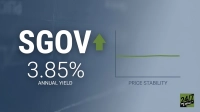
For SGOV, iShares reports a 30-day SEC yield of 3.83% and a 12-month trailing yield of 3.63%, both as of November 5, 2026. The fund pays distributions monthly.
State Street Global Advisors reports two yields for BIL. The 30-day SEC yield is 3.84% (ProShares reports the same figure for IQMM), and the fund distribution yield, covering the past 365 days, is 3.67%, both as of November 6, 2026. It also pays monthly.
For IQMM, ProShares reports an SEC 7-day yield of 3.84%, matching State Street Global Advisors’ BIL figure, as of October 30, 2026, with distributions paid weekly. ProShares designed the fund to meet the GENIUS Act requirements for stablecoin reserves.
So why are the backward-looking numbers lower? Per FRED, the target range sat lower for much of the past year, before the September 17, 2026 increase. Trailing yields still include those months of lower rates. The SEC yields reflect bills bought at today’s higher rates, which is why they sit close to the current target range. If you want to know what your fund earns right now, the SEC yield is the better guide, and both numbers will move if the Fed changes rates.
What a Hold Means for Your Cash
With rates unchanged, T-bill ETF yields should remain near current levels until the Fed moves again. They aren’t guaranteed. These funds also aren’t bank deposits, so FDIC insurance doesn’t cover them. If the Fed cuts rates later, these funds’ yields would fall as maturing bills get replaced with lower-paying ones.
Fees explain why similar funds pay slightly different yields, because expenses come straight out of your income. iShares lists SGOV’s expense ratio at 0.09%. State Street Global Advisors lists BIL’s gross expense ratio at 0.1352%. ProShares lists two expense ratios for IQMM. The net expense ratio is 0.15%, thanks to a contractual fee waiver through January 31, 2027, and the gross expense ratio is 0.20% before the waiver.
Picking a Fund Matters More Than Timing the Fed
A Fed hold keeps T-bill ETF yields close to where they are now. Your income comes down to two things you control: what you pay in fees and whether you’re reading the right yield.
Check the sponsor’s page for any T-bill fund. Look for the 30-day SEC yield (or the 7-day yield for a money market fund) and the expense ratio. Then compare those to the current federal funds target range of 3.75% to 4.00%. When the Fed eventually changes that range, the SEC yield will show it first.
Contact [email protected] for any questions or corrections.
Ryne Mauck is an investment writer covering exchange-traded funds, retirement planning, and portfolio strategy. Through his work at 24/7 Wall St. and other investment platforms, including Seeking Alpha, he aims to provide clear, research-driven insights that help investors make more informed decisions while maintaining a long-term approach to investing.
Ryne holds a B.Sc. in Finance and an M.A. in Political Science. He is a formerly registered Municipal Advisor Representative and has passed the Series 50, Series 63, and Series 65 exams. His articles are not intended to be, nor should they be interpreted as, financial advice.