You’re 62 With $400K Earning 0.6% at the Bank. These 3 ETFs Put It to Work Before You Retire
At 62 with $400,000 earning next to nothing, you are not playing it safe. You are watching inflation quietly drain your future while the market offers a straightforward fix most pre-retirees walk right past.

This post may contain links from our sponsors and affiliates, and Flywheel Publishing may receive compensation for actions taken through them.

You are 62 years old. You have $400,000 parked in a bank account earning 0.6%, and every month it sits there is a month it fails you. Meanwhile, the FDIC national average on a 12-month CD is 1.68%, the Fed Funds upper bound sits at 3.75%, and a 26-week Treasury bill yields 3.99%. Your cash is asleep in a market that is very much awake. Three ETFs can fix that before you clock out for the last time: Vanguard S&P 500 ETF (NYSEARCA:VOO) for growth, Schwab U.S. Dividend Equity ETF (NYSEARCA:SCHD) for income, and iShares 0-3 Month Treasury Bond ETF (NYSEARCA:SGOV) for the cash sleeve that finally earns its keep.
The Real Problem: Time, Not Timing
At 62, you have roughly two to three decades of retirement to fund. Sitting in a 0.6% account carries hidden risk. It is a slow bleed against inflation. The goal is straightforward. You need a portfolio that grows, pays, and protects at the same time. That is exactly what these three funds do when you split the job among them.
VOO: The Growth Engine
VOO is Vanguard’s S&P 500 tracker, and it is about as cheap as investing gets. The expense ratio is 0.03%, which means on every $10,000 you invest, roughly $3 a year goes to Vanguard and the rest stays working for you. Over the last twelve months, VOO returned 17.81%, and over five years it is up 80.11%. Ten-year total return sits at 302.37%.
For a pre-retiree, VOO handles the growth mandate. You are not retiring at 62 and cashing out on day one. Money you will not touch for 10-plus years belongs in equities, and owning the 500 largest U.S. companies through the cheapest wrapper available is the default answer most professionals would give you.
SCHD: The Paycheck Machine
SCHD is where your income sleeve lives. It screens for quality U.S. dividend payers and holds names like Bristol-Myers Squibb at 4.26%, Merck at 4.14%, ConocoPhillips at 4.10%, Lockheed Martin at 4.07%, and Chevron at 4.04%. That is a defensive lineup across healthcare, energy, defense, and consumer staples, and the top 10 positions represent roughly 40.57% of the fund.
The expense ratio is 0.06%. SCHD paid $1.048 per share in trailing 12-month distributions and delivers those checks quarterly. Total one-year return is 24.17%, with a ten-year return of 221.09%. With $71.6 billion in assets, this is a mainstream, liquid, boringly effective way to convert equity capital into recurring income you can eventually pair with Social Security.
SGOV: Your Cash, Finally Working
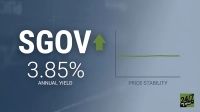
SGOV is the fix for the specific insult you are living with right now. It holds U.S. Treasury bills maturing in 0 to 3 months. The expense ratio is 0.09%, and because it is anchored to the front end of the yield curve, its price barely moves. Over the past year, SGOV’s price is up just 3.84%, with a one-week change of 0.05%. That is the point. It sits still and pays you.
SGOV distributes monthly. The July 1, 2026 payment was $0.295765 per share, and trailing 12-month distributions total $3.820317 per share. That yield leans on the 3.83% 13-week T-bill rate, roughly 6.2 times higher than the 0.6% you are earning today. Same liquidity, same overnight-safe risk profile, dramatically more income.
The Trade-Off
None of this is free. VOO will fall hard in a bear market. Retirees in 2008 watched the S&P 500 drop by roughly half, and a 62-year-old cannot ignore that. SCHD’s payouts are not guaranteed and have historically been lumpy: quarterly amounts recently ranged from $0.2488 to $0.8241. SGOV’s yield floats with the Fed. If the 3.75% Fed Funds rate starts falling, so will your monthly SGOV check.
The right mix is personal, and the principle is universal: a growth engine, an income engine, and a cash sleeve that actually pays are the three jobs your $400,000 needs to do before you retire. Right now, only the bank is being paid, and it is being paid by you.
Contact [email protected] for any questions or corrections.
Austin Smith is a financial publisher with over two decades of experience as an investor, analyst, and advisor. He covers stocks, ETFs, Artificial intelligence and personal finance for 24/7 Wall St. Previously, he spent over a decade at The Motley Fool as a senior editor for Fool.com, portfolio advisor for Millionacres, and launched The Ascent to help reader take control of their personal finances.
His work has been featured on Fool.com, NPR, CNBC, USA Today, Yahoo Finance, MSN, AOL, Marketwatch, and many other publications. He is as an advisor to private companies, and co-hosts The AI Investor Podcast with Eric Bleeker.
When not looking for investment opportunities, he can be found skiing, running, or playing soccer with his children. Learn more about Austin's investment approach here.