2 Farm ETFs Own What Every Grocery Store Depends On

This post may contain links from our sponsors and affiliates, and Flywheel Publishing may receive compensation for actions taken through them.
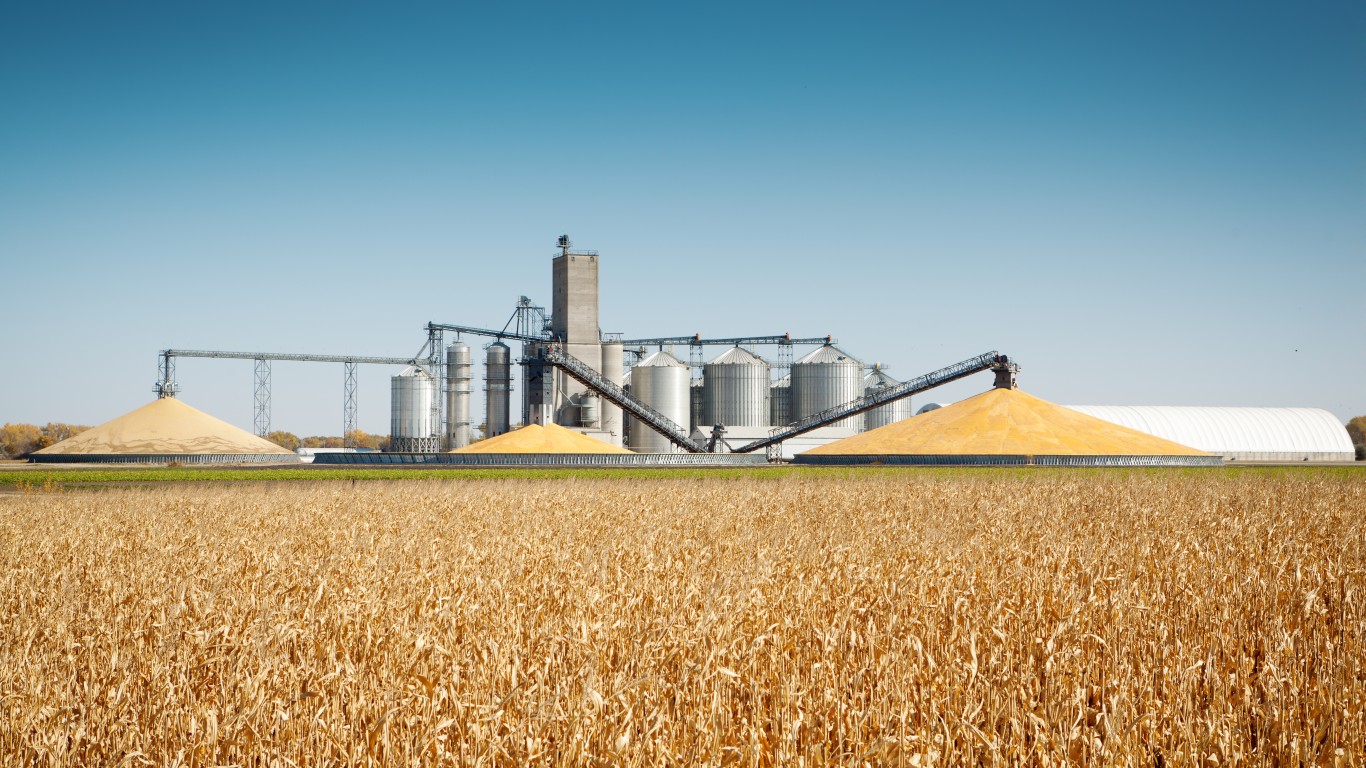
A box of cereal, a bag of flour, and a pack of chicken thighs all trace back to the same few inputs: seed, fertilizer, machinery, and a grain processor. The VanEck Agribusiness ETF (NYSEARCA:MOO) and the iShares MSCI Agriculture Producers ETF (NYSEARCA:VEGI) own the companies that supply them. From November 17, 2025, through November 18, 2026, with distributions reinvested, MOO returned about 18% and VEGI about 15%. Each outpaced the 11% from the iShares Core S&P 500 ETF (NYSEARCA:IVV).
That one-year chart flatters both funds. Over five years starting November 18, 2021, MOO lost about 5%, and VEGI gained 17%, while IVV gained 67%. Both trailed the S&P 500 badly, so the recent run says little about the long-term record.
Following a Grocery Cart Back to the Farm
Both funds own the same core supply chain, weighted very differently. The weights below use MOO’s holdings as of June 30, 2026[1] and VEGI’s as of August 31, 2026[2].
- Meat and seafood. Tyson Foods processes chicken, beef, and pork and made up about 4% of MOO. MOO also owns Pilgrim’s Pride in poultry, Cal-Maine Foods in eggs, and Mowi in farmed salmon. One step further back, Zoetis sells vaccines and medicines for livestock and accounted for about 5% of MOO. VEGI holds smaller stakes in several of the same protein names.
- Flour, cooking oil, and sweeteners. Archer-Daniels-Midland and Bunge buy, store, ship, and crush grains and oilseeds into ingredients that food makers use. ADM was about 5% of MOO and 7% of VEGI, and Bunge was roughly 3% of each.
- Fertilizer. Nutrien produces potash, nitrogen, and phosphate and runs a farm retail network. It made up about 6% of both funds. CF Industries, a nitrogen producer, was about 4% of each.
- Seeds and crop protection. Corteva (NYSE:CTVA | CTVA Price Prediction) develops seed genetics and crop chemicals, and it was about 9% of MOO and 10% of VEGI. Bayer, whose crop science arm sells seeds and herbicides, was MOO’s largest position at about 9%.
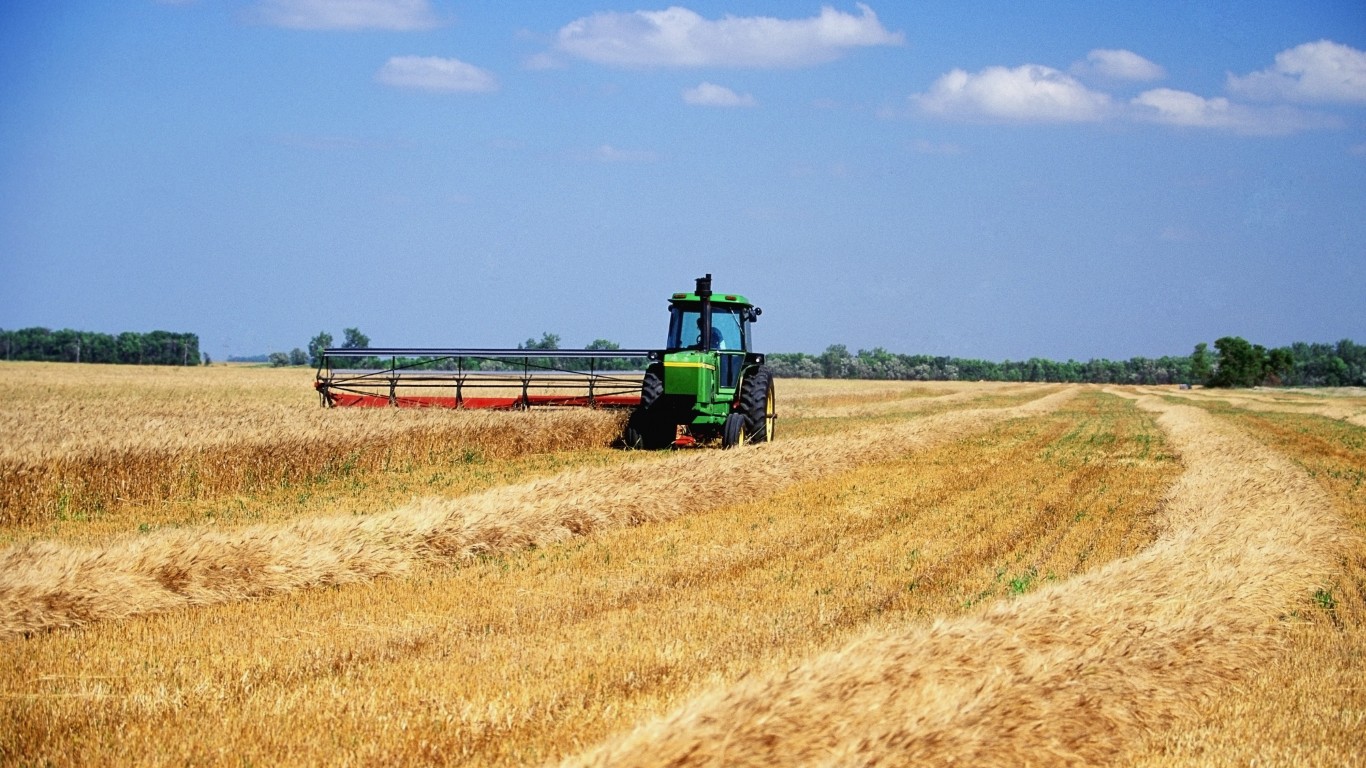
- Tractors and combines. Deere (NYSE:DE) builds the machines that plant, spray, and harvest. It was about 9% of MOO and 28% of VEGI. Kubota, a Japanese equipment maker, was about 5% of MOO and 3% of VEGI.
The overlap at the top is heavy. What separates these funds is how much each leans on any one company.
MOO Offers the Broadest Map of the Food Chain
MOO tracks the MVIS Global Agribusiness Index and held 50 positions at midyear, with about $944 million[1] in net assets. Its three largest holdings, Bayer, Corteva and Deere, each sat near 9%.
Breadth is the case for MOO. Its top ten includes Zoetis and Tyson, which puts animal health and meat processing beside the crop and equipment names. Livestock demand and crop demand do not always peak together, so that mix spreads the fund’s sources of return across more of the food system.
Bayer is the trade-off. MOO’s largest position spent years under litigation pressure tied to its Roundup weedkiller, and investors here carry that exposure at full weight. The five-year loss is the other caution, since the fund has gone half a decade without paying back holders.
As of Nov. 18, shares traded near $81. The trailing yield is about 2.2%, delivered in one distribution over the past year. A single annual payment is too irregular to plan monthly spending around.
VEGI Rises and Falls With Deere
VEGI tracks the MSCI ACWI Select Agriculture Producers Index and listed 157 holdings at the end of August. That count exaggerates its diversification. Deere alone made up 28% of net assets, and Corteva added 10%.
In practice, VEGI acts partly like a position on one equipment maker. Deere’s sales follow farm income. When crop prices are strong, farmers replace tractors and combines, and when incomes fall, they delay those purchases. VEGI owners take on that cycle directly.
That concentration is also why VEGI wins a spot as the less obvious pick. Investors who view Deere as the strongest farm equipment franchise get it at a much heavier weight than MOO offers, plus a long tail of fertilizer, food, and plantation stocks from India, Saudi Arabia, and Malaysia. Its five-year gain of 17% beat MOO’s result, though it still lagged IVV by a wide margin.
The fund is much smaller, with about $156 million[2] in net assets. Its trailing yield is about 2.0% from two payments, and the larger one supplied 58% of the year’s total, so income arrives unevenly.
Weather, Trade and Currency Can Hit Both Funds
Crop prices and farm incomes sit underneath nearly every holding. When grain prices slide, farmers buy less equipment, apply less fertilizer and trade down on seed. Drought, floods, and disease can swing crops, and with them demand for inputs and the volumes processors handle.
Trade policy matters just as much. Tariffs and retaliation can close export markets for American crops, which pressures grain handlers like ADM and Bunge and cuts the buying power of the farmers who purchase Deere machines and Nutrien fertilizer.
Foreign exposure adds another layer. Fund filings list Bayer under a German[3] security identifier, Kubota under a Japanese one, and Mowi under a Norwegian one. When the dollar strengthens, those shares are worth less to a U.S. investor even if their local prices hold steady, and overseas markets carry their own political and regulatory risks.
Finally, a few large companies drive each fund, so a stumble at one can weigh heavily on returns.
Matching Each Fund to the Right Investor
MOO suits long-term investors seeking the widest reach across the food chain, including meat and animal health, with no single holding much above 9%. VEGI fits investors comfortable with Deere steering more than a quarter of results in exchange for a heavier tilt toward equipment and seeds. Either way, consider the fact that both trailed the S&P 500 over five years, and track farm incomes and trade policy, which set the pace for orders at Deere, Nutrien and Corteva.
Contact [email protected] for any questions or corrections.
Ryne Mauck is an investment writer covering exchange-traded funds, retirement planning, and portfolio strategy. Through his work at 24/7 Wall St. and other investment platforms, including Seeking Alpha, he aims to provide clear, research-driven insights that help investors make more informed decisions while maintaining a long-term approach to investing.
Ryne holds a B.Sc. in Finance and an M.A. in Political Science. He is a formerly registered Municipal Advisor Representative and has passed the Series 50, Series 63, and Series 65 exams. His articles are not intended to be, nor should they be interpreted as, financial advice.