Warren Buffett Told His Trustee to Put 90% of His Wife’s Inheritance in One S&P 500 Fund and Named Vanguard. On $500,000, VOO Costs $150 a Year and SPY Costs $472.50

This post may contain links from our sponsors and affiliates, and Flywheel Publishing may receive compensation for actions taken through them.

The State Street SPDR S&P 500 ETF Trust (NYSEARCA:SPY) is the oldest and most familiar way to own the S&P 500. Plenty of retirement accounts hold SPY for that reason. One ticker buys 500 large U.S. companies with no stock picking. SPY launched in January 1993 as the first ETF listed in the United States, and it still does its job well. Yet the author of the 2013 Berkshire Hathaway (NYSE:BRK-B | BRK-B Price Prediction) shareholder letter outlined a plan for his own family that indirectly points to a cheaper fund tracking the same benchmark: the Vanguard S&P 500 ETF (NYSEARCA:VOO).
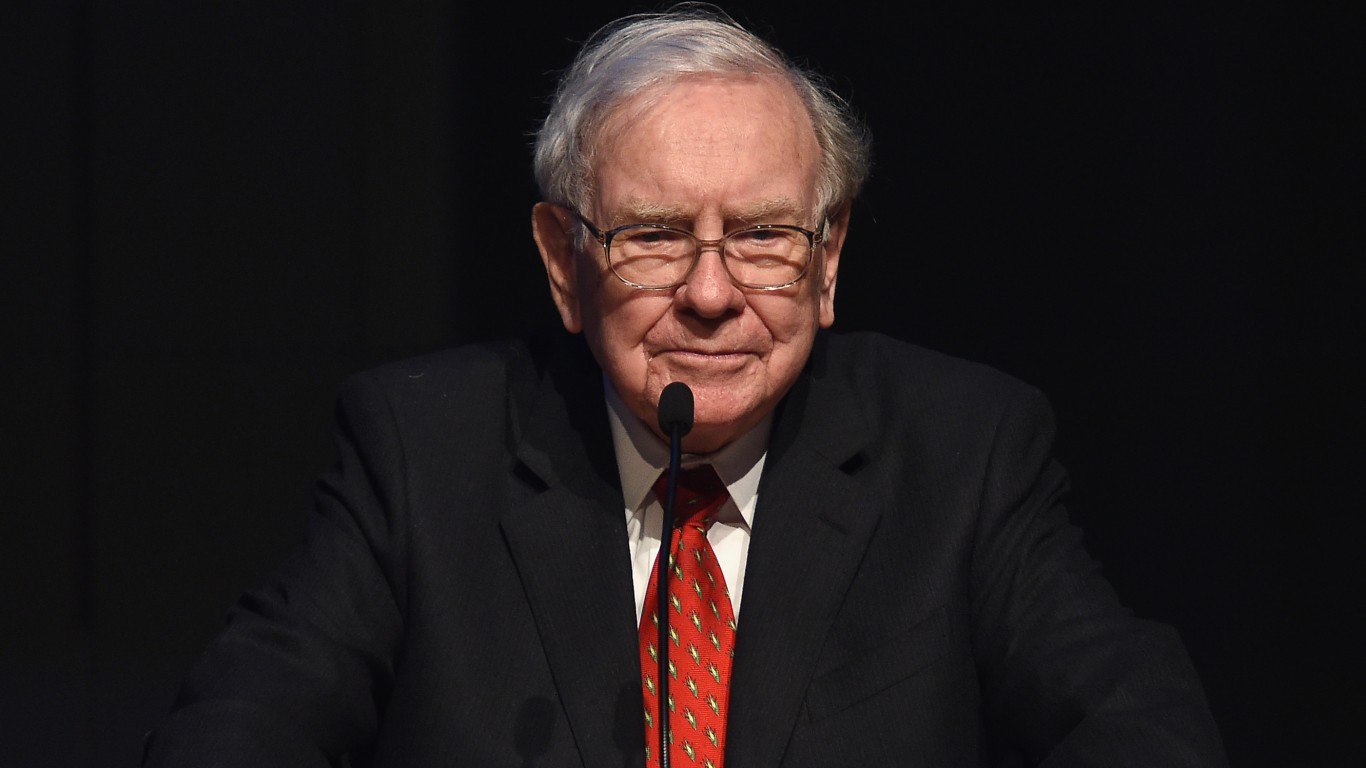
In that letter, Warren Buffett wrote: “What I advise here is essentially identical to certain instructions I’ve laid out in my will. One bequest provides that cash will be delivered to a trustee for my wife’s benefit.” Buffett then gave the trustee a two-line plan: “Put 10% of the cash in short-term government bonds and 90% in a very low-cost S&P 500 index fund. (I suggest Vanguard’s.)”[1] The word “Vanguard’s” appears in his letter, but he doesn’t name a specific Vanguard fund or ticker. Vanguard’s S&P 500 ETF goes by the ticker VOO.
Why Buffett Built a 90/10 Plan for His Widow
In a March 2014 CNBC Squawk Box interview quoted by CFA Institute, Buffett said he had laid out what “the average person who is not an expert on stocks should do,” adding that his widow “will not be an expert on stocks.”
Buffett said the 10%[1] in short-term government bonds lets the beneficiary draw from that reserve during “a terrible period in the market” rather than “selling stocks at the wrong time.” Of the index fund, he said: “It’s low-cost, it’s in a bunch of wonderful businesses, and it takes care of itself.”
Same Index, Two Price Tags
Both funds target the same benchmark. According to State Street, SPY seeks to match the price and yield performance of the S&P 500, and Vanguard’s April 28, 2026 prospectus says VOO tracks the S&P 500 Index. With identical exposure, cost is the clearest difference between them.
An expense ratio is the annual fee a fund deducts from its assets, and it comes out every year whether markets rise or fall. SPY’s net expense ratio is 0.0945% per State Street. A $500,000 position pays $472.50 a year at that rate.
VOO’s net expense ratio is 0.03% per Vanguard’s fact sheet. The same $500,000 costs $150 a year. That gap repeats every year the position remains open and widens as the balance grows, which is exactly the kind of cost Buffett told his trustee to minimize.
What a Switch From SPY to VOO Involves
Moving from SPY to VOO takes a sale and a purchase. Depending on your brokerage, each trade can carry a commission, and every trade carries a bid-ask spread, the small gap between the price buyers pay and sellers receive. Your broker’s pricing determines the full one-time cost of a switch, which you can then compare with the recurring savings.
How Each Fund Handles Dividends Between Payouts
The unit investment trust structure of SPY requires cash dividends from its holdings to sit uninvested until the trust pays them out. VOO, an exchange-traded share class of Vanguard 500 Index Fund, is an open-end fund that can reinvest that cash at the fund level between payouts.
The payment calendars differ. SPY’s latest dividend went ex on September 18, 2026, and paid on October 30, 2026. VOO’s went ex on September 28, 2026, and paid on September 30, 2026.
Your Mix May Differ From Buffett’s 90/10
The 90/10 split was written for one beneficiary. Your own mix depends on your circumstances, including your age, your other income, and how much a market downturn in the first years of withdrawals would shake you (planners call that sequence-of-returns risk, and we mapped out how to defend against it in a guide that costs nothing here). The fund choice inside the stock portion is a separate decision from how much belongs in stocks at all.
Capital Gains Taxes Can Outweigh Fee Savings on a SPY Sale
Selling SPY shares in a taxable account can trigger capital gains tax, and on a long-held position that bill can outweigh years of fee savings. Your broker reports the sale and your cost basis on Form 1099-B, according to IRS Publication 550. Switching inside a tax-advantaged retirement account such as an IRA or 401(k) generally avoids that tax hit. In a taxable account, new contributions placed in VOO would carry the lower fee without requiring a sale.
How SPY and VOO Measure Up Against Buffett’s Cost Focus
Buffett asked for a very low-cost S&P 500 fund and named Vanguard. SPY and VOO both track that benchmark, so a buy-and-hold retiree following that advice gets the same businesses for $150 a year instead of $472.50 on $500,000. Of the two, VOO is the lower-cost fund, which lines up with the cost focus in his instructions.
Contact [email protected] for any questions or corrections.
Ryne Mauck is an investment writer covering exchange-traded funds, retirement planning, and portfolio strategy. Through his work at 24/7 Wall St. and other investment platforms, including Seeking Alpha, he aims to provide clear, research-driven insights that help investors make more informed decisions while maintaining a long-term approach to investing.
Ryne holds a B.Sc. in Finance and an M.A. in Political Science. He is a formerly registered Municipal Advisor Representative and has passed the Series 50, Series 63, and Series 65 exams. His articles are not intended to be, nor should they be interpreted as, financial advice.