Buffett Says a Know-Nothing Investor Can Beat the Pros. $250 a Month in the S&P 500 Could Turn Into $508,000
Warren Buffett built a fortune through decades of expert stock picking, then told ordinary savers to ignore everything he knows. The reason why exposes a hidden cost most investors never calculate until it is far too late.

This post may contain links from our sponsors and affiliates, and Flywheel Publishing may receive compensation for actions taken through them.
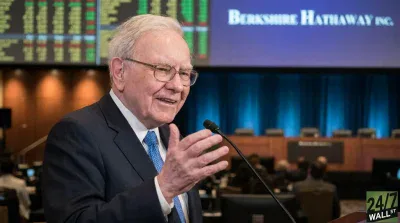
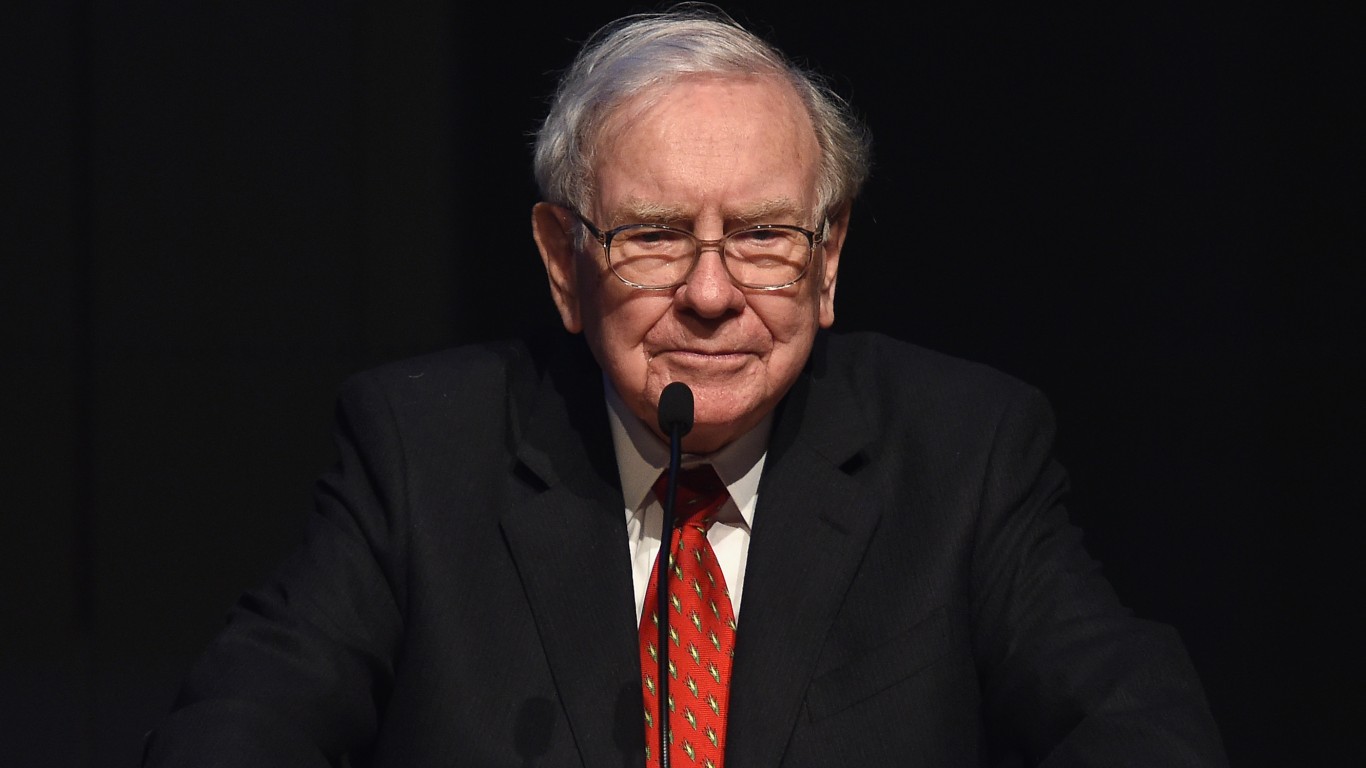
Warren Buffett ran one of the most famous stock-picking operations in history, yet his advice to ordinary savers points away from stock picking. In his 1993 letter to Berkshire Hathaway (NYSE:BRK-B | BRK-B Price Prediction) shareholders, Warren Buffett argued that an investor who knows nothing about markets can outperform most investment professionals by investing periodically in an index fund.
Professionals have research teams, data terminals and decades of training. The claim still holds because of mechanics: Chase the pros and you could give up a six-figure difference over a working life.
Why Knowing Nothing Beats Trying Harder
The S&P 500 is the market’s average. Active managers, taken together, own the market too, so as a group they earn that average before costs. After costs, the group has to trail it. The know-nothing investor earns the average minus almost nothing. Those costs pile up in four places:
1. Management fees: An active fund charges a yearly percentage of your balance whether it beats the index or lags it. A low-cost S&P 500 fund charges a fraction of that.
2. Trading costs: Every buy and sell carries spreads and commissions. An index fund trades only when the index itself changes.
3. Tax drag: Frequent selling in a taxable account realizes capital gains yearly, shrinking the compounding base. Buy-and-hold postpones most of that bill.
4. Behavior: People with strong opinions act on them, and each move is a fresh chance to be wrong.
Automatic contributions remove the last trap by taking timing off the table. The money moves on payday, picking up more shares when prices fall and fewer when they rise. Here is what one of those costs does on its own. Run the plan below with a 1% annual fee and the return drops from 9.5% to 8.5%. The ending value shrinks to about $413,000. The fee costs roughly $96,000, more than every dollar you contributed.
$250 a Month for 30 Years Grows to $508,000
The illustration uses $250 a month for 30 years, with an assumed constant annual return of 9.5% compounded monthly. The ending value is $508,000. The total money actually contributed is $90,000. Most of that balance is growth you never paid for. At year 20, the same plan holds about $178,000 on $60,000 contributed. The final decade does the biggest work because gains start earning gains of their own.
No real market delivers 9.5% every single year. Returns come in chunks, with strong years, flat years and painful ones. Treat $508,000 as a straight-line picture of how compounding works, and skip reading it as a forecast.
Where the Know-Nothing Plan Breaks Down
Index funds protect you from fees and bad stock picks. Your sell button is the mistake that ruins the result. Picture year 20 of the plan. Your account holds about $178,000. A bear market cuts stocks by 40%. Within months, about $71,000 disappears and the balance sits near $107,000. That loss tops everything you contributed up to that point. Headlines will warn it could get worse.
Selling there locks in the loss and gives up the final decade, the stretch that produces most of the gain. Staying in, and still buying every month, is the entire job.
Low-Cost Funds That Put Buffett’s Advice to Work
The Vanguard S&P 500 ETF (NYSEARCA:VOO) charges an expense ratio of 0.03%. Shares are about $711, up nearly 17% over the past year and about 324% over 10 years.
It paid $7.43 per share in trailing 12-month dividends, which a reinvestment plan rolls back into shares.
The SPDR S&P 500 ETF (NYSEARCA:SPY), the original S&P 500 ETF, charges about 0.09%. Both track the same index. Over decades of monthly contributions, VOO carries the lower fee of the two.
Berkshire Hathaway stock rose about 1% over the past year and 252% over 10 years, trailing VOO across both periods. It makes up 1.6% of SPY.
3 Habits That Keep the Know-Nothing Plan on Track
1. Automatic monthly purchases of a low-cost S&P 500 fund timed to payday remove the need for any decision.
2. Rerunning the 30-year math at a fund’s actual expense ratio shows exactly what fees take from the ending balance.
3. A written plan for a 40% decline, made in advance, is what keeps a saver contributing instead of selling.
The real test comes with the next bear market. Savers who keep monthly purchases running through it are the ones who collect the final decade’s compounding.
Contact [email protected] for any questions or corrections.
Joel South covers large-cap stocks, dividend investing, and major market trends, with a focus on earnings analysis, valuation, and turning complex data into actionable insights for investors.
He brings more than 15 years of experience as an investor and financial journalist, including 12 years at The Motley Fool, where he served as an investment analyst, Bureau Chief, and later led the Fool.com investing news desk. He has also co-hosted an investing podcast and appeared across TV and radio discussing market trends.