The Iconic U.S. Navy Giants Facing Their Last Days at Sea Before Retirement
With 2025 coming to a close in a couple months and the fiscal year just starting–despite a government shutdown– the United States Navy is once again pressed with the question of reevaluating its fleet. Each year, the Navy decides which…

With 2025 coming to a close in a couple months and the fiscal year just starting–despite a government shutdown– the United States Navy is once again pressed with the question of reevaluating its fleet. Each year, the Navy decides which ships are ready for retirement and which will continue to be part of the fleet. The Navy also adds new ships as a means to introduce new tech and replace the older vessels being retired or sold off.
In terms of the current structure of the U.S. Navy destroyers account for roughly 30% of active vessels and submarines about a quarter, with cruisers, littoral combat ships and amphibious assault ships filling out the rest. With its newest round of commissionings, the Navy is looking to further add to its attack submarine capabilities with the Virginia-class and to its destroyer fleet with more Arleigh-Burkes on the way.
Out of all the ships on the chopping block in the near future, there are a few main classes that are seeing notable reductions in their numbers. The Los Angeles-class and Ohio-class submarines each have some notable vessels that are being decommissioned. At the same time, the Nimitz-class aircraft carriers are slowly being phased out as well. Here, 24/7 Wall St. is taking a closer look at the upcoming Navy decommissionings.
To identify the ships that the U.S. Navy plans to decommission going forward, 24/7 Wall St. reviewed reports from the Office of the Chief of Naval Operations among other sources. We ordered these ships and submarines according to when they entered service. We also included supplemental information regarding the hull number, class, type and commissioning date of each vessel.
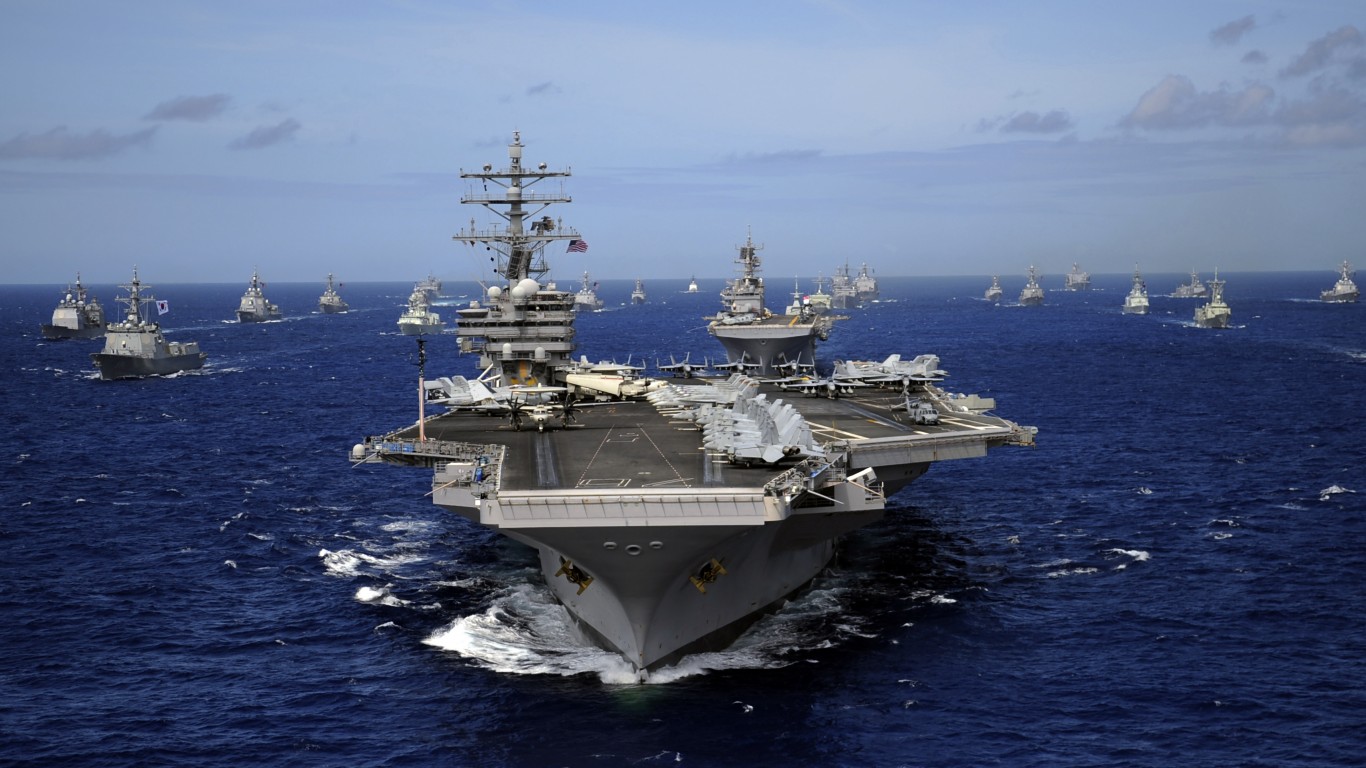
Perhaps, the biggest removal from the fleet is the Nimitz-class which is expected to be phased out over some time and replaced by the Ford-class supercarriers. Currently, there are a couple Ford-class supercarriers in late-stage construction and testing phases at Newport News Shipbuilding. They feature a number of new systems, primarily an upgraded powerplant from the Nimitz-class and improved weapons elevators–not to mention, state-of-the-art radar. These new supercarriers promise higher sortie rates, as well. However, they have been burdened with supply-chain issues which have resulted in scheduling delays. Originally, the Enterprise was expected for a 2025 summer delivery but this has been postponed with a new target for March 2027. (The Ford-Class & New Ship Programs Bring Next-Gen to the Navy.)
Here is a look at the U.S. Navy ships being decommissioned:
Why Are We Covering This?
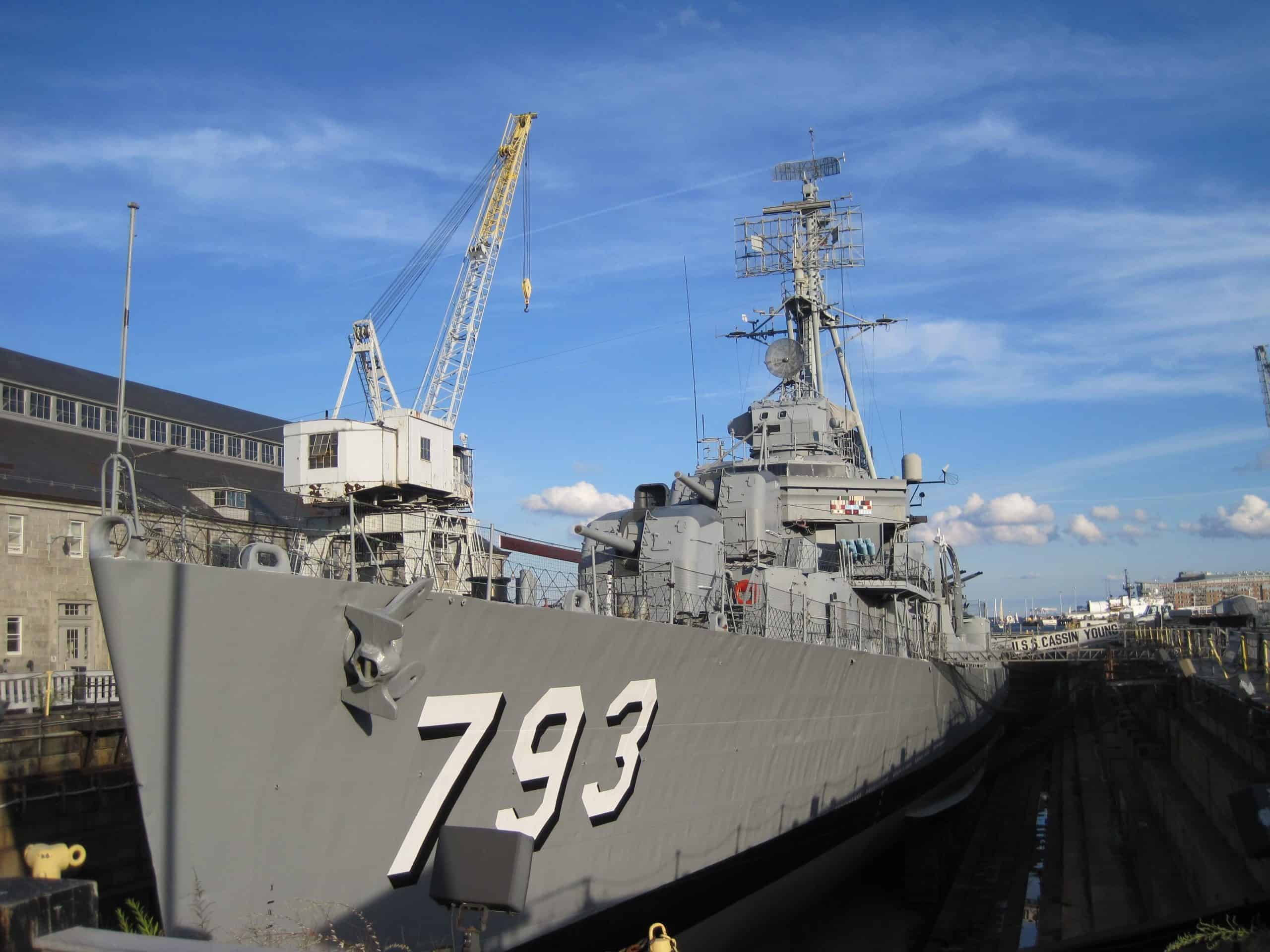
Knowing the most recent ships and submarines to enter and depart the U.S. Navy is important for understanding the state of national security in the United States. Also, the Navy is primarily how the United States projects power across vast distances and maintains a secure balance within the global community.
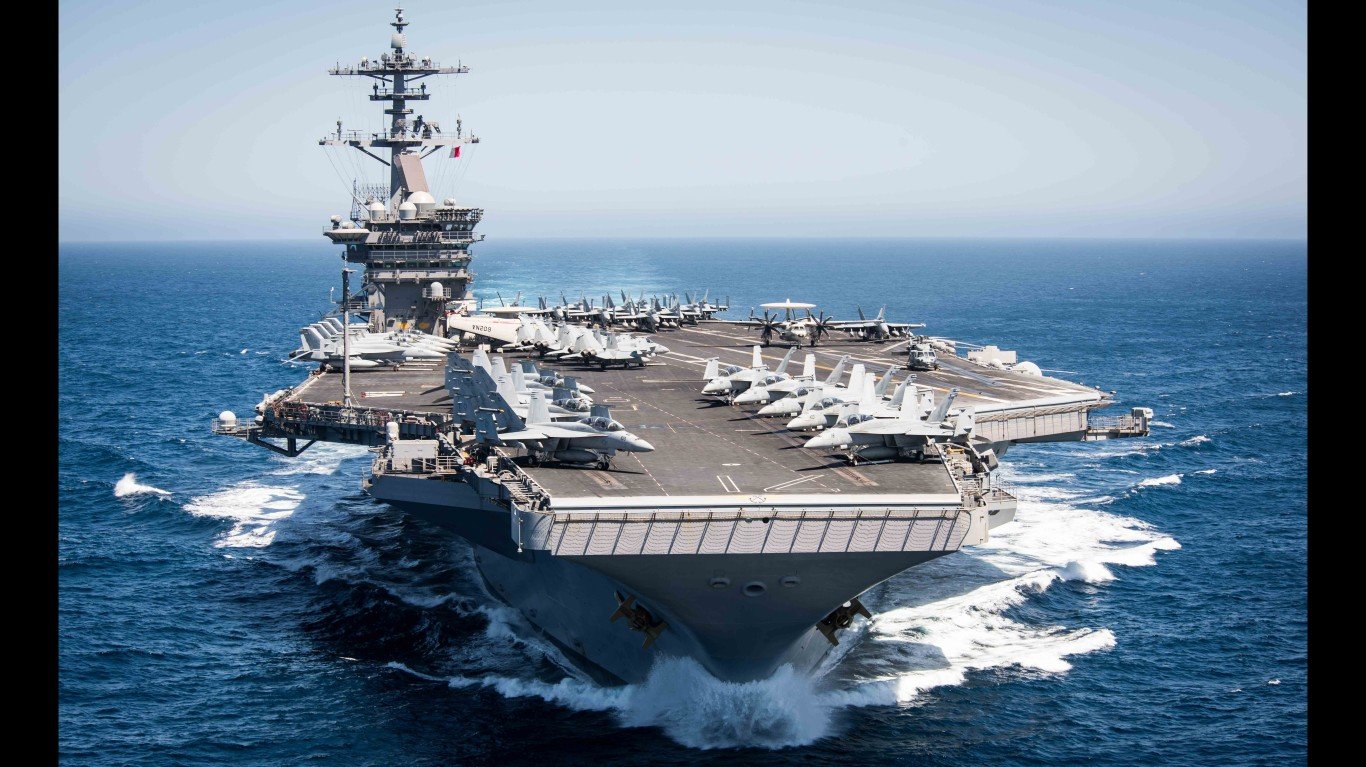
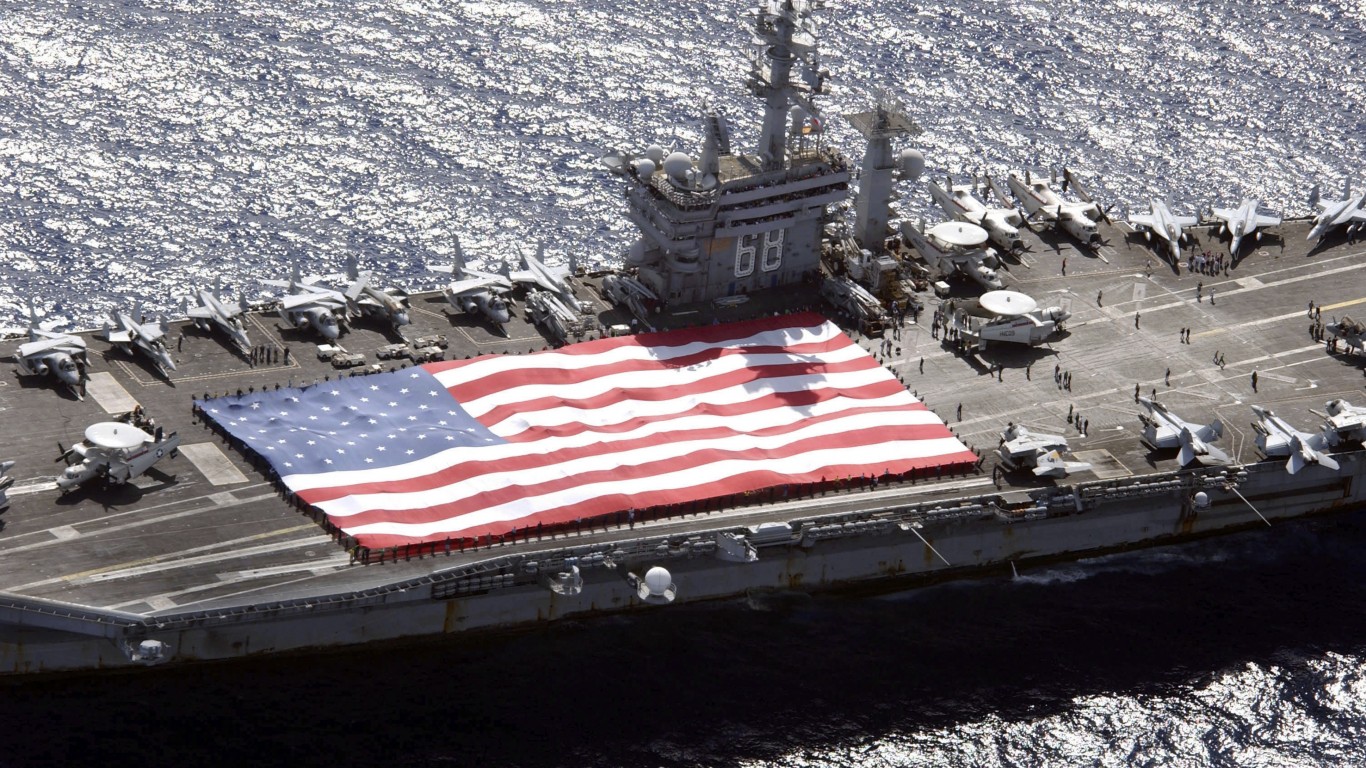
USS Nimitz
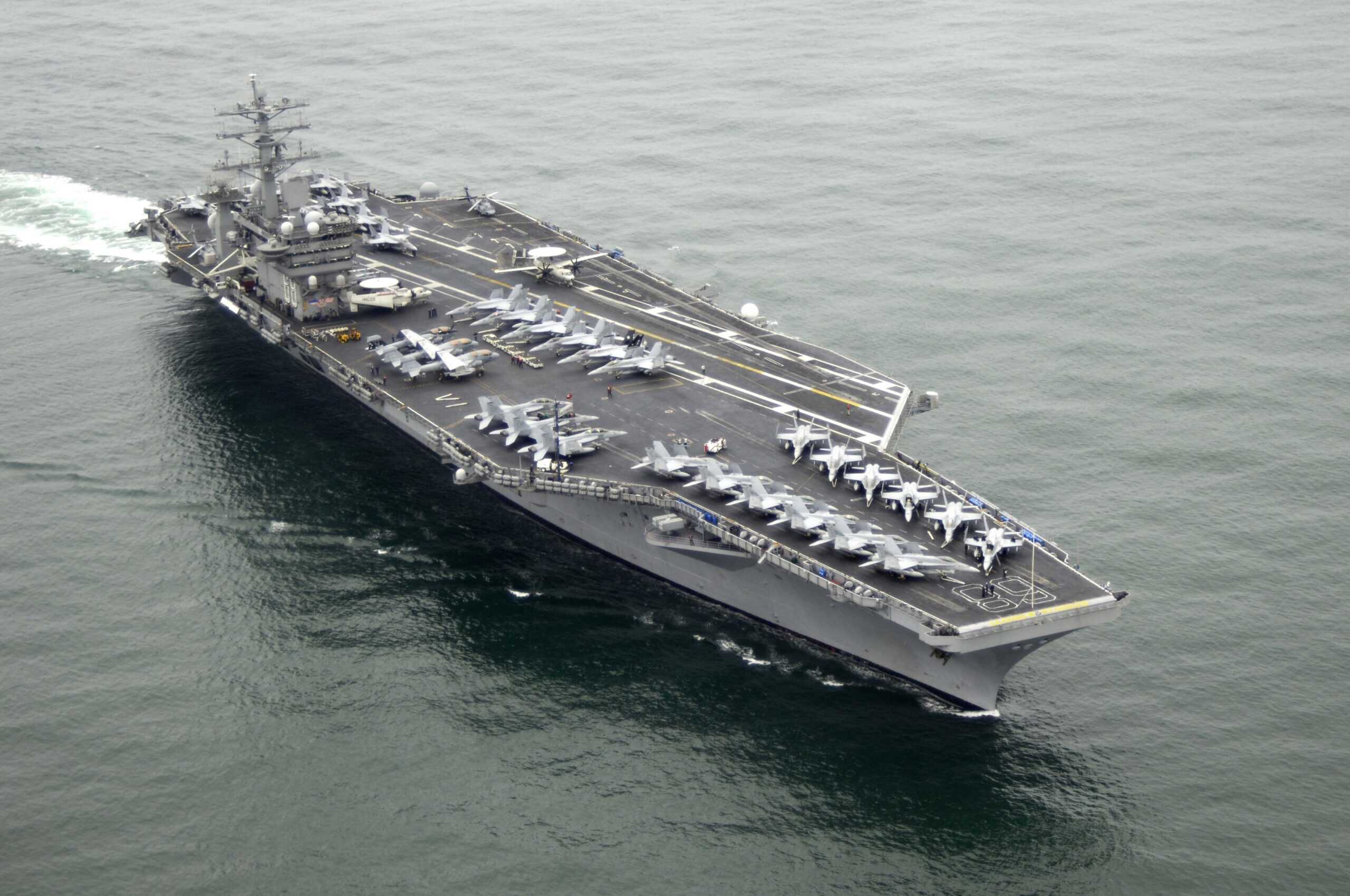
- Hull number: CVN-68
- Class: Nimitz-class
- Type: Aircraft carrier
- Commission date: May 3, 1975
- Planned decommission: 2026
As the lead ship of the Nimitz-class carriers, USS Nimitz has been a central pillar of U.S. carrier strike capability for more than half-a-century. This carrier has been deployed worldwide on a number of different missions and exercises, providing aircover and precision strikes as the core of carrier strike groups. Nimitz-class carriers are considered the crown jewels of the U.S. Navy but it’s almost time for this class to give way to the new Ford-class of supercarriers that are coming out over the next decade or so.
USS Ohio
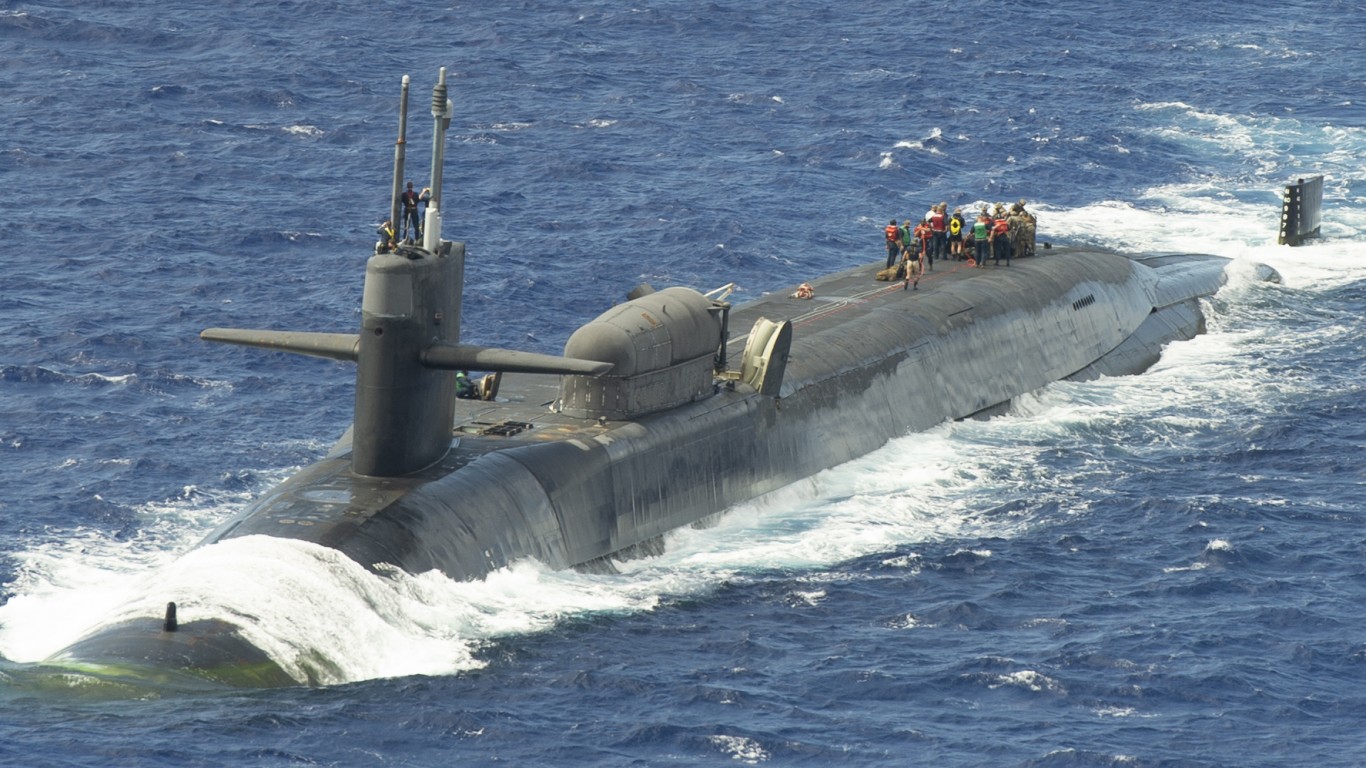
- Hull number: SSGN-726
- Class: Ohio-class
- Type: Guided-missile submarine
- Commission date: November 11, 1981
- Planned decommission: 2026
Originally built as a ballistic-missile submarine, USS Ohio was later converted into a guided-missile and special-operations sub (SSGN). In this SSGN configuration the Ohio can launch large Tomahawk salvoes, host special-operations teams, as well as support covert ISR and strike missions. This conversion extended the sub’s operational life into the 21st century but now Virginia-class and Colombia-class are looking to be the future of the U.S. Navy.
USS Florida

- Hull number: SSGN-728
- Class: Ohio-class
- Type: Guided-missile submarine
- Commission date: June 18, 1983
- Planned decommission: 2026
Like the USS Ohio, the USS Florida began its service as an SSBN and was later turned into an SSGN, trading strategic deterrent missiles for large conventional-strike payloads and special-operations capability. Florida has supported theater commanders by providing clandestine strike options, Tomahawk missiles at the ready, and discreet insertion/extraction of special-operations forces where needed. The SSGN program was an inventive example of adapting Cold War subs for more modern and networked missions.
USNS Joshua Humphreys

- Hull number: T-AO-188
- Class: Henry J. Kaiser-class
- Type: Fleet replenishment oiler (MSC)
- Commission date: April 3, 1987 (placed in service)
- Planned decommission: 2025
The USNS Joshua Humphreys is a Henry J. Kaiser-class fleet oiler that might be lesser known to Navy buffs as it serves in a logistical role as opposed to combat. Specifically, this ship serves under Military Sealift Command to keep the fleet fueled and mobile. Although this ship plays a quiet role it is incredibly necessary as it enablers global naval operations. Without steady logistics, carrier and surface groups could not sustain a presence or high sortie rates. These oilers are typically crewed by civilian mariners and form the backbone of at-sea logistics.
USS Helena
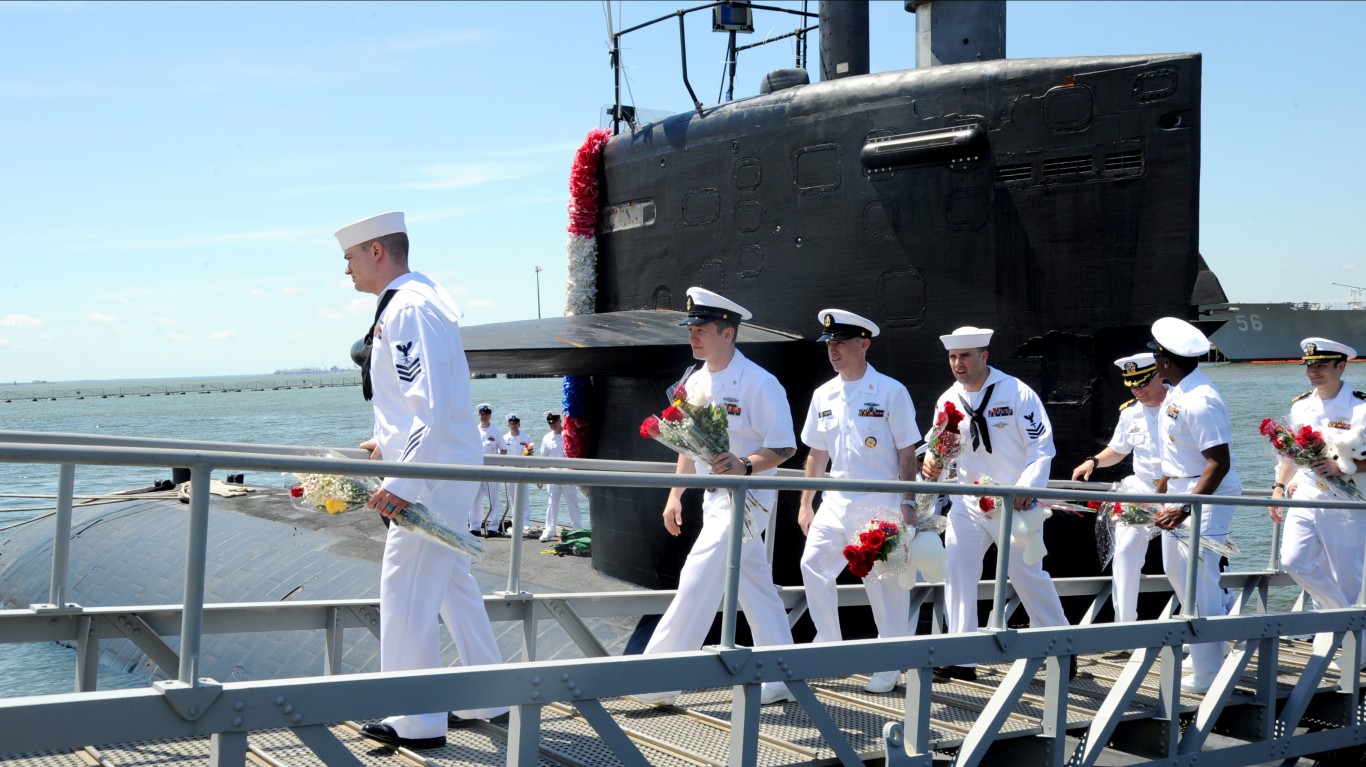
- Hull number: SSN-725
- Class: Los Angeles-class
- Type: Attack submarine
- Commission date: July 11, 1987
- Planned decommission: Decommissioned in July 2025
The USS Helena is a Los Angeles-class attack submarine that has carried out a number of roles for the U.S. Navy. These roles are considered the classic fast-attack mission set which include: anti-submarine and anti-surface warfare, intelligence collection, and strike with submarine-launched cruise missiles. These subs have been quiet workhorses for covert reconnaissance and precision strike support for joint operations. Interesting to note is that Helena also inherited its storied name from earlier ships that saw intense combat in World War 2.
USS Pasadena
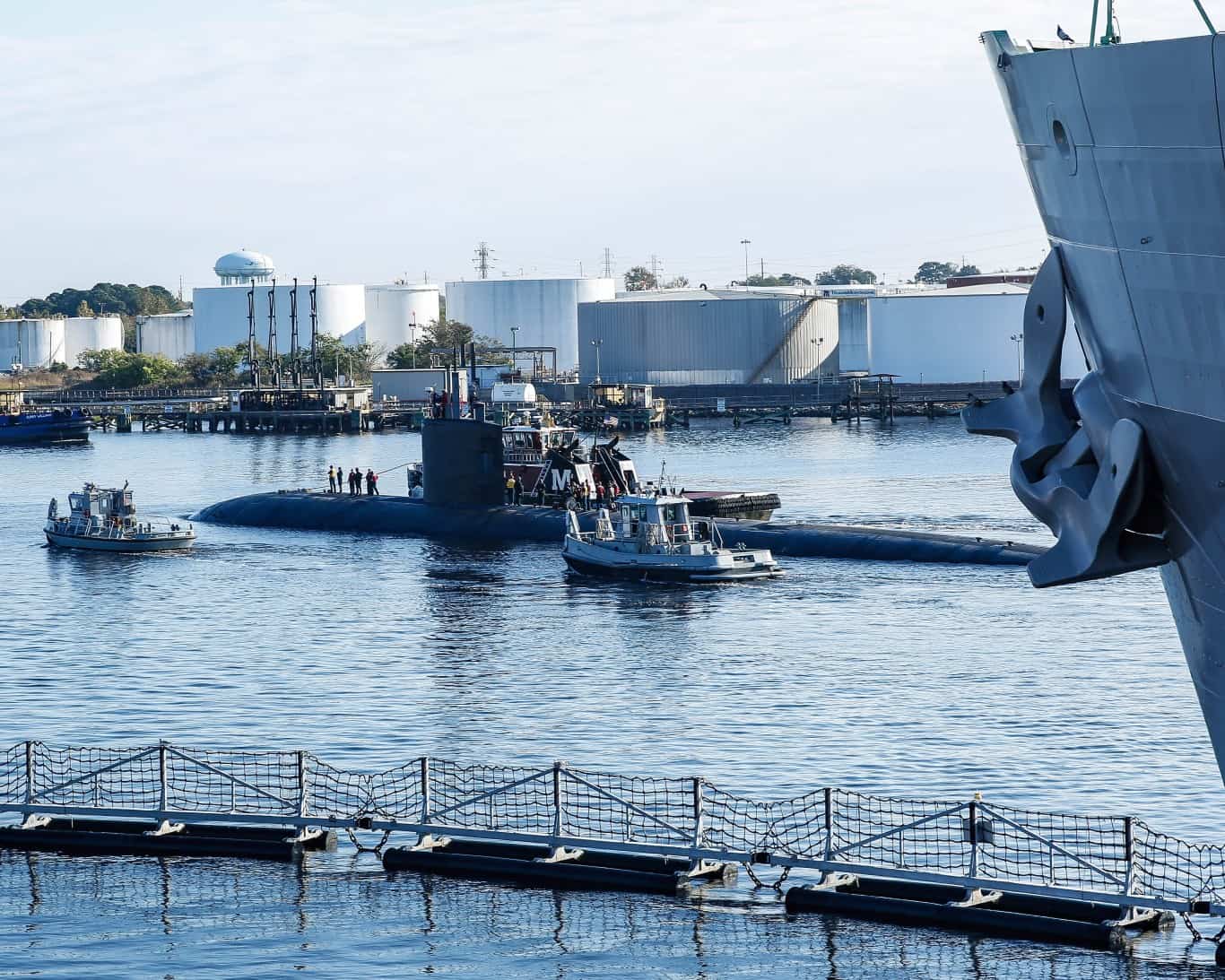
- Hull number: SSN-752
- Class: Los Angeles-class
- Type: Attack submarine
- Commission date: February 11, 1989
- Planned decommission: 2025
The USS Pasadena is another Los Angeles-class fast-attack submarine built for multi-mission undersea work. Its roles included tracking adversary submarines, conducting maritime intelligence and providing discreet strike capability. Subs like Pasadena gave commanders a stealthy option to gather information, deliver precision strikes, and support special operations, typically operating in contested waters. Their quiet performance and sensor capabilities made them essential Cold War and post-Cold War assets.
USS Newport News

- Hull number: SSN-750
- Class: Los Angeles-class
- Type: Attack submarine
- Commission date: June 3, 1989
- Planned decommission: 2026
As a Los Angeles-class attack submarine, the USS Newport News has been engaged in a full range of undersea missions along with sometimes supporting allied exercises and training. The Newport News’ mix of sensors and weapons allows it to punch above its weight class in a strategic sense.
USS Chancellorsville/Robert Smalls
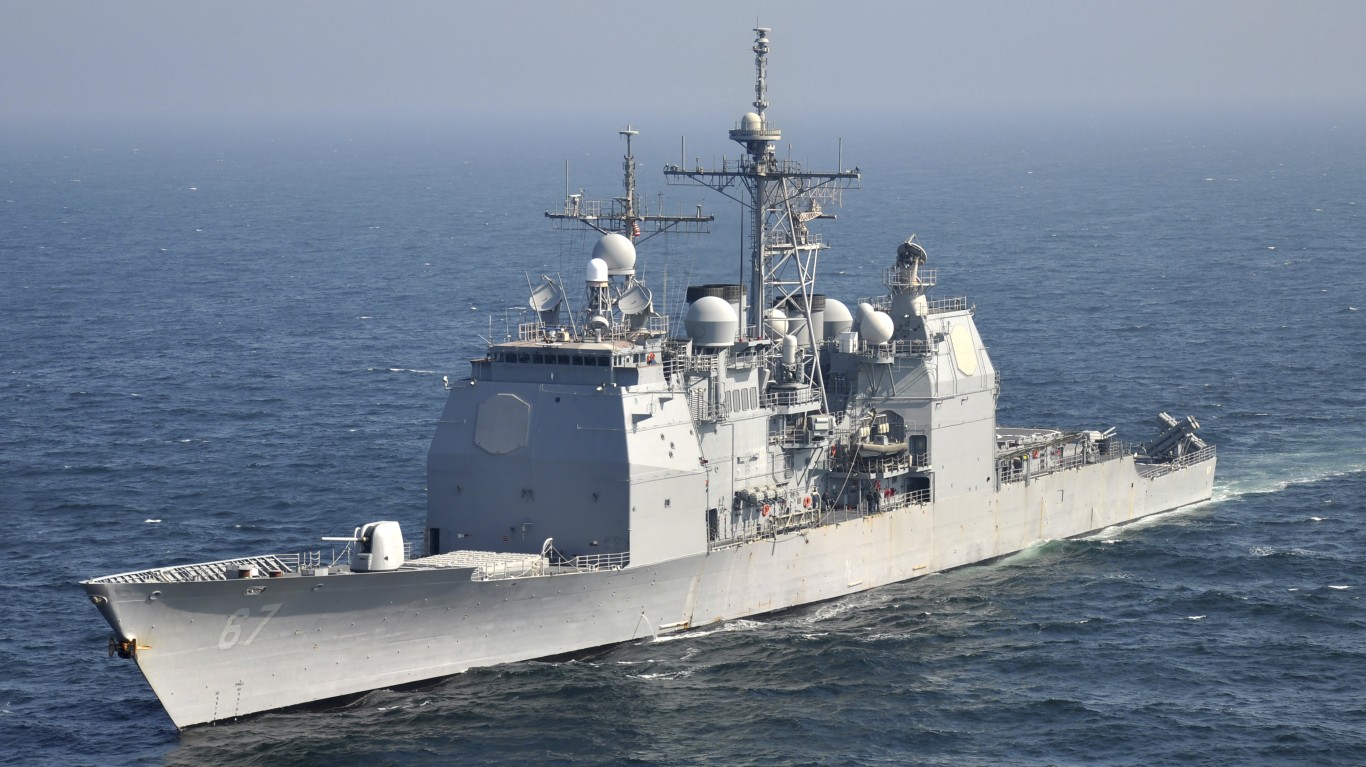
- Hull number: CG-62
- Class: Ticonderoga-class
- Type: Guided-missile cruiser
- Commission date: November 4, 1989
- Planned decommission: 2026
USS Chancellorsville is a Ticonderoga-class guided-missile cruiser built around the Aegis combat system. This ship’s role centers around air-defense, anti-surface and strike missions as an escort in carrier strike groups. These cruisers provide area air-defense, layered sensor coverage, and Tomahawk strike capability. Recently the ship’s name has been discussed for change to honor Robert Smalls, as part of a move to align vessel names with different historical figures. The Ticonderoga class is being phased out as a whole in lieu of newer cruisers. What’s interesting is that Ticonderoga cruisers were among the first ships to field the Aegis radar and integrate it with shipboard missile systems. The first Ticonderoga class ship entered service back in 1983.
USS Comstock

- Hull number: LSD-45
- Class: Whidbey Island-class
- Type: Dock landing ship
- Commission date: February 3, 1990
- Planned decommission: 2026
The USS Comstock is Whidbey Island–class dock landing ship serves as a flexible amphibious transport for Marines, landing craft and equipment. This class of ships is built around a large well deck, allowing it to launch and recover LCACs and conventional landing craft, support amphibious ready groups, and sustain expeditionary operations with cargo. These ships are incredibly important for forcible-entry options as well as humanitarian efforts.
USNS Pecos

- Hull number: T-AO-197
- Class: Henry J. Kaiser-class
- Type: Fleet replenishment oiler (MSC)
- Commission date: July 6, 1990 (placed in service)
- Planned decommission: 2026
The USNS Pecos is a Henry J. Kaiser–class fleet oiler operated by Military Sealift Command, like the USNS Joshua Humphreys. It delivers fuel, cargo and equipment to carrier strike groups at sea. Like other ships in its class, the Pecos enables sustained forward operations by supplying fleet with everything it needs. Again, without ships like this, the logistics for resupply at sea would be a nightmare for the U.S. Navy.
USS Scranton

- Hull number: SSN-756
- Class: Los Angeles-class
- Type: Attack submarine
- Commission date: January 26, 1991
- Planned decommission: 2026
The USS Scranton is a Los Angeles–class fast-attack submarine that performs classic undersea missions. These missions typically include anti-submarine and anti-surface warfare, covert intelligence collection, and precision-strike with cruise missiles. The Los Angeles class was a formidable series of submarines during the Cold War with balanced speed, sensors and weapons. However, this class is slowly being phased out for newer Virginia-class and Colombia-class submarines.
USS Alexandria

- Hull number: SSN-757
- Class: Los Angeles-class
- Type: Attack submarine
- Commission date: June 29, 1991
- Planned decommission: 2026
The USS Alexandria is another Los Angeles–class attack submarine that combines quiet sensors, torpedoes and cruise-missile capability to operate below the horizon for months at a time. Alexandria’s missions include trailing adversary submarines, collecting signals and imagery, and delivering precision fires in support of joint operations.
USNS Victorious

- Hull number: T-AGOS-19
- Class: Victorious-class
- Type: Ocean surveillance ship (MSC)
- Commission date: August 13, 1991 (placed in service)
- Planned decommission: 2026
Part of the Victorious-class ocean surveillance fleet, the USNS Victorious is built to tow long passive acoustic arrays for submarine detection and oceanographic monitoring. Operated by Military Sealift Command with civilian mariners and specialist technicians aboard, the Victorious contributes to undersea monitoring and antisubmarine warfare by listening for quiet submarines and collecting environmental data that improves sonar performance. These low-profile ships play a niche but important role in maintaining an advantage at sea.
USS Oak Hill

- Hull number: LSD-51
- Class: Harpers Ferry-class
- Type: Dock landing ship
- Commission date: June 8, 1996
- Planned decommission: 2026
The USS Oak Hill is a Harpers Ferry–class dock landing ship that supports amphibious and expeditionary operations by carrying Marines’ vehicles, landing craft and among other assets. The Oak Hill has been used for crisis response and disaster relief in the past, as well as amphibious exercises. Like the Whidbey Island-class USS Comstock, it allows for forcible-entry options and expeditionary landings.
Contact [email protected] for any questions or corrections.
Chris Lange is a financial and geopolitical writer with more than a decade of experience covering a myriad of topics. He has published thousands of articles for 24/7 Wall St., with past coverage focused heavily on stocks, IPOs, healthcare, defense, global affairs, and technology.
His work has been quoted, or referenced by a number of outlets including Business Insider, USA Today, Yahoo Finance, MSN, The Motley Fool, and many other publications. A graduate of Southwestern University, he studied business with a focus on investments and has previous experience in banking and startups.
When not reading or writing the news, he is following his passion for Lacrosse, playing chess, or building solar projects with his dad.