Ole Reliable: The Oldest Weapons NATO Still Uses Today
NATO may field some of the most advanced military technology on the planet, but scattered across the alliance are weapons old enough to have served multiple generations of soldiers. Machine guns from the 1930s, tanks from the 1960s, and aircraft…


NATO may field some of the most advanced military technology on the planet, but scattered across the alliance are weapons old enough to have served multiple generations of soldiers. Machine guns from the 1930s, tanks from the 1960s, and aircraft older than many of the pilots flying them continue to play real roles in defense planning. Here, 24/7 Wall St. is taking a closer look at the oldest weapons used by NATO.
To determine the oldest weapons used by NATO, 24/7 Wall St. reviewed various historical and military sources. We included a variety of weapons, spanning small arms to naval vessels. We included supplemental information for each as well regarding the type, year introduced, who it is used by and why this weapon matters to NATO.
Here is a look at the oldest weapons used by NATO:
Why Are We Covering This?
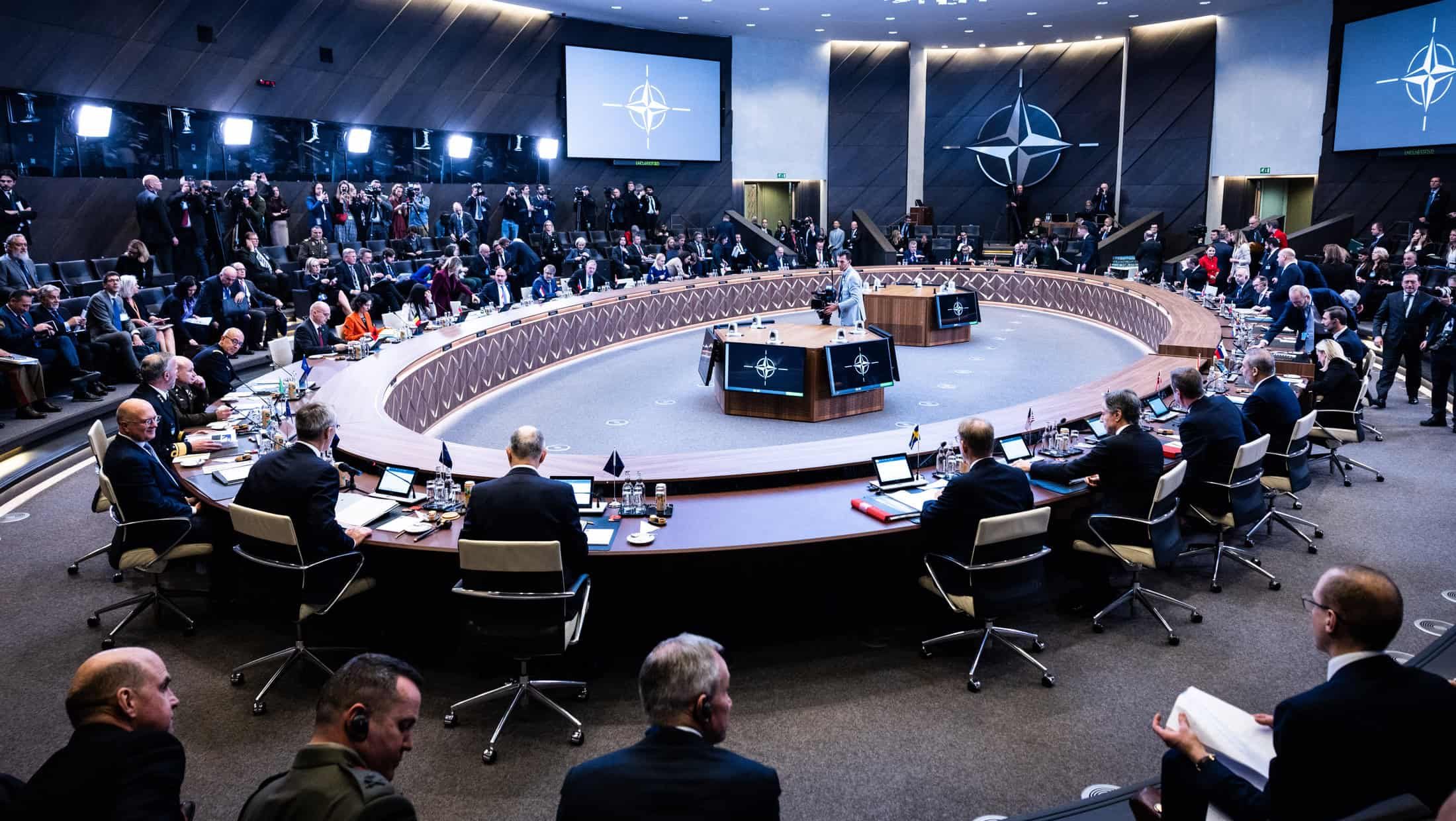
Some of NATO’s most reliable weapons are also its oldest. While modern systems dominate headlines, many Cold War and even World War II–era platforms continue to play meaningful roles across the alliance. These weapons endure because they remain effective, affordable, and adaptable to new mission demands. By highlighting the oldest systems still in service, we gain some insight into how NATO balances modernization with practicality, why certain designs prove nearly impossible to replace, and how legacy hardware continues to support frontline operations in a rapidly evolving geopolitical landscape.
NATO’s Surprising Reliance on Decades-Old Weapons
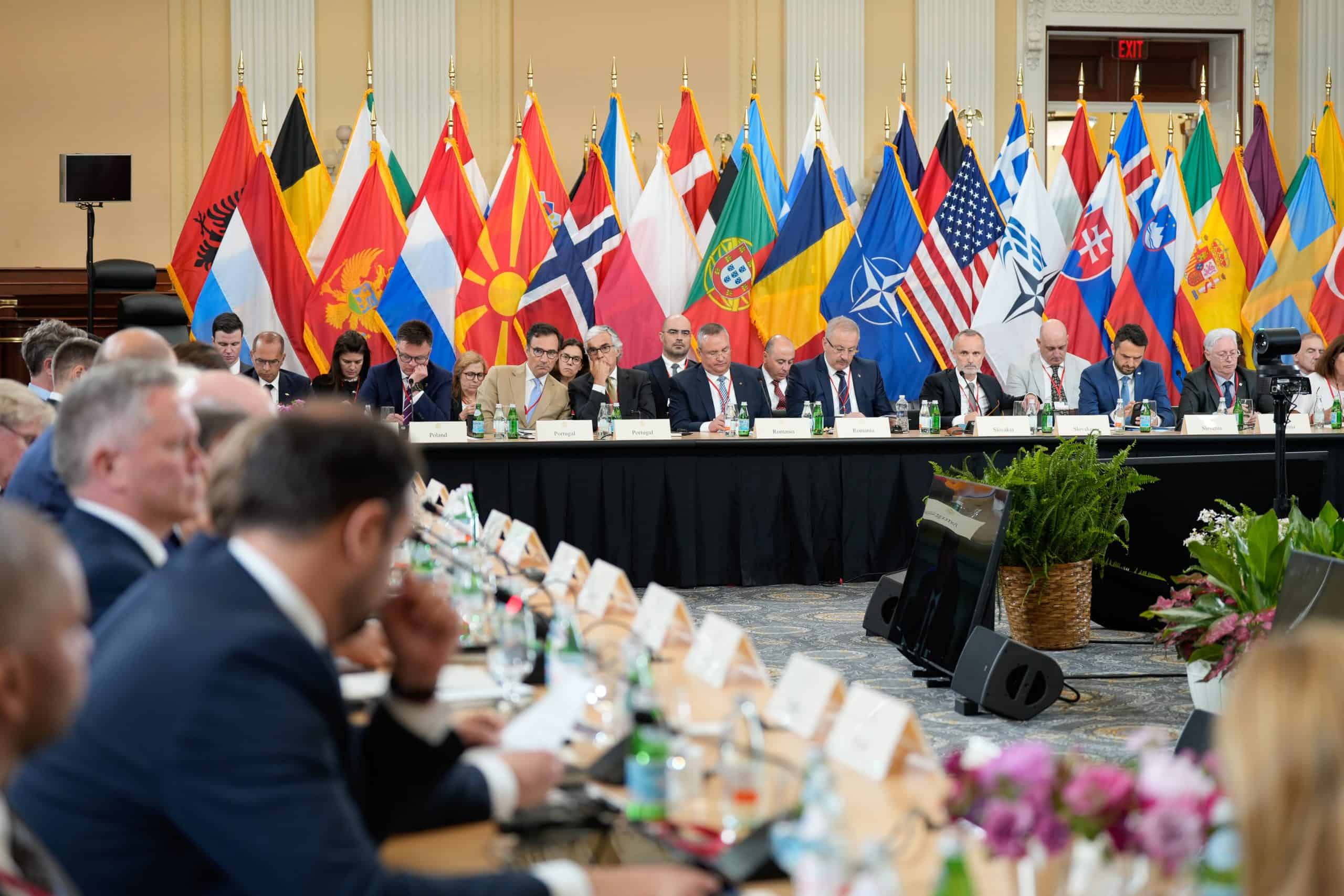
NATO fields some of the world’s most advanced military technology, yet many of its member states still rely on weapons designed half a century ago—or even earlier. From machine guns built before World War II to aircraft older than most pilots flying them today, these legacy systems remain firmly in service. Their continued use highlights a surprising truth: age doesn’t always diminish battlefield value.
Why These Legacy Weapons Haven’t Been Retired
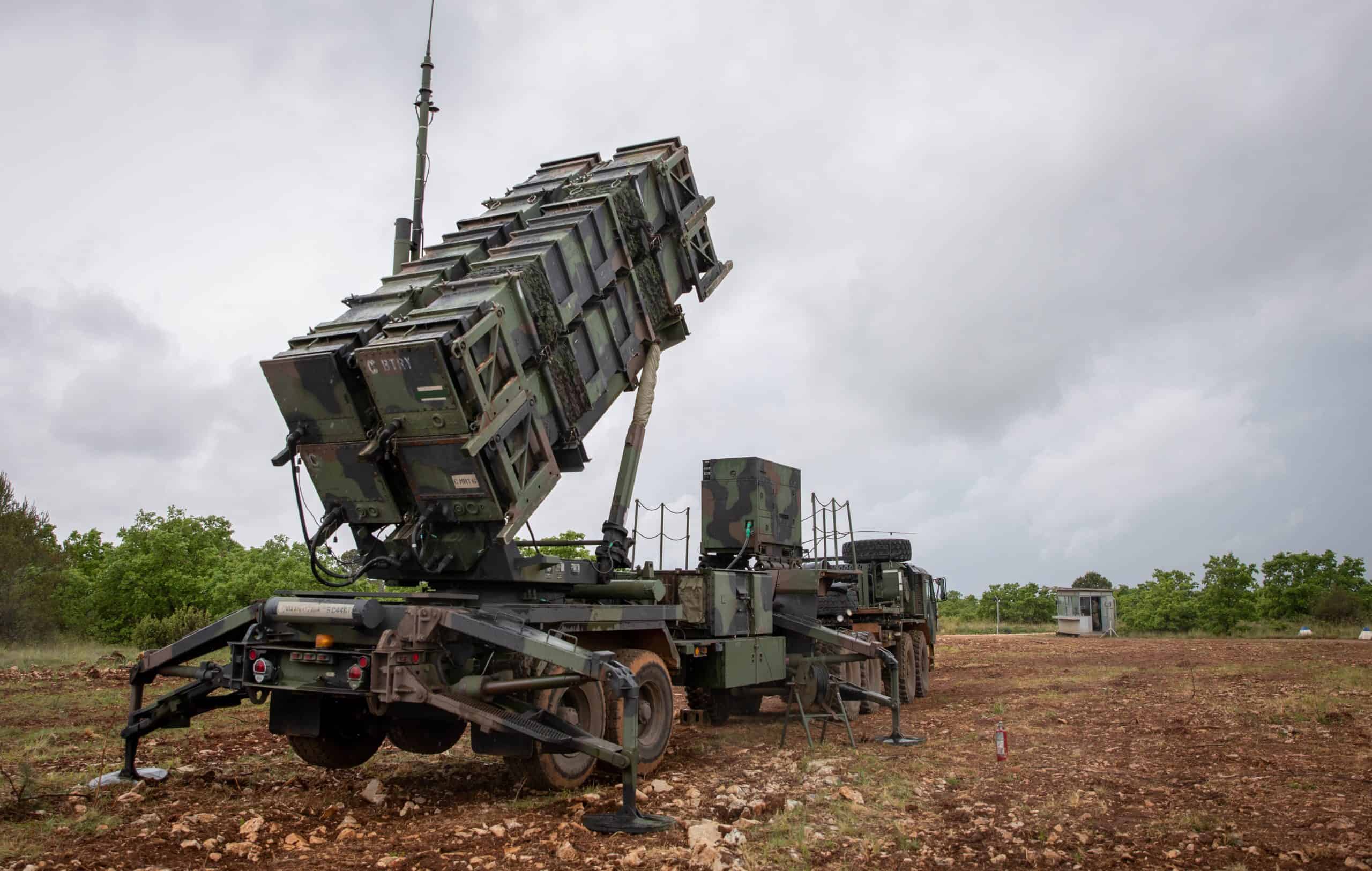
Despite their age, many of these weapons refuse to fade away because they continue to do their jobs exceptionally well. Some are extremely reliable, others are inexpensive to maintain, and many have proven themselves in combat for generations. Their durability and effectiveness make them too valuable to discard, even as more modern systems become available.
Modern Upgrades That Keep Old Weapons Relevant
The longevity of these systems isn’t due to nostalgia—it’s because modernization programs have kept them combat-ready. Updated optics, engines, avionics, sensors, and digital fire-control systems allow hardware from the 1940s through the 1970s to operate alongside modern platforms. In some cases, upgraded legacy weapons remain more practical than expensive new designs.
NATO’s Mix of Old and New Technology on Today’s Battlefield

NATO militaries operate an unusual blend of cutting-edge stealth fighters and Cold War–era tanks, artillery, and aircraft. This mix reflects both the alliance’s diverse budgets and the simple fact that some older designs still outperform expectations. On modern battlefields, these veteran systems often fill roles newer platforms weren’t designed for.
What These Enduring Weapons Reveal About NATO Strategy
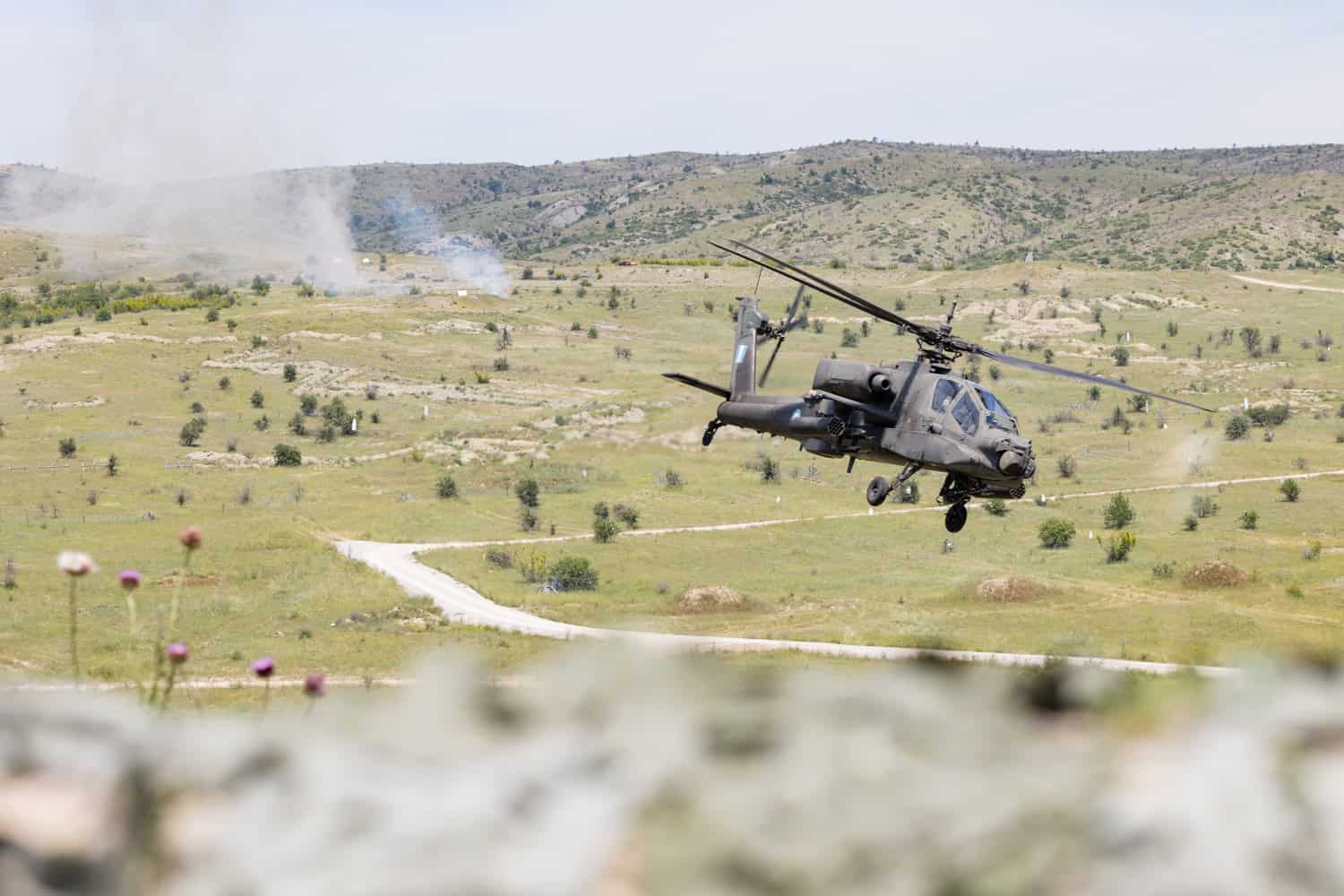
The continued presence of these older weapons highlights broader strategic priorities within NATO: cost efficiency, logistical simplicity, and proven real-world performance. Many of these systems remain in service not because of neglect, but because they continue to meet mission requirements. Their longevity underscores how NATO balances modernization with practicality.
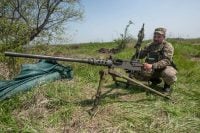
M2 Browning Heavy Machine Gun
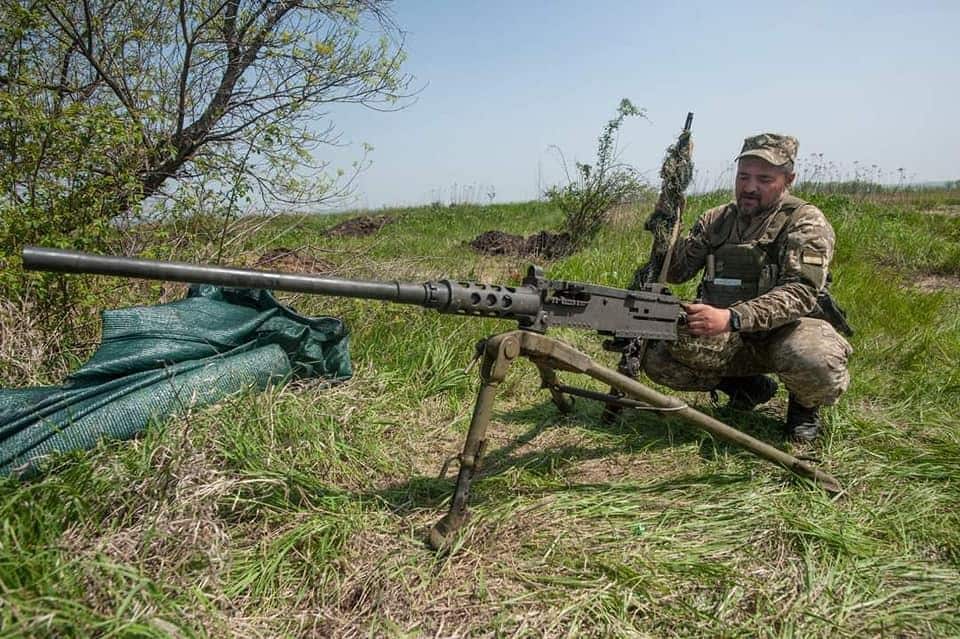
- Year introduced to service: 1933
- Type: Heavy Machine Gun
- Who it is used by: USA and multiple NATO nations
- Why it is still in service: Unmatched reliability and firepower for nearly a century
- Modern upgrades: Modern mounts, optics rails, and maintenance updates keep it effective
The M2 Browning remains one of the most enduring weapons in NATO service. Its .50 caliber power, rugged design, and ability to operate in extreme conditions make it indispensable for vehicles, aircraft, and defensive positions. Upgraded mounts and optics compatibility ensure its continued relevance.
FN MAG / M240
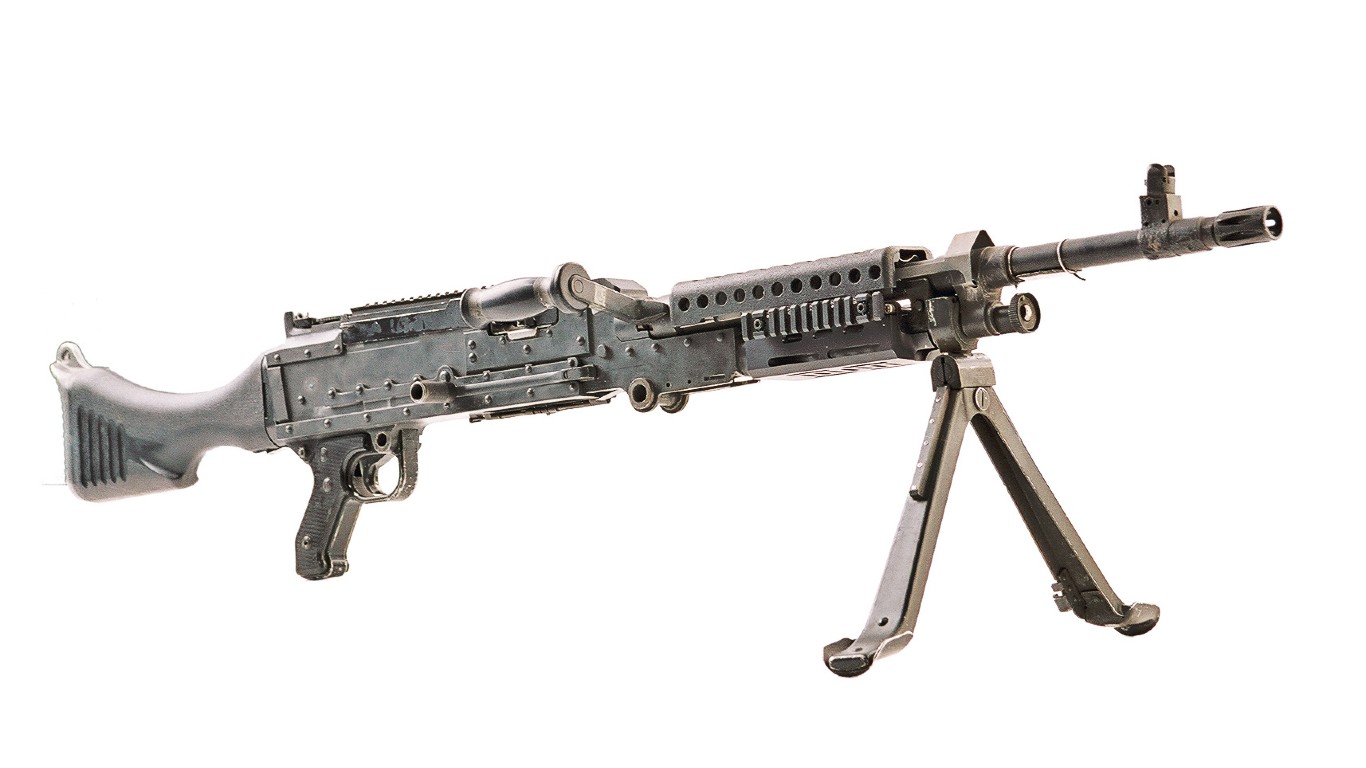
- Year introduced to service: 1958
- Type: Medium Machine Gun
- Who it is used by: Widespread across NATO
- Why it is still in service: Exceptional durability and accuracy
- Modern upgrades: Modernized optics, rails, and lightweight variants
The FN MAG, known as the M240 in the U.S., is a cornerstone of NATO firepower. Its reliability in harsh environments and accurate sustained fire have kept it in frontline service for decades. Modern lightweight models and accessory rails extend its battlefield lifespan.
AKM Rifle
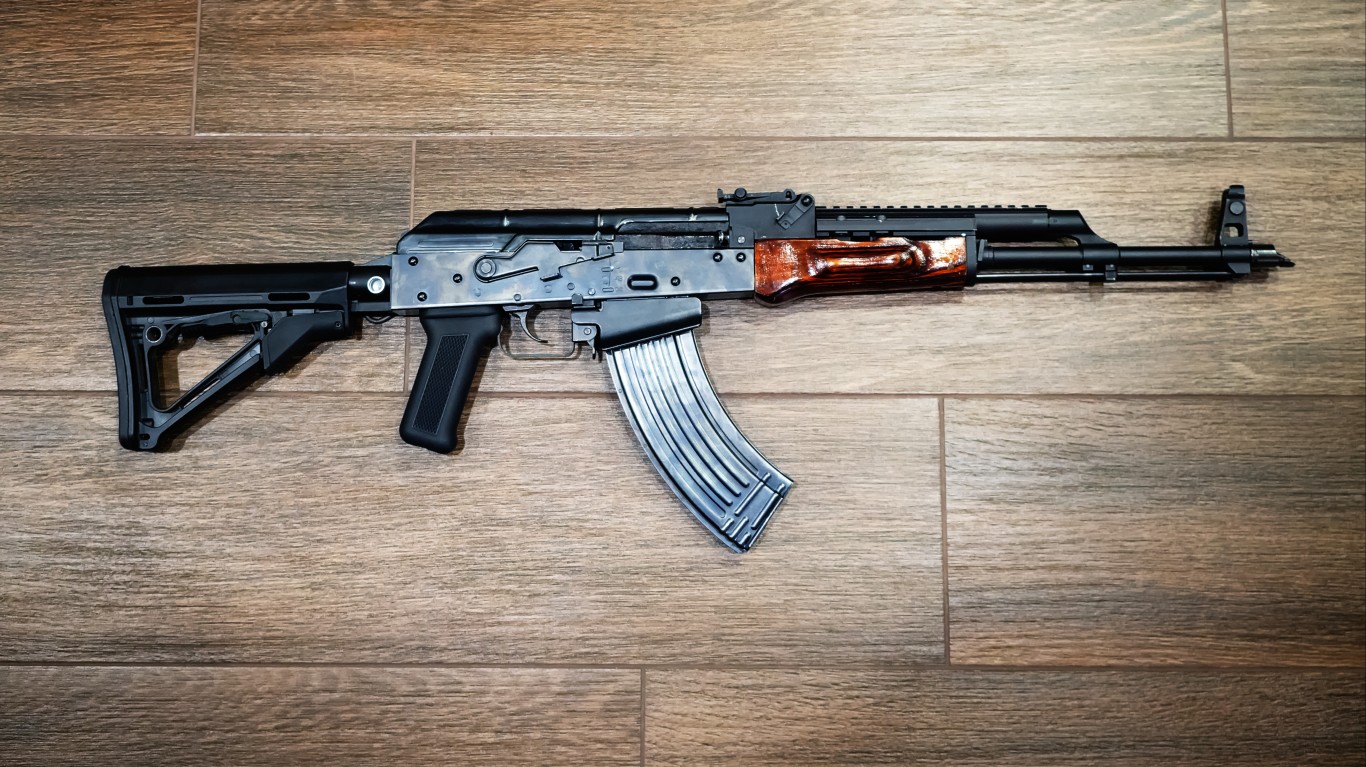
- Year introduced to service: 1959
- Type: Assault Rifle
- Who it is used by: Used by Poland, Lithuania, Latvia, Estonia (legacy stocks)
- Why it is still in service: Rugged, simple, and reliable
- Modern upgrades: Used mainly in reserve or transitional forces
Some NATO members still retain AKM rifles for reserve and emergency roles. Its simple design, durability, and ease of maintenance make it a viable backup system even as nations transition to newer rifles.
Carl Gustaf Recoilless Rifle
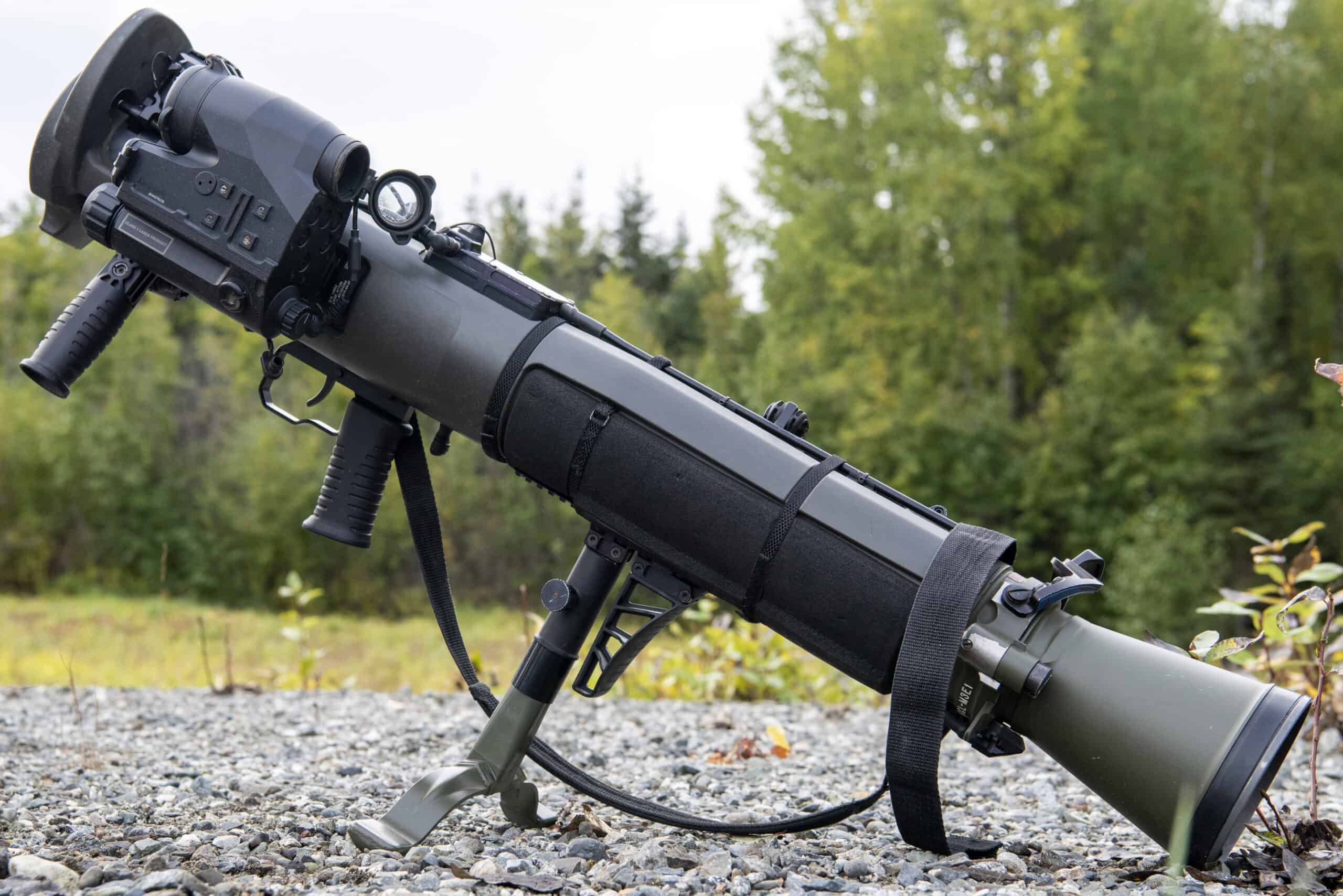
- Year introduced to service: 1946
- Type: Recoilless Rifle
- Who it is used by: USA, Sweden, UK, others
- Why it is still in service: Highly versatile with multiple ammunition types
- Modern upgrades: Modern variants (M3/M4) keep it frontline-capable
The Carl Gustaf has served NATO forces for generations due to its adaptability. With ammunition options ranging from anti-armor to smoke and illumination, it remains a powerful support weapon. The latest lightweight versions ensure continued widespread use.
Browning Hi-Power
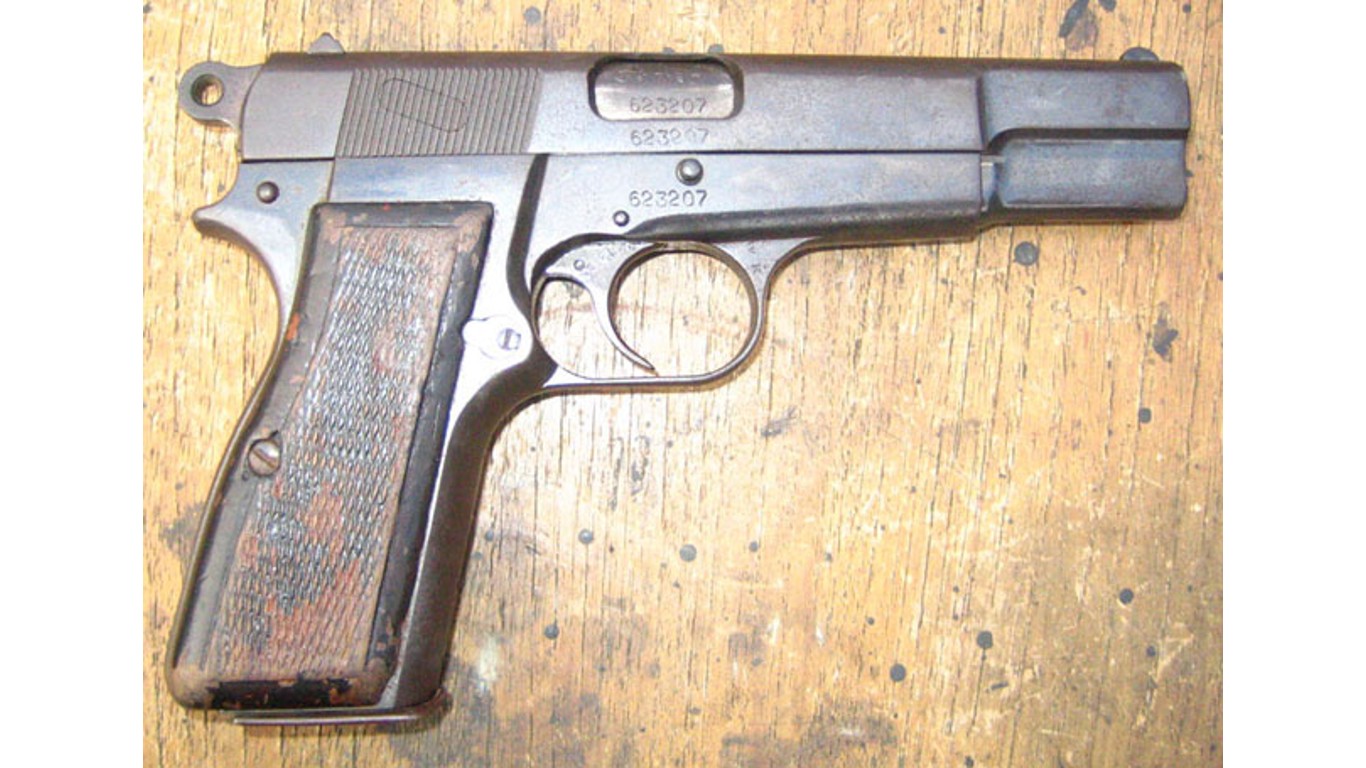
- Year introduced to service: 1935
- Type: Pistol
- Who it is used by: Limited use in some NATO forces
- Why it is still in service: Accurate and historically trusted
- Modern upgrades: Used mostly in reserve or specialist roles
Though largely replaced by modern handguns, the Browning Hi‑Power remains in limited NATO service. Its high-capacity design and proven performance made it a standard for decades. Some units still rely on remaining stocks for training or secondary duties.
MG3 Machine Gun
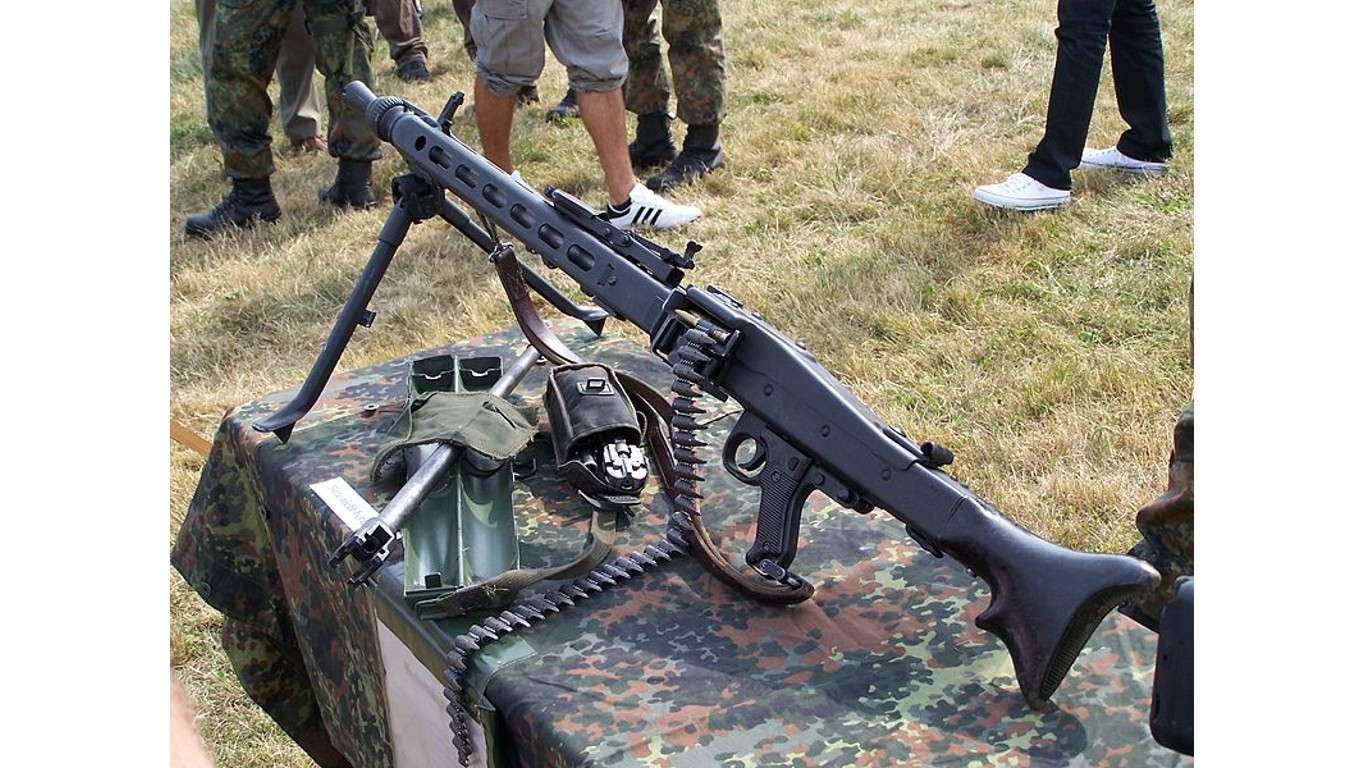
- Year introduced to service: 1960
- Type: General-Purpose Machine Gun
- Who it is used by: Germany, Norway, Turkey
- Why it is still in service: High rate of fire and proven MG42 lineage
- Modern upgrades: Updated mounts and accessory compatibility
The MG3 is a modernized continuation of the legendary MG42. Its extremely high rate of fire and battlefield reliability keep it relevant in NATO arsenals. Updated components and optics compatibility maintain its operational value.
M72 LAW
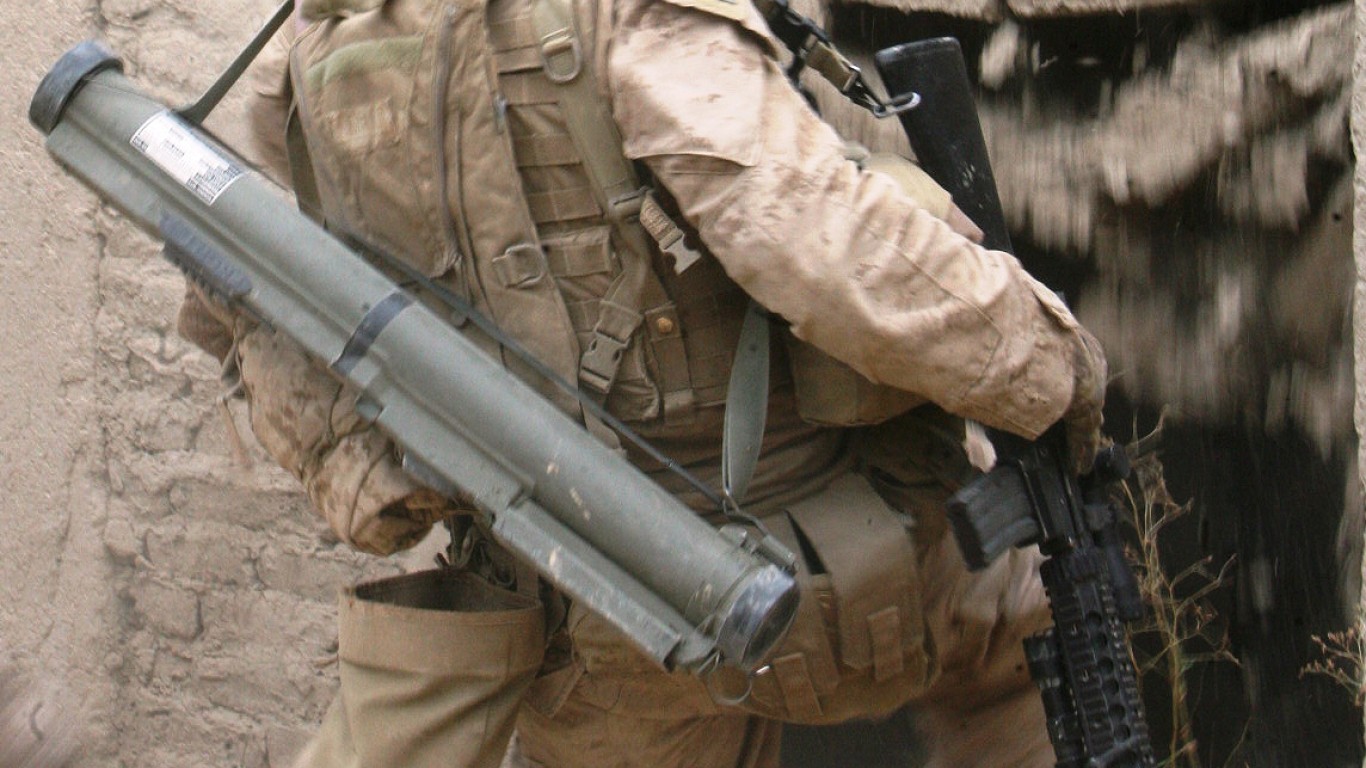
- Year introduced to service: 1963
- Type: Light Anti-Tank Weapon
- Who it is used by: USA, Norway, UK, others
- Why it is still in service: Lightweight, disposable, and simple
- Modern upgrades: Improved modern variants enhance safety and performance
The M72 LAW remains a popular shoulder-fired weapon due to its simplicity and portability. Ideal for infantry requiring quick anti-armor or bunker‑breaching capability, upgraded versions remain in NATO inventories.
Sterling SMG

- Year introduced to service: 1953
- Type: Submachine Gun
- Who it is used by: Limited UK/Canadian reserve use
- Why it is still in service: Compact and reliable for CQB
- Modern upgrades: Kept for ceremonial and reserve units
The Sterling SMG served NATO forces for decades as a compact and dependable submachine gun. While phased out from frontline roles, it continues to see limited ceremonial and reserve usage due to its historic value and reliability.
HK G3 Rifle

- Year introduced to service: 1959
- Type: Battle Rifle
- Who it is used by: Portugal, Greece, Turkey (reserve forces)
- Why it is still in service: Powerful 7.62mm performance
- Modern upgrades: Modern stocks and optics upgrades keep it usable
The G3 rifle remains in use among several NATO militaries, especially in reserve formations. Its powerful 7.62mm cartridge and rugged construction ensure continued viability in defensive roles.
RPG-7
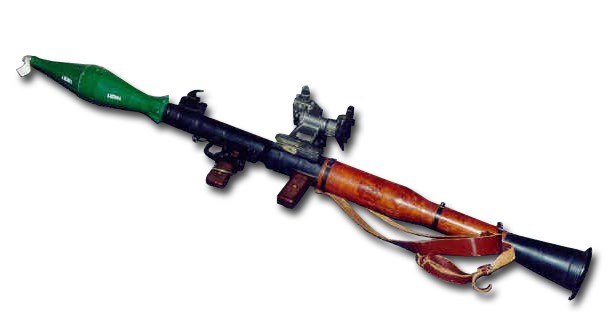
- Year introduced to service: 1961
- Type: Rocket Launcher
- Who it is used by: Bulgaria, Romania (secondary use)
- Why it is still in service: Cheap, rugged, and effective
- Modern upgrades: Upgraded optics and rounds extend relevance
While not originally a NATO weapon, the RPG‑7 persists in some NATO nations due to legacy stockpiles and its effectiveness. Upgraded sights and improved warheads give it continued utility in limited roles.
M113 APC
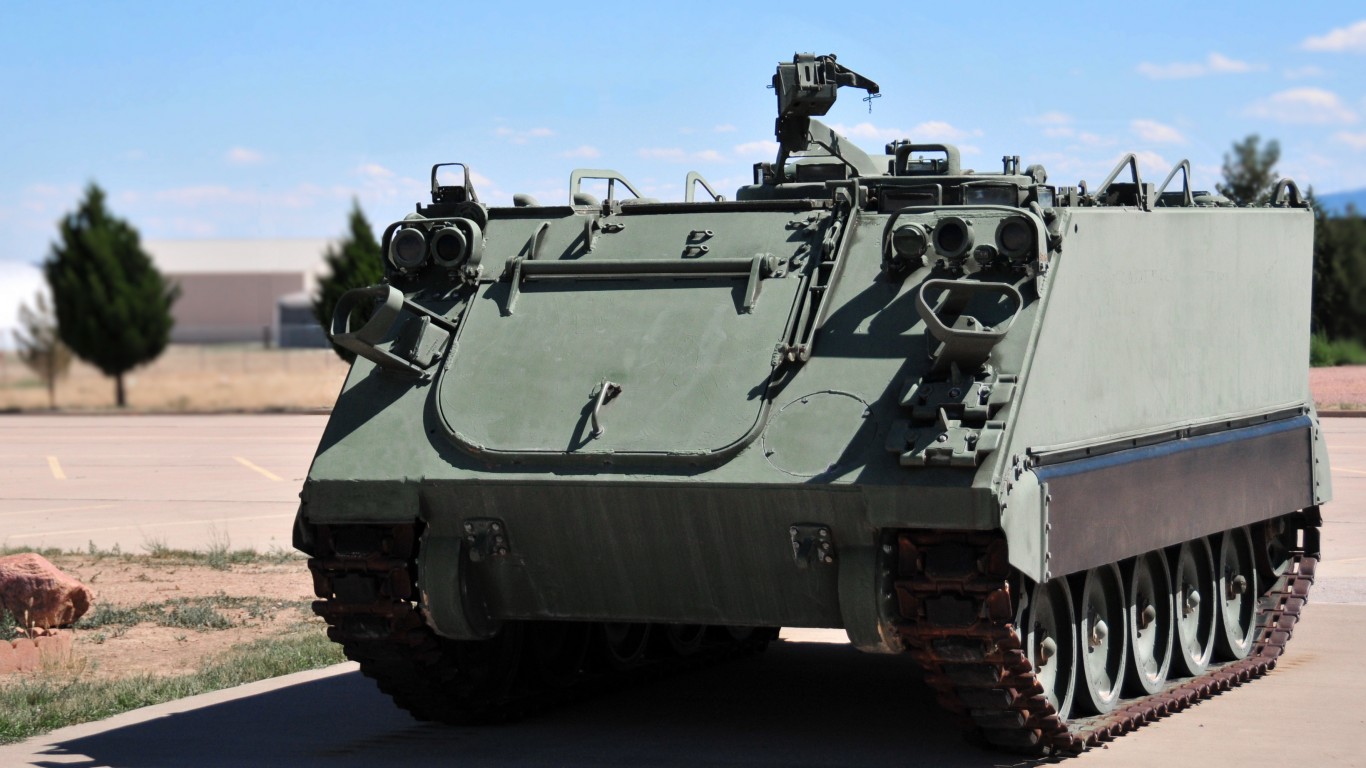
- Year introduced to service: 1960
- Type: Armored Personnel Carrier
- Who it is used by: USA, Italy, Denmark, others
- Why it is still in service: Simple, reliable, widely available
- Modern upgrades: Modernized variants with new armor and engines
The M113 remains a logistical workhorse across NATO. Its modular design has allowed countless upgrades, keeping it viable for transport, command, medical, and support missions for over 60 years.
Leopard 1
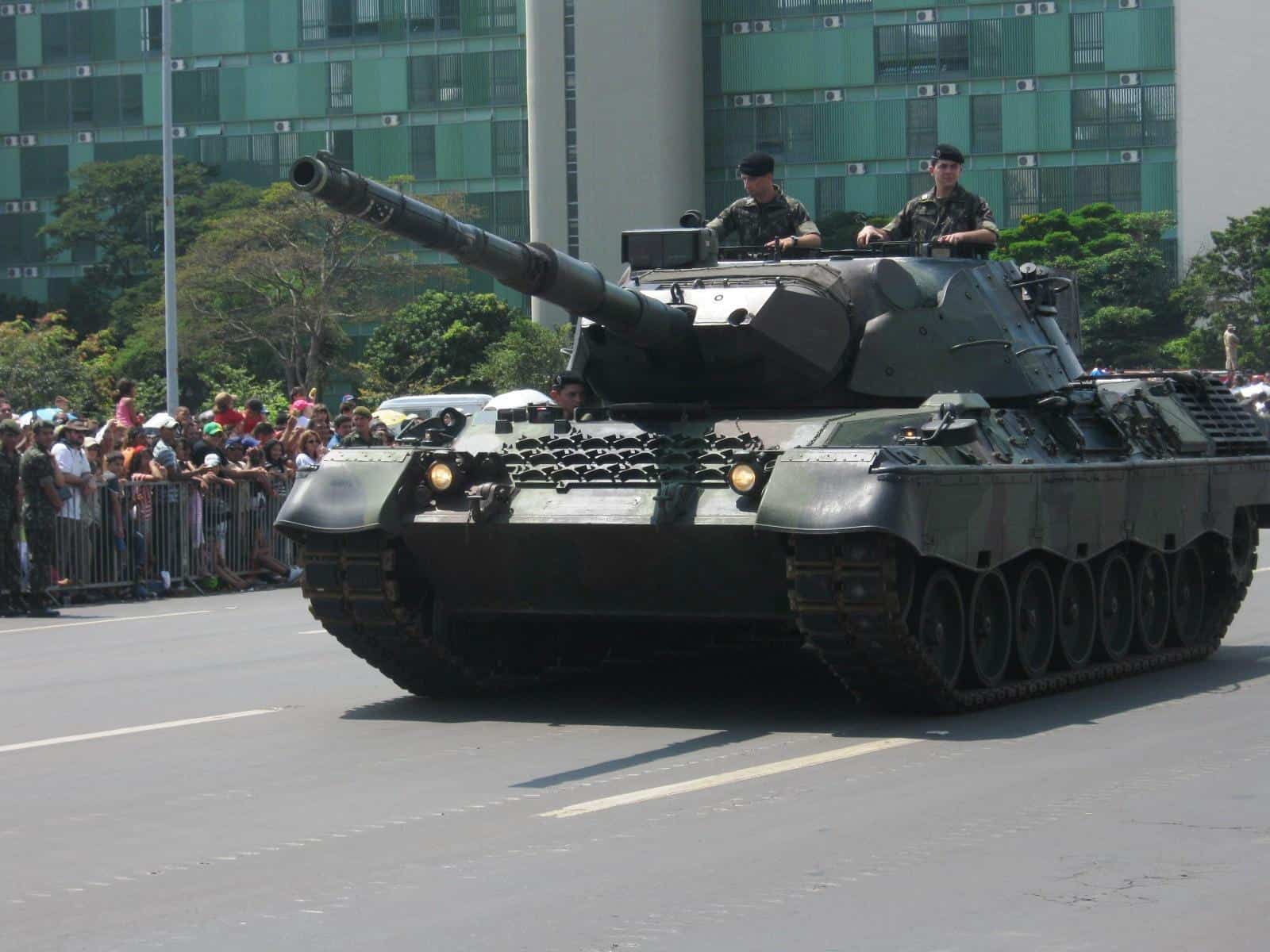
- Year introduced to service: 1965
- Type: Main Battle Tank
- Who it is used by: Greece, Turkey, others
- Why it is still in service: Fast, accurate, and easy to maintain
- Modern upgrades: Fire control and armor upgrades keep it relevant
The Leopard 1 served as NATO’s premier tank for decades. Many nations still operate upgraded versions with improved targeting systems, making it effective in training and secondary combat roles.
M60 Patton
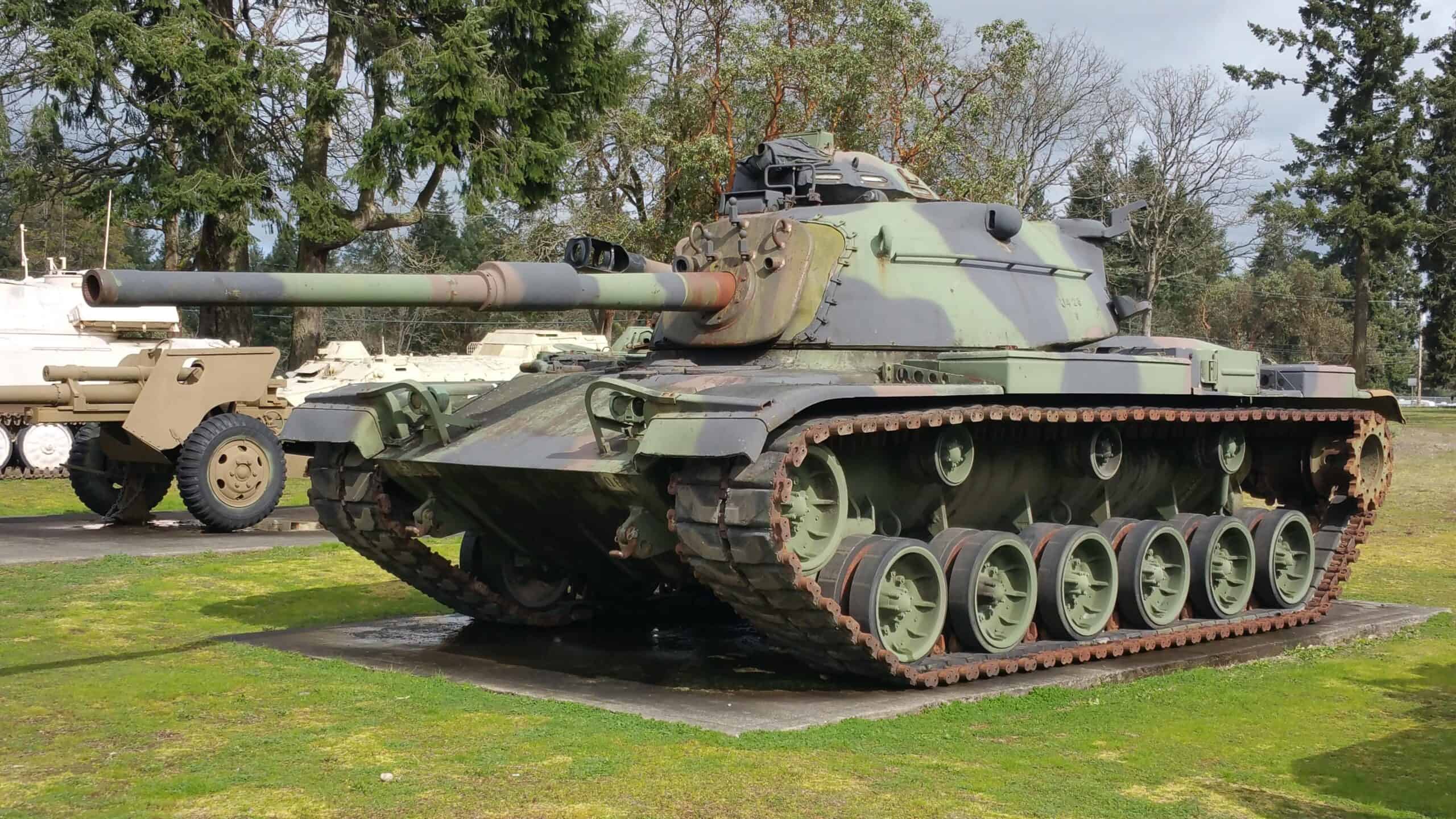
- Year introduced to service: 1960
- Type: Main Battle Tank
- Who it is used by: Turkey
- Why it is still in service: Reliable platform with strong 105mm gun
- Modern upgrades: A3 and A4 upgrades extend service life
The M60 Patton remains in Turkish service thanks to extensive modernization programs. Upgraded armor, electronics, and fire control systems have kept this Cold War tank in active use.
BTR-60

- Year introduced to service: 1960
- Type: Armored Personnel Carrier
- Who it is used by: Romania, others (reserve)
- Why it is still in service: Simple and mobile
- Modern upgrades: Retained mostly for reserve and training
The BTR‑60 remains in limited NATO service due to its large existing fleets and low operating cost. Though outdated, it still performs adequately in support and reserve roles.
M109 Howitzer (early variants)
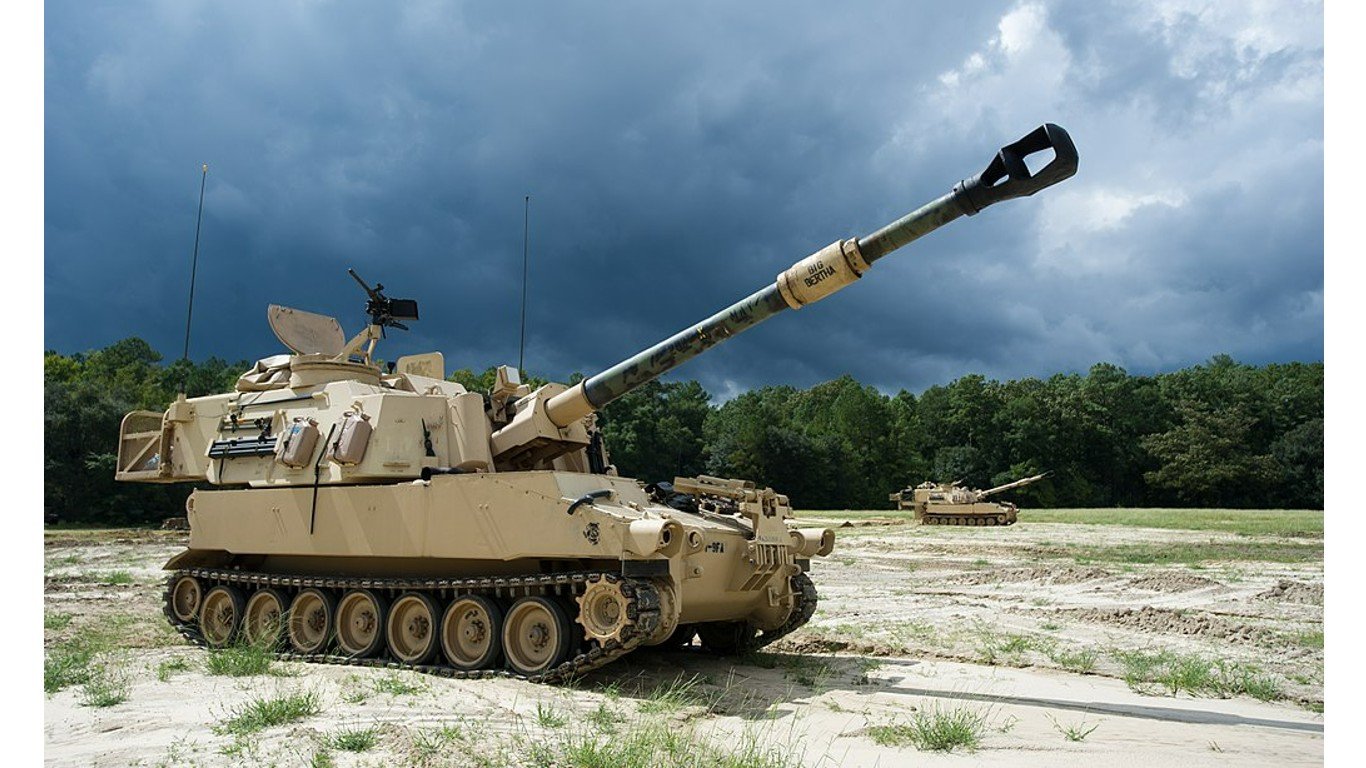
- Year introduced to service: 1963
- Type: Self-Propelled Howitzer
- Who it is used by: USA, Italy, others
- Why it is still in service: Long-range indirect fire capability
- Modern upgrades: Modern A6/A7 variants keep system relevant
The M109 has served NATO armies for generations. While modern variants exist, many nations still operate upgraded early models with digital fire control and improved ammunition.
AMX-30
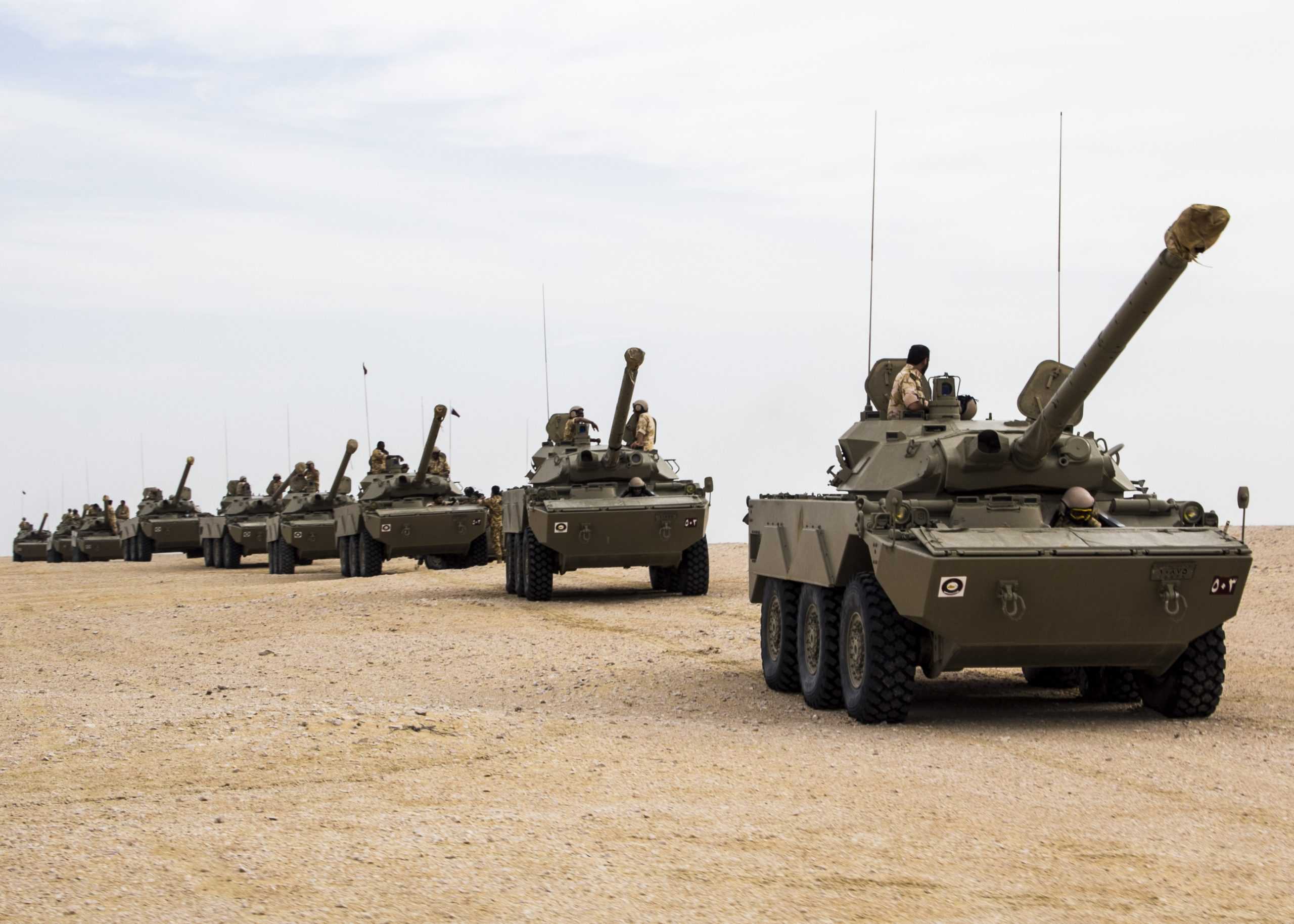
- Year introduced to service: 1966
- Type: Main Battle Tank
- Who it is used by: Spain (legacy stocks) / some NATO partners
- Why it is still in service: Lightweight and mobile
- Modern upgrades: Used mostly in training or reserve roles
The AMX‑30, once France’s main tank, remains in limited NATO‑aligned inventories. Its mobility and operational simplicity maintain niche utility despite its age.
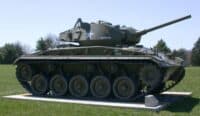
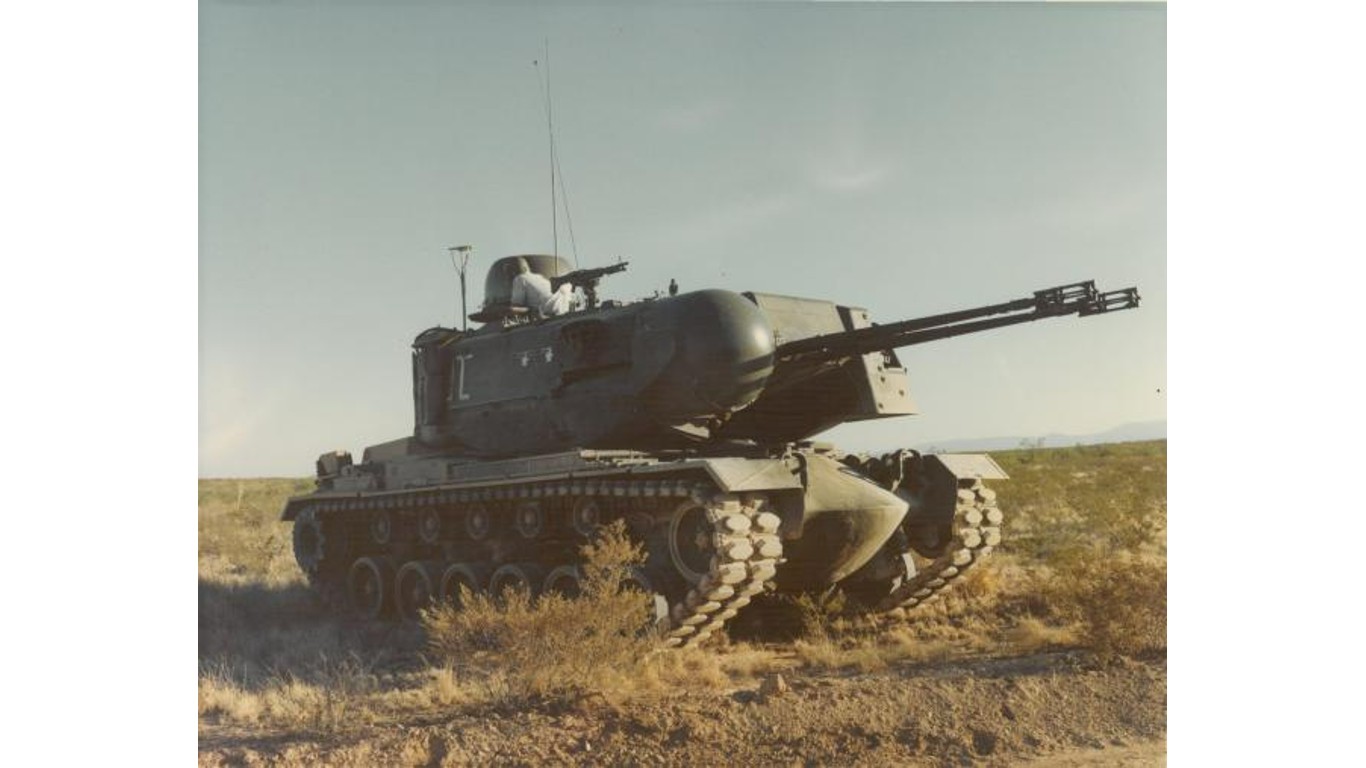
M41 Walker Bulldog
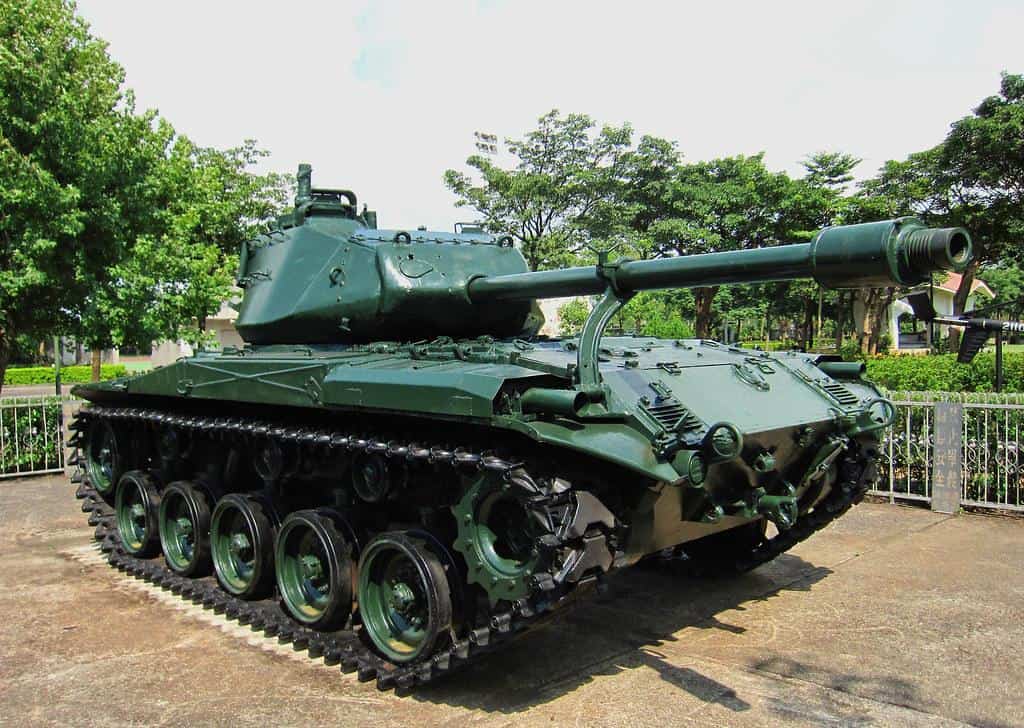
- Year introduced to service: 1953
- Type: Light Tank
- Who it is used by: Some NATO partners retain limited units
- Why it is still in service: Fast and agile
- Modern upgrades: Used mainly for training
The M41 served as a reconnaissance tank and remains in extremely limited NATO use. Its speed and light weight make it suitable for training despite being obsolete for modern combat.
KC-135 Stratotanker
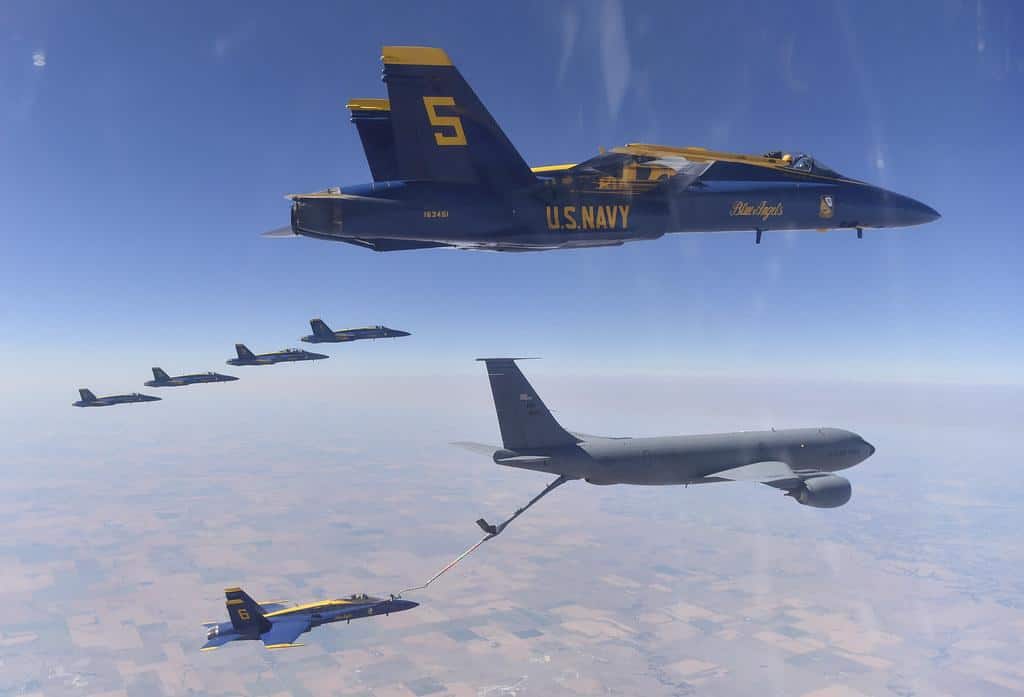
- Year introduced to service: 1957
- Type: Aerial Refueler
- Who it is used by: USA and NATO partners
- Why it is still in service: Essential for long-range air operations
- Modern upgrades: Re-engining and avionics upgrades extend service
The KC‑135 is one of NATO’s most strategically important aircraft. Modern upgrades keep it flying decades after introduction, ensuring NATO airpower can project globally.
C-130 Hercules
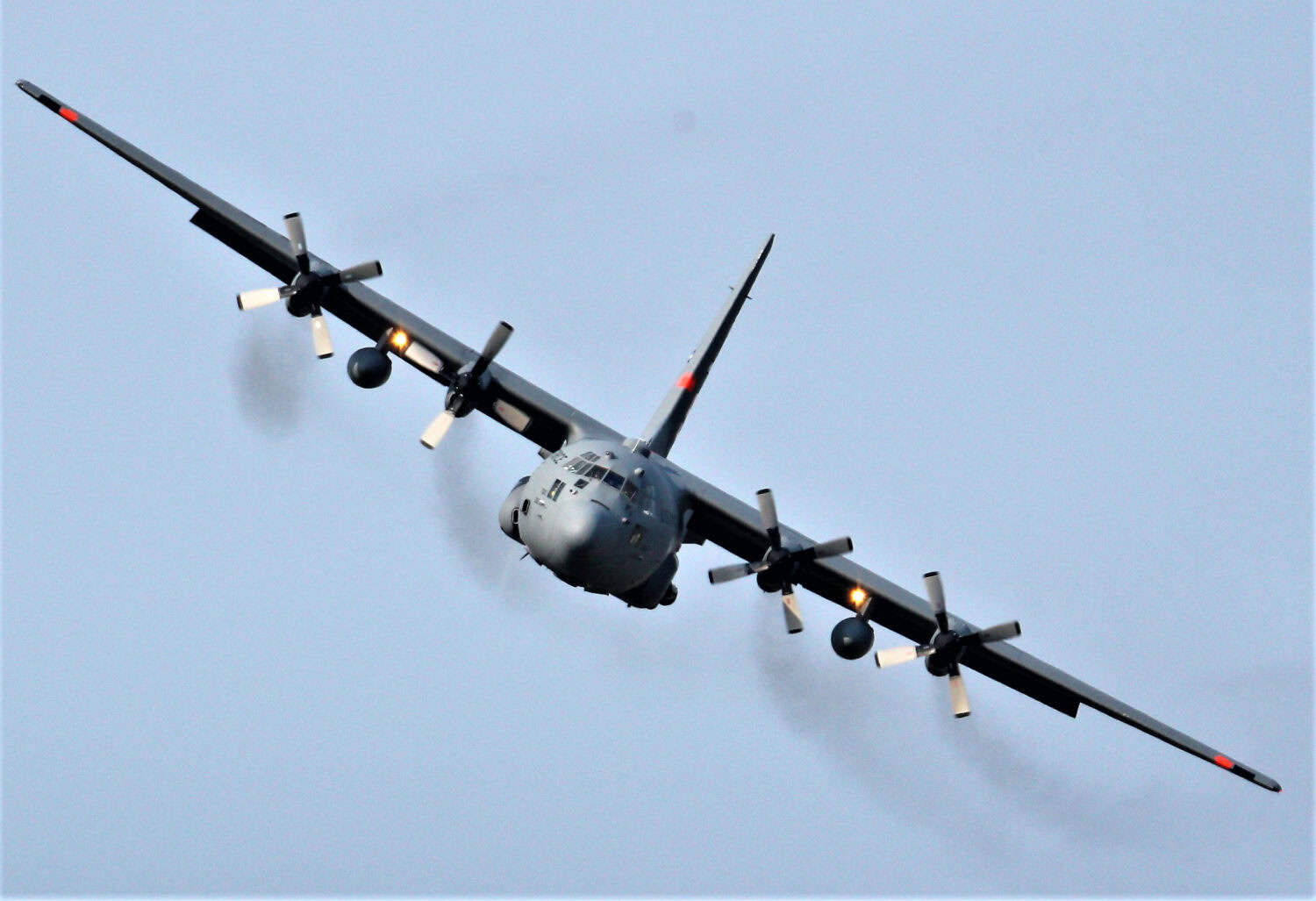
- Year introduced to service: 1956
- Type: Transport Aircraft
- Who it is used by: Many NATO nations
- Why it is still in service: Rugged, versatile, and globally proven
- Modern upgrades: New engines, avionics, and J‑model upgrades
The C‑130 remains a backbone of NATO airlift. Its ability to operate from rough airstrips and perform countless mission types ensures its continued widespread use.
T-38 Talon

- Year introduced to service: 1959
- Type: Trainer Aircraft
- Who it is used by: USA (training role)
- Why it is still in service: Exceptional flight performance
- Modern upgrades: Upgraded avionics extend life
The T‑38 has trained generations of NATO fighter pilots. Despite its age, continuous upgrades keep it effective as a supersonic jet trainer.
MiG-21
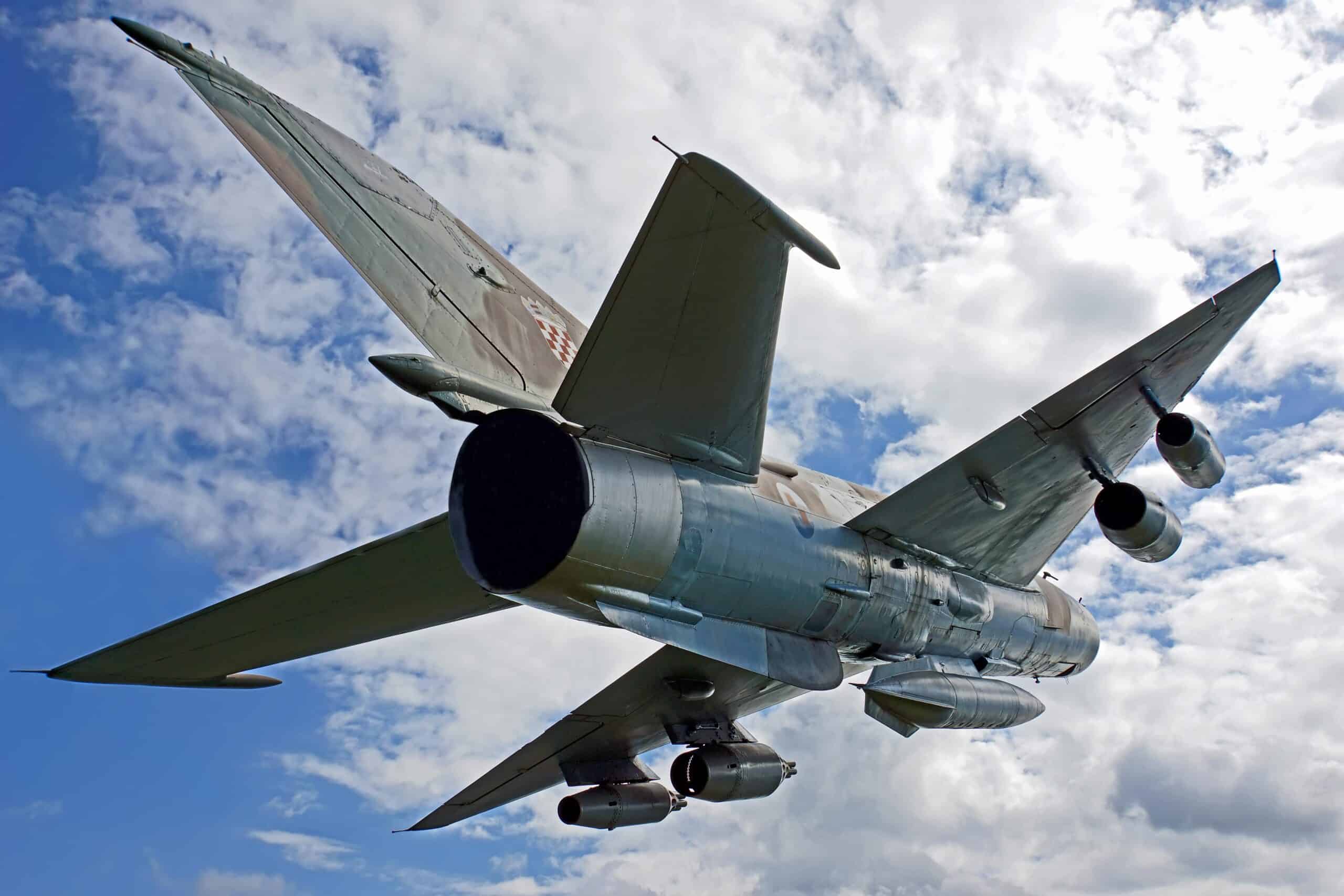
- Year introduced to service: 1959
- Type: Fighter Aircraft
- Who it is used by: Croatia (upgraded)
- Why it is still in service: Fast, simple, and rugged
- Modern upgrades: Modern avionics keep it barely viable
Although nearing the end of its service life, Croatia’s upgraded MiG‑21s remain operational. Their simplicity and speed continue to provide limited air defense capability.
UH-1 Iroquois
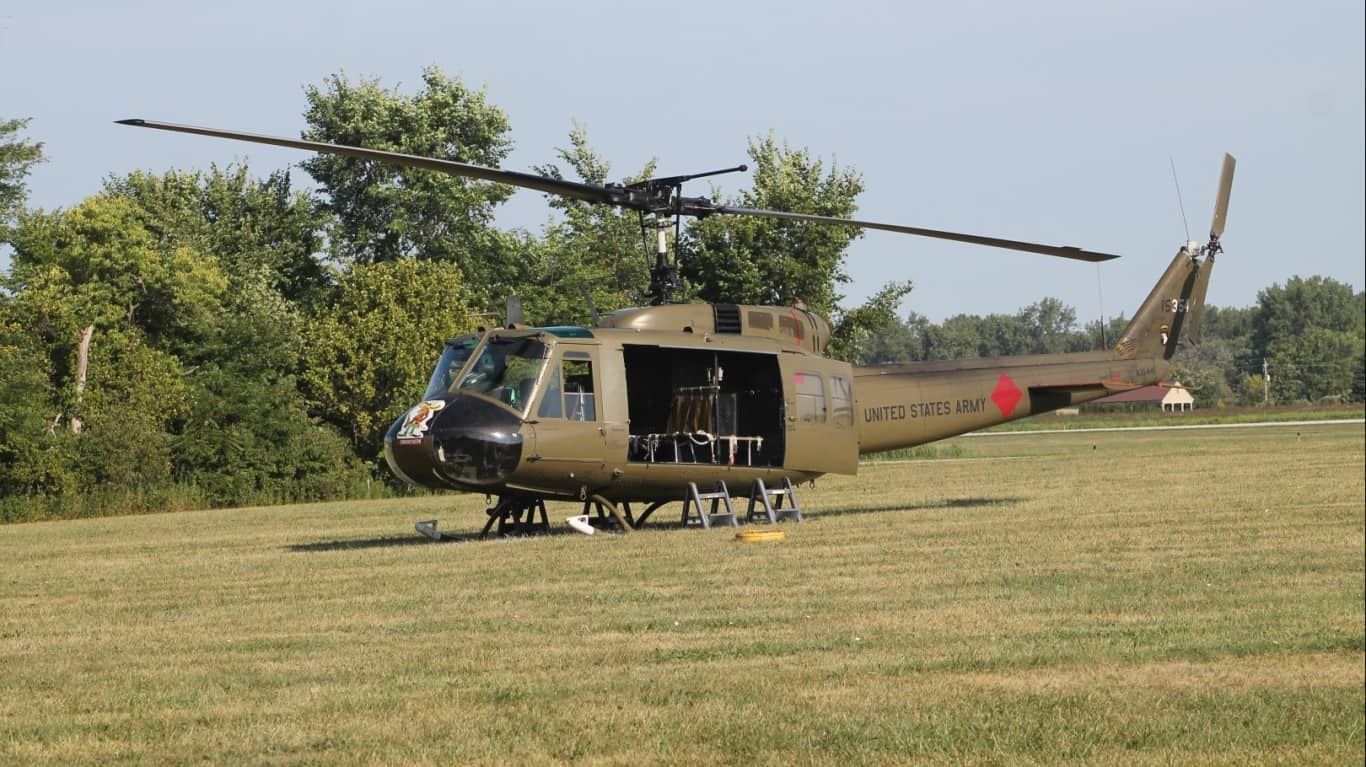
- Year introduced to service: 1959
- Type: Utility Helicopter
- Who it is used by: Turkey and limited NATO users
- Why it is still in service: Rugged and easy to maintain
- Modern upgrades: Modern engines and avionics upgrades
The UH‑1, famous worldwide, still serves in NATO roles thanks to its simplicity and reliability. Modernized versions retain utility for transport and training missions.
P-3 Orion
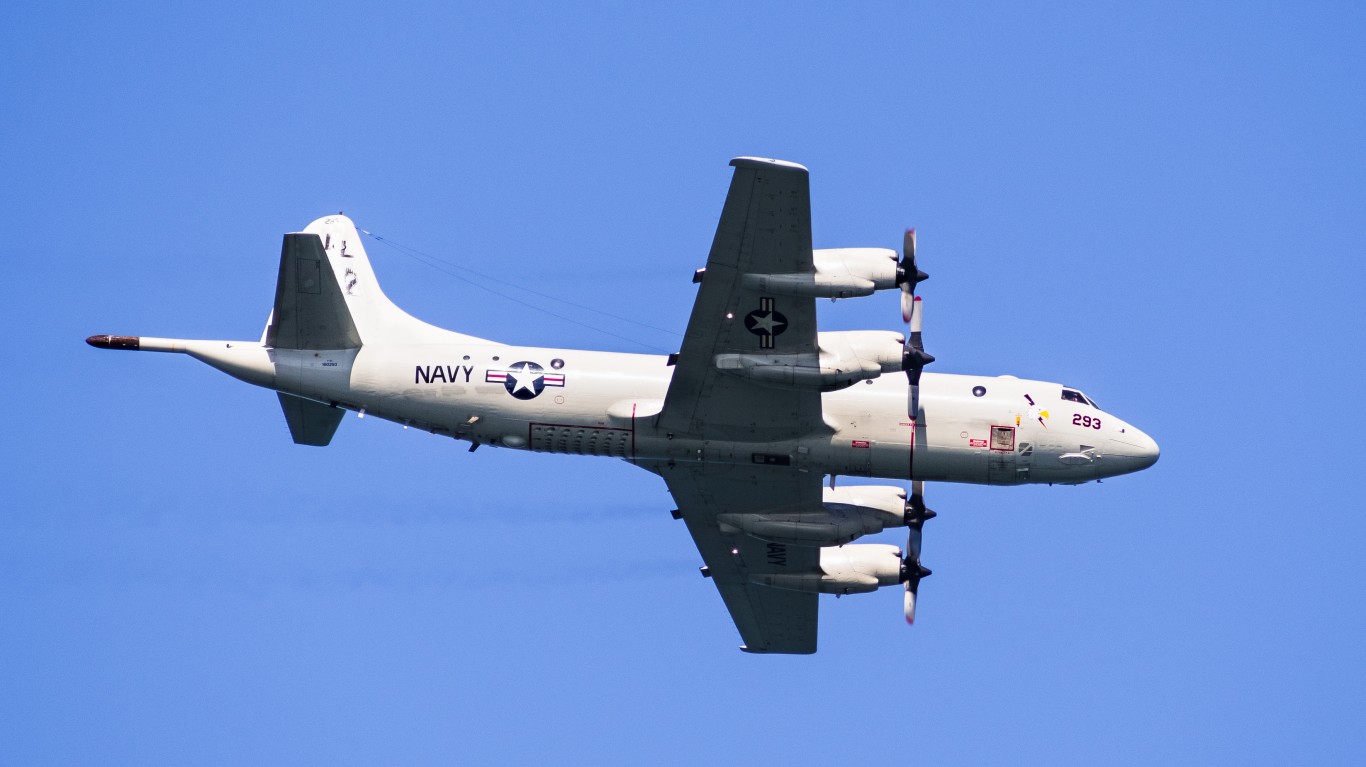
- Year introduced to service: 1962
- Type: Maritime Patrol Aircraft
- Who it is used by: Norway, Portugal (until recently)
- Why it is still in service: Exceptional endurance
- Modern upgrades: Modern sensors extend relevance
The P‑3 Orion remains valuable for maritime patrol and submarine tracking. Upgraded mission systems keep it useful despite newer aircraft entering service.
Bofors 40mm L/60
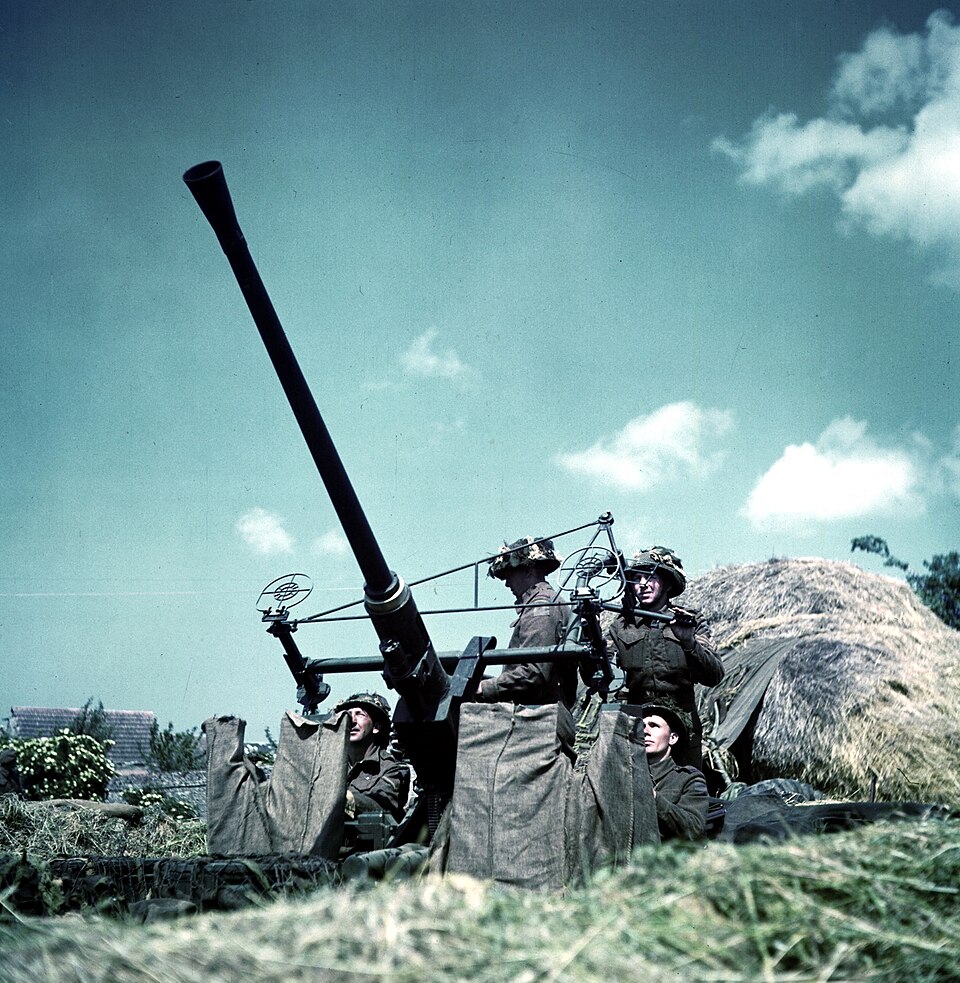
- Year introduced to service: 1934
- Type: Anti-Aircraft Gun
- Who it is used by: Used in reserve by some NATO forces
- Why it is still in service: Extremely reliable and effective
- Modern upgrades: Modern fire control integration possible
The Bofors 40mm gun has been in service for nearly a century. Its reliability and potent firepower ensure it remains in reserve or coastal defense roles among some NATO nations.
M101 105mm Howitzer
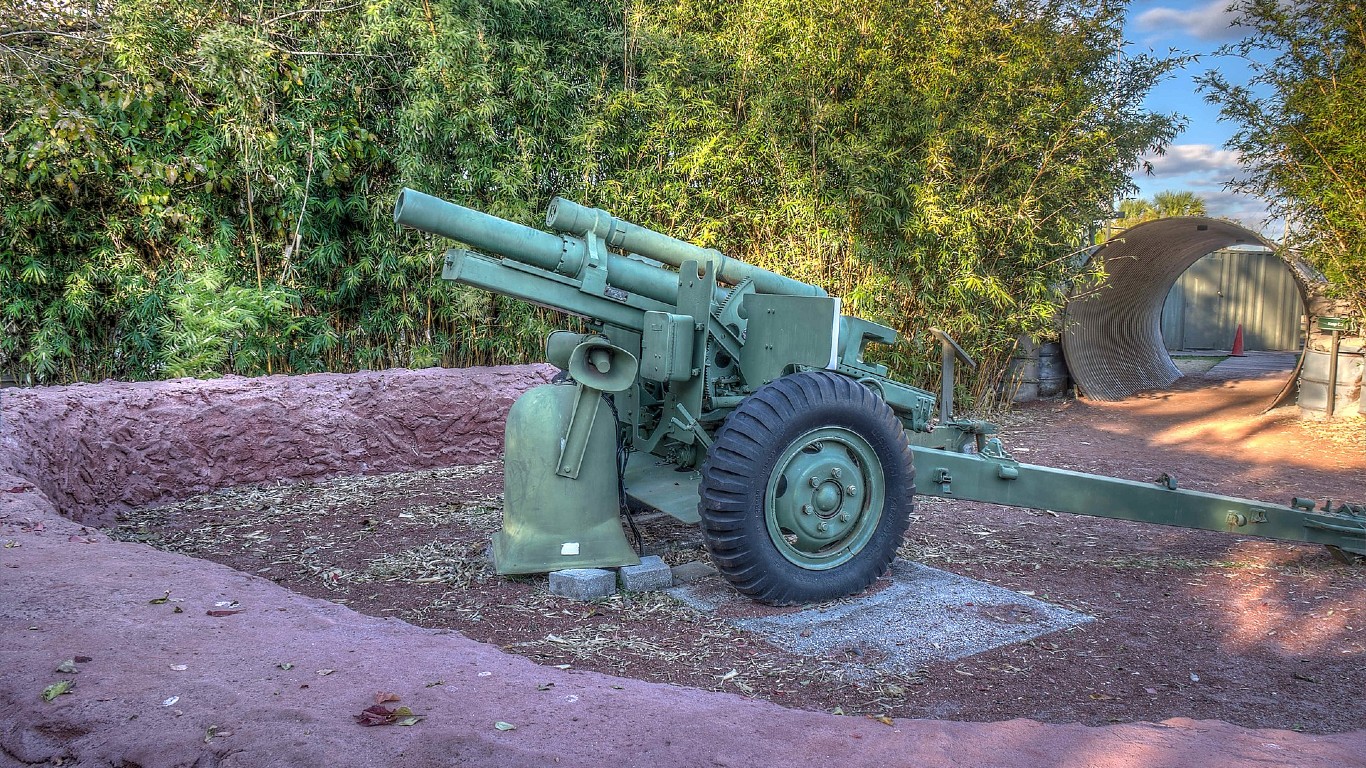
- Year introduced to service: 1941
- Type: Towed Artillery
- Who it is used by: Some NATO reserve units
- Why it is still in service: Simple and accurate
- Modern upgrades: Used primarily for training
The M101, a WWII-era workhorse, still appears in NATO reserve and ceremonial units. Its reliability and ease of operation keep it in limited active service.
M114 155mm Howitzer
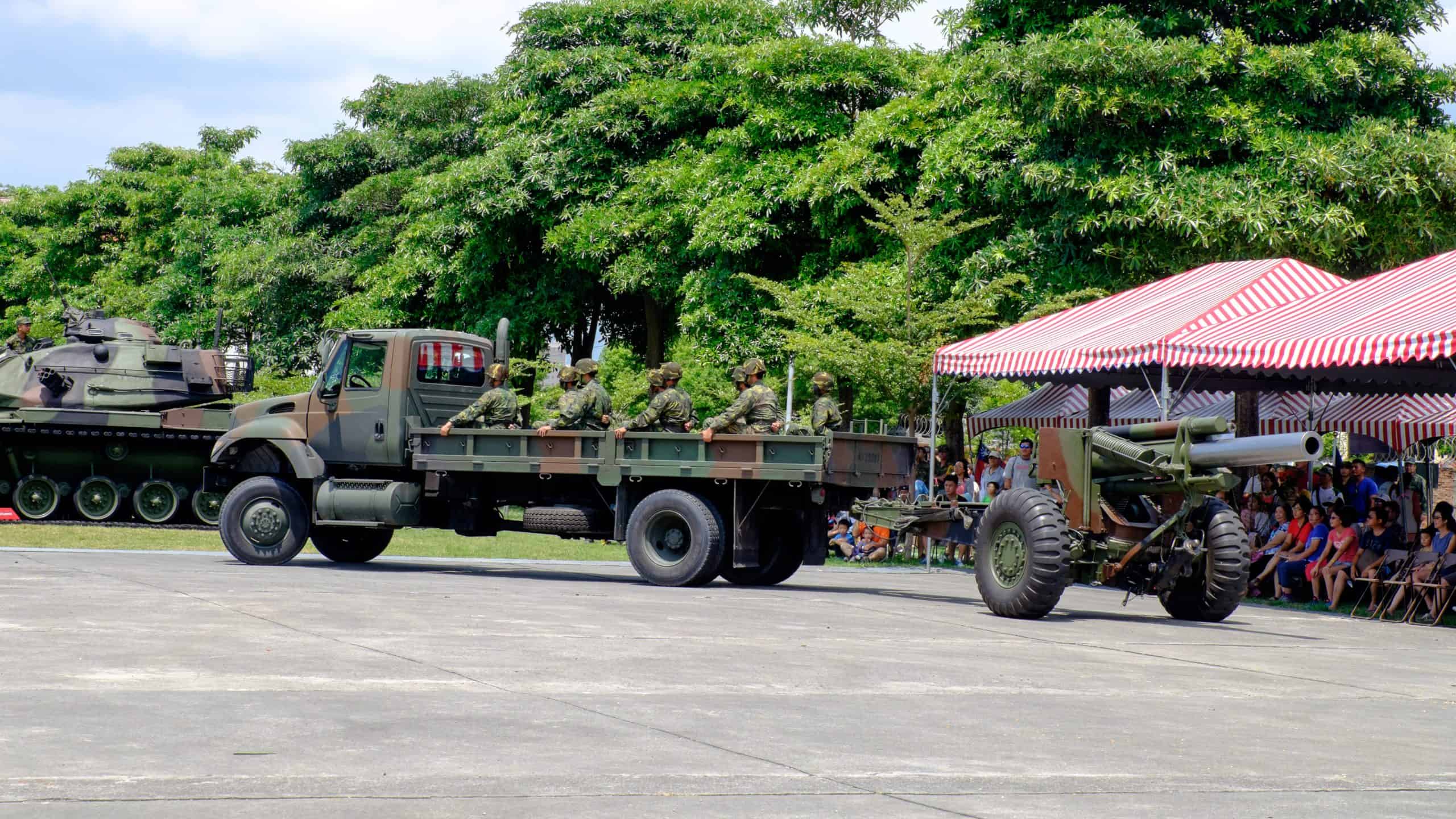
- Year introduced to service: 1942
- Type: Towed Artillery
- Who it is used by: Limited NATO training roles
- Why it is still in service: Durable and powerful
- Modern upgrades: Retained for low-cost artillery training
The M114 remains in use primarily for training due to its robustness and availability. Though outdated for frontline combat, it provides valuable artillery instruction capabilities.
ZU-23-2
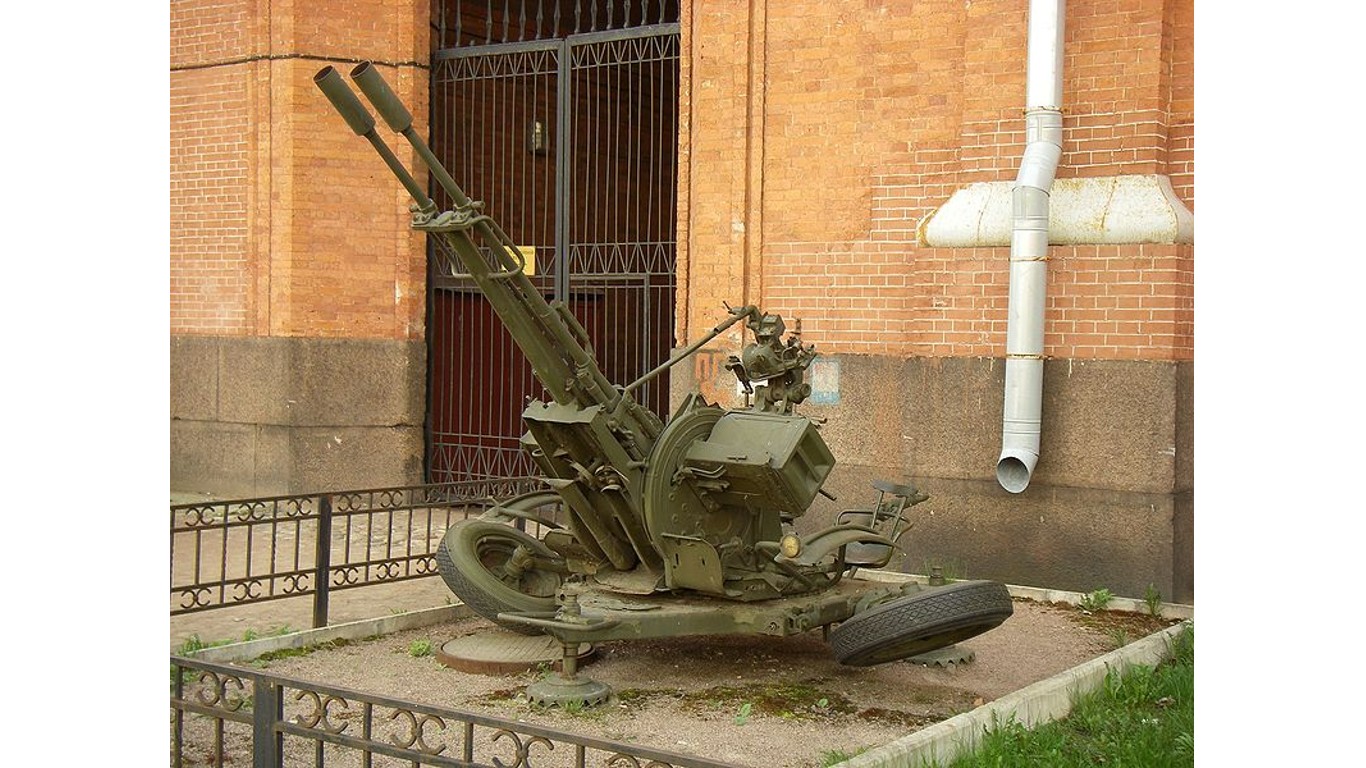
- Year introduced to service: 1960
- Type: Anti-Aircraft Gun
- Who it is used by: Poland, Romania, others
- Why it is still in service: High rate of fire and simplicity
- Modern upgrades: Modern fire control systems keep it viable
The ZU‑23‑2 continues to serve NATO nations acquired from Eastern Bloc inventories. Upgraded targeting and stabilization systems extend its defensive usefulness.
SA-6 Gainful (2K12 Kub)

- Year introduced to service: 1967
- Type: Mobile SAM System
- Who it is used by: Poland, others (limited)
- Why it is still in service: Mobile and effective for medium-range defense
- Modern upgrades: Upgraded radar and missiles keep it functional
Some NATO nations continue to operate SA‑6 systems inherited from pre‑NATO arsenals. Upgrades have sustained their defensive capability despite age.
Harpoon (Block 1 variants)
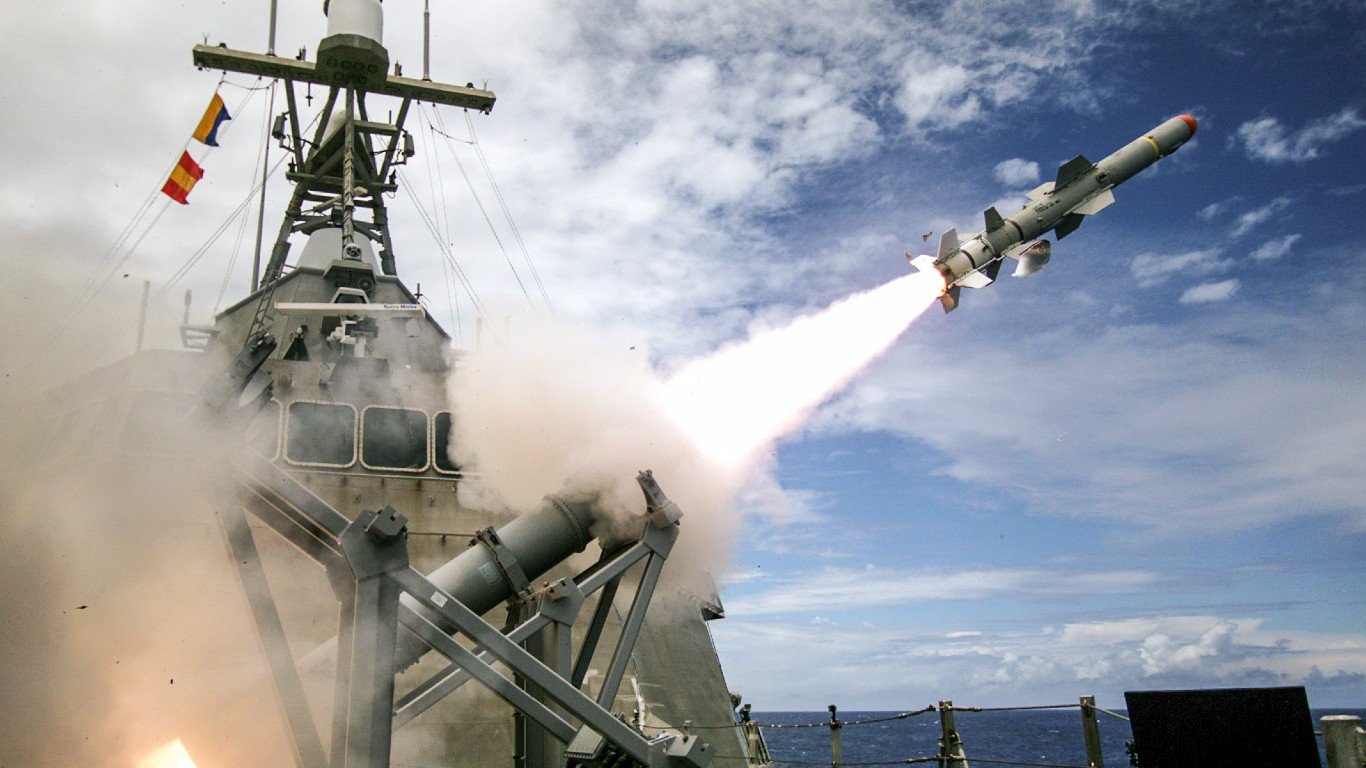
- Year introduced to service: 1977
- Type: Anti-Ship Missile
- Who it is used by: USA, UK, Denmark, others
- Why it is still in service: Proven, long-range naval strike capability
- Modern upgrades: New guidance packages and electronics
The Harpoon remains a cornerstone of NATO naval strike power. Early variants are still in service thanks to ongoing modernization and mission success.
Knox-Class Frigates

- Year introduced to service: 1969
- Type: Frigate
- Who it is used by: Some transferred to NATO partners
- Why it is still in service: Robust design and long-range capability
- Modern upgrades: Upgrades allow continued patrol and training use
Though retired from U.S. service, Knox-class frigates continue operating with some NATO partners. Their durability and upgrade potential make them effective for patrol and maritime security.
Contact [email protected] for any questions or corrections.
Chris Lange is a financial and geopolitical writer with more than a decade of experience covering a myriad of topics. He has published thousands of articles for 24/7 Wall St., with past coverage focused heavily on stocks, IPOs, healthcare, defense, global affairs, and technology.
His work has been quoted, or referenced by a number of outlets including Business Insider, USA Today, Yahoo Finance, MSN, The Motley Fool, and many other publications. A graduate of Southwestern University, he studied business with a focus on investments and has previous experience in banking and startups.
When not reading or writing the news, he is following his passion for Lacrosse, playing chess, or building solar projects with his dad.