The Firearms That Gave Navy SEALs an Edge in Urban Combat
Urban warfare has a way of exposing weaknesses in both tactics and equipment. For U.S. Navy SEAL teams operating in dense cities, the firearms they carry often determine how quickly they can seize control of a building, a street, or…

Urban warfare has a way of exposing weaknesses in both tactics and equipment. For U.S. Navy SEAL teams operating in dense cities, the firearms they carry often determine how quickly they can seize control of a building, a street, or an entire neighborhood. Over the years, certain weapons proved especially effective in close quarters, offering the speed, precision, and reliability needed to dominate some of the most dangerous environments in modern combat. Here, 24/7 Wall St. is taking a closer look at the weapons Navy SEALs rely on in urban combat.
To determine the firearms that gave the Navy SEALs an edge in urban combat, 24/7 Wall St. reviewed various historical and military sources. We included supplemental information regarding the weapon type, manufacturer, country of origin, when it was introduced, caliber, and what urban combat advantages each weapon yields.
Here is a look at the firearms that gave Navy SEALs an edge in urban combat:
Why Are We Covering This?
Understanding how elite military units operate in cities requires looking closely at the tools they rely on. Urban combat presents unique challenges—limited space, unpredictable angles, and extremely short reaction times. For Navy SEAL teams, the firearms chosen for these environments are not accidental; they are the result of years of operational experience and constant refinement. By examining the weapons that proved most effective in close, complex terrain, it becomes easier to see how equipment can shape tactics and give small teams a meaningful advantage during some of the most demanding missions in modern warfare.
Fighting Where Distance Disappears
Urban combat compresses the battlefield. Streets, stairwells, and tight interiors leave little room for error, and reaction time is often measured in seconds. For elite units like the U.S. Navy SEALs, success in these environments depends heavily on the weapons they carry. Firearms designed for speed, control, and adaptability can make the difference between hesitation and decisive action.
Why Cities Change the Rules of Combat
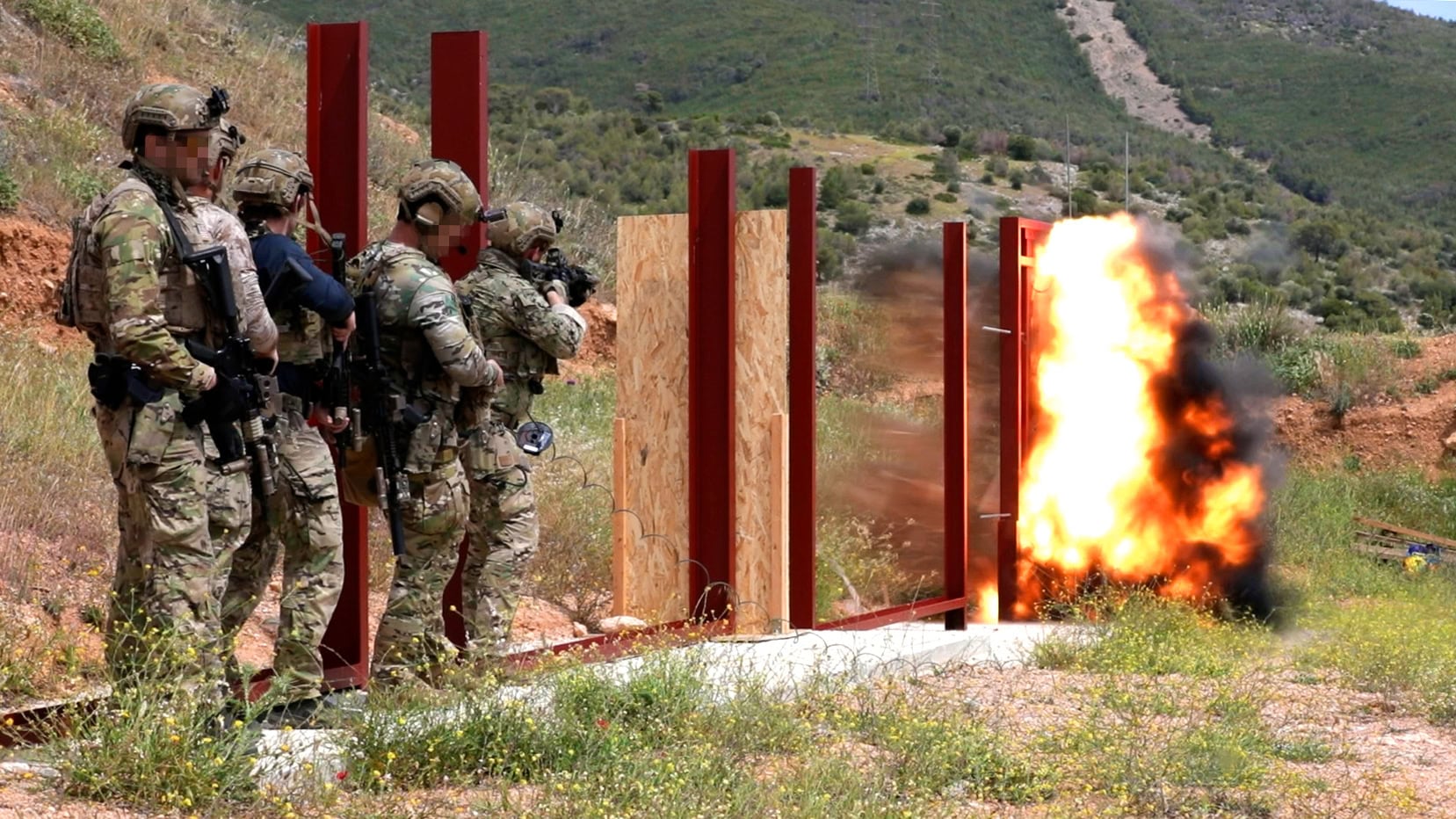
Cities create a different kind of fight. Long sightlines can suddenly collapse into close encounters, and threats can appear from rooftops, windows, or doorways with little warning. Weapons built for open terrain are not always ideal in these situations. SEAL teams have long favored firearms that remain effective when maneuvering through confined spaces.
Compact Weapons, Faster Decisions
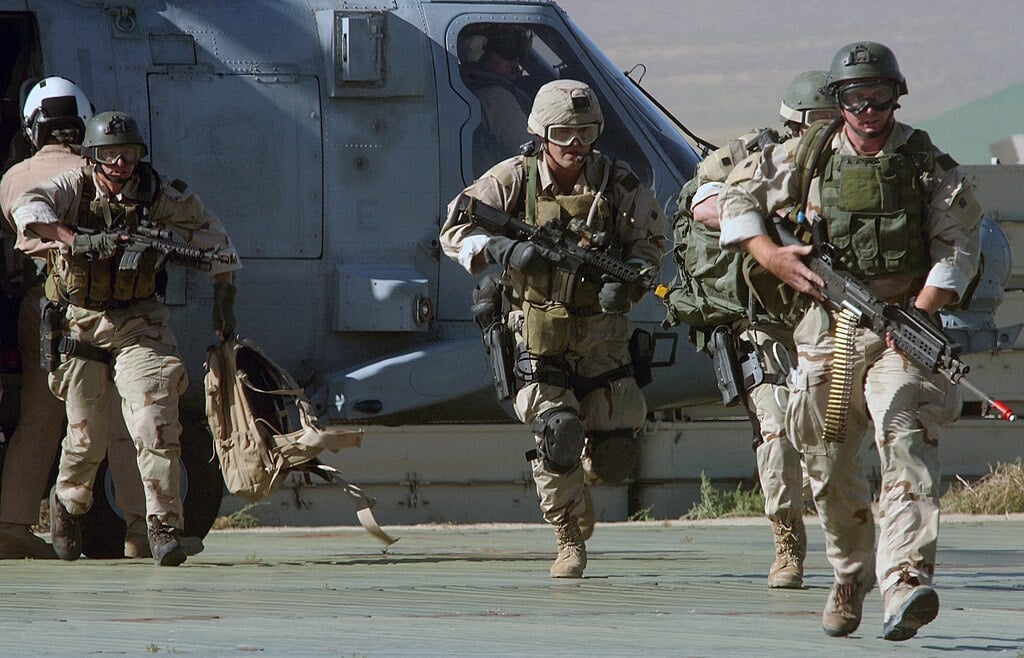
In dense environments, a weapon’s size and handling matter as much as its firepower. Carbines with shorter barrels, controllable submachine guns, and specialized platforms allow operators to move quickly through buildings while maintaining accuracy. Over time, Naval Special Warfare units refined their weapon choices to match the unique demands of close-quarters combat.
Precision Still Matters in the City
Even in tight urban settings, engagements do not always happen at arm’s length. Windows, alleys, and long streets can create opportunities—and dangers—at distance. Because of this, SEAL teams often combine compact assault weapons with precision rifles that allow overwatch elements to control key areas while assault teams move below.
The Tools Behind Urban Special Operations

The firearms used by Navy SEALs reflect decades of experience fighting in complex environments around the world. Each platform represents a balance of mobility, firepower, and reliability. Together, they form a toolkit designed for one of the most demanding forms of warfare—urban combat, where adaptability and speed are often the greatest advantages.
Mk 18 CQBR
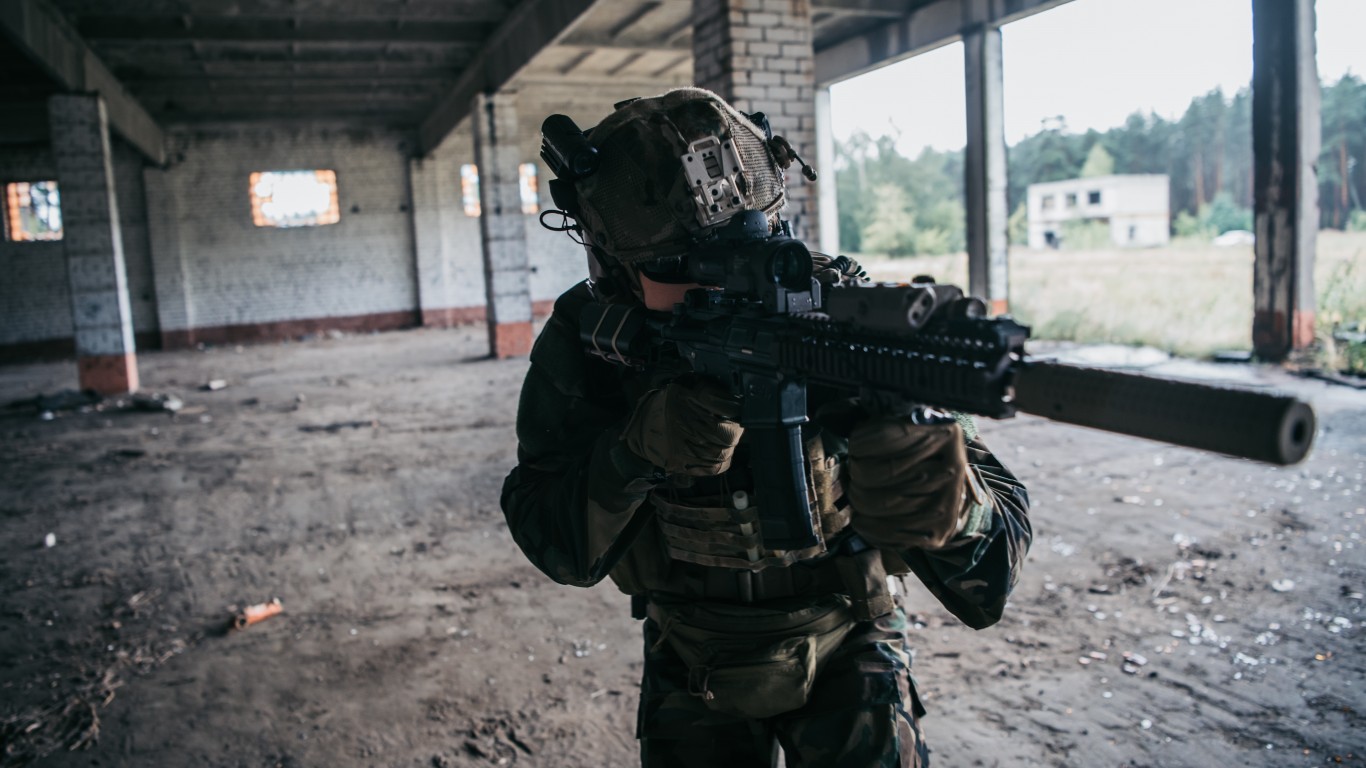
- Weapon Type: Carbine
- Manufacturer: Colt / Daniel Defense
- Country of Origin: USA
- Era introduced to service: 2000s
- Standard caliber: 5.56 NATO
- Urban Combat Advantage: Compact CQB maneuverability
- Why SEALs Used It: Favored for tight urban fighting
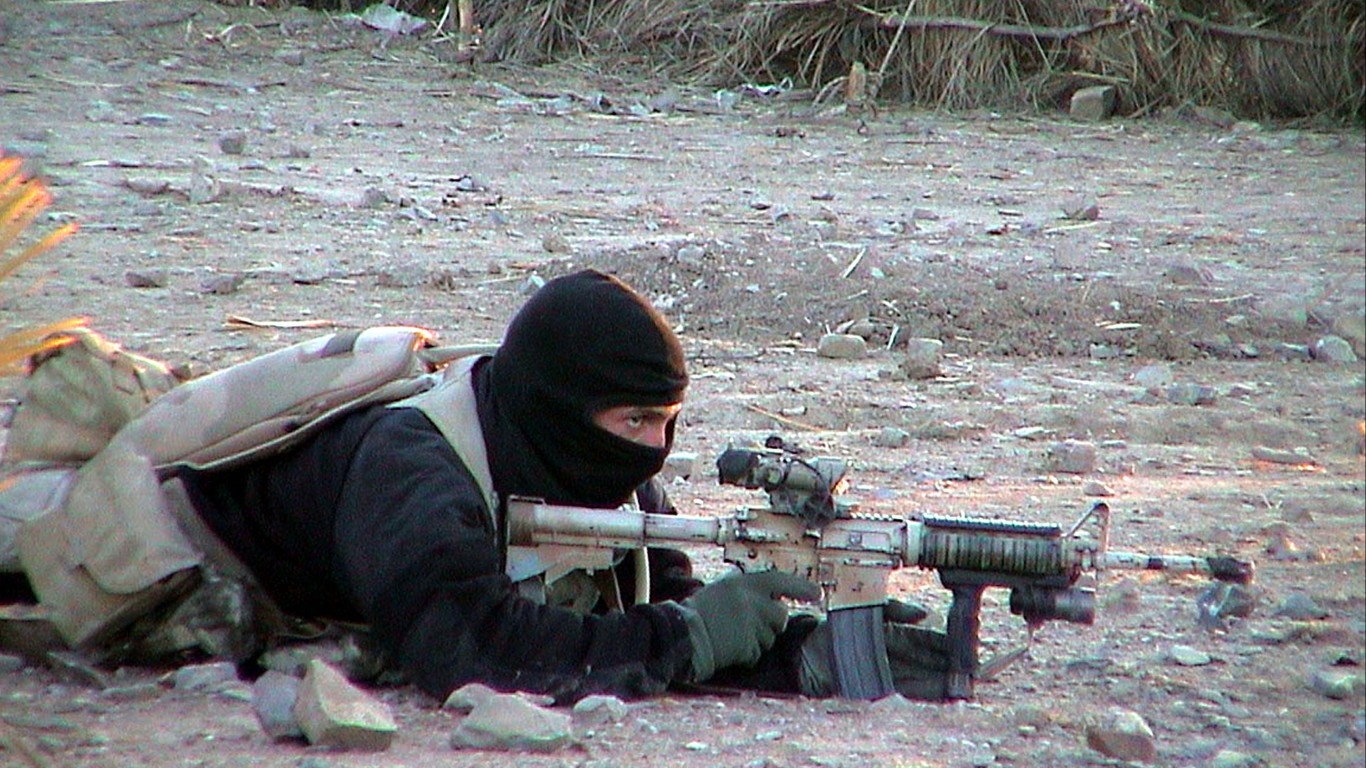
The Mk 18 CQBR became closely associated with SEAL urban operations because its extremely short barrel made it easier to maneuver through rooms, stairwells, and narrow hallways. Designed for close-quarters battle, it allowed operators to move quickly without sacrificing accuracy. During raids in Iraq and Afghanistan, the platform proved that compact rifles could dominate confined environments where speed and handling mattered most.
HK416
- Weapon Type: Carbine
- Manufacturer: Heckler & Koch
- Country of Origin: Germany
- Era introduced to service: 2000s
- Standard caliber: 5.56 NATO
- Urban Combat Advantage: Reliability in high-tempo combat
- Why SEALs Used It: Used by SEAL teams in raids
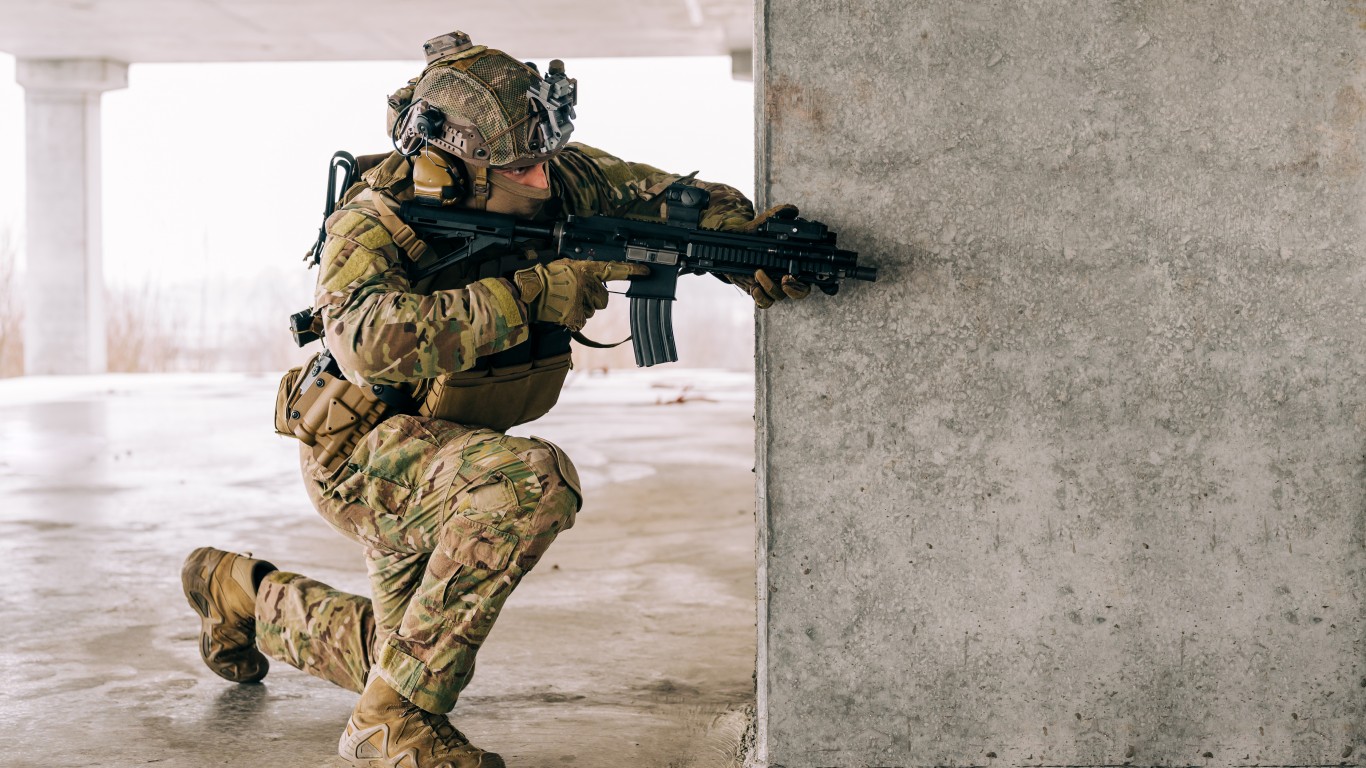
The HK416 earned a reputation among special operations units for reliability under harsh combat conditions. During sustained urban raids where weapons were exposed to dust, heat, and heavy firing schedules, the rifle’s piston-driven system helped reduce malfunctions. For SEAL teams conducting high‑tempo missions, that reliability translated into confidence when clearing buildings and engaging threats at extremely short distances.
Colt M4A1 SOPMOD
- Weapon Type: Carbine
- Manufacturer: Colt
- Country of Origin: USA
- Era introduced to service: 1990s
- Standard caliber: 5.56 NATO
- Urban Combat Advantage: Modular CQB platform
- Why SEALs Used It: Widely issued in SOCOM
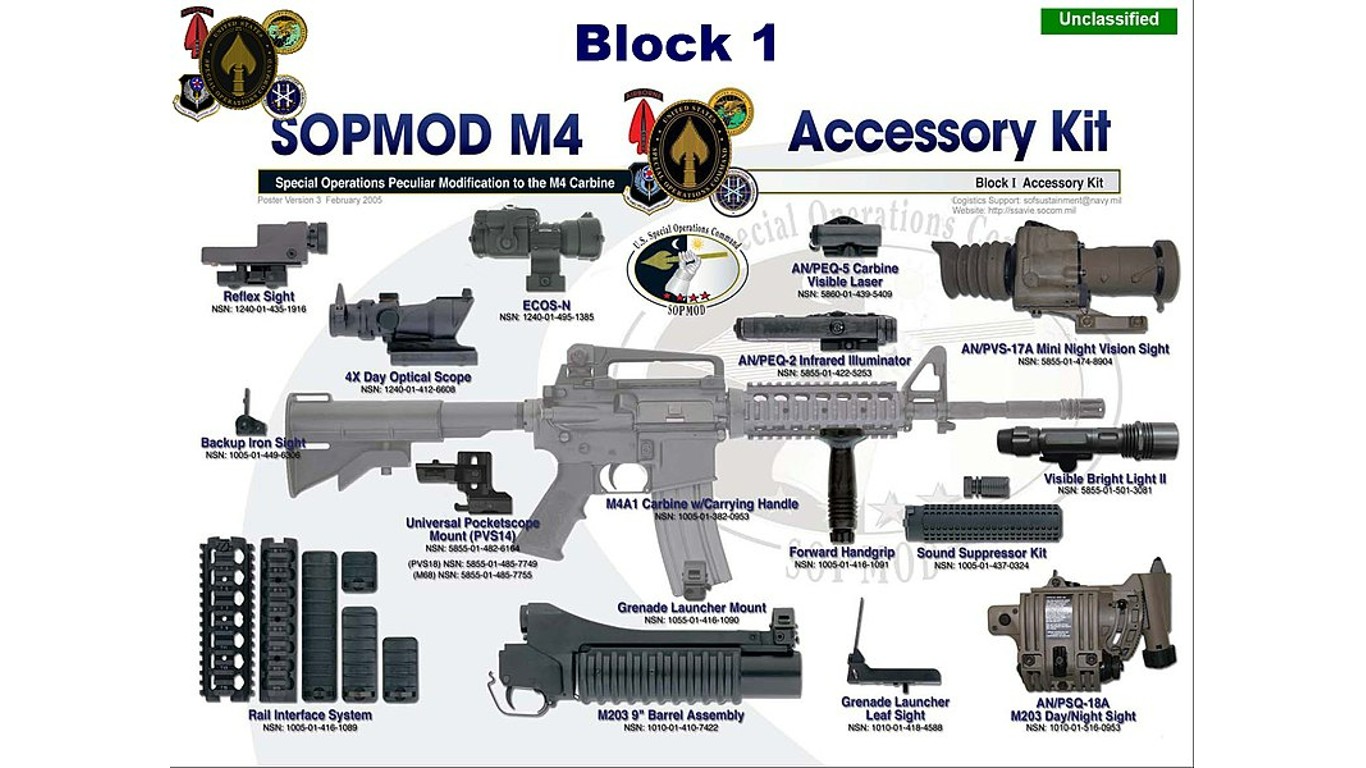
The M4A1 SOPMOD program helped define the modern modular carbine used by special operations forces. By allowing optics, lights, lasers, and suppressors to be easily mounted, the platform became extremely adaptable for urban missions. SEAL teams could tailor the rifle for night raids, close‑quarters fighting, or mixed environments, giving operators flexibility that earlier service rifles simply could not provide.
Daniel Defense Mk18
- Weapon Type: Carbine
- Manufacturer: Daniel Defense
- Country of Origin: USA
- Era introduced to service: 2010s
- Standard caliber: 5.56 NATO
- Urban Combat Advantage: Short-barrel urban fighting
- Why SEALs Used It: Modern SEAL configurations
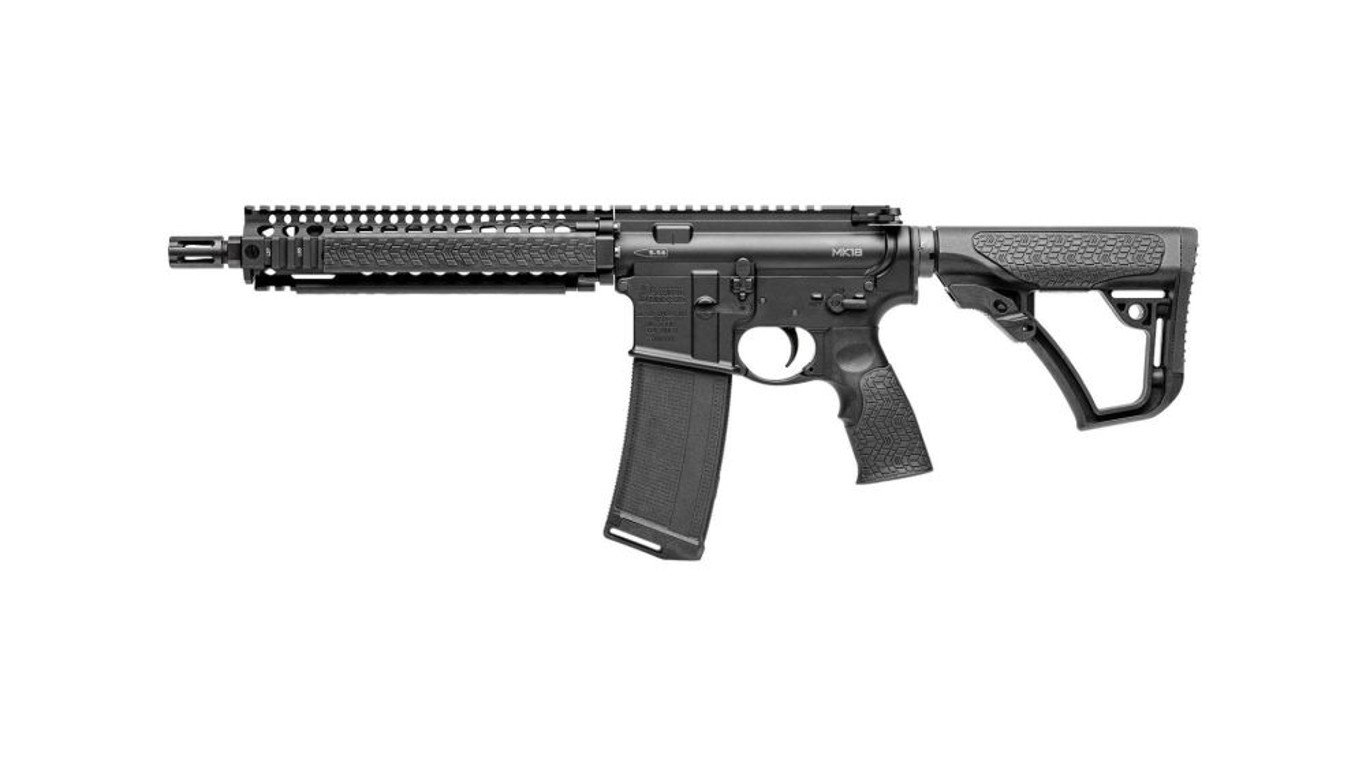
Daniel Defense versions of the Mk18 continued the evolution of the compact CQB rifle that SEAL teams favored during urban operations. Improved rails, durability, and accessory integration made the platform easier to configure for modern missions. In dense environments where rifles constantly struck walls, vehicles, and gear, rugged construction and compact dimensions helped maintain effectiveness during fast-moving assaults.
SIG MCX Virtus
- Weapon Type: Carbine
- Manufacturer: SIG Sauer
- Country of Origin: USA
- Era introduced to service: 2010s
- Standard caliber: 5.56 NATO / .300 BLK
- Urban Combat Advantage: Suppressor optimized
- Why SEALs Used It: SOF adaptable platform
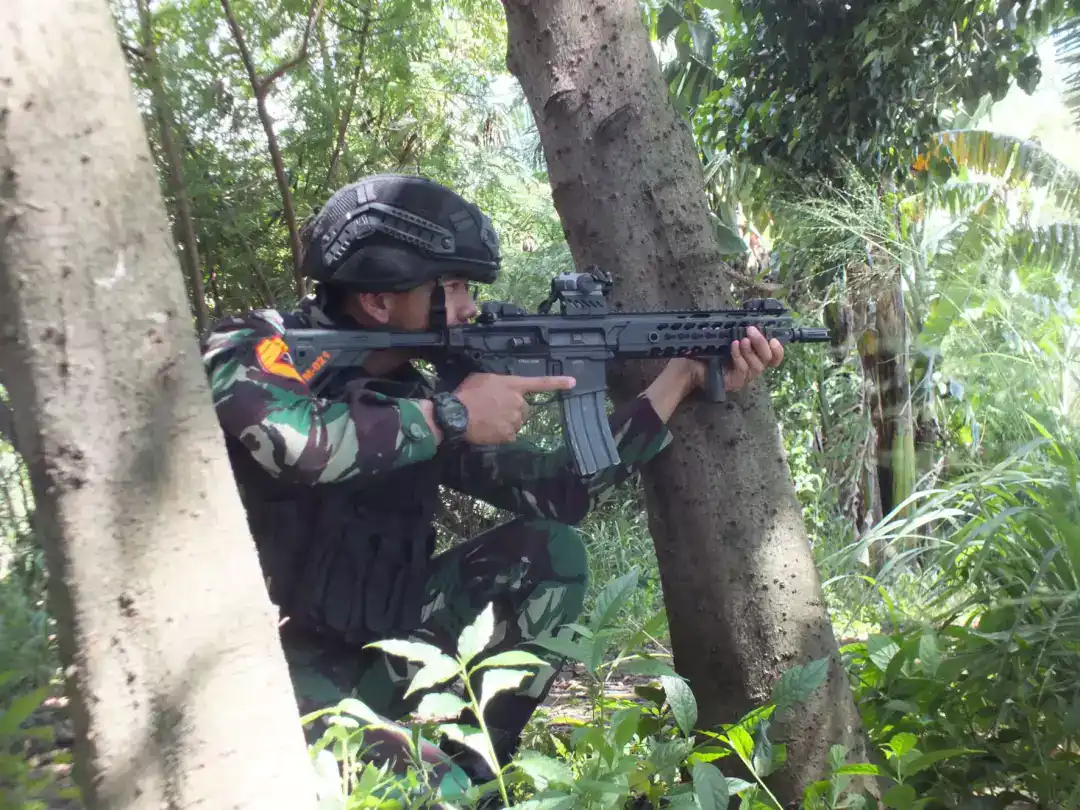
The SIG MCX Virtus reflects how modern special operations rifles increasingly emphasize suppressed fire and modularity. Its design allows quick caliber changes and improved performance with suppressors, features that are valuable in confined spaces. For SEAL teams operating in cities, weapons like the MCX provide adaptability when missions shift between quiet reconnaissance, close fighting, and engagements at moderate distance.
SIG MCX Rattler
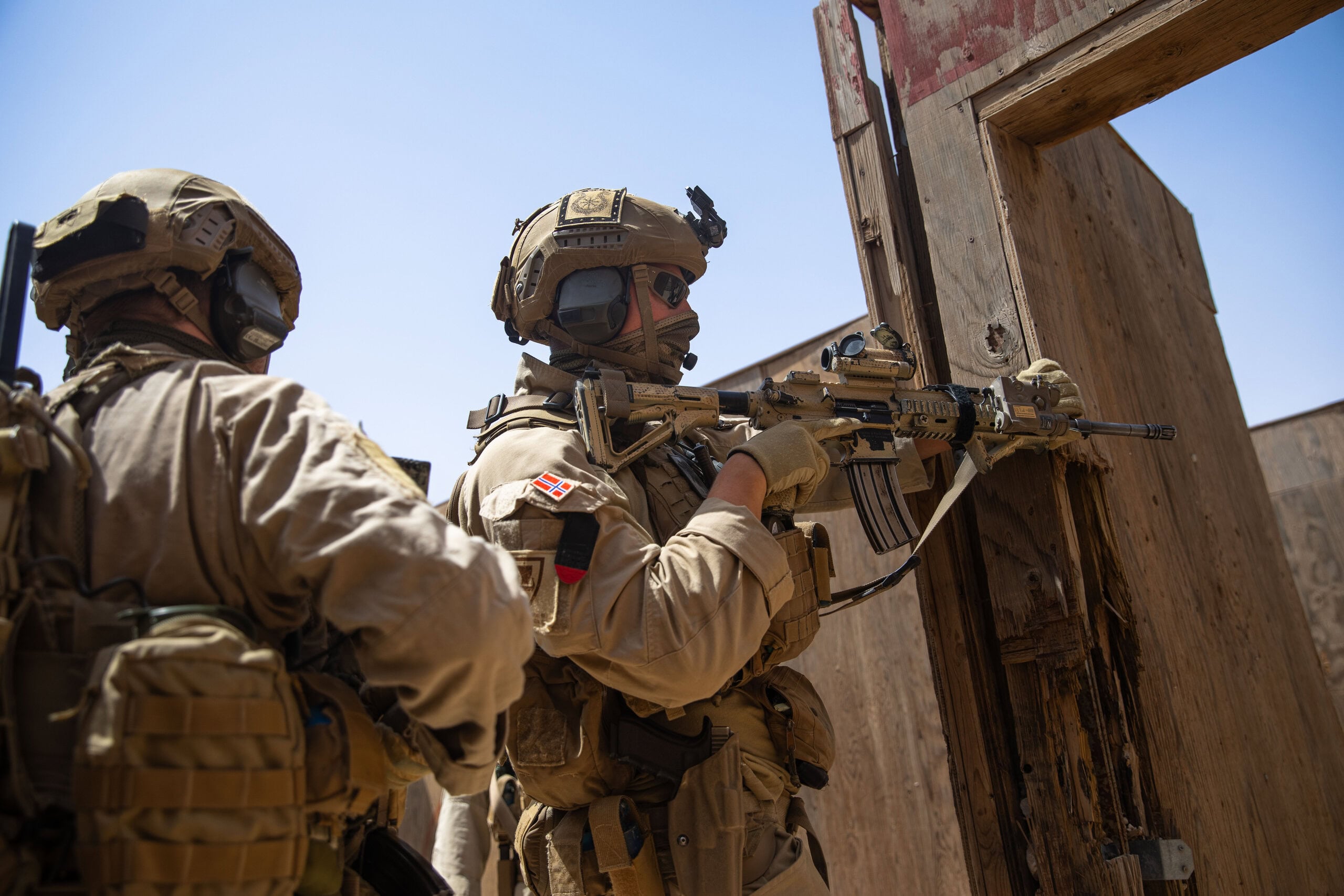
- Weapon Type: PDW
- Manufacturer: SIG Sauer
- Country of Origin: USA
- Era introduced to service: 2010s
- Standard caliber: .300 Blackout
- Urban Combat Advantage: Ultra-compact suppressed fire
- Why SEALs Used It: Close protection missions
The MCX Rattler was built around extreme compactness and the .300 Blackout cartridge, making it particularly effective in very tight environments. Short enough to maneuver easily inside vehicles or narrow hallways, it also performs well with suppressors. For special operations teams, that combination offers a powerful weapon that remains controllable during fast, close engagements typical of urban raids.
Honey Badger
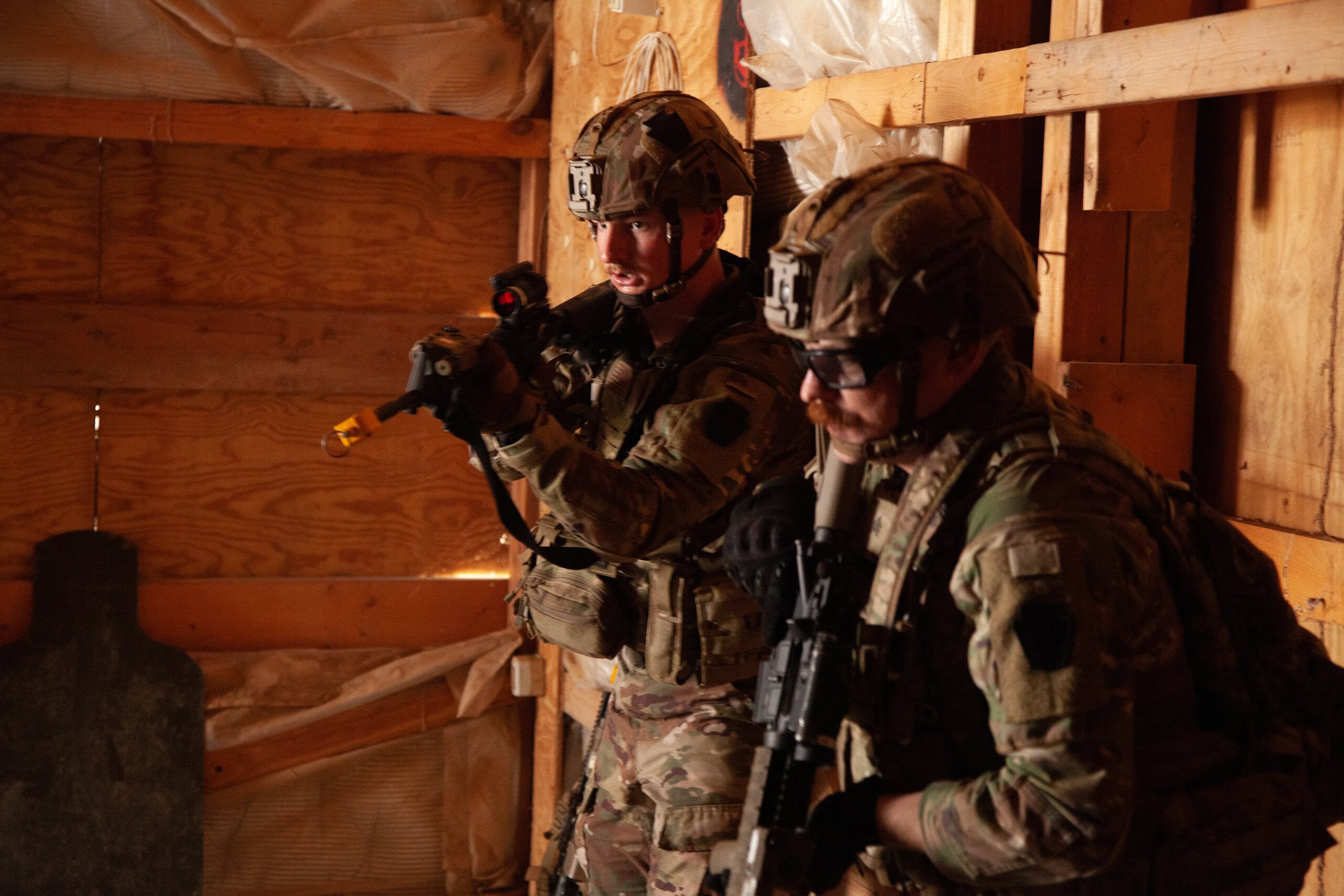
- Weapon Type: PDW
- Manufacturer: Q / AAC
- Country of Origin: USA
- Era introduced to service: 2010s
- Standard caliber: .300 Blackout
- Urban Combat Advantage: Designed for suppressed CQB
- Why SEALs Used It: SOF-oriented design
The Honey Badger became well known for pairing the .300 Blackout round with a lightweight, compact platform optimized for suppressed fire. Weapons like this appeal to special operations units because they can reduce noise and flash while maintaining effectiveness at short ranges. In urban environments where surprise and control matter, systems designed around suppression can provide a meaningful tactical advantage.
HK416C
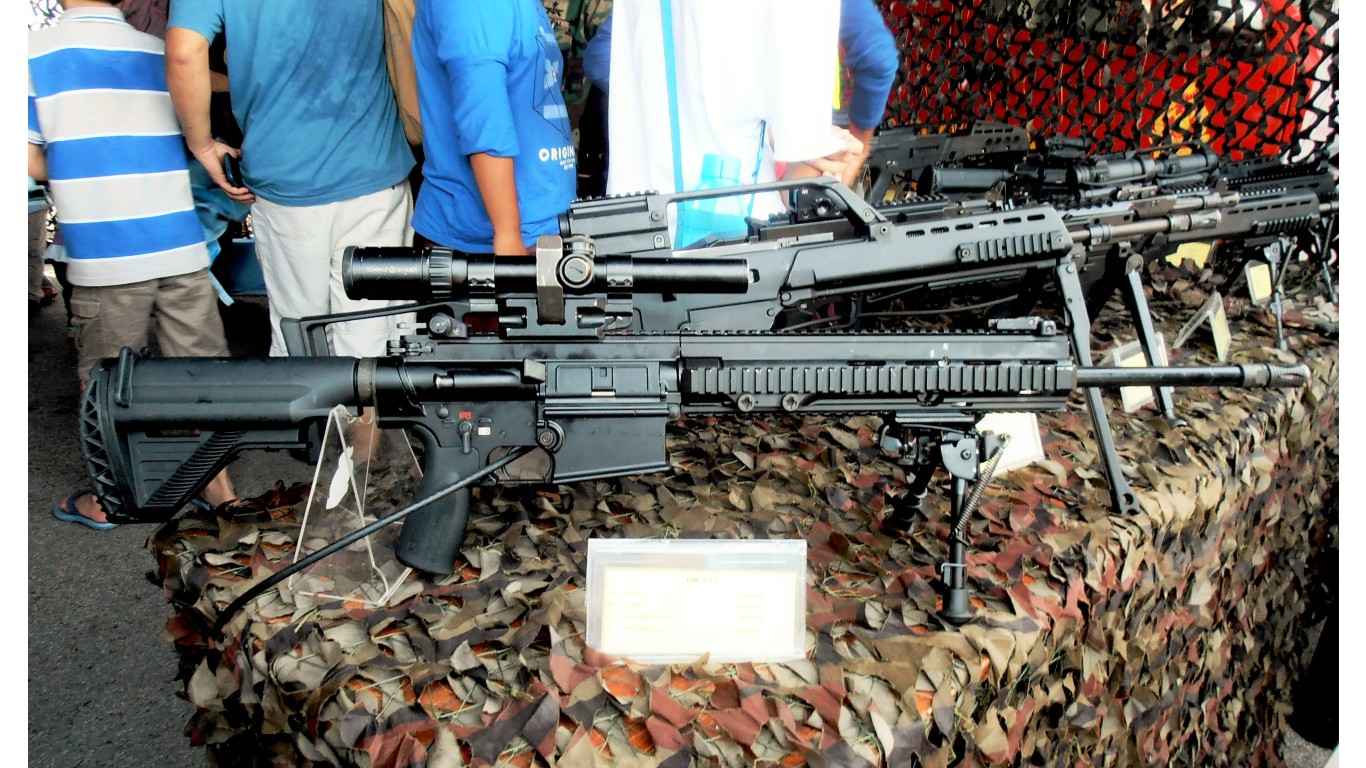
- Weapon Type: Carbine
- Manufacturer: Heckler & Koch
- Country of Origin: Germany
- Era introduced to service: 2010s
- Standard caliber: 5.56 NATO
- Urban Combat Advantage: Extreme compactness
- Why SEALs Used It: Vehicle and interior ops
Compact variants of the HK416 were developed for missions where even standard carbines were considered too large. Operating in vehicles, helicopters, and confined interior spaces requires weapons that remain easy to control and quick to deploy. For SEAL teams and other special operators, shortened versions of reliable rifles allowed them to retain firepower without sacrificing maneuverability in tight urban terrain.
LVAW (.300 BLK)
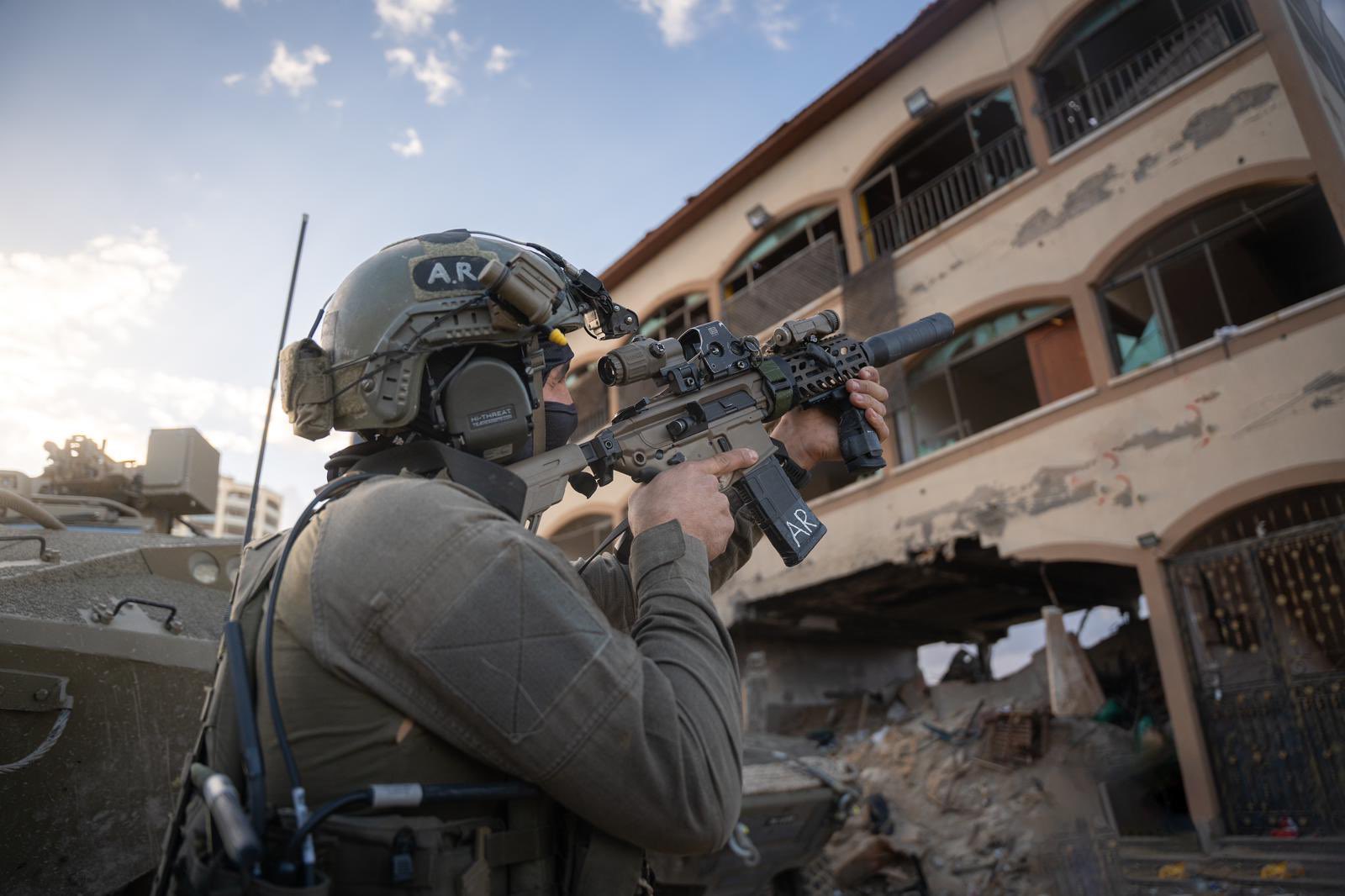
- Weapon Type: Carbine
- Manufacturer: Various SOCOM builds
- Country of Origin: USA
- Era introduced to service: 2010s
- Standard caliber: .300 Blackout
- Urban Combat Advantage: Quiet suppressed capability
- Why SEALs Used It: Used in specialized missions
The Low Visibility Assault Weapon concept emphasizes suppressed fire and reduced signature during operations where stealth is important. Built around the .300 Blackout cartridge, these rifles are optimized for subsonic ammunition and close engagement distances. For special operations forces moving through populated areas or sensitive environments, weapons like the LVAW help maintain discretion while still delivering decisive firepower.
HK MP5A3

- Weapon Type: Submachine Gun
- Manufacturer: Heckler & Koch
- Country of Origin: Germany
- Era introduced to service: 1960s
- Standard caliber: 9mm
- Urban Combat Advantage: Control in CQB
- Why SEALs Used It: Iconic counter-terror weapon
For many years the MP5 defined counter‑terror and close‑quarters operations around the world. Its controllability in automatic fire and compact size made it well suited for clearing buildings or fighting inside aircraft and ships. SEAL teams and other elite units relied on the MP5 during early urban missions where precision and manageable recoil were more valuable than raw range or power.
HK MP5SD
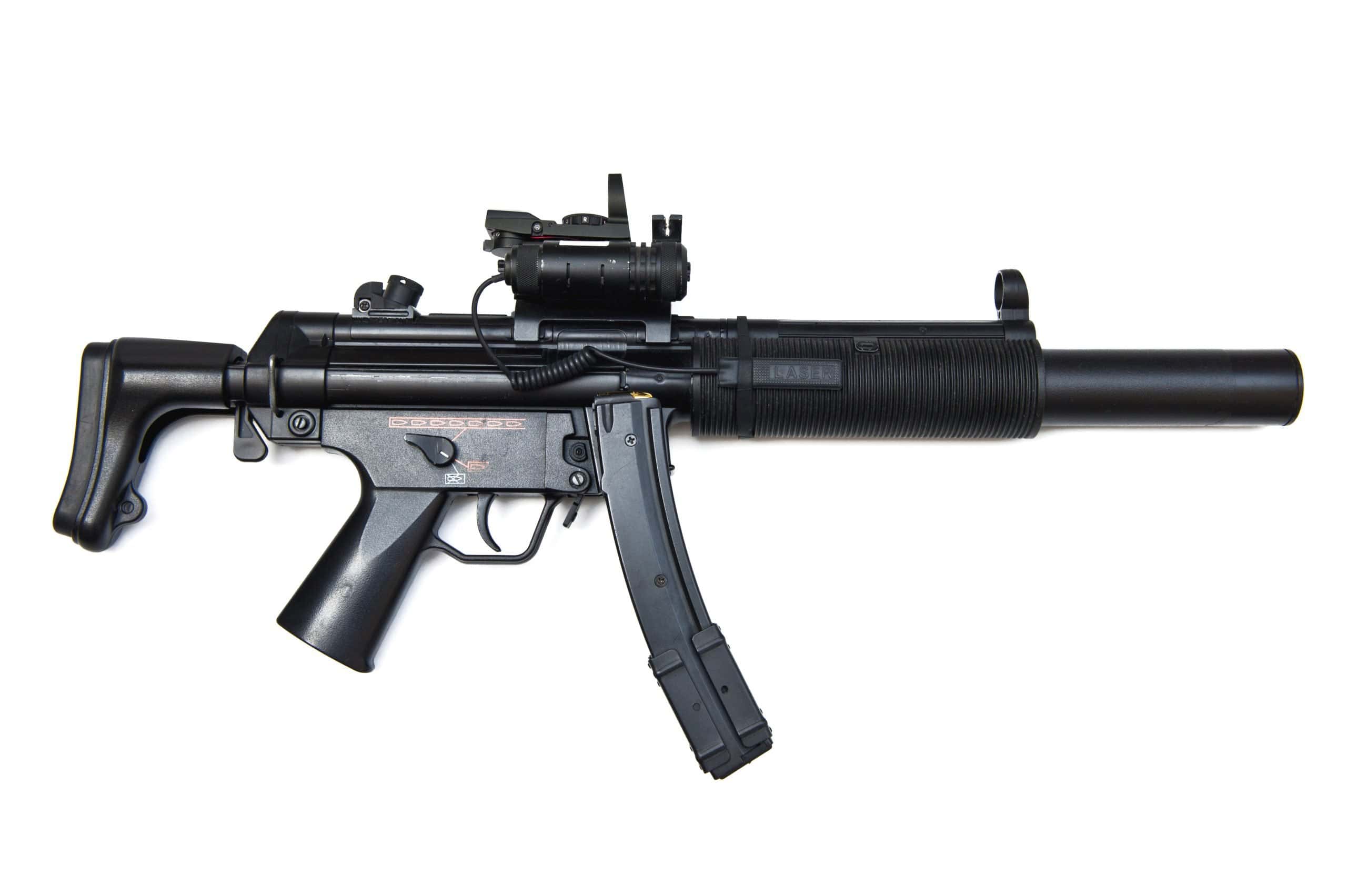
- Weapon Type: Submachine Gun
- Manufacturer: Heckler & Koch
- Country of Origin: Germany
- Era introduced to service: 1970s
- Standard caliber: 9mm
- Urban Combat Advantage: Integrally suppressed
- Why SEALs Used It: Stealth operations
The integrally suppressed MP5SD was designed specifically for missions where minimizing sound and muzzle flash was essential. By combining a suppressor with subsonic ammunition, it allowed operators to engage targets with far less noise than conventional weapons. In urban counter‑terror scenarios, that capability could help maintain surprise and prevent confusion among friendly forces operating in tight spaces.
HK MP7
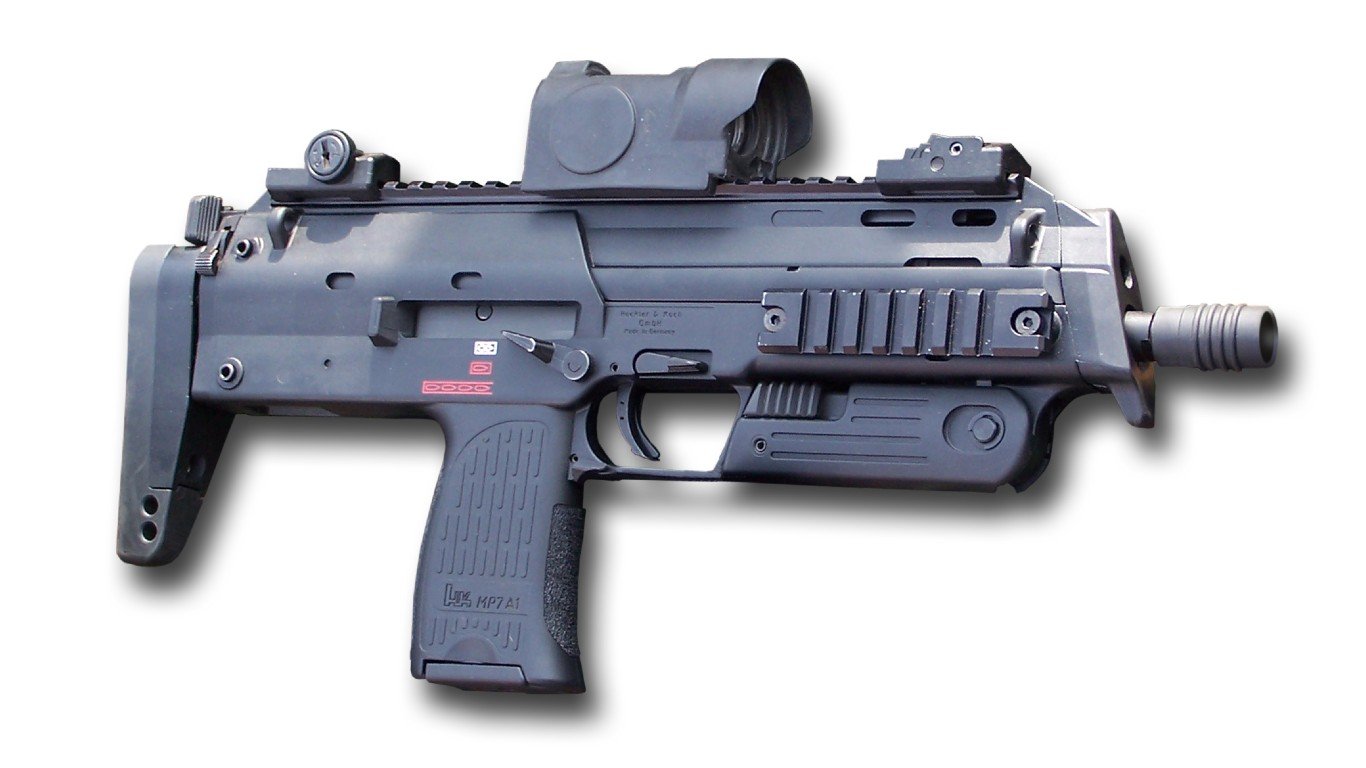
- Weapon Type: PDW
- Manufacturer: Heckler & Koch
- Country of Origin: Germany
- Era introduced to service: 2000s
- Standard caliber: 4.6×30mm
- Urban Combat Advantage: Compact armor-piercing capability
- Why SEALs Used It: Special operations roles
The MP7 represents a newer generation of compact personal defense weapons intended to replace traditional submachine guns. Its small size makes it extremely maneuverable indoors, while its high‑velocity cartridge improves penetration against modern armor. For special operations units, platforms like the MP7 offer a balance between portability and effectiveness when fighting in dense environments or confined structures.
Mk 12 SPR
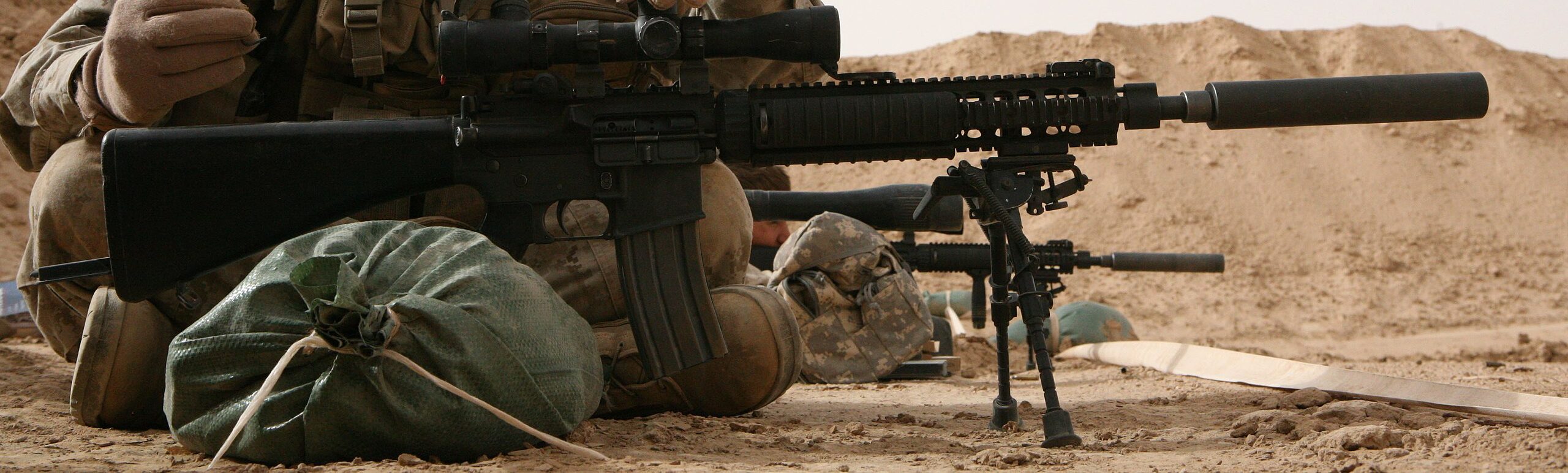
- Weapon Type: Precision Rifle
- Manufacturer: Knight’s Armament
- Country of Origin: USA
- Era introduced to service: 2000s
- Standard caliber: 5.56 NATO
- Urban Combat Advantage: Urban overwatch
- Why SEALs Used It: Used for precision support
While many SEAL weapons focus on close‑quarters fighting, the Mk 12 SPR filled a different role in urban combat. Positioned on rooftops or overlooking streets, it allowed operators to provide precise fire at longer distances. In city environments where threats could appear from windows or across intersections, a rifle like the Mk 12 helped control areas beyond the reach of typical carbines.
SR-25 / Mk 11
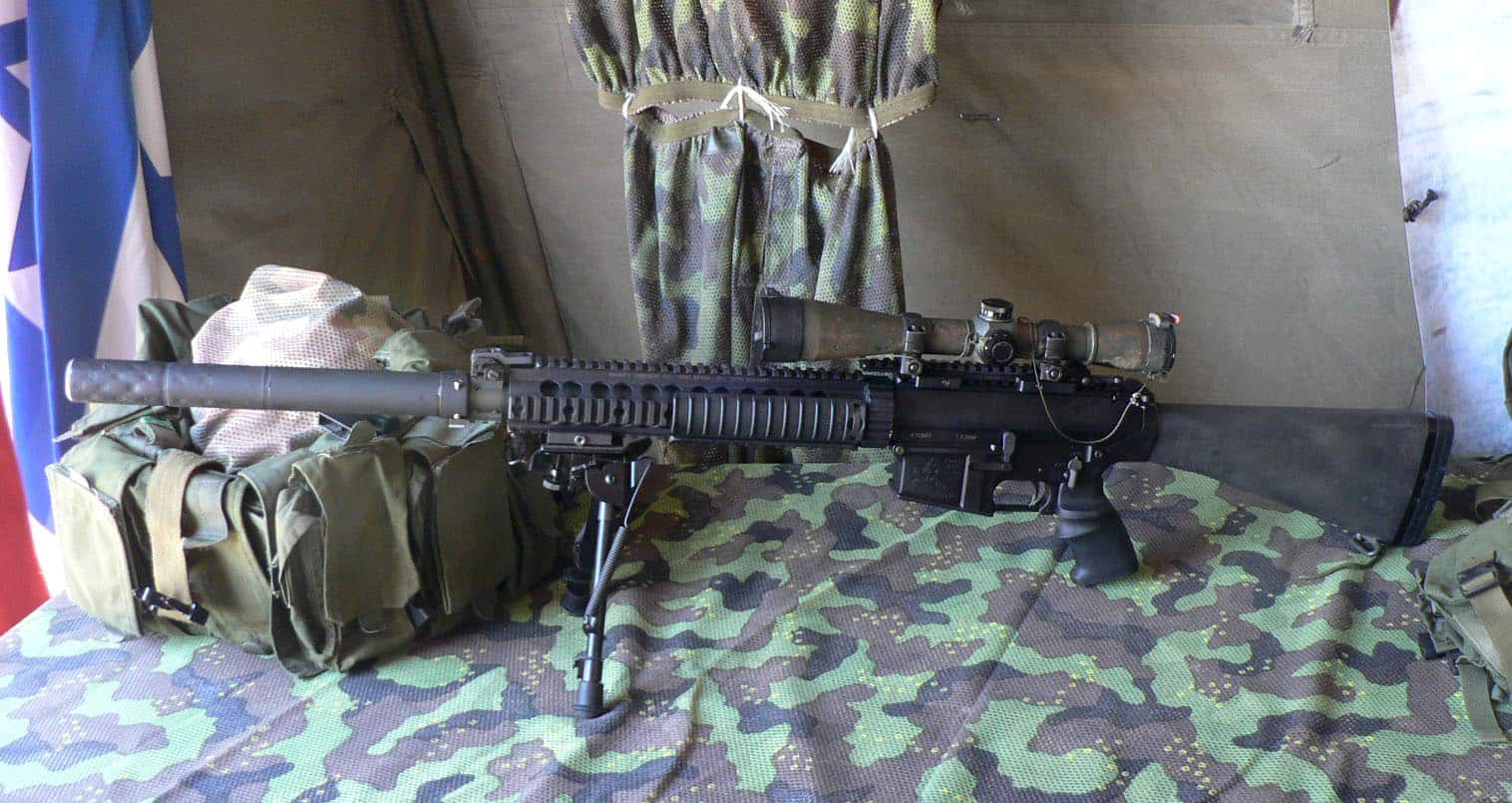
- Weapon Type: Battle Rifle
- Manufacturer: Knight’s Armament
- Country of Origin: USA
- Era introduced to service: 1990s
- Standard caliber: 7.62 NATO
- Urban Combat Advantage: Longer-range control
- Why SEALs Used It: SEAL sniper support
The SR‑25 and its military Mk 11 variant became important tools for special operations snipers operating in urban terrain. Semi‑automatic fire and strong accuracy allowed operators to quickly engage multiple threats from overwatch positions. In dense cities where enemies could appear suddenly across streets or from rooftops, rifles like this gave SEAL teams the ability to dominate key sightlines.
M110 SASS
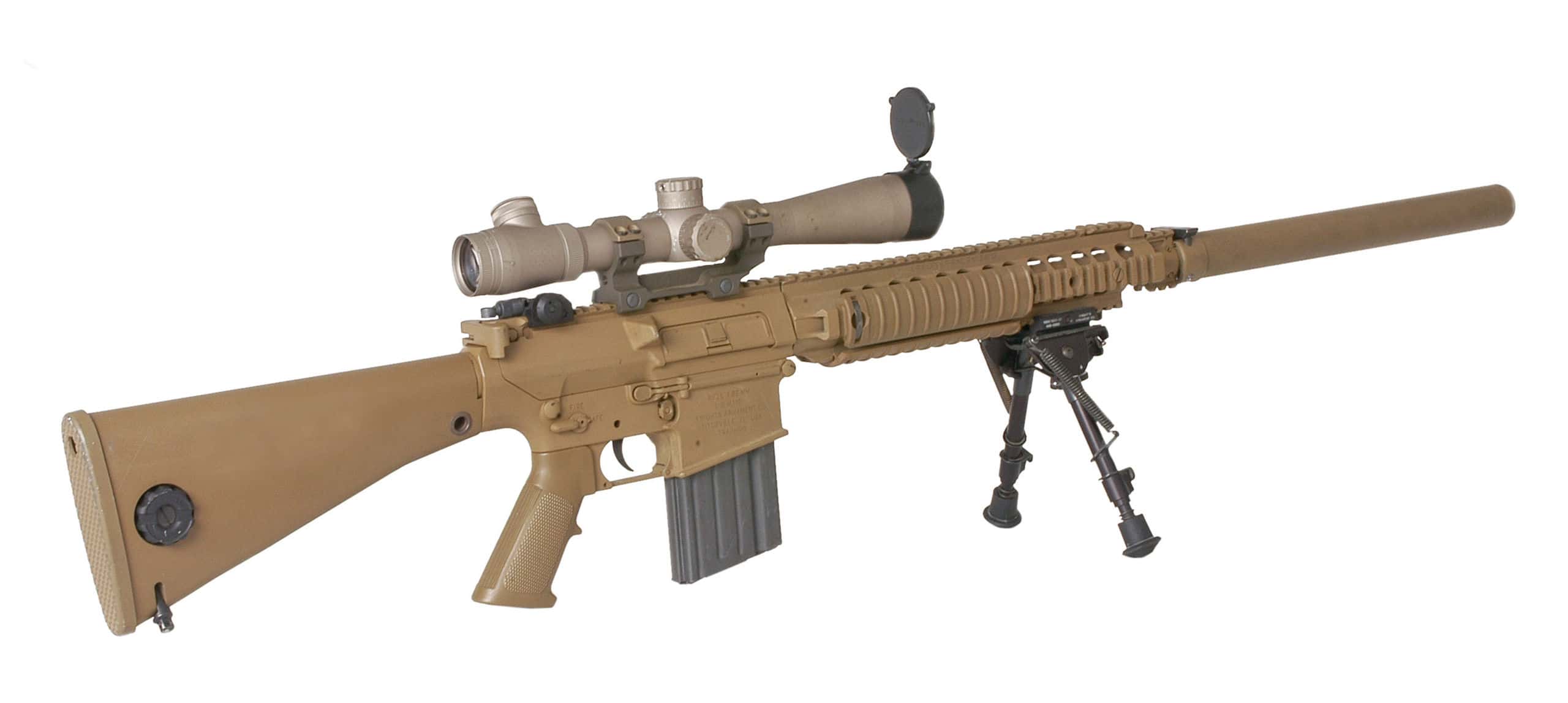
- Weapon Type: Sniper Rifle
- Manufacturer: Knight’s Armament
- Country of Origin: USA
- Era introduced to service: 2000s
- Standard caliber: 7.62 NATO
- Urban Combat Advantage: Sustained precision fire
- Why SEALs Used It: SOCOM precision missions
The M110 Semi‑Automatic Sniper System expanded on earlier precision rifles by improving ergonomics, suppression capability, and sustained accuracy. For urban missions, these traits mattered because snipers often had to track moving targets or respond quickly to developing situations. A semi‑automatic precision platform allowed SEAL elements to support assault teams while maintaining strong control over surrounding streets and buildings.
HK417
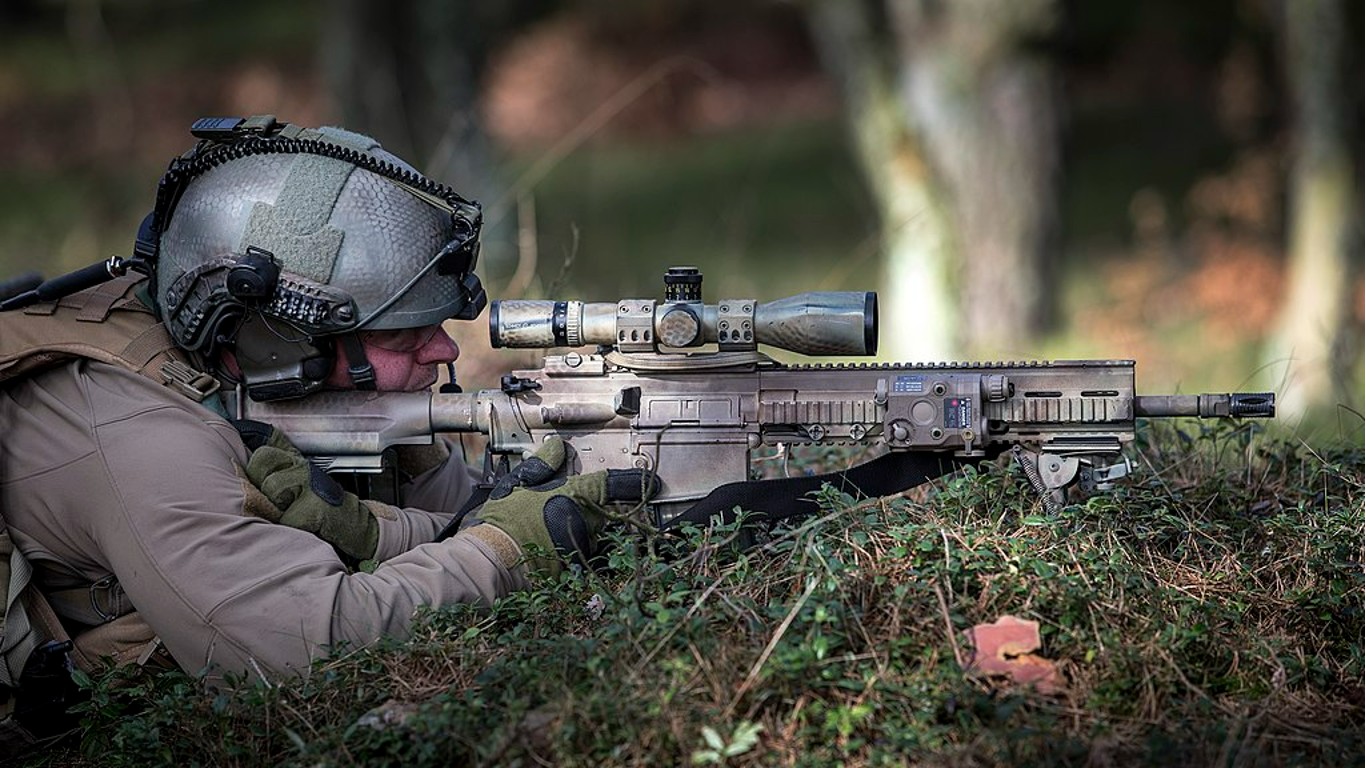
- Weapon Type: Battle Rifle
- Manufacturer: Heckler & Koch
- Country of Origin: Germany
- Era introduced to service: 2000s
- Standard caliber: 7.62 NATO
- Urban Combat Advantage: Powerful urban precision
- Why SEALs Used It: Special operations adoption
The HK417 brought the reliability concepts of the HK416 into a larger 7.62 NATO platform. In urban fighting, the heavier cartridge can be valuable when engaging targets behind cover or at longer distances across city blocks. For special operations teams, rifles like the HK417 provide added power without sacrificing the familiar handling characteristics of modern tactical carbines.
Benelli M4 (M1014)
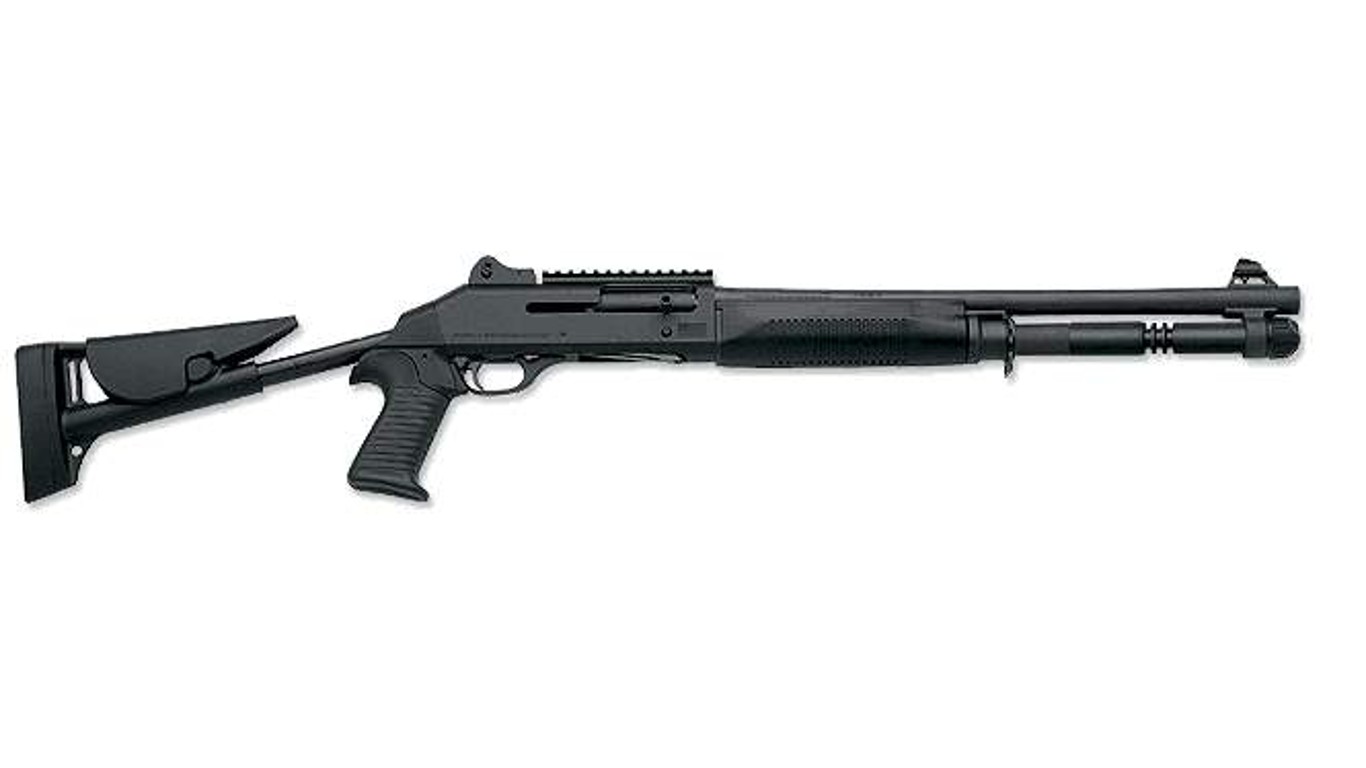
- Weapon Type: Shotgun
- Manufacturer: Benelli
- Country of Origin: Italy
- Era introduced to service: 1990s
- Standard caliber: 12 gauge
- Urban Combat Advantage: Door breaching and close fire
- Why SEALs Used It: Combat-proven shotgun
The Benelli M4 became a trusted combat shotgun thanks to its semi‑automatic operation and rugged design. In urban warfare, shotguns are often used during the opening moments of a raid to breach doors or clear tight spaces. For SEAL teams, a reliable shotgun ensures that entry points can be forced quickly, allowing assault elements to maintain momentum during critical operations.
Remington 870
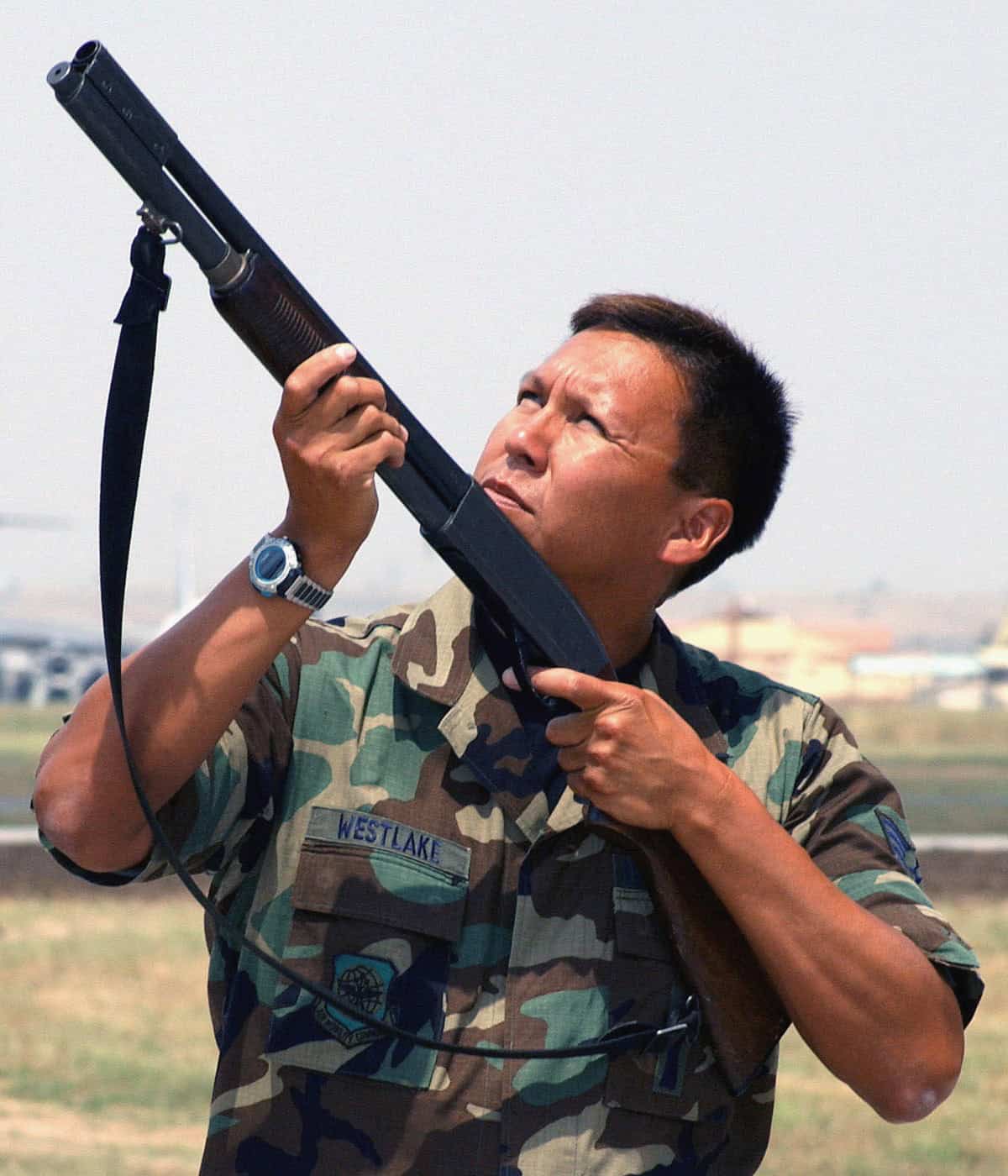
- Weapon Type: Shotgun
- Manufacturer: Remington
- Country of Origin: USA
- Era introduced to service: 1950s
- Standard caliber: 12 gauge
- Urban Combat Advantage: Reliable breaching
- Why SEALs Used It: Military police and SEAL use
The Remington 870 has long been valued for its simplicity and durability. In military use, it often serves as a breaching tool capable of quickly defeating locks or hinges. For SEAL teams conducting building entries, dependable shotguns like the 870 play a specialized but important role, helping operators move through structures efficiently during high‑risk urban missions.
Mossberg 590A1
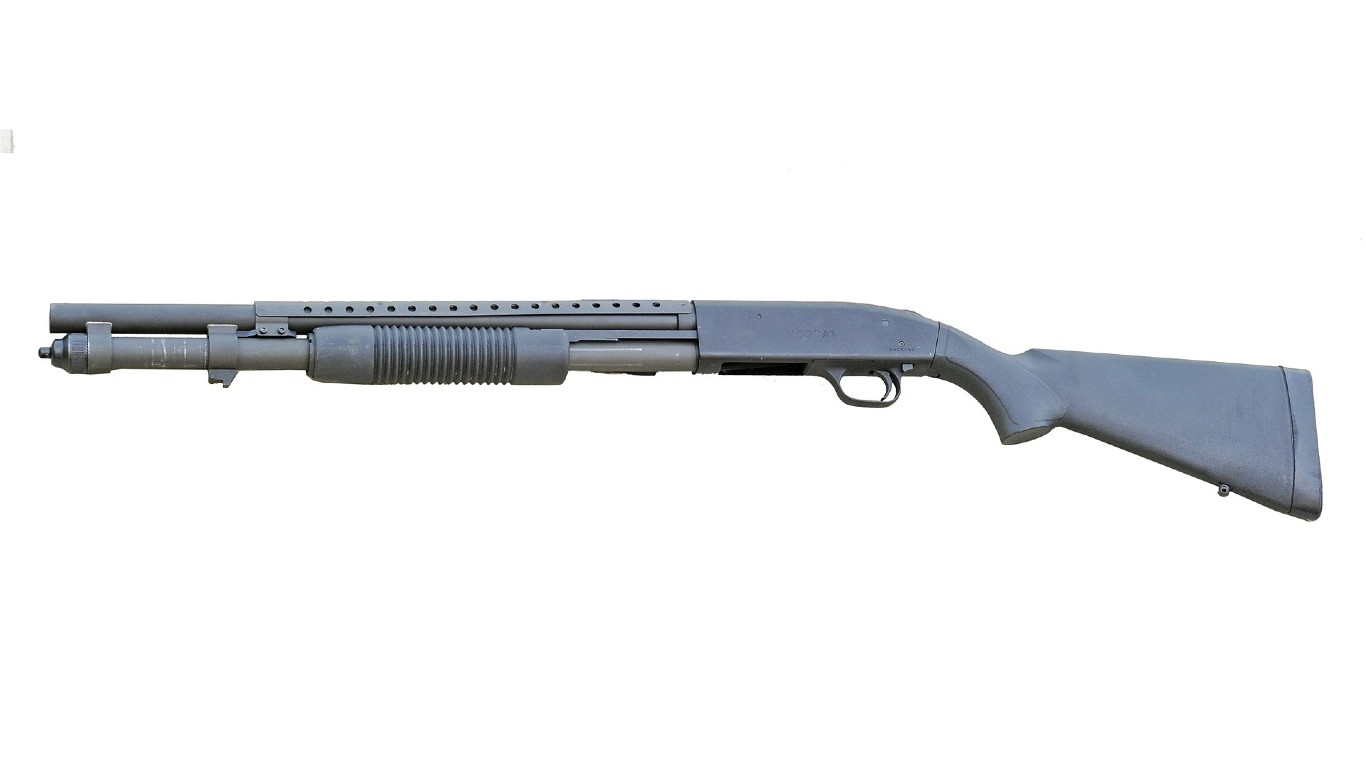
- Weapon Type: Shotgun
- Manufacturer: Mossberg
- Country of Origin: USA
- Era introduced to service: 1980s
- Standard caliber: 12 gauge
- Urban Combat Advantage: Durable combat shotgun
- Why SEALs Used It: Used in breaching roles
The Mossberg 590A1 was designed with military durability in mind, featuring reinforced components that can withstand heavy use. Shotguns like this are commonly used during breaching operations where reliability is essential. In urban combat scenarios, quickly opening doors or barriers can determine how smoothly a raid unfolds, making robust breaching tools an important part of the SEAL arsenal.
FN SCAR-L
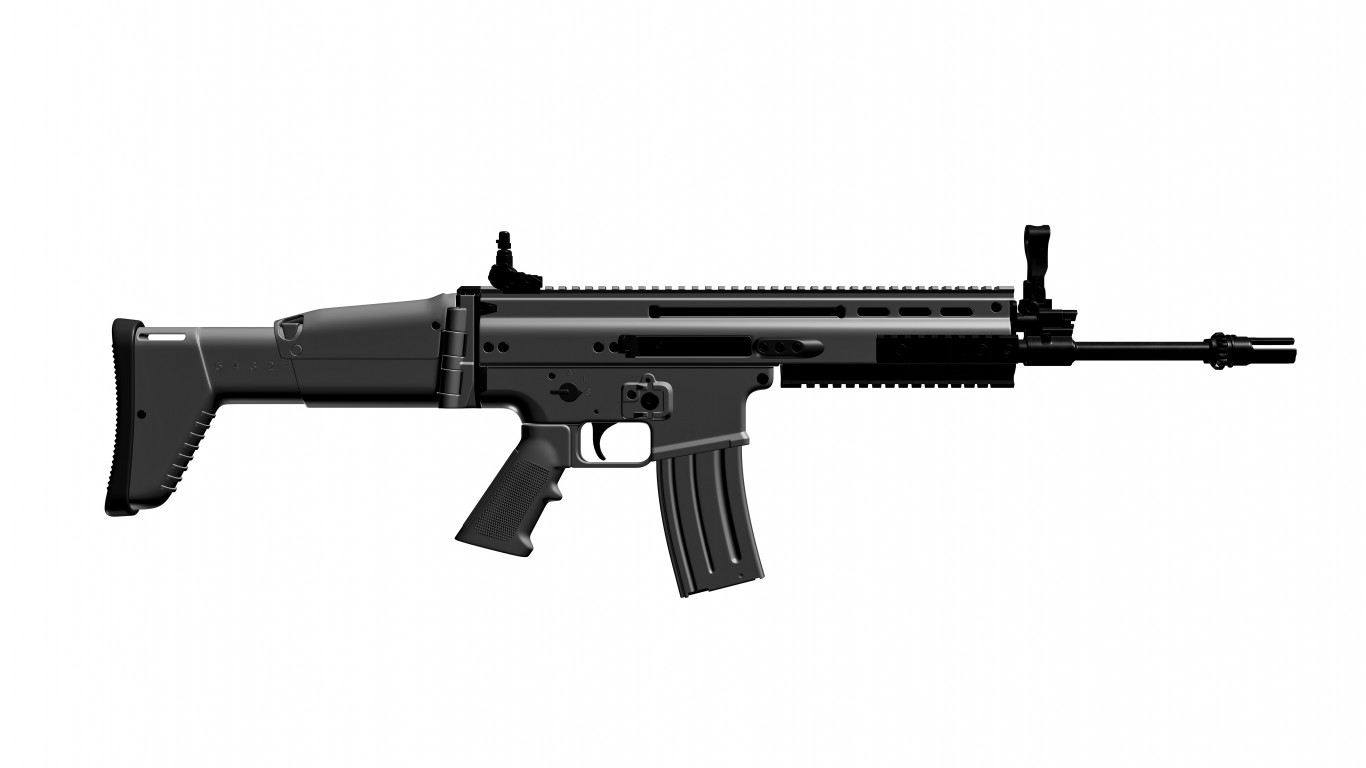
- Weapon Type: Carbine
- Manufacturer: FN Herstal
- Country of Origin: Belgium
- Era introduced to service: 2000s
- Standard caliber: 5.56 NATO
- Urban Combat Advantage: Modular combat system
- Why SEALs Used It: SOCOM adoption
The FN SCAR‑L was developed as part of a SOCOM effort to create a more adaptable family of rifles for special operations forces. Lightweight construction, adjustable ergonomics, and modern rails made it suitable for a variety of missions. In urban settings, weapons like the SCAR‑L give operators flexibility while maintaining the accuracy and control needed during fast‑moving engagements.
FN SCAR-H
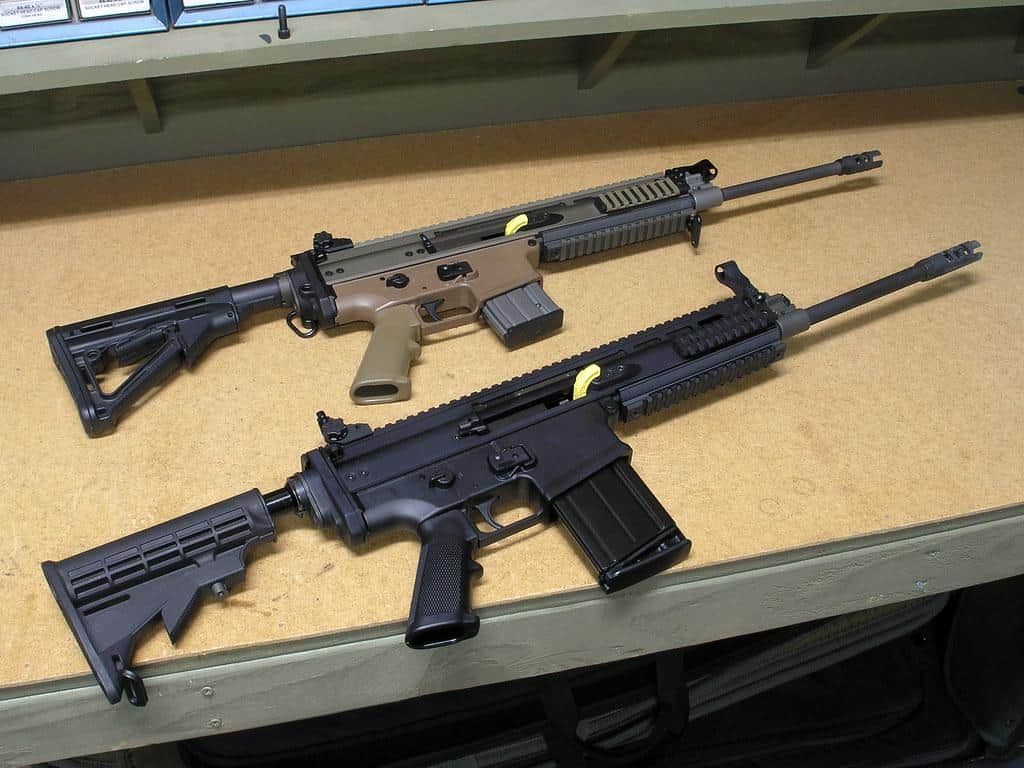
- Weapon Type: Battle Rifle
- Manufacturer: FN Herstal
- Country of Origin: Belgium
- Era introduced to service: 2000s
- Standard caliber: 7.62 NATO
- Urban Combat Advantage: Hard-hitting urban support
- Why SEALs Used It: SOF battle rifle
The SCAR‑H provides the same modular platform as the SCAR‑L but with the increased power of the 7.62 NATO cartridge. In cities where adversaries may use cover or operate at longer distances, the heavier round can offer advantages. For special operations teams, rifles like the SCAR‑H allow assault elements to combine maneuverability with stronger stopping power.
SIG Spear / XM7
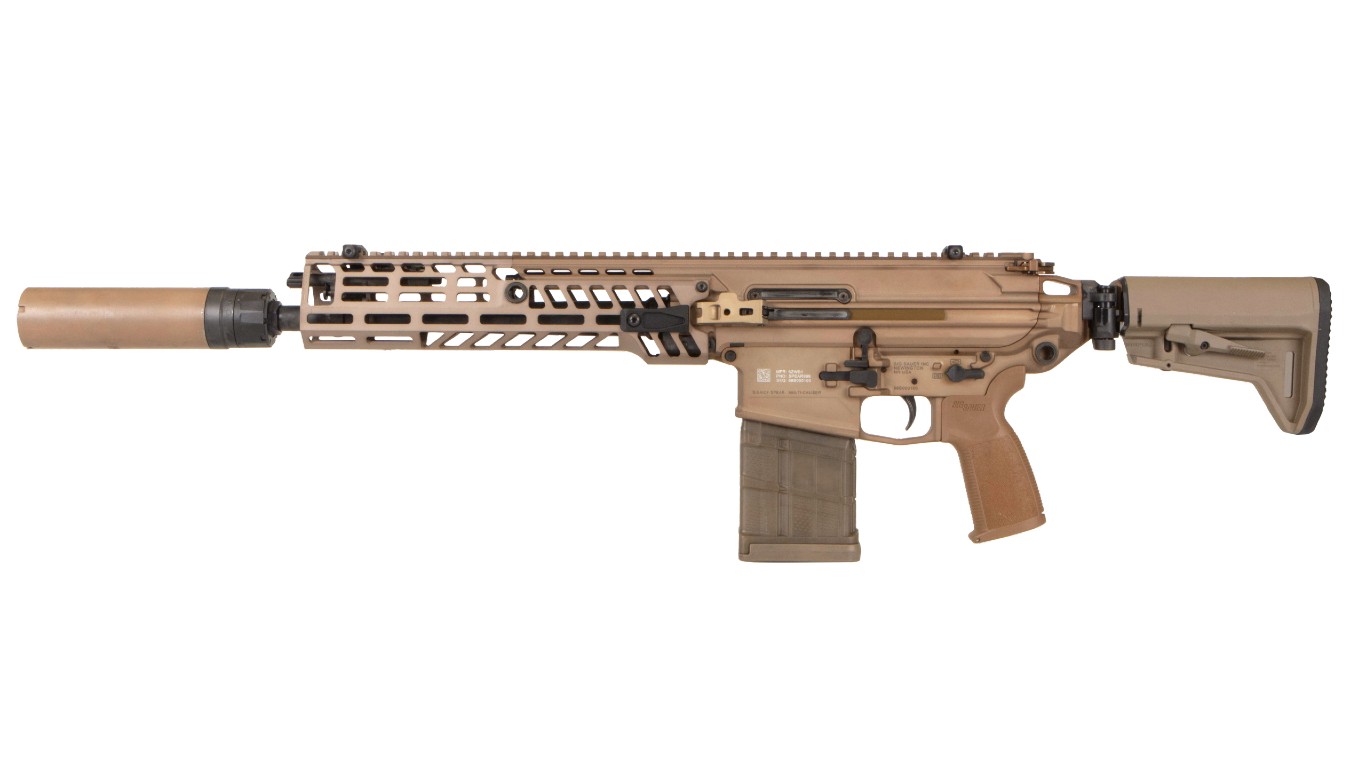
- Weapon Type: Battle Rifle
- Manufacturer: SIG Sauer
- Country of Origin: USA
- Era introduced to service: 2020s
- Standard caliber: 6.8×51
- Urban Combat Advantage: Next-gen lethality
- Why SEALs Used It: SOF testing influence
The SIG Spear represents the newest generation of military rifles emphasizing greater range and ballistic performance. Although still early in its broader adoption, weapons like this illustrate how special operations units continue to evaluate new technology. In urban combat, improved optics integration and increased power could influence how future teams approach close and mid‑range engagements.
Knight’s Armament PDW
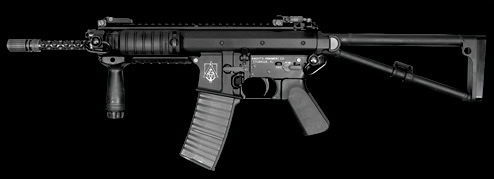
- Weapon Type: PDW
- Manufacturer: Knight’s Armament
- Country of Origin: USA
- Era introduced to service: 2000s
- Standard caliber: 6×35mm
- Urban Combat Advantage: Compact personal defense
- Why SEALs Used It: Experimental SOF interest
Knight’s Armament developed its PDW concept to bridge the gap between submachine guns and compact rifles. By using a specialized cartridge and lightweight platform, the design aimed to deliver better performance without sacrificing portability. For special operations units experimenting with new solutions, weapons like this highlight the constant search for an ideal balance in close‑quarters combat.
HK MP9
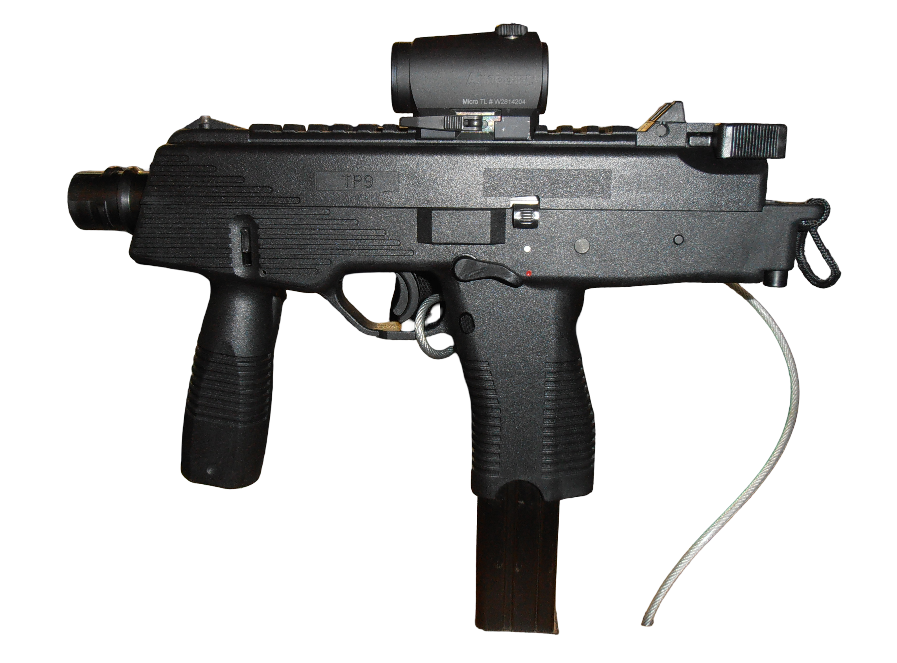
- Weapon Type: Submachine Gun
- Manufacturer: B&T
- Country of Origin: Switzerland
- Era introduced to service: 2000s
- Standard caliber: 9mm
- Urban Combat Advantage: Very compact CQB weapon
- Why SEALs Used It: Limited SOF use
The MP9 is an extremely compact submachine gun that can be deployed quickly in tight spaces. Its size makes it well suited for protective details or missions where larger rifles are impractical. For special operations forces working in dense urban terrain, weapons like the MP9 emphasize speed, maneuverability, and the ability to respond immediately to threats.
CZ Scorpion
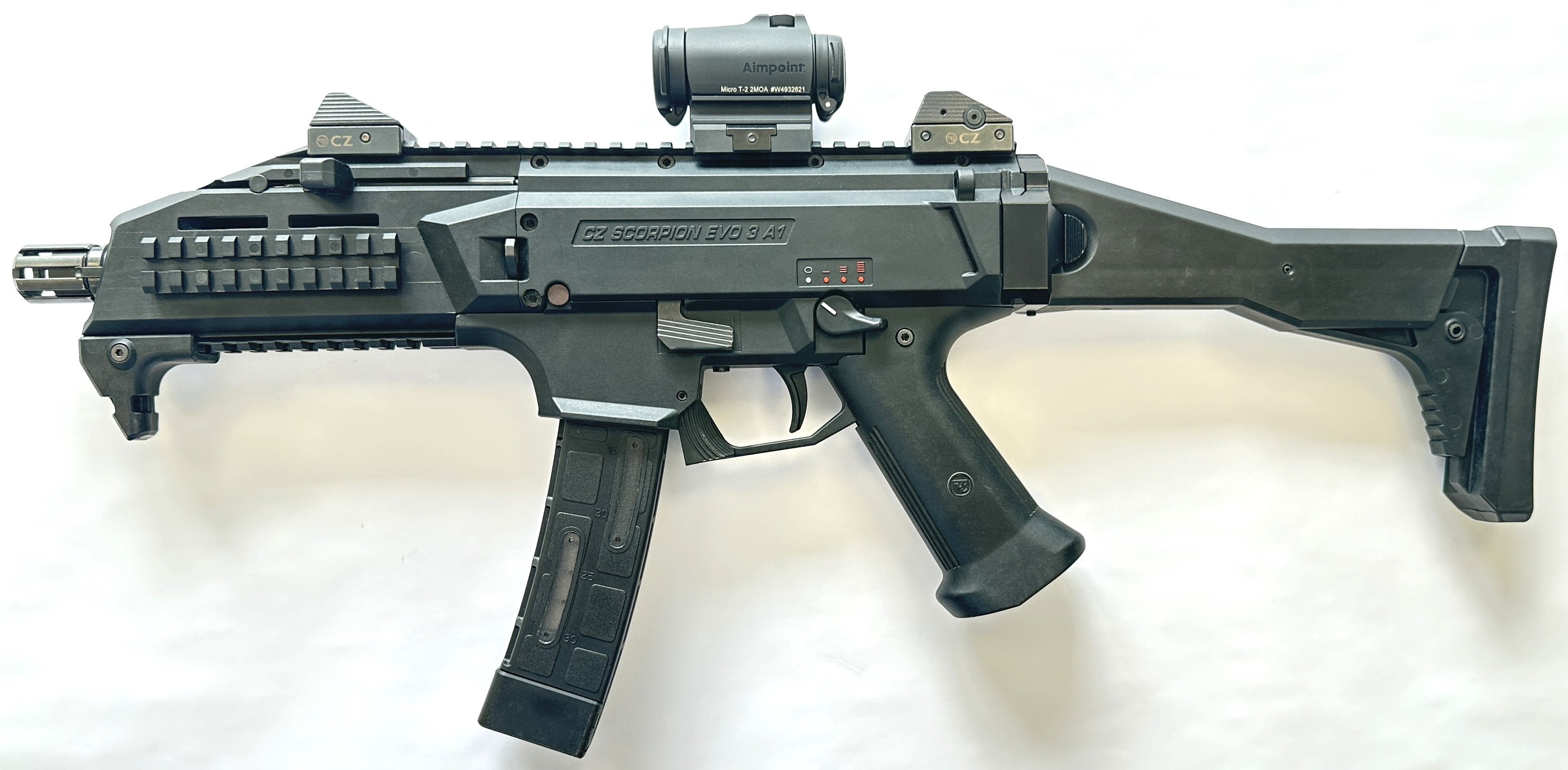
- Weapon Type: Submachine Gun
- Manufacturer: CZ
- Country of Origin: Czech Republic
- Era introduced to service: 2010s
- Standard caliber: 9mm
- Urban Combat Advantage: Modern SMG ergonomics
- Why SEALs Used It: Evaluated by special units
The CZ Scorpion represents a modern take on the submachine gun, combining simple construction with improved ergonomics and accessory options. While not as historically tied to SEAL operations as some other platforms, weapons like it show how the category continues to evolve. Compact SMGs remain appealing in certain urban scenarios where control and portability are key priorities.
Contact [email protected] for any questions or corrections.
Chris Lange is a financial and geopolitical writer with more than a decade of experience covering a myriad of topics. He has published thousands of articles for 24/7 Wall St., with past coverage focused heavily on stocks, IPOs, healthcare, defense, global affairs, and technology.
His work has been quoted, or referenced by a number of outlets including Business Insider, USA Today, Yahoo Finance, MSN, The Motley Fool, and many other publications. A graduate of Southwestern University, he studied business with a focus on investments and has previous experience in banking and startups.
When not reading or writing the news, he is following his passion for Lacrosse, playing chess, or building solar projects with his dad.