Nvidia Thrown Out of China
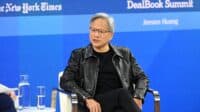
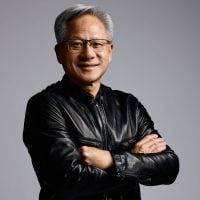
China would prefer AI chips made by local manufacturers over those from Nvidia. Can CEO Jensen Huang broker peace between the U.S. and Chinese authorities?


Nvidia Corp.’s (NASDAQ: NVDA | NVDA Price Prediction) recent journey in China began when the U.S. government blocked exports of its chips to China in April. This included a chip known as H20, which was less powerful than Nvidia’s flagship products. The intention was that these stripped-down chips would keep China from getting an artificial intelligence (AI) edge on the United States.
The U.S. government changed its Nvidia plans in August and let it export its chips to China, after heavy lobbying by CEO Jensen Huang. Huang also went to China in what might be called shuttle diplomacy. President Trump said he wanted a 15% export license for Nvidia’s products. Although expensive, it gave Nvidia access to the world’s second-largest consumer of AI chips. It also meant that China would be able to improve products like DeepSeek, its leading AI product.
Along the way, several AI industry leaders said that China’s improving products threatened the U.S. dominance of AI. The two companies were in a race for which would have the upper hand in the most important tech advance since the creation of the personal computer and the internet.
One of Donald Trump’s most senior cabinet officers made a significant strategic error. On July 15, Howard Lutnick, the U.S. Secretary of Commerce, told CNBC that the H20 did not threaten U.S. AI success because it was far from Nvidia’s best products: “We don’t sell them our best stuff, not our second-best stuff, not even our third-best.” Chinese officials described the comments as an insult.
Lutnick’s comments also allowed Chinese officials to push for the use of the nation’s homegrown AI chips. Among the reasons given were that the H20 was a “security risk.” Nvidia reacted to the Chinese decision by stopping production, and it told suppliers to stop making components for H20 virtually.
To make matters more complex, Nvidia is preparing another chip for the Chinese market. Huang said it was up to the U.S. government whether China could import these.
The most important part of this back-and-forth is a Chinese desire to use chips made by local manufacturers. The leading company in this push is Huawei, which some describe as China’s answer to Nvidia products. RAND’s Jimmy Goodrich told The Wall Street Journal that “China wants to have the best chips but also wants to have domestic chips at the same time. Those two goals are in conflict with one another.”
Can Huang broker peace between the U.S. and Chinese authorities? If not, homegrown products will be favored heavily over Nvidia’s.
Is Nvidia a $50 Trillion Stock? 1 Top Wall Street Analyst Thinks So
Contact [email protected] for any questions or corrections.
Douglas A. McIntyre is the co-founder, chief executive officer and editor in chief of 24/7 Wall St. and 24/7 Tempo. He has held these jobs since 2006.
McIntyre has written thousands of articles for 24/7 Wall St. He is an expert on corporate finance, the automotive industry, media companies and international finance. He has edited articles on national demographics, sports, personal income and travel.
His work has been quoted or mentioned in The New York Times, The Wall Street Journal, Los Angeles Times, The Washington Post, NBC News, Time, The New Yorker, HuffPost USA Today, Business Insider, Yahoo, AOL, MarketWatch, The Atlantic, Bloomberg, New York Post, Chicago Tribune, Forbes, The Guardian and many other major publications. McIntyre has been a guest on CNBC, the BBC and television and radio stations across the country.
A magna cum laude graduate of Harvard College, McIntyre also was president of The Harvard Advocate. Founded in 1866, the Advocate is the oldest college publication in the United States.
TheStreet.com, Comps.com and Edgar Online are some of the public companies for which McIntyre served on the board of directors. He was a Vicinity Corporation board member when the company was sold to Microsoft in 2002. He served on the audit committees of some of these companies.
McIntyre has been the CEO of FutureSource, a provider of trading terminals and news to commodities and futures traders. He was president of Switchboard, the online phone directory company. He served as chairman and CEO of On2 Technologies, the video compression company that provided video compression software for Adobe’s Flash. Google bought On2 in 2009.