Strong May Jobs Report Puts Kevin Warsh on a Collision Course With Trump
President Trump has not been afraid to voice his opinion on interest rates — namely, the fact that he wants them lowered. Before Jerome Powell stepped down as chair of the Federal Reserve, he and Trump butted heads publicly…

This post may contain links from our sponsors and affiliates, and Flywheel Publishing may receive compensation for actions taken through them.
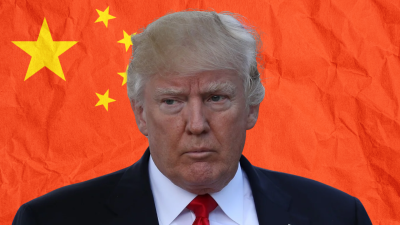
President Trump has not been afraid to voice his opinion on interest rates — namely, the fact that he wants them lowered.
Before Jerome Powell stepped down as chair of the Federal Reserve, he and Trump butted heads publicly over the issue on numerous occasions. Trump didn’t hesitate to blast Powell, calling him a “stubborn mule” and “a real dummy,” among other taunts.
Now that Kevin Warsh has stepped into Powell’s role, the insults could soon start slinging again.
Trump has repeatedly argued that interest rate cuts will reduce borrowing costs for consumers and businesses, boost economic growth, and help support the housing market. Lower rates could also make it easier for companies to invest and could therefore be a boon to the stock market.
Additionally, Trump feels that inflation is not the major threat it once was, and that keeping interest rates elevated is basically nonsensical.
But the Fed hasn’t budged on interest rates. And there’s a reason for that.
The Fed’s primary responsibility is to maintain price stability while supporting maximum employment. That means policymakers cannot focus solely on growth. They must also ensure that inflation remains under control.
Strong May jobs report makes rate cuts less likely
While Trump wants lower rates, economic data continues to suggest caution.
The Fed has long targeted 2% inflation as a healthy level to maintain in the long run. But according to the latest Consumer Price Index report from the Bureau of Labor Statistics, consumer prices increased 3.8% year over year in April.
Much of that increase came as a result of elevated gas prices. But the numbers don’t lie. And while they do represent a significant improvement from the inflation crisis that immediately followed the pandemic, they also indicate that higher prices have not fully disappeared. Cutting rates too aggressively could risk reigniting inflation at a time when many Americans are still struggling.
Meanwhile, the latest unemployment data makes the case against rate cuts.
The U.S. economy 172,000 jobs in May, surpassing economists’ expectations. The unemployment rate held steady at 4.3%.
The report delivered an important message to policymakers — that the economy is not showing the kind of weakness that would typically justify rate cuts.
One of the Fed’s biggest concerns heading into 2026 was the possibility that higher borrowing costs could trigger a significant slowdown in hiring. But if companies continue to add jobs at a steady pace, it makes the argument for rate cuts more tenuous.
The Trump-Warsh battle could continue if prices stay elevated
Even if inflation continues to moderate, several risks could keep prices elevated in the months ahead.
One of the biggest concerns is energy. Ongoing conflict in the Middle East has created uncertainty in global oil markets. Any disruption to energy supplies or shipping routes could drive oil prices higher, increasing transportation costs and putting renewed pressure on consumer prices.
Geopolitical tensions are not the only threat, though. Persistent shortages continue to fuel elevated housing costs, which is one of the largest components of inflation.
All told, inflation could easily remain stubbornly elevated in the months to come, which could make it very difficult for the Fed to justify a near-term rate cut. Will that lead to a public battle between Trump and Warsh, complete with grade school-level name-calling? It might.
Trump will most likely keep advocating for lower rates as a way to support growth and reduce borrowing costs. But if inflation remains elevated and the labor market stays strong, he’s highly unlikely to get his way. As such, the battle between the Fed and the White House could easily rage on for the foreseeable future.
Contact [email protected] for any questions or corrections.
Maurie Backman has more than a decade of experience writing about financial topics, including retirement, investing, Social Security, and real estate. Her work has appeared on sites that include The Motley Fool, USA Today, U.S. News & World Report, and Kiplinger.
Prior to becoming a full-time financial writer, Maurie worked in the financial industry trading distressed debt. She then changed course and spent a few years designing electronic toys. After a stint in content marketing and UX, she shifted back into writing and has since covered everything from the housing market to estate planning to Medicare.
When she's not busy writing, Maurie can be found hiking, walking her dogs, driving her kids to their various sports practices and games, and curling up with a good book. She cooks on occasion and bakes way too often.