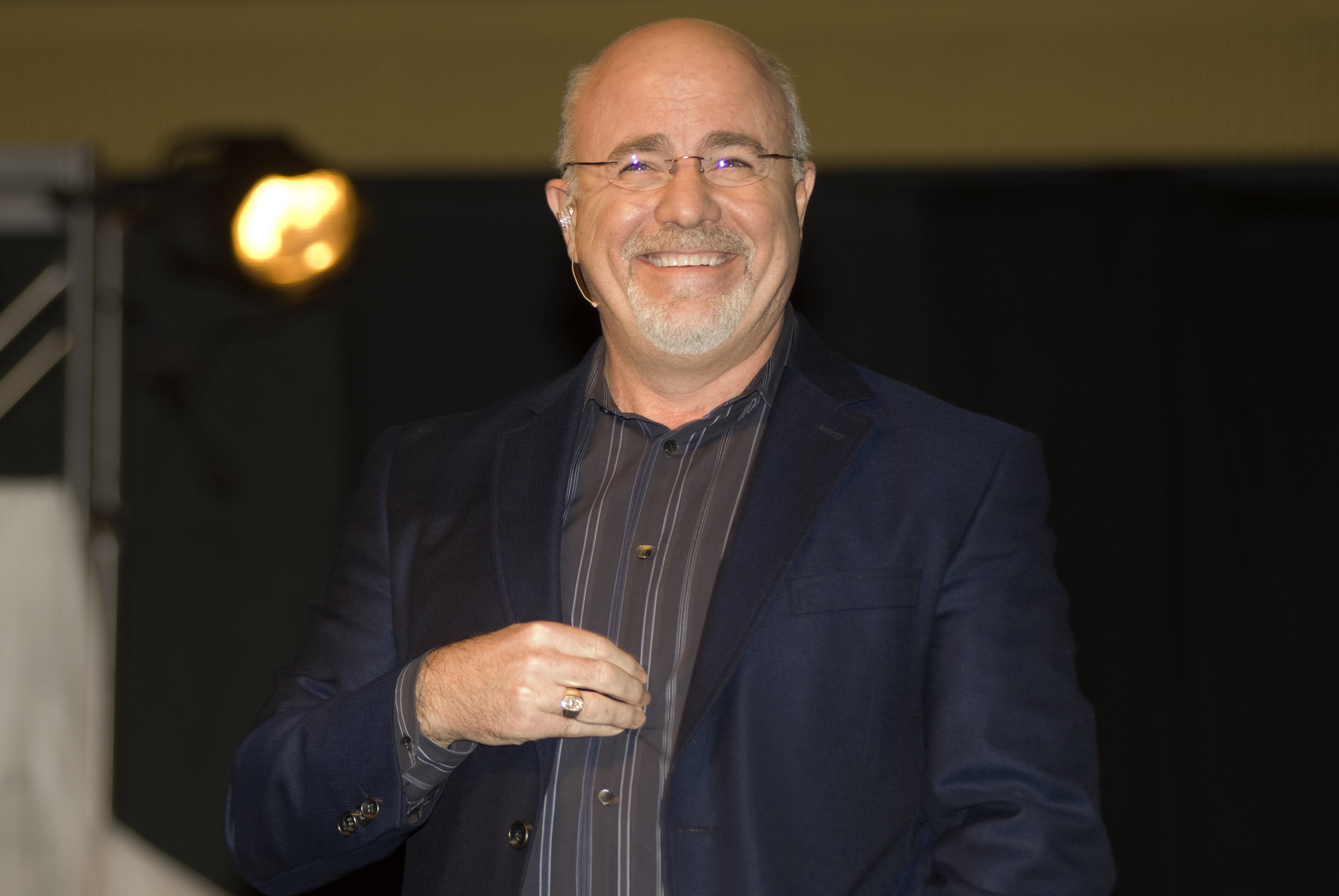
‘Your $200K Would Be $400K’: Dave Ramsey to 71-Year-Old Who Panic-Sold Retirement Account Twice
A 71-year-old named Donna called into The Ramsey Show recently with a confession most retirees would rather bury. "During COVID we had our 401(k)s, our retirement accounts, and the stock market took a dive and we went down like $26,000…

This post may contain links from our sponsors and affiliates, and Flywheel Publishing may receive compensation for actions taken through them.

A 71-year-old named Donna called into The Ramsey Show recently with a confession most retirees would rather bury. “During COVID we had our 401(k)s, our retirement accounts, and the stock market took a dive and we went down like $26,000 in a week and we got nervous,” she said. “So we took it out real quick. And our thought was that we don’t have time to recover.” Then, after mustering the courage to get back in, she and her 84-year-old husband did it again.
Dave Ramsey’s verdict was blunt: “Your $200 would be $400 if you’d have left it alone.” The lesson buried in this call is one that every investor approaching retirement needs to hear: the correct portfolio is the one you can actually hold when the screen turns red.
The receipt on panic-selling
Donna’s account held roughly $190,000 in retirement savings when COVID hit. Co-host Jade Warshaw put a precise cost on the decision: “The problem is the first dive when you said you lost the $26,000, it recovered in like 50 days. The moment you took it out, you just locked in that loss. You 100% lost the $26,000.”
That is the mechanic worth committing to memory. A paper loss is reversible. A realized loss is not. Selling at the bottom converts a temporary drawdown into a permanent subtraction from your net worth, and it forfeits every dollar of the recovery that follows. The COVID crash underscores how brutal the timing can be: the S&P 500 fell 34% in just 33 calendar days from its February 19, 2020 peak to its March 23 trough, then fully recovered by August 2020, roughly five months later. Investors who sold at the bottom captured all of the decline and none of the rebound.
Ramsey framed how the experience actually felt in the moment: “You got out at exactly the wrong time, like the worst possible. You did it the worst possible way you could have done it.”
Then comes the opportunity cost, which is the figure most panic-sellers never sit down and total up. “It went up 25% three years in a row and you missed that,” Ramsey told her. He also cited the broader historical record: 97% of five-year periods in stock market history have produced positive returns, and major crashes like COVID and the 2008 financial crisis ultimately recovered.
The 2008 example he reached for is the one retirees most often misremember. “The Dow Jones went from $13,000 to $6,500 and people said ‘I lost everything.’ No, you lost half,” he said. “And it’s not 13,000 now where it started, it’s now 36,000, and that’s since 2008.” Ramsey made that observation when the Dow was in roughly that range. As of mid-August 2026, the index trades above 53,000, which makes the case for staying invested even more striking. The investors who held got the full rebuild. The ones who sold at 6,500 funded someone else’s recovery.
The variable that decides the whole question
What should determine whether a 71-year-old keeps money in stocks is a simple behavioral question: can she sit through a 30% drawdown without hitting the sell button? Age is secondary. Donna proved twice that she cannot, and Ramsey took her at her word: “You do not need to be investing in the stock market because you don’t have the backbone to stand the volatility.”
That sounds harsh, but it is the right diagnosis. A theoretically optimal stock allocation that you sell at the worst possible moment is worse than a conservative cash allocation you hold through every scare. Donna’s behavior took a portfolio that history says would have doubled and turned it into a confirmed loss, twice over.
Ramsey’s recommendation was calibrated to her temperament rather than her age: “Put it in a high-yield savings account, dump it in a high-yield savings account and let her ride. And you’re going to make 3 or 4%, you’re going to break even with inflation, but you’re not going to lose anything. And you’re going to sleep beautifully.” That range holds up against today’s rate environment. The 10-year Treasury is currently yielding approximately 4.69%, and the best high-yield savings accounts are posting rates up to 4.50% APY, meaning a conservative saver in 2026 can earn a meaningful real return without touching the stock market at all.
What to actually do with this
Run a two-question test before your next market scare:
- How did I behave last time? If you sold in March 2020 or late 2022, that is data about yourself worth respecting. Treat it like a medical history. Ramsey’s closing line on Donna applies here: “I think you’re better off making too little money and not being awake all night.”
- What return do I actually need? If a high-yield savings account or short Treasuries can cover your withdrawal rate, taking equity risk you cannot stomach is uncompensated risk. Match the vehicle to the temperament, then leave it alone.
Donna’s $200,000 failed to become $400,000 because the seat belt came off at the worst possible moment on the ride, not once but twice. The right portfolio is the boring one you can actually sit through.
Editor’s note: This article has been updated to reflect the 10-year Treasury yield of approximately 4.69% (as of August 17, 2026), current high-yield savings account rates of up to 4.50% APY, and added context that the Dow Jones Industrial Average has since climbed above 53,000 from the 36,000 level Ramsey cited on-air. Specific S&P 500 COVID crash data (a 34% decline in 33 calendar days, with a full recovery by August 2020) was also added.
Contact [email protected] for any questions or corrections.
I've been writing about stocks and personal finance for 20+ years. I believe all great companies are tech companies in the long run, and I invest accordingly.