Could You Afford To Retire In Elk Country On $300,000?
Many Americans dream of retiring to Montana elk country. They know the landscape, have hunted there for years, and can easily picture themselves spending every fall in the mountains. What they often have not done is calculate the difference between…

This post may contain links from our sponsors and affiliates, and Flywheel Publishing may receive compensation for actions taken through them.
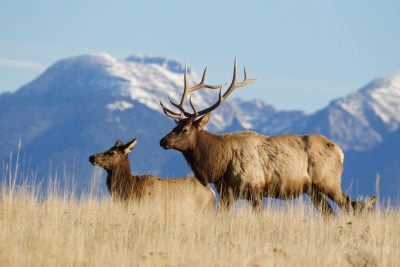
Many Americans dream of retiring to Montana elk country. They know the landscape, have hunted there for years, and can easily picture themselves spending every fall in the mountains. What they often have not done is calculate the difference between visiting for ten days and living there year-round at age 78. Here is what the math looks like for a 67-year-old retiree with a $300,000 portfolio and $2,800 per month in Social Security.
What Western Montana Actually Costs Now
The first thing to accept is that “western Montana” is no longer one market. The Bitterroot, Flathead, and Gallatin valleys have absorbed a decade of out-of-state money and price like mountain-resort towns. Hamilton sits on that edge. Realistic middle-class retirement math works in places like Dillon, Lewistown, Anaconda, Philipsburg, and smaller towns east of the Divide, where you get public land out the back door without paying Bozeman rent.
Statewide, the cost-of-living picture supports the premise. Montana’s regional price parity sits at 94.645, the second lowest in the western United States behind Wyoming. The state ranks 5th overall on tax competitiveness, with no sales tax and modest individual income-tax rates. Inflation remains a factor, but retirees living primarily on Social Security receive annual cost-of-living adjustments designed to help offset rising prices over time.
A Realistic Annual Budget for Montana
For a single retiree in Dillon or Lewistown who already owns a modest home outright, a realistic annual budget looks like this:
- Property tax, homeowners insurance, and maintenance reserve on a $275,000 home: about $6,000
- Heat, power, water, internet, phone in a cold-winter climate: about $3,800
- Groceries at the USDA low-cost plan for one: about $4,200
- Medicare Part B at $202.90 per month, plus a Medigap Plan G, Part D, dental, vision, and the $283 Part B deductible: about $6,800
- Truck fuel, insurance, tires, and replacement reserve for rural driving: about $6,200
- Resident hunting and fishing licenses, tags, ammunition, optics replacement, processing, freezer: about $1,500
- Miscellaneous, gifts, travel to see family, emergency reserve, state income tax on withdrawals: about $5,000
That lands around $33,500 a year. Against $33,600 in Social Security and a 3.5% withdrawal from $300,000 (roughly $10,500), gross income is about $44,100. The cushion is real but thin, and it assumes the house is paid for.
Where The Plan Breaks
It breaks the moment you have to buy the house. A modest place in Hamilton runs well into the $400,000s now. Dillon and Lewistown are more forgiving, but if the entire $300,000 portfolio goes to a cash purchase, the retiree is left living on Social Security alone, with no liquidity for a new roof, a transmission, or a Medigap premium hike. Renting at $1,200 to $1,400 a month works on paper but consumes the withdrawal entirely and leaves nothing for the truck or the tag. The honest answer: this scenario requires either an existing paid-off home, equity transferred in from a sale elsewhere, or a target town cheap enough that a $180,000 to $220,000 house leaves real portfolio behind. Lewistown and Miles City still offer that. Hamilton does not.
The Thing Most Analyses Miss
Two structural costs compound over a Montana retirement. The first is homeowners insurance in the wildland-urban interface. Carriers have been re-rating and non-renewing across the northern Rockies, and a property that insured for $1,400 five years ago can quote at $2,800 or higher today, with higher deductibles for wind and wildfire. Budget for it to climb faster than general inflation.
The second is the aging curve of the hunt itself. At 67, a DIY elk hunt on public land is reasonable. At 78, it usually is not. The retiree who moved for elk needs to honestly price the years when he will hire a packer, lease a horse, hunt closer to the road, or shift to deer and birds. Specialist healthcare is the other side of that coin: orthopedics, cardiology, and oncology in rural Montana mean driving to Missoula, Billings, or Salt Lake. Build a transportation and lodging line for medical travel, because it arrives whether you planned for it or not.
The Real Answer
Retiring in elk country on $300,000 plus $2,800 a month can work, but only under specific conditions: a paid-off or near-paid-off home in a genuinely affordable Montana town, a withdrawal rate around 3.5%, adequate reserves for insurance, healthcare, and vehicle costs, and a willingness to let outdoor pursuits evolve as physical abilities change. Get those pieces right and the plan can be sustainable. Miss one or more of them and Montana’s rising housing, insurance, and healthcare costs can put significant pressure on the budget.
Contact [email protected] for any questions or corrections.
Drew Wood has edited or ghostwritten nine books and published more than 1,500 articles on investing, business, politics, travel, world cultures, wildlife, and earth science. He holds a doctorate and four master's degrees and has nearly 30 years of college teaching experience. His travels have taken him to 25 countries, including three years living in Ukraine.