Windermere or Winter Park: Which Orlando-Area Retirement Destination Fits your Budget?
Windermere and Winter Park sit only about 20 miles apart, and both offer easy access to Orlando’s airport, healthcare system, and attractions. Yet the retirements they deliver, and what those retirements cost, are dramatically different. For a couple in their…

This post may contain links from our sponsors and affiliates, and Flywheel Publishing may receive compensation for actions taken through them.
Windermere and Winter Park sit only about 20 miles apart, and both offer easy access to Orlando’s airport, healthcare system, and attractions. Yet the retirements they deliver, and what those retirements cost, are dramatically different. For a couple in their mid-60s with a paid-off home, a $1 million to $1.5 million portfolio, and $4,500 a month in Social Security, choosing between them can change the entire retirement budget.
What Each Town Actually Costs To Live In
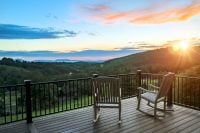
Windermere is the lake-and-gate version of Central Florida retirement. The draw is space: a larger single-family home on or near the Butler Chain of Lakes, golf membership at Isleworth or Bay Hill within reach, and Disney fireworks visible from the back porch. The trade-off is that proximity to Disney also means living closer to one of the busiest tourism corridors in the country, with traffic that can fluctuate dramatically during peak visitor seasons.
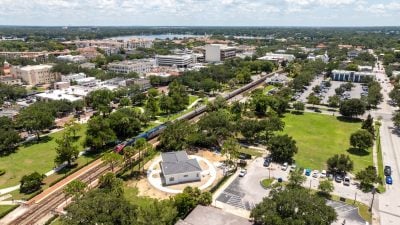
Winter Park is the walkable, older-money alternative. Park Avenue, the Morse Museum, the Bach Festival, and Rollins College auditing programs for residents over 60 offer cultural anchors. Disney remains an easy day trip, but daily life revolves more around restaurants, museums, shops, and community events than theme parks.
The Real Annual Budgets
Here is what each lifestyle actually spends in current dollars, assuming the house is owned outright and the couple is on Medicare. Healthcare uses the 2026 Part B standard premium of $202.90 per person per month, plus Medigap Plan G and Part D through AdventHealth or Orlando Health networks, which together come to roughly $12,000 a year for two.
| Annual Line Item | Windermere | Winter Park |
|---|---|---|
| Property tax (homesteaded) | $18,000 | $10,000 |
| Homeowners and flood insurance | $15,000 | $6,000 |
| Utilities, pool, landscaping | $14,000 | $7,500 |
| Healthcare (Medicare, Medigap, dental) | $12,000 | $12,000 |
| Food (USDA moderate-to-liberal plan) | $14,000 | $13,000 |
| Transportation (two vehicles) | $8,000 | $5,500 |
| Dining, golf or club dues, entertainment | $15,000 | $12,000 |
| Travel | $10,000 | $8,000 |
| Reserves, replacements, federal tax on withdrawals | $16,000 | $11,000 |
| Total | $122,000 | $85,000 |
The gap comes from the house itself. A bigger envelope on more water in a stronger wind zone simply costs more to insure, cool, and maintain.
The Portfolio Math
Social Security covers $54,000 of either budget. Winter Park leaves a $31,000 gap, which at a 4% withdrawal rate requires about $775,000 of invested assets. A $1 million portfolio handles it with room. A $1.5 million portfolio handles it comfortably enough to keep the withdrawal at 3.5% and let the balance compound.
Windermere leaves a $68,000 gap. At 4%, that requires $1.7 million. At a more conservative 3.5%, which is what a 64-year-old couple looking at a 30-year horizon should use, it requires roughly $1.94 million. The headline portfolio range funds only a stretched version of the Windermere retirement, with the withdrawal rate pushed to 4.5% or 5%, which is the math people quietly accept right before the first major roof or insurance reset reveals it does not work.
The Insurance Reality Most Buyers Underprice
Florida property insurance has risen sharply over the past several years, particularly for higher-value homes and properties with greater storm exposure. A $1.8 million Butler Chain home can easily carry five-figure annual insurance costs when homeowners and flood coverage are combined, and those increases often outpace general inflation. Over a long retirement, the insurance line can become one of the fastest-growing expenses in the budget. A smaller Winter Park home on higher ground generally faces less pressure from that trend.
That is also why Florida’s tax profile, ranked 4th overall on the 2025 State Tax Competitiveness Index with no individual income tax, looks better on paper than it lives out in Windermere. The state gives back at the income line what the coast takes at the insurance line.
What The Choice Really Comes Down To
If the couple wants Windermere, the honest target is closer to $1.9 million invested, a 3.5% withdrawal rate, and a deliberate decision to treat the lake home as a lifestyle purchase rather than a financial one. If they want Winter Park, the math they already have works. The lower carrying costs leave more room for travel, family, hobbies, and the unexpected expenses that inevitably arrive over a long retirement. For the portfolio in this example, the stronger financial fit is the smaller, older, walkable town.
Contact [email protected] for any questions or corrections.
Drew Wood has edited or ghostwritten nine books and published more than 1,500 articles on investing, business, politics, travel, world cultures, wildlife, and earth science. He holds a doctorate and four master's degrees and has nearly 30 years of college teaching experience. His travels have taken him to 25 countries, including three years living in Ukraine.