I’m 40 and my advisor wants me to switch from Roth to traditional 401(k). Dave Ramsey says it’s a million-dollar mistake
Her financial advisor pushed her to abandon the Roth 401(k) and take the traditional tax break instead, and it sounded reasonable until she called Dave Ramsey and learned exactly how much that one switch could cost her family.

This post may contain links from our sponsors and affiliates, and Flywheel Publishing may receive compensation for actions taken through them.
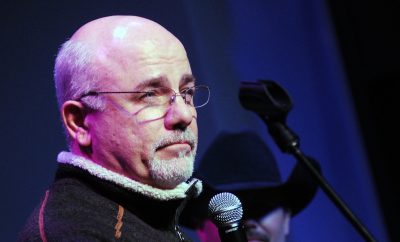
A 40-year-old caller phoned into The Ramsey Show with a nagging feeling she could not quite name. Her financial advisor had told her to stop funding her company’s Roth 401(k) and redirect the money into a traditional 401(k) instead, citing her income level and the appeal of an immediate tax deduction. She planned to max out at $24,500 a year either way, the full IRS contribution limit for 2026. Something about the advice felt wrong, but she could not pinpoint the precise circumstance that would actually make the switch worthwhile.
Dave Ramsey did not hedge. “You need to get a new financial advisor that can actually do math,” he told her, then added, “I’m flabbergasted that somebody could be this dumb and call themselves a financial advisor.”
The Verdict: Ramsey Is Right on the Math
For a 40-year-old with a 25-year runway and the cash flow to max out contributions, the Roth almost always wins. The logic is direct: the tax deduction on a traditional 401(k) applies only to the money going in, while every dollar of growth on top of that comes out taxable in retirement. A Roth flips the equation entirely. You pay tax on the seed and the harvest is yours.
Ramsey walked through the numbers on air. Contributing $24,500 a year for 25 years produces a projected $3.1 million balance by age 65, with total contributions of roughly $612,500. The remaining $2.5 million is pure growth, and that gap is the entire ballgame. Here is how Ramsey framed the trade the advisor was pitching: “He’s telling you to save taxes on $600,000 of the $3.1 million, but for doing that, you get to pay taxes on $2.5 million.” He pegged the tax exposure on that growth at $700,000 to $800,000 and called it almost a million-dollar mistake. “A guy that makes a million-dollar mistake, you don’t keep,” he said.
The inflation backdrop sharpens this case. Consumer prices rose 3.4% annually through August 2026, holding steady from the July reading, according to the Bureau of Labor Statistics. Both readings remain well above the Federal Reserve’s 2% target. Persistent price pressure tends to push tax brackets and future statutory rates higher over time, which is precisely the environment where locking in today’s rate through a Roth pays off most.
Run your own numbers and you will see the same pattern Ramsey outlined. The larger the growth relative to contributions, the worse the traditional account looks on an after-tax basis.
The Inheritance Trap Nobody Talks About
The tax bill does not stop at retirement. Ramsey flagged the inheritance angle, which is where the traditional account becomes even more expensive. Under the Secure Act, heirs must fully draw down an inherited traditional IRA within 10 years. On a $3.1 million balance, that forces roughly $300,000 a year in taxable distributions, stacked on top of whatever your children already earn. The result can push them into a top bracket for an entire decade.
A Roth inheritance carries the same 10-year drawdown rule, but none of those distributions are subject to income tax. “It’s harder in retirement, it’s harder in inherited, and you pay light-years more taxes. There’s no case where this is not going to happen,” Ramsey said.
The Variable That Could Flip the Math
The one factor that could genuinely tilt this calculation toward a traditional account is a firm conviction that your retirement tax rate will be dramatically lower than your rate today. That is a bold assumption under any circumstance, and recent policy moves make it bolder still.
The Federal Reserve raised its benchmark target to 3.75% to 4.00% in September 2026, its first rate hike since 2023, citing inflation that “remains elevated.” Rate policy and tax policy move on completely different tracks, but the bigger picture points in the same direction: federal deficits, entitlement funding pressures, and the 2.8% Social Security COLA for 2026 all create pressure for higher revenue collection over a 25-year horizon, not lower. The 2026 COLA marks the fifth consecutive year with an adjustment of at least 2.5%, a streak not seen since the 1990s, according to the Social Security Administration.
Worth noting too is a shift inside the tax code itself. Starting in 2026, SECURE 2.0 requires workers whose prior-year FICA wages from the plan sponsor exceeded $150,000 to make any catch-up contributions as Roth dollars rather than pre-tax. Congress built a structural preference for Roth treatment at higher income levels directly into the law, and that preference is unlikely to reverse.
If you retire with a $3 million balance plus Social Security income plus required minimum distributions, your effective bracket in retirement can easily match or exceed your bracket today. That is the scenario Ramsey’s math assumes, and it is the realistic one for anyone who maxes contributions for 25 years straight.
What to Do This Week
Four concrete steps are worth taking now.
- Log into your 401(k) portal and confirm whether your plan offers a Roth option. Many plans do and employees never enable it.
- Model both paths using an IRA comparison calculator with your actual salary, contribution rate, and expected return. Focus on the after-tax balance at 65, not the gross number.
- Ask your advisor to show the math in writing, including the tax on projected growth and the Secure Act drawdown impact on heirs. If they cannot, seek a second opinion from a fee-only fiduciary.
- Keep in mind that employer matching contributions always go into a traditional (pre-tax) bucket, so you gain some built-in tax diversification regardless of which type you choose for your own dollars.
Individual situations vary and a qualified tax professional should review your specifics before you make any changes. The principle Ramsey hammered on is durable: when the growth dwarfs the contributions, you want that growth to come out tax-free.
Editor’s note: This update corrects the federal funds rate to 3.75% to 4.00%, reflecting the Federal Reserve’s September 16, 2026 rate hike (the first since 2023), and refreshes the inflation reference to August 2026 CPI data, which showed the annual rate holding at 3.4% according to the Bureau of Labor Statistics.
Contact [email protected] for any questions or corrections.
I am a long time investor and student of business, and believe finding good companies that can become great investments is the best game on earth. After 20 years of writing and researching the public markets it is clear that individuals have never had more tools and information to take control of their financial lives. From ETFs and $0 commissions to cryptos and prediction markets there has never been a greater democratization of access to investing.
I write to help people understand the investments available to them so they can make the best choice for their portfolio, whether they're starting out or looking for income in retirement.