The Real Cost of Retiring in a Del Webb Community, America’s Biggest 55+ Brand
The Del Webb sales pitch ends at the front gate, but the real financial conversation starts the moment you sign. Before you commit, find out what a pickleball-and-coffee retirement actually demands from your portfolio over the next 30 years.

This post may contain links from our sponsors and affiliates, and Flywheel Publishing may receive compensation for actions taken through them.
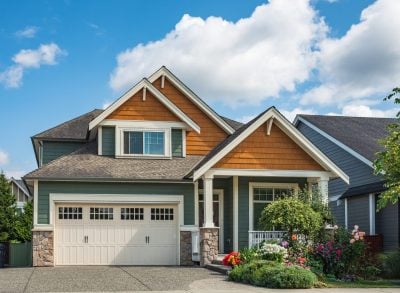
Everybody who walks through a Del Webb model home hears the same pitch: pickleball courts full, the clubhouse smelling like fresh coffee, and a sales agent quoting a price that looks like a bargain next to your family home. You sign, move in, and the sticker price turns out to be only the first conversation. What does it actually cost, all in, to retire inside America’s biggest active-adult brand?
What You Are Really Buying at the Front Gate
Del Webb, a brand of PulteGroup, operates in the states where 55-plus buyers concentrate: Arizona, Florida, the Carolinas, Nevada, Texas, and a shrinking California footprint. According to 55places.com, there are now 166 Del Webb active-adult communities across the U.S. as of 2026. A new single-story two-bedroom in a Phoenix-area Del Webb typically runs mid-$400s to high $500s. Florida communities sit in a similar band, though upgraded models with lanai and pool packages reach $700,000 quickly. California communities push well past $800,000.
Financing in the current rate environment continues to surprise retirees. The 10-year Treasury has been trading near 4.76% to 4.78% this week, and the 30-year fixed mortgage rate from Freddie Mac has climbed to 6.66% to 6.71%, near its highest level in about a year, as oil price volatility and renewed geopolitical uncertainty push bond yields higher. The National Association of Realtors reported that existing home sales slipped to an annualized pace of 4.05 million units in July 2026, with the median price for a previously owned home at $431,400. Your current home has accumulated real value, but selling it may take longer than expected in this rate environment.
The Line Items That Set the Budget
Assume a couple, both 62, buying a $500,000 Del Webb home in Phoenix or Sarasota, paying cash from a downsize. Here is the annual working budget in today’s dollars:
- HOA dues: $2,400 to $4,800. Del Webb dues typically run $200 to $400 per month. Florida communities often add a CDD (community development district) assessment, another $1,500 to $3,000 annually for the first two decades.
- Property taxes and insurance: $6,000 to $9,000. Florida wind exposure and Arizona reconstruction costs have pushed homeowner premiums sharply higher over the past three years.
- Healthcare bridge (pre-Medicare): $18,000 to $26,000 for a couple on ACA silver plans at modest income. This is the single biggest budget item for anyone entering Del Webb before 65.
- Food, utilities, transportation: $22,000 to $26,000. The Bureau of Labor Statistics pegs average U.S. household expenditures at $78,535 for 2024; retirees with a paid-off home come in below that on housing, but not by much on everything else.
- Miscellaneous and reserves: $12,000. This covers the roof, HVAC, one car replacement every eight years, gifts, travel, and federal income tax on portfolio withdrawals.
That totals roughly $75,000 to $85,000 a year before Medicare, settling closer to $65,000 once both spouses turn 65 and drop the ACA premium.
Turning the Budget Into a Portfolio Number
Using $78,000 as the working annual figure for a couple retiring at 62 in a mid-tier Del Webb: Social Security at 67 for a two-earner household with average benefits lands near $58,000 combined in today’s dollars. The 2026 COLA of 2.8% keeps that roughly whole against recent inflation, and preliminary estimates from the Senior Citizens League project the 2027 COLA at approximately 3.6%, which would provide a somewhat larger buffer if inflation stays elevated. Even so, the post-claim math leaves a permanent gap of about $20,000 a year once both spouses are receiving benefits.
The five-year bridge from 62 to 67 is where the portfolio does the heavy lifting. You need the full $78,000 from investments, ideally from a treasury ladder or short-duration bond position to avoid selling equities into weakness. At a 3.5% withdrawal rate suited to a 30-plus year horizon, covering the post-Social Security gap of $20,000 requires about $570,000. Add roughly $400,000 for the bridge years, and you land near $1.0 million in investable assets on top of the paid-off Del Webb home. Financing the house instead of paying cash pushes that figure toward $1.4 million.
The Cost Nobody Prices In: HOA Compounding
HOA dues climb steadily. Across mature Del Webb communities in Arizona and Florida, dues have historically risen 4% to 6% annually, well above the recent CPI trajectory and well above the 2026 Social Security COLA of 2.8%. A $300 monthly dues bill at age 62 becomes closer to $700 at 82 in nominal dollars. Special assessments arrive when the original clubhouse roof, pools, and pickleball surfaces all need replacement at once, which they will, because the community was built all at once.
Florida buyers face a second layer of complexity. The CDD bond that funded roads and infrastructure is amortized over 20 to 30 years, and the payoff obligation transfers with the home. Prospective buyers should request the full CDD disclosure before signing. Some residents discover ten years in that their seemingly “low” HOA was masking a five-figure infrastructure debt attached to the parcel.
What It Actually Takes
The workable Del Webb retirement, entered at 62 in Arizona or Florida with a paid-off $500,000 home, requires roughly $1.0 million in investable assets, a 3.5% long-horizon withdrawal rate, both spouses claiming Social Security by 67, and an explicit reserve for HOA escalation and special assessments that arrive on a schedule the sales office does not advertise. The mortgage environment as of late summer 2026 also makes the cash-purchase path more valuable than in prior years: at a Freddie Mac 30-year rate near 6.7%, financing even $300,000 adds more than $2,000 a month in fixed outflows that compete directly with discretionary spending and investment contributions. The pickleball is real. So is the compounding. Budget for both.
Editor’s note: This article was updated to reflect the 10-year Treasury yield near 4.76-4.78% and the Freddie Mac 30-year mortgage rate of 6.66-6.71% as of early September 2026 (up from the ranges cited at original publication), the NAR’s July 2026 existing home sales figure of 4.05 million annualized at a median price of $431,400, and the Senior Citizens League’s current 2027 Social Security COLA projection of approximately 3.6%.
Contact [email protected] for any questions or corrections.
I am a long time investor and student of business, and believe finding good companies that can become great investments is the best game on earth. After 20 years of writing and researching the public markets it is clear that individuals have never had more tools and information to take control of their financial lives. From ETFs and $0 commissions to cryptos and prediction markets there has never been a greater democratization of access to investing.
I write to help people understand the investments available to them so they can make the best choice for their portfolio, whether they're starting out or looking for income in retirement.