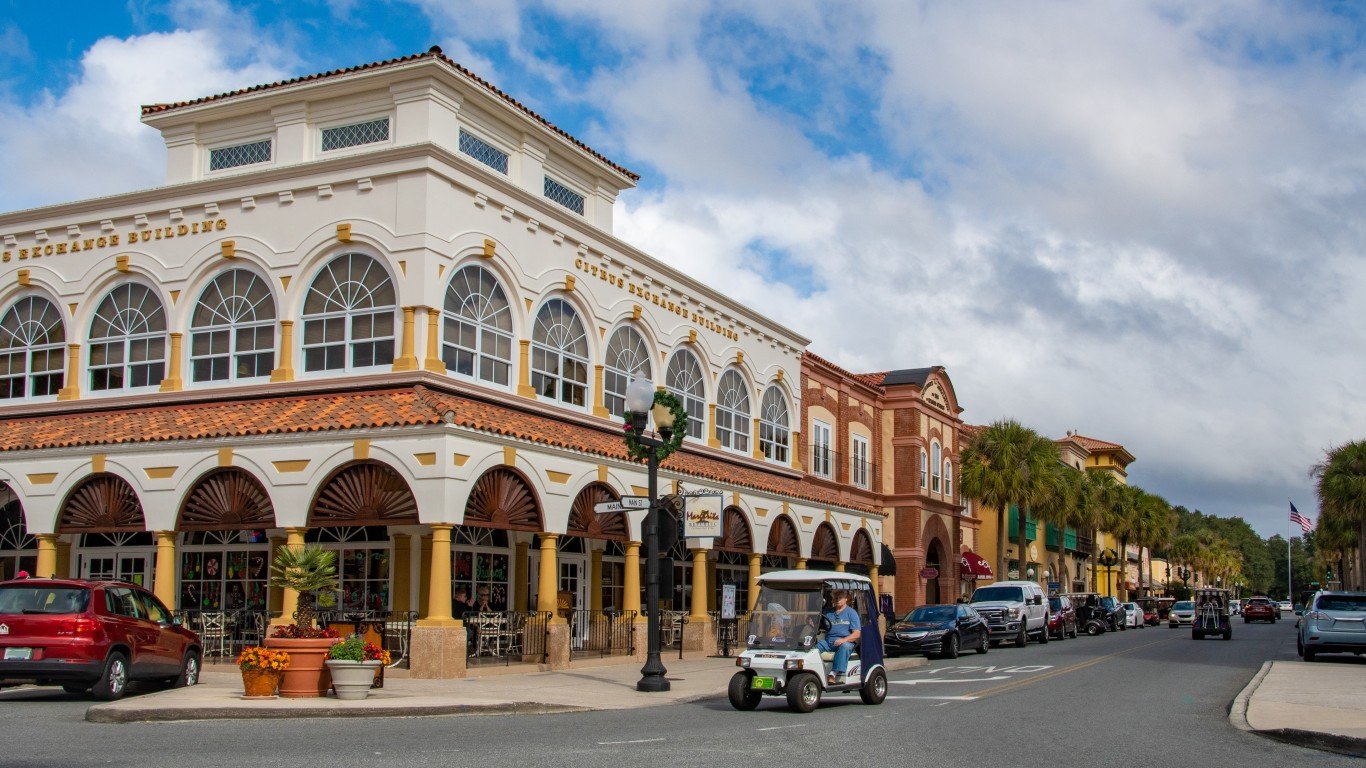
Everyone’s Chasing The Villages. Smart Retirees Are Quietly Buying Here Instead
Florida's most famous retirement community has a cost stack that the brochure never mentions, and a growing group of retirees skipped it entirely for a city most people never considered putting on the list.

This post may contain links from our sponsors and affiliates, and Flywheel Publishing may receive compensation for actions taken through them.

We get this question almost every week: Everyone I know is moving to The Villages. Am I missing something by looking somewhere else? Usually not. The Villages works for plenty of people, but the sticker price conceals a recurring cost stack, and Florida’s overall numbers have grown considerably less friendly than the brochure suggests. A growing group of retirees is heading to Sioux Falls, South Dakota instead. Here is what it takes to make that work.
Why Sioux Falls Keeps Showing Up on the Short List
South Dakota’s cost of living sits roughly 12% below the national average, and Sioux Falls tracks even lower than the state as a whole. The Tax Foundation’s 2026 State Tax Competitiveness Index ranks South Dakota 2nd in the country, trailing only Wyoming. The state levies no individual income tax, no tax on Social Security benefits, no tax on pension or IRA withdrawals, and no estate tax. For retirees who actively manage their taxable income each year, that profile is hard to beat.
Infrastructure matters too. Sioux Falls supports two major hospital systems and a regional airport. Its housing stock has never faced the hurricane insurance repricing that has upended household budgets across Florida, and that last point deserves more weight than it usually receives. A Sioux Falls homeowner simply does not carry the insurer-driven cost escalation risk that Florida buyers now absorb as a permanent feature of home ownership.
The Villages sticker price tells only part of the story. Buyers there absorb CDD bond assessments that can run for decades, monthly amenity fees, and Florida homeowners insurance premiums that have roughly doubled over the past several years. Those recurring charges rarely appear in listings, and they compound in ways a purchase price cannot reveal.
What It Actually Costs in Sioux Falls
A realistic working budget for a couple retiring at 62 in a paid-off three-bedroom home in Sioux Falls, in current dollars:
- Property taxes, homeowners insurance, and maintenance on a home around the mid-$300s: $8,500
- Utilities, with real Dakota winter heating: $3,800
- Food, using the USDA moderate-cost plan for two: $13,200
- ACA marketplace premiums for two, pre-Medicare, MAGI managed into the subsidy zone: $9,600
- Two vehicles, fuel, insurance, replacement reserve: $8,500
- Travel, hobbies, gifts, personal: $9,000
- Miscellaneous reserves (roof, HVAC, medical out-of-pocket): $6,500
- Federal income tax on withdrawals: $4,500
That totals roughly $63,600 a year. Once both spouses reach 65 and shift to Medicare, the ACA line drops off. Part B plus a Medigap plan replaces it, generally at a lower total cost. The 2026 standard Medicare Part B premium is $202.90 per person per month, and the Part A inpatient deductible runs $1,736 per benefit period, a figure worth parking in the miscellaneous reserve line. IRMAA surcharges on both Part B and Part D do not begin until modified AGI exceeds $109,000 for a single filer or $218,000 for joint filers, a threshold most retirees drawing from a balanced portfolio will not reach.
The Portfolio Math
Assume both spouses claim Social Security at their full retirement age of 67. The SSA’s own estimates put the average combined benefit for an aged couple at roughly $3,208 per month in 2026, or about $38,500 a year, following the 2.8% COLA that took effect in January. Higher earners who spent most of their careers near the wage base can land closer to $46,000 combined, and that is a reasonable planning target for the couple this analysis describes.
From age 67 forward, the gap between $63,600 in spending and Social Security income falls somewhere between $17,600 and $25,000 a year, depending on actual earnings histories. A 4% withdrawal rate on a $17,600 annual gap implies a portfolio target of about $440,000 at age 67; a $25,000 gap pushes that figure closer to $625,000.
The harder part is the bridge from 62 to 67. Five years of full expenses with no Social Security means roughly $320,000 in cumulative spending. Keeping that money in a taxable brokerage account or a short Treasury ladder lets you control MAGI during the ACA subsidy window. Total portfolio at retirement lands somewhere around $840,000 to $900,000 for a couple with above-average earnings histories, with a buffer added for sequence-of-returns risk. The 2.8% COLA does not always keep pace with what a retiree grocery bill actually does. The S&P CoreLogic Case-Shiller National Home Price Index reached 335.1 in May 2026, confirming that housing costs have not retreated, either.
The Thing Most Analyses Miss
South Dakota’s tax structure interacts with the ACA bridge in a particularly useful way. With no state income tax, you can run deliberate Roth conversions during the 62-to-65 window, filling up to just below the ACA subsidy cliff, then throttle back once Medicare kicks in. In Florida, the same strategy is available on paper, but every dollar saved on the federal side tends to flow straight to an insurance carrier or, for Villages buyers, to a bond amortization schedule with years left to run. Over a 30-year retirement, that drag can easily consume six figures that a Sioux Falls buyer simply keeps.
The housing market also offers more negotiating room than saturated retirement-destination markets do. Existing home sales ran at an annualized pace of 4.06 million units in July 2026, down from 4.09 million in June, a soft backdrop that places buyers in a stronger position than they have occupied for much of the past four years. In smaller Midwestern cities, the NAR has noted that a household income around $60,000 can still qualify for a median-priced home, a dynamic that simply does not exist in most of coastal Florida.
The Number You Need
To retire at 62 in Sioux Falls with a spouse, a paid-off home, and a spending plan around $63,600 a year, plan on roughly $900,000 invested, a blended withdrawal rate near 4%, Social Security claimed at 67, and an ACA bridge funded from taxable accounts with MAGI managed deliberately. Single retirees should cut the Social Security assumption in half and target closer to $1.1 million. The recurring cost stack in Sioux Falls behaves in a way that Florida’s does not: the tax code stays out of your way entirely, and the dollars you do not spend on insurance and assessments are precisely the dollars that let a mid-six-figure portfolio last 30 years.
Editor’s note: This pass updated July 2026 existing home sales from 4.05 million to 4.06 million to match the NAR’s primary data release, clarified that IRMAA surcharges apply to both Medicare Part B and Part D premiums (not Part D alone), and added the 2026 standard Part B premium of $202.90 per person per month as a concrete planning figure.
Contact [email protected] for any questions or corrections.
I am a long time investor and student of business, and believe finding good companies that can become great investments is the best game on earth. After 20 years of writing and researching the public markets it is clear that individuals have never had more tools and information to take control of their financial lives. From ETFs and $0 commissions to cryptos and prediction markets there has never been a greater democratization of access to investing.
I write to help people understand the investments available to them so they can make the best choice for their portfolio, whether they're starting out or looking for income in retirement.