Replace Your $6,000 Grocery Budget With Dividends Alone: The Math
The company behind Cheerios, Pillsbury, and Blue Buffalo has paid dividends for 127 straight years, and a single calculation reveals exactly how much of its stock it takes to make your grocery bill someone else's problem.

Here is a satisfying piece of symmetry: the company that stocks half your pantry can, in theory, pay for the pantry itself. This article solves for how much General Mills (NYSE:GIS | GIS Price Prediction) stock it would take to generate enough annual dividend income to cover a $6,000 a year grocery budget, or $500 a month. That $6,000 figure serves as an illustration for the math rather than a benchmark for household spending.
What You Are Actually Buying
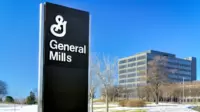
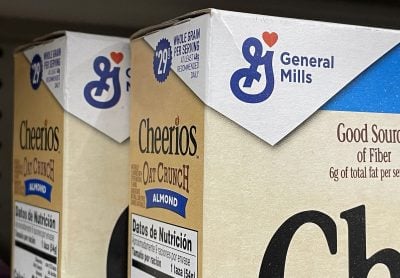
General Mills is a large packaged foods manufacturer whose brands span cereal, snacks, baking products, yogurt and pet food, sold primarily through grocery retailers. The portfolio includes Cheerios, Nature Valley, Pillsbury, Betty Crocker, Häagen-Dazs, Old El Paso, Annie’s and Blue Buffalo. It is a consumer staples business with a $19.17 billion market cap and a dividend record management flagged as its 127th consecutive year of uninterrupted payments.
GIS-Only Math
General Mills currently pays a $0.61 quarterly dividend, or $2.44 per share annualized. At the recent share price of about $36, the yield is roughly 6.8%.

To generate $6,000 in annual dividends, you need $6,000 divided by $2.44 per share. That works out to roughly 2,460 shares. At today’s price, that is a position of about $88,000 in a single stock. Let that number land. Covering one recurring household expense from one company’s payout requires meaningful capital concentrated in one name, with all the earnings, brand and category risk that goes with it.
Same Goal at Three Yield Tiers
Zoom out from GIS and the trade-offs across yield ranges are clearer.
- Conservative (3% to 4% yield). Think broad dividend growth funds and blue-chip staples on the lower-yield side. To throw off $6,000 a year at 4%, you need roughly $150,000 in capital. You give up current income for a diversified base and a payout stream more likely to grow with inflation.
- Moderate (5% to 7% yield). This is where GIS currently sits alongside REITs, preferred shares, covered call ETFs and high-dividend equity funds. At 6%, the same $6,000 target needs about $100,000. Growth in the distribution slows, and some structures cap upside.
- Aggressive (8% to 14% yield). Business development companies, mortgage REITs and leveraged option-income funds. At 10%, $6,000 comes off just $60,000 of capital, but principal erosion and distribution cuts are common. You are often spending down the asset while growth stalls.
Frozen Payout Risk
Here is the caveat the yield alone hides. The quarterly dividend was lifted to $0.61 at the 2025 ex-date and has been held there at every ex-date since. Grocery prices, meanwhile, keep climbing. A payout that stops growing while your bill does not means the same 2,460 shares cover a smaller share of the cart each year.
The business backdrop explains the pause. Fiscal 2026 revenue came in at $18.42 billion, down 5% year over year, and management guided fiscal 2027 to organic sales of -1.5% to +0.5% and adjusted EPS of $3.00 to $3.20. Free cash flow of $1.63 billion, down 29%, still covers the dividend, but leaves less room for hikes. The stock reflects that pressure: shares are down roughly 25% over the past year. COO Dana McNabb told investors shoppers are “more deliberate in how and where they shop, buying more on promotion and less on everyday prices”.

Other Side
Food demand does not vanish in a downturn, the brand shelf is deep, and a payout held steady is still a payout being paid. Analysts carry a roughly $38 average price target, above today’s quote, and the forward multiple sits near 12x earnings. Management has flagged $750 million of cost savings in fiscal 2027 toward $3 billion cumulative by fiscal 2030.

What To Do Next
- Decide whether you want $6,000 of grocery money from one ticker or from a diversified basket. If concentration bothers you, split the position across two or three staples names or a dividend growth fund yielding in the 3% to 4% band, accepting the larger capital requirement. The whole idea of living off the checks without selling shares is the subject of a free dividend ladder guide we put together here.
- Track the next annual dividend decision. General Mills historically raises the payout with the July ex-date. Another hold at $0.61 would confirm the pause; a raise would signal management’s confidence that fiscal 2027 execution is landing.
- Compare the 10-year total return of a broad dividend growth fund against a 10%-yielding income fund before deciding which tier fits your actual retirement horizon.
Contact [email protected] for any questions or corrections.
Chris Lange is a financial and geopolitical writer with more than a decade of experience covering a myriad of topics. He has published thousands of articles for 24/7 Wall St., with past coverage focused heavily on stocks, IPOs, healthcare, defense, global affairs, and technology.
His work has been quoted, or referenced by a number of outlets including Business Insider, USA Today, Yahoo Finance, MSN, The Motley Fool, and many other publications. A graduate of Southwestern University, he studied business with a focus on investments and has previous experience in banking and startups.
When not reading or writing the news, he is following his passion for Lacrosse, playing chess, or building solar projects with his dad.