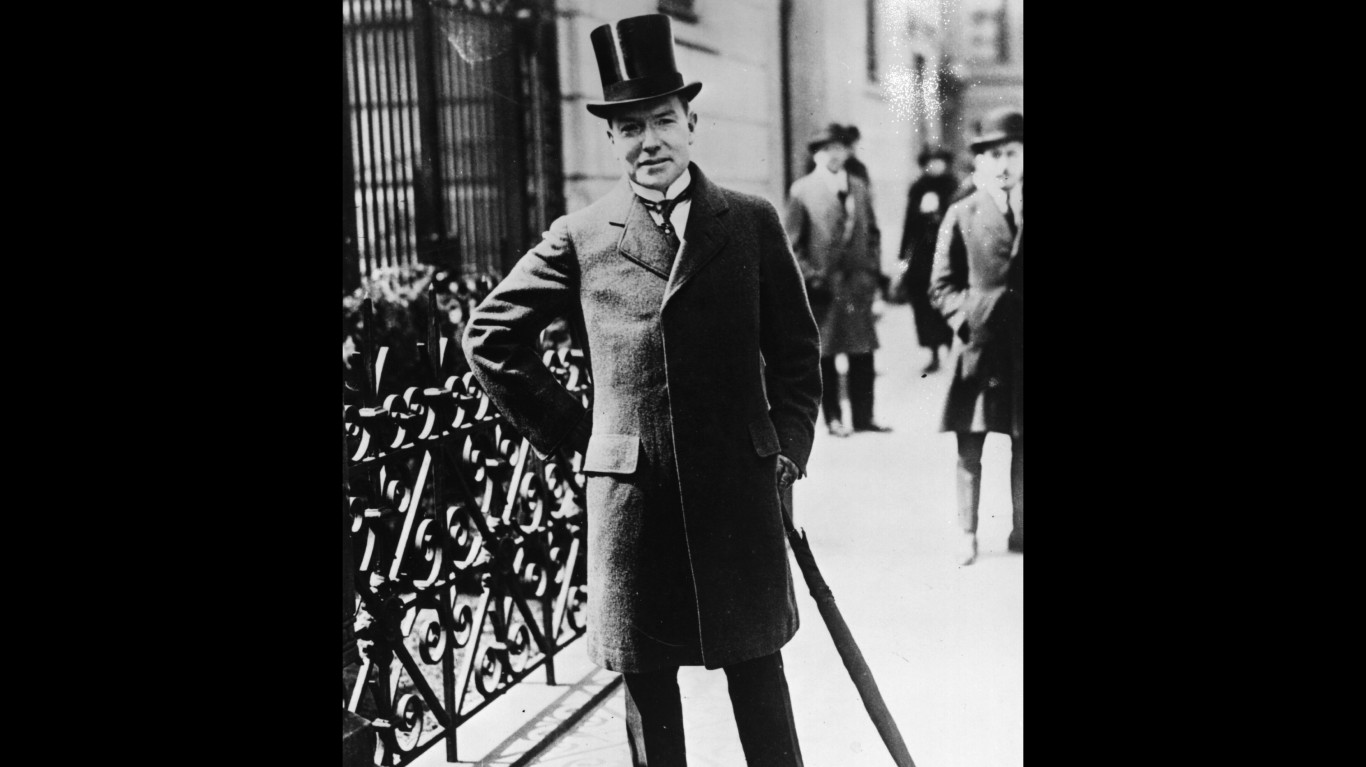
Rockefeller vs. Vanderbilt: One Family Used a Trust to Protect Its Fortune. The Family Historian Says the Other Had Zero Millionaires Within 4 Generations.
Cornelius Vanderbilt died with a fortune larger than the U.S. Treasury, yet something the Rockefellers quietly did in 1934 separated a dynasty that endured from one that collapsed within two generations.

This post may contain links from our sponsors and affiliates, and Flywheel Publishing may receive compensation for actions taken through them.

One Fortune, One Heir, Zero Guardrails
Cornelius Vanderbilt died with a fortune estimated at $95 million to $105 million, a sum widely cited at the time as larger than what sat in the U.S. Treasury. His will handed roughly 95% of it directly to his son William Henry Vanderbilt, with instructions that the money not be wasted. Those instructions carried moral weight only. No trust gated the assets, no professional trustee staged distributions, and no spendthrift clause restrained the heirs to come.
It’s often assumed that Vanderbilt’s son must have squandered the fortune, the opposite is actually true. William Henry Vanderbilt was the richest American from 1877 until his death in 1885, roughly doubling the fortune to more than $200 million in about eight years by expanding the New York Central Railroad. The collapse came later, and it came through dispersion.
Trophy Assets Are Not a Store of Value
Later heirs built ten Fifth Avenue mansions, alongside yachts and legendary entertaining, without the operating discipline that defined the first two generations. Every one of those mansions had been demolished by 1947.
An inherited mansion is not wealth if the carrying costs exceed what the next generation can sustain and nobody wants to buy it. Modern readers with inherited property, a lake house, a farm, a brownstone, recognize that math immediately.
A Reunion With No Millionaires in the Room
By 1907, within thirty years of Cornelius’s death, no Vanderbilt sat among the richest people in the United States. Within forty-eight years, one of his grandchildren reportedly died penniless.
In 1973, 120 of Cornelius’s descendants gathered at Vanderbilt University for the family’s first reunion, a figure representing attendees rather than a count of living heirs. According to family historian Arthur T. Vanderbilt II, in his book Fortune’s Children: The Fall of the House of Vanderbilt, not one of those attendees was a millionaire.
Other sources have pushed back on Arthur T Vanderbilt II’s account, but it’s worth comparing the Vanderbilt story with the experience of another of America’s wealthiest families.
Rockefeller Built a Container
In 1934, John D. Rockefeller Jr. placed the bulk of the family fortune into irrevocable dynasty trusts. Those trusts have carried assets through six generations without a single federal estate tax bill. They predate the generation-skipping transfer tax Congress created in 1976 and were grandfathered under it.
A dynasty trust removes assets from the taxable estate permanently. The holdings compound inside the trust across generations rather than facing a fresh estate tax assessment at each individual’s death.
What a Trust Actually Supplies
Three things distinguish a trust from a raw bequest: spendthrift control, restricted distributions, and professional management. Heirs do not own trust assets outright, which shields those assets from creditors, from lawsuits, and from an heir’s own poor decisions. Distributions can be staged over time or under conditions, rather than handed over the way Cornelius handed the railroad fortune to William Henry.
Fairness matters here. Many of today’s trust tools were less developed in the Vanderbilts’ era. The legal technology of wealth preservation was more mature by 1934 than it had been in 1877.
Modern Version and Its Ceiling
Dynasty trusts remain legal and in use, typically paired with the federal estate and generation-skipping transfer exemption. For estates of decedents dying in 2026, the basic exclusion amount is $15,000,000, up from $13,990,000 for decedents who died in 2025. Perpetuity-friendly jurisdictions include South Dakota, Nevada, Delaware, Alaska, and Wyoming.
State the limit plainly: this structure is built for estates large enough to exceed the exemption, which keeps it out of mass-market use. For everyone below that line, the work is less exotic and more clerical, wills, beneficiary forms, titling, and we put the full checklist in a free estate guide for readers who want the smaller-scale version of what the Rockefellers built.
The Vanderbilt fortune was dispersed, spent, and outgrown. The Rockefeller fortune stayed inside a container. American capital compounds either way. It just does not always compound inside the same family.
Contact [email protected] for any questions or corrections.
AJ spent 10 years writing about financial markets at The Motley Fool. His coverage centers on technology stocks and the broader macroeconomic trends, from interest rates to geopolitics, that shape where markets are headed next. AJ is drawn to the stories where big-picture economics and individual companies collide.