She Paid $40,000 of Medical Bills From Checking Over 15 Years and Kept Every Receipt. At 68 She Pulled $40,000 Out of Her HSA Tax-Free in One Afternoon
The IRS sets no deadline for HSA reimbursements, and one retired woman turned that obscure rule into a massive tax-free payday using nothing but a shoebox of old receipts. Most account holders have access to the same strategy and have…

This post may contain links from our sponsors and affiliates, and Flywheel Publishing may receive compensation for actions taken through them.
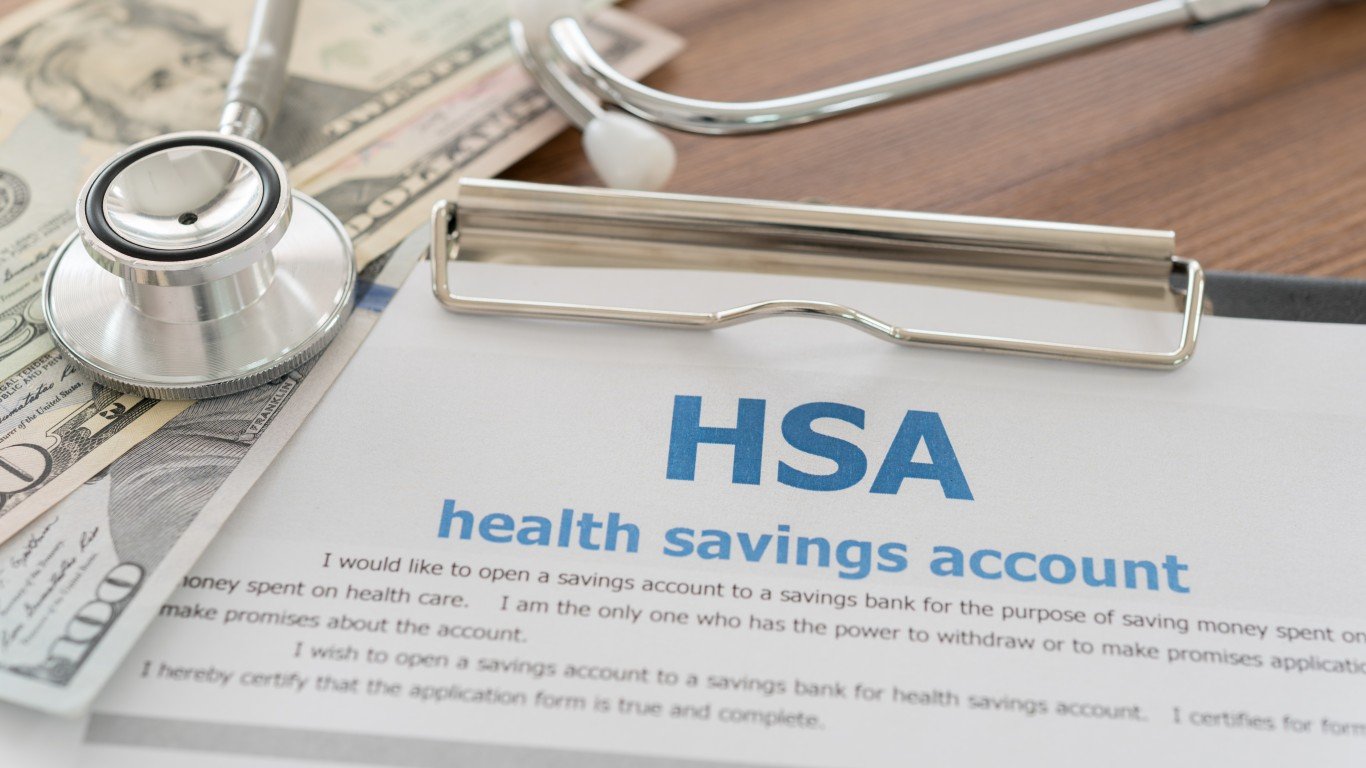
Understanding any strategy allowed under health savings account rules is critical, especially when paying medical bills out of pocket, keeping receipts, and reimbursing yourself from the HSA years later. In the headline’s scenario, a saver paid about $40,000 in medical costs out of pocket over 15 years. That comes to roughly $2,667 a year. At 68, she paid the full amount back at once. Current federal rules permit every step of that plan, but the industry data suggests few account holders follow it.
How an Old Receipt Becomes a Tax-Free Withdrawal
An HSA withdrawal is tax-free when it pays for, or is paid back for, a qualified medical expense that you incur after you established the HSA. The IRS sets no deadline for reimbursement. Publication 969 only requires records “sufficient to show” that the money went to qualified expenses. A bill from 15 years ago gets the same tax treatment as one paid back the week it got in.
Clark Howard explained the rule on his podcast in April 2026. He said the withdrawal “doesn’t have to be withdrawn in the same year as the expense. You just have to have proof of the unreimbursed expenses you’ve had through the years.” The receipts are what let the money come out tax-free.
Why Age 68 Changes the Tax Math
After age 65, non-medical HSA withdrawals no longer carry a penalty. They are simply taxed as income. A 68-year-old without receipts could take out $40,000, but it would count as taxable income. With receipts, the same withdrawal is tax-free. The receipts are worth whatever income tax she would otherwise have paid on that $40,000.
Medicare also affects timing. Once someone enrolls in Medicare, they can no longer contribute to an HSA. Medicare Part A coverage often starts retroactively, backdated up to six months. By 68, the saver is most likely only withdrawing money. The account can still cover Medicare costs, including the $202.90 standard monthly Part B premium and the $283 Part B deductible for 2026.
Most Accounts Get Spent Almost as Fast as They’re Funded
Devenir’s year-end 2025 report counted 41.7 million accounts holding nearly $174 billion. During 2025, account holders contributed nearly $60 billion and withdrew nearly $45 billion. For most people, the HSA works like a checking account for doctor visits rather than a long-term savings account.
Debit card swipes made up 91% of all withdrawals, with an average transaction of $117. Only about 10% of accounts had any money invested, and 22% had a zero or negative balance at year-end. Invested accounts averaged $24,252, or 9.7 times the average funded account that wasn’t invested. Accounts opened in 2004 averaged $34,952, while accounts opened in 2025 averaged $2,181.
These figures are averages, and a few large accounts pull them up. Picture ten accounts holding $2,000 each and one holding $200,000. The average is $20,000, but the typical account still has $2,000. With 1.7 million accounts above $25,000 and millions near zero, the typical HSA is likely well below the averages Devenir reports.
A Credible Case Against Hoarding Receipts
Not everyone agrees the strategy is best. A listener named Mike from Utah challenged Howard on a May 2026 episode. He reasoned that people who haven’t maxed out their Roth IRA and 401(k) should “reimburse your medical expenses every year and use that money to increase your Roth.” His point was that Roth money can be spent tax-free on anything, while HSA money is tax-free only for medical costs.
The strategy also requires regular cash flow, and Howard raised this point back in 2018, when he asked a caller, “Are you in a position that you can pay the out-of-pocket costs or no?” Paying about $2,667 a year from checking assumes the household budget can cover medical costs without dipping into the HSA.
What It Takes to Build the Same Balance
For 2026, the HSA contribution limits are $4,400 for self-only coverage and $8,750 for family coverage. People 55 and older can add a $1,000 catch-up contribution. The medical care price index reached 592.934 in August 2026, close to its 12-month high of 594.393 in July.
The 68-year-old in the headline differs from the typical account holder in three ways: she let the balance stay in the account, paid her bills from other money, and kept records for 15 years. Devenir’s data suggests most HSA holders do none of those things. The tax advantage was available to all of them. The records made it usable at the end.
Contact [email protected] for any questions or corrections.
David Beren has been a Flywheel Publishing contributor since 2022. Writing for 24/7 Wall St. since 2023, David loves to write about topics of all shapes and sizes. As a technology expert, David focuses heavily on consumer electronics brands, automobiles, and general technology. He has previously written for LifeWire, formerly About.com. As a part-time freelance writer, David’s “day job” has been working on and leading social media for multiple Fortune 100 brands. David loves the flexibility of this field and its ability to reach customers exactly where they like to spend their time. Additionally, David previously published his own blog, TmoNews.com, which reached 3 million readers in its first year. In addition to freelance and social media work, David loves to spend time with his family and children and relive the glory days of video game consoles by playing any retro game console he can get his hands on.