$7,650 a Month Without Owning a Single Stock: The All-ETF Income Portfolio
Generating nearly $92,000 a year from ETF distributions sounds straightforward until you realize the yield you chase determines whether your income grows with inflation or quietly gets eaten alive by it.

This post may contain links from our sponsors and affiliates, and Flywheel Publishing may receive compensation for actions taken through them.
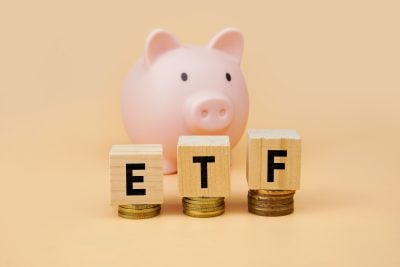
Earning $7,650 a month from ETF distributions alone means building a portfolio that generates $91,800 a year. Depending on the yield you accept, that takes somewhere between $765,000 and more than $2.6 million. Timing matters too, since the 10-year Treasury yields 5.3% and the top of the Fed’s target range sits at 4%, and dividend stocks have been losing ground as bond yields rise. Each ETF has to offer enough extra yield to justify taking on more risk than that baseline.
Sleep-at-Night Tier: 3% to 4% Yield
At a 3.5% blended yield, $91,800 divided by 0.035 equals about $2.62 million. At 4%, the figure falls to $2.3 million.
Broad dividend equity funds make up this level. Vanguard High Dividend Yield ETF (NYSEARCA:VYM) yields roughly 2.3% on trailing distributions. iShares Core High Dividend ETF (NYSEARCA:HDV) screens for financial health and charges 0.08%. SPDR Portfolio S&P 500 High Dividend ETF (NYSEARCA:SPYD) yields about 4.5% and leans toward REITs and utilities.
The tradeoff is capital, since you need the most money upfront. In return, you get diversified holdings, dividends that tend to grow, and principal that can appreciate. VYM gained 198% over the past 10 years.
Mixing All Seven Funds for a 5% to 7% Yield
This level mixes all seven funds into one portfolio with a blended yield of 6.3%. Divide $91,800 by 0.063 to get roughly $1.46 million. Across the full range, 5% requires $1.8 million and 7% requires about $1.3 million.
| ETF | Weight | Role |
|---|---|---|
| JPMorgan Equity Premium Income ETF (NYSEARCA:JEPI) | 20% | Covered-call equity income |
| VYM | 15% | Dividend growth core |
| HDV | 15% | Quality-screened dividends |
| NEOS S&P 500 High Income ETF (CBOE:SPYI) | 15% | S&P 500 option income |
| iShares Broad USD High Yield Corporate Bond ETF (CBOE:USHY) | 15% | High-yield corporate bonds |
| SPYD | 10% | High-dividend S&P 500 stocks |
| iShares Preferred and Income Securities ETF (NASDAQ:PFF) | 10% | Preferred shares |
PFF yields about 5.5%, but its payouts swing from month to month. One payment came in at just $0.03 per share. That’s the cost of this level: dividend growth slows, upside gets capped, and the income can lag inflation over decades.
Chasing 8% to 14% Yields With Less Capital
At 10%, $91,800 divided by 0.10 equals $918,000. At 12%, it drops to $765,000.
SPYI yields around 11.7% on trailing payouts and uses Section 1256 options treatment for tax efficiency. JEPI yields about 8.1%, though its forward annualized payout of $4.10 trails the $4.56 it paid over the last 12 months. USHY yields about 7.2%, but its price rose only 20% over five years.
A smaller portfolio comes with weaker protection. Distributions can be cut, principal often erodes, and you end up spending down the asset instead of living off its growth.
Why the Lower Yield Can Pay More Later
VYM’s annual payout grew from $3.25 per share in 2022 to $3.68 over the trailing year, or about 3% a year. Funds with faster payout growth compound income more quickly. If a 3.5% portfolio grows its payout 8% a year, the same $2.62 million produces about $183,500 by year nine. At 6% growth, your $7,650 monthly check becomes roughly $13,700 in a decade.
A flat 12% stream still pays $7,650 ten years from now, and inflation shrinks what that buys every year. A higher yield buys you a smaller starting balance in exchange for slower income growth.
Three Moves to Make Before Committing Capital
- Add up your actual annual spending instead of using $91,800 by default. If your real number is closer to $70,000, the capital needed at each level drops in proportion.
- Compare 10-year total returns, distributions included, for a dividend growth fund and a covered-call or high-yield bond fund. Look at whether the income per share rose or flattened, and whether the share price held up.
- Model taxes for each portion in your own bracket. Preferred dividends, bond interest, and option income are each taxed differently, so two portfolios with the same 6.3% yield can leave you with different after-tax checks.
Contact [email protected] for any questions or corrections.
David Beren has been a Flywheel Publishing contributor since 2022. Writing for 24/7 Wall St. since 2023, David loves to write about topics of all shapes and sizes. As a technology expert, David focuses heavily on consumer electronics brands, automobiles, and general technology. He has previously written for LifeWire, formerly About.com. As a part-time freelance writer, David’s “day job” has been working on and leading social media for multiple Fortune 100 brands. David loves the flexibility of this field and its ability to reach customers exactly where they like to spend their time. Additionally, David previously published his own blog, TmoNews.com, which reached 3 million readers in its first year. In addition to freelance and social media work, David loves to spend time with his family and children and relive the glory days of video game consoles by playing any retro game console he can get his hands on.