A Nobel Economist Compared This Fund to the Invention of the Wheel. $100 a Month Could Top $544,000
A Nobel Prize-winning economist once ranked a single investing product alongside the wheel and the printing press, and his reasoning reveals why the timing of your first dollar matters far more than its size.

This post may contain links from our sponsors and affiliates, and Flywheel Publishing may receive compensation for actions taken through them.
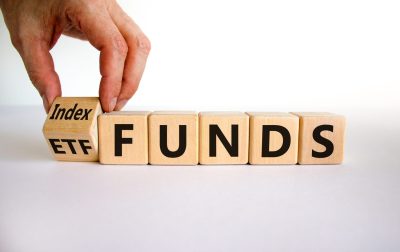
Paul Samuelson, the first American to win the Nobel Prize in economics, once placed the invention of the index fund alongside the invention of the wheel, the alphabet and Gutenberg printing. He made the comparison in a speech honoring Vanguard founder Jack Bogle. He meant it.
The comparison holds up. A $100 a month practice shows why. If you wait until you can invest “real money,” you give up the years that do most of the work.
Why a Nobel Economist Rated a Boring Fund So Highly
Before index funds, average investors had to pay someone to pick stocks. Brokers charged commissions. Actively managed mutual funds charged annual fees plus sales charges on deposits. Most trailed the market once costs came out.
Samuelson had argued for years that this was unavoidable. All investors together own the market, so the average dollar earns the market return before fees. Subtract fees, and the average active dollar falls behind. The index fund turned that logic into something you could buy: every stock in the S&P 500, no one paid to pick stocks, and you keep almost all of the market’s return.
Fees matter more than most people think. Take a $100 monthly practice and it grows to roughly $544,000 in the illustration below. Now cut that return by one percentage point, a typical example of active-management fees. The same deposits reach only about $404,000. You made the same deposits for the same period, and the fee alone made the difference.
$100 a Month Turns Into $544,000 Because of Time
Here is the illustration. Invest $100 a month for 40 years at a constant 9.5% annual return.
You contribute $48,000 of your own money. The account ends near $544,000.
Most of that ending balance is growth on growth. Your deposits are the smaller part. Early years grow mostly from your deposits. Later years grow mostly from returns on returns.
This is a straight-line illustration of compounding, not a forecast. Real markets never deliver the same return every year. Returns arrive through crashes, flat periods and sharp rallies in unpredictable order.
The length of time matters more than deposit size. Start the same $100 a month at the same return, but wait 10 years. You end with about $203,000. Those lost years would have done more than a bigger deposit later.
Who This Framing Actually Serves
This plan requires a long horizon. It works for a first paycheck, a new graduate or a newborn. Here is how to set it up:
- Open the right account. At a first job, check whether your 401(k) offers an S&P 500 index option. Outside work, a Roth IRA lets growth come out tax-free in retirement.
- Open a custodial account for a child. A UTMA or UGMA brokerage account lets a parent invest for a minor. If the child has earned income, a custodial Roth IRA can hold up to that amount.
- Automate the $100. Set a recurring transfer for the day after payday. Many brokers sell fractional shares, so even a small deposit buys a slice of the fund.
- Turn on dividend reinvestment. Every quarterly payout buys more shares without any action from you.
What VOO and SPY Hold and Cost Today
The two best-known ways to own the index are the Vanguard S&P 500 ETF (NYSEARCA:VOO) and the SPDR S&P 500 ETF (NYSEARCA:SPY). VOO’s expense ratio is 0.03%. SPY charges 0.0945%. Both cost far less than the 1% example above.
Owning either fund means owning America’s largest companies. In SPY’s latest fact sheet, NVIDIA (NASDAQ:NVDA | NVDA Price Prediction) is the largest holding at 8%, Apple (NASDAQ:AAPL) at 7%, and Microsoft (NASDAQ:MSFT) at 5%. These weights shift as the market moves.
VOO shares trade near $711 and are up about 323% over the past 10 years. The fund paid $7 per share in trailing 12-month dividends. Reinvesting those payments adds to compounding.
Start With $100 Now Instead of Waiting for More
Waiting until you can invest more is costly. A 10-year delay cuts the ending value from about $544,000 to roughly $203,000. A larger deposit later can’t buy back time you didn’t invest. An investor who opens an account this week and automates $100 a month into a low-cost S&P 500 fund, raising the amount as income grows, puts those years to work.
Samuelson put the index fund next to the wheel because it gave anyone a cheap way to own the market’s return, and starting early with a small amount does more than starting late with a large one.
Contact [email protected] for any questions or corrections.
Joel South covers large-cap stocks, dividend investing, and major market trends, with a focus on earnings analysis, valuation, and turning complex data into actionable insights for investors.
He brings more than 15 years of experience as an investor and financial journalist, including 12 years at The Motley Fool, where he served as an investment analyst, Bureau Chief, and later led the Fool.com investing news desk. He has also co-hosted an investing podcast and appeared across TV and radio discussing market trends.