Rupert Murdoch’s 1999 Divorce Put the Empire Into a Trust His Ex-Wife Insisted On, With Her Three Children Holding Equal Votes. In 2024 He Tried to Rewrite It at 93, a Nevada Court Said No, and Last Year Her Three Kids Each Walked Away With $1.1 Billion, Because the Trust She Insisted On Held
A Nevada court stopped Rupert Murdoch cold when he tried to undo a trust his ex-wife demanded during their divorce, and the fallout reshaped control of a media empire worth tens of billions. The legal standard that blocked him is…

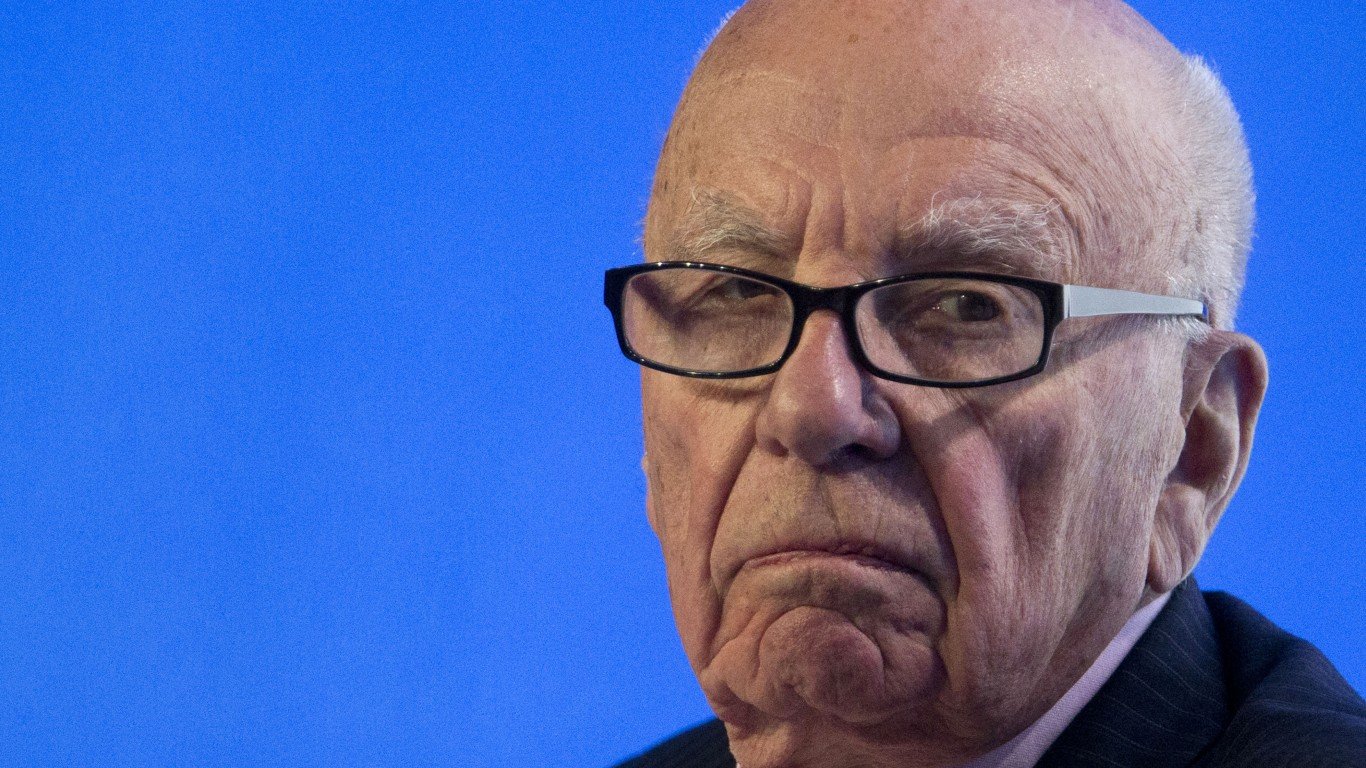
An irrevocable family trust can bind its creator, even a billionaire who controls Fox Corporation (NASDAQ:FOXA | FOXA Price Prediction) and News Corp (NASDAQ:NWSA). That matters for trust beneficiaries, for people considering funding one, and for parents negotiating a divorce with children involved. The Murdoch case gives a clear answer in that an irrevocable trust can be changed only on the terms written into it, and a court will hold the creator to those terms.
Murdoch’s Divorce Trust Outlasted His Attempt to Rewrite It
Rupert Murdoch set up the family trust as a condition of his divorce from his second wife, Anna, who insisted the conglomerate would be passed down equally amongst his then-four children. Under its terms, control would pass in equal shares to Lachlan, James, Elisabeth and Prudence after his death. Murdoch could amend it only if he acted in “good faith” and for the sole benefit of the beneficiary in question.
In December 2024, Nevada probate commissioner Edmund Gorman Jr. found that Murdoch, then 93, and Lachlan had acted in “bad faith”. He called the plan a “carefully crafted charade” to “permanently cement Lachlan Murdoch’s executive roles”.
The family settled in September 2025. Prudence MacLeod, Elisabeth and James were each expected to receive about $1.1 billion from selling their Fox and News Corp holdings. A new trust for Lachlan and his half-sisters Grace and Chloe holds 36% of Fox’s Class B common stock and 33% of News Corp’s Class B shares, and it runs until 2050.
Federal Tax Law Rewards Giving Up the Power to Change It
Irrevocability pays off at the federal level. Under 26 U.S.C. § 2038(a)(1), transferred property remains in the decedent’s taxable estate. This applies if, at death, they held a power, “alone or by the decedent in conjunction with any other person,” to “alter, amend, revoke, or terminate” it. For 2026, the federal basic exclusion amount is $15,000,000 under 26 U.S.C. § 2010(c)(3), with inflation adjustments starting after 2026.
At the state level, Nevada requires impartial administration of trusts with two or more beneficiaries under NRS 164.720. Under NRS 164.940, trustees and “indispensable parties” can modify terms through nonjudicial settlement agreements, as long as the changes leave the trust’s material purpose intact.
Who Gains From Locking It Up and Who Gives Up Too Much
This structure fits parents who want a divorce settlement to guarantee equal treatment of children, owners of a family business with several heirs, and households whose estates could exceed the 2026 exclusion. It works poorly for anyone who may need the assets back, wants to reshuffle heirs later, or depends on the income, but a revocable living trust keeps that flexibility, though Section 2038 keeps those assets inside the grantor’s taxable estate.
What Helped the Murdoch Trust Survive a Challenge
- The trust was a written condition of the divorce settlement, which is how Anna Murdoch secured equal treatment for the children.
- Its terms spelled out how control was divided, including who votes the business shares and in what proportion.
- The amendment power was written narrowly. A good-faith, benefit-of-the-beneficiaries standard is what stopped Murdoch’s changes.
- The governing state matters. Nevada dynasty trusts can run for 365 years. Its asset-protection trusts have a two-year statute of limitations before creditors can challenge them, according to Las Vegas trust attorney Steven Oshins.
- The tax benefit depends on how an estate’s projected value compares with the $15,000,000 exclusion, considered against giving up control.
Irrevocable Still Leaves Room for a Buyout
The main tradeoff is lost control. Murdoch built the empire but still couldn’t redirect it. Beneficiaries of an irrevocable trust can also amend its terms. The 2025 settlement let three heirs sell out and moved control into a new vehicle. It took time to get there: Murdoch filed to change the trust in December 2023, and the case went to trial in Reno in September 2024.
Section 2038 also covers amendment powers given up during the 3-year period ending on the date of the decedent’s death, so deathbed releases of control can fail. On the receiving side, the IRS notes that if trust income “is paid, credited, or distributed to you, that income is also taxable to you.”
The next test is how the 2050 trust works for Lachlan’s side of the family, and the new trust carries the old one’s lesson: whatever terms it locks in will bind its creator as well.
Contact [email protected] for any questions or corrections.
David Beren has been a Flywheel Publishing contributor since 2022. Writing for 24/7 Wall St. since 2023, David loves to write about topics of all shapes and sizes. As a technology expert, David focuses heavily on consumer electronics brands, automobiles, and general technology. He has previously written for LifeWire, formerly About.com. As a part-time freelance writer, David’s “day job” has been working on and leading social media for multiple Fortune 100 brands. David loves the flexibility of this field and its ability to reach customers exactly where they like to spend their time. Additionally, David previously published his own blog, TmoNews.com, which reached 3 million readers in its first year. In addition to freelance and social media work, David loves to spend time with his family and children and relive the glory days of video game consoles by playing any retro game console he can get his hands on.