Turn 74 With $600,000 in an IRA and Decide to Convert $50,000 to a Roth, and the IRS Requires the $23,500 RMD to Come Out First, Taxed, With Not a Dollar of It Allowed Into the Roth
A 74-year-old with a $600,000 IRA thinks converting $50,000 to a Roth is straightforward, but a federal ordering rule quietly rewrites the entire plan before a single dollar moves.

This post may contain links from our sponsors and affiliates, and Flywheel Publishing may receive compensation for actions taken through them.
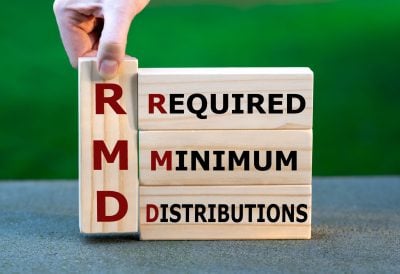
Picture a 74-year-old with a $600,000 traditional IRA who decides to convert $50,000 to a Roth in a year when a required minimum distribution is also due. The order matters here because federal rules require the RMD to come out first and be taxed as ordinary income, and none of it can go into the Roth. So, a retiree who planned the whole year around that one $50,000 conversion ends up with more taxable income than they expected.
How a $600,000 Balance Becomes a $23,500 Withdrawal
An RMD is calculated by dividing the IRA balance as of the prior December 31 by a life expectancy factor from the IRS Uniform Lifetime Table. For someone turning 74, that factor is 25.5.
When applied to a $600,000 balance, the factor produces a required withdrawal of about $23,529, or roughly $23,500. IRS Publication 590-B states that owners must begin RMDs by April 1 of the year after they reach age 73, so at 74 the owner is already on the annual schedule.
Why the First Dollars Out Belong to the RMD
The ordering rule comes from Treasury regulation 26 CFR 1.408A-4, A-6(a), which says that “the first dollars distributed during that year are treated as consisting of the required minimum distribution until an amount equal to the required minimum distribution for that year has been distributed.” Under A-1(c) of the same regulation, a conversion counts as a distribution even when it is done as a trustee-to-trustee transfer.
A conversion also has to qualify as a rollover, and 26 U.S.C. § 402(c)(4)(B) leaves out of the rollover definition any distribution to the extent such distribution is required under section 401(a)(9). IRS Publication 17 puts it more simply: “You can’t convert amounts that must be distributed from your traditional IRA for a particular year.” If you deposit an RMD into a Roth anyway, the regulation treats it as a regular contribution and says it isn’t a conversion contribution.
Two Withdrawals Add Up to $73,500 of Taxable Income
Completing the plan as written means taking the $23,500 RMD and then converting $50,000, for $73,500, leaving the traditional IRA in one year. Under 26 U.S.C. § 408(d)(1), both amounts count as gross income. Before any investment growth, the traditional IRA would hold about $526,500 then.
For 2026, single taxpayers face a 22% rate on income over $50,400, and the 24% rate starts above $105,700. The single standard deduction is $16,100, which reduces the share of income that reaches the higher brackets.
To give a rough sense of scale, taxing the full $73,500 at 22% would cost $16,170. The RMD’s share would be $5,170, and that portion is owed whether or not a conversion happens. Of course, the actual tax depends on deductions and on the lower brackets.
Don’t forget that Social Security will also add to the total. The average retired worker received $2,095 a month before the latest adjustment, or $25,140 a year. The regulation states that conversion income counts when determining the taxable portion of Social Security payments under section 86, so a conversion can increase the share of benefits that gets taxed.
(This ordering rule is one of nine IRS quirks that quietly drain retirement accounts, all charted in our free tax trap map.)
Medicare Premiums Arrive Two Years Later
Medicare’s income-related surcharge, known as IRMAA, is based on modified adjusted gross income from two years prior, so income from 2026 affects 2028 premiums. The standard Part B premium for 2026 is $202.90 a month, and for single taxpayers the surcharge applies to income over $109,000.
Even if you counted the full average benefit on top of $73,500, total income would be $98,640, which is below that line. A larger conversion that crossed it would add $81.20 a month to Part B, or $974.40 a year, plus $14.50 a month for Part D.
Where Older Savers Sit Nationally
Households age 70 and older numbered 29,519,419 in the second quarter of 2026 and held 33.6% of U.S. household net worth, according to the central bank’s distribution wealth data. These are aggregate figures, so they cannot show whether a $600,000 IRA is typical for a 74-year-old.
Ordering Choices and What Comes Next
The rules offer a few ways to structure the year. Taking the RMD early opens the door to a conversion later in the year. An owner who wants total withdrawals to stay at $50,000 could take the RMD and convert $26,500, which moves less money into the Roth but keeps taxable income closer to the original plan.
Two figures are worth watching in the coming year. Social Security’s 3.6% 2027 inflation adjustment raises the estimated average retired-worker benefit to $2,170, which adds to future taxable income. The IRMAA thresholds for 2026 income have not been announced. Each year’s RMD also grows as a share of the balance, because the divisor drops to 24.6 at age 75.
Contact [email protected] for any questions or corrections.
David Beren has been a Flywheel Publishing contributor since 2022. Writing for 24/7 Wall St. since 2023, David loves to write about topics of all shapes and sizes. As a technology expert, David focuses heavily on consumer electronics brands, automobiles, and general technology. He has previously written for LifeWire, formerly About.com. As a part-time freelance writer, David’s “day job” has been working on and leading social media for multiple Fortune 100 brands. David loves the flexibility of this field and its ability to reach customers exactly where they like to spend their time. Additionally, David previously published his own blog, TmoNews.com, which reached 3 million readers in its first year. In addition to freelance and social media work, David loves to spend time with his family and children and relive the glory days of video game consoles by playing any retro game console he can get his hands on.