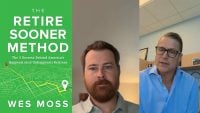
A 28-Year-Old AI Founder Brags About No Booze, No Sleep, No Fun. Retirement Expert Wes Moss Says That Is the Wrong Formula
A 28-year-old AI founder brags about three consecutive 92-hour workweeks, and retirement expert Wes Moss says that exact mindset, carried into retirement, quietly destroys the one asset no portfolio can replace.

This post may contain links from our sponsors and affiliates, and Flywheel Publishing may receive compensation for actions taken through them.

Wes Moss opens the sleep chapter of his book The Retire Sooner Method with a Wall Street Journal front-page story about a twenty-eight-year-old AI founder. The founder had posted on LinkedIn about working three ninety-two-hour weeks in a row. His goal, according to Moss, is a $10 billion company in ten years.
Wes Moss notes the story, titled “AI Startup Founders Tout a Winning Formula, No Booze, No Sleep, No Fun,” ran on September 11, 2025. Moss is a certified financial planner who, according to the book’s author bio, serves as chief investment strategist at Capital Investment Advisors. He uses the story to describe a culture where “skimping on sleep became a badge of honor. Executives boasted about running on four hours a night. Entrepreneurs claimed they were too tough to need rest.”
If you’re in your fifties or sixties, this is about money. Moss mentions an Allianz study finding that 64% of Americans worry more about running out of money than about death. He also mentions an American Academy of Sleep Medicine survey in which 66% of respondents said they had lost sleep over their finances. Bring the founder’s grind into retirement and you pile sleep debt on top of the money worry that already keeps most people awake.
Why Moss Wins This Argument for Anyone Near Retirement
Moss is right. In Wes Moss’s research, 69% of happy retirees report getting enough sleep, compared with 38% of unhappy retirees. Among the happiest retirees, getting enough sleep is the norm. Among the unhappiest, it’s the exception.
Moss explains the mechanism in terms any investor will recognize: “This is the flywheel of sleep, health, and happiness. It’s one of the most efficient compounding systems in life.” It works like reinvested dividends. Good sleep gives you mental clarity. Clarity gives you energy to exercise and see people. That activity improves your sleep, which lowers anxiety, including anxiety about your finances.
He also points to diminishing returns: “The difference between five hours and seven hours of sleep is life-changing. The difference between eight hours and ten hours? Much smaller.” Moss says the same plateau shows up with wealth. Beyond a certain asset level, extra money adds less and less happiness. The founder’s pursuit of billions ignores that curve on both counts.
Moss gives the grind its due for the earning years: “There is no substitute for hard work. But when you shift into retirement, you’re playing with a different playbook.” His permission slip for retirees is simple: “There’s no shame in eight hours, no medals for five.”
Financial Clarity Decides Who Sleeps Soundly
The one factor that most shapes whether you sleep well in retirement is whether you know your numbers. Moss says retirees with vague plans often toss and turn. Those who know their income tops their needs, who have several income streams and who have paid off big debts like a mortgage tend to sleep more soundly.
His comparison lands: “Think of financial anxiety as excess caffeine for your brain.” He describes a retired couple, Charlotte and Ray. They worked out daily yet still slept poorly because their minds were racing about money. Once they got clarity on their plan, Charlotte told him, “We haven’t slept this well in years.”
Wes Moss, CFP, is Managing Partner and Chief Investment Strategist at Capital Investment Advisors, a fee-only SEC Registered Investment Adviser with over $8.1 billion* in assets under management.
Moss takes listener questions at wesmoss.com/ask and lays out the framework in The Retire Sooner Method.
Picture two retirees with the same savings and the same budget. One has checked that guaranteed income covers her essential bills even if markets fall. The other has never compared the two. Their portfolios match. Their nights look very different.
Steps to Take Before Your Next Sleepless Night
- Separate essentials from extras. List the bills you must pay each month: housing, food, insurance, utilities and healthcare. Keep travel and hobbies in a separate column so you know your true floor.
- Pull your guaranteed income figures. Log into your my Social Security account at SSA.gov and check estimated benefits at several claiming ages. Add any pension or annuity payments you expect.
- Compare income to essentials. If guaranteed income covers your floor, write that down and look at it when worry hits. If it falls short, name the exact account that will fill the gap.
- Put your mortgage payoff date on the calendar. Moss lists getting rid of major debts as one of the traits of retirees who sleep well. Knowing when that payment ends turns a vague worry into a date you can plan around.
- Set a fixed sleep schedule. Moss mentions a National Sleep Foundation review of sixty-three studies covering over forty thousand people that linked irregular sleep timing to impaired mood, interrupted metabolism and poor sleep quality. Aim for seven to eight hours at consistent times.
A founder’s formula may build a startup, but in retirement, a plan clear enough to let you sleep eight hours is the asset that keeps compounding.
Contact [email protected] for any questions or corrections.
Jake has been been working in financial media for almost 15 years. He focuses on all things personal finance for 24/7 Wall St. with high hopes to educate and entertain. Most recently, Jake spent 12 years working various roles at The Motley Fool. He started copy editing fool.com content, worked on premium and marketing campaigns, and helped launch The Ascent, a personal finance brand.
His work has been featured on platforms like MSN, Yahoo Finance, USA Today, and more. He's written about credit cards, social security, ETFs, savings accounts, and just about anything else you can imagine when thinking about money. Jake love to cook, play golf, and tell people he's never had a cavity. (It's true!)