Rivian Earnings Don’t Mask Stock Collapse
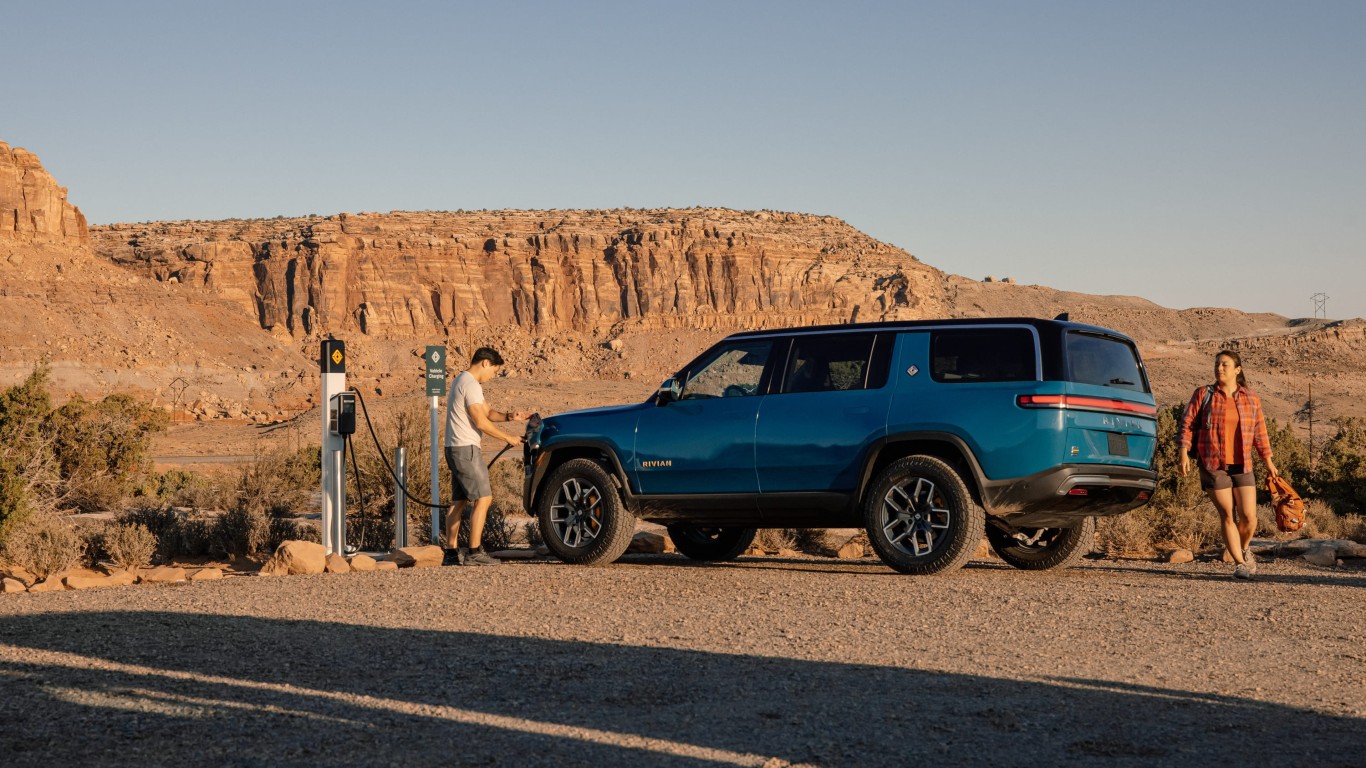
Rivian just beat earnings expectations and watched its stock crater anyway, raising a question that no quarterly report seems able to answer: can this EV company survive long enough to matter?

This post may contain links from our sponsors and affiliates, and Flywheel Publishing may receive compensation for actions taken through them.

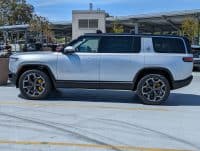
Rivian (NASDAQ: RIVN | RIVN Price Prediction) posted better-than-expected earnings. Its R2 SUV has shown sales promise. Neither masks the fact that the EV company’s stock is down 42% this year, although it will get a small piece of that share back because of its modest quarterly success. And, despite an improvement at the bottom line, Rivian lost $913 million.
Rivian was proud of its revenue performance. It rose 38% to $2.16 billion. And, indeed, the bottom line improved. It lost $1.17 billion in the same period last year.
What may concern investors most is that Rivian did not change its top-line delivery guidance. Before earnings, the range was 65,000 to 70,000. In the earnings announcement, it raised the range to 67,000 to 70,000. And, despite comments about R2 sales, the disclosure was less specific. “We had record deliveries, with R2 delivering much of the gain quarter-over-quarter.” Rivian did not break out the R2 numbers from total deliveries, and it could have.
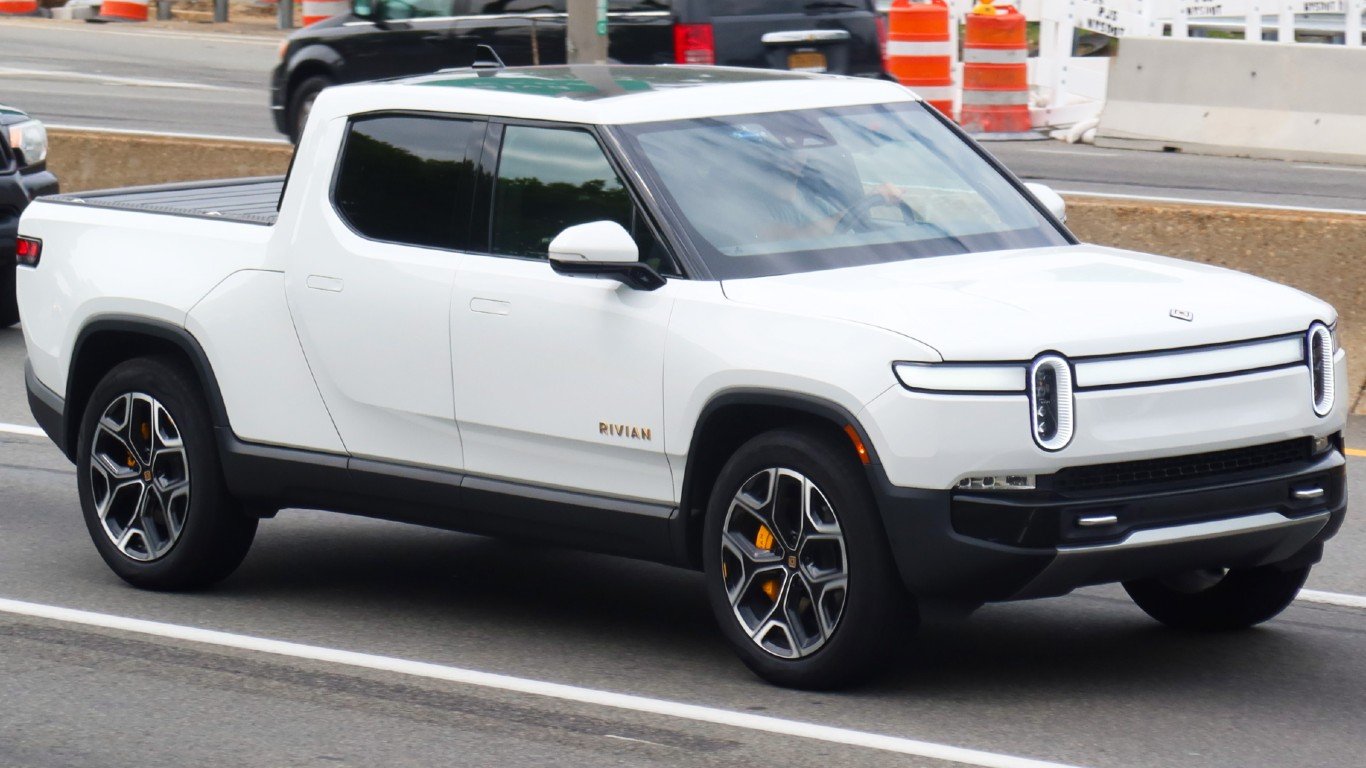
Presumably, its sales of the expensive R1T and R1S continue to be poor.
Rivian remains one of the two US EV companies with a grim future. The other is Lucid (NASDAQ: LCID).
Rivian’s unit deliveries would need to go well into the hundreds of thousands for it to make money, and it is swimming against a strong tide.
Legacy car companies driven out of the market by losses are beginning to return at a modest pace. Evidence points to this across many fossil-fuel power manufacturers. Notably, Ford (NYSE: F) will launch its Fathom next year, and says sales should hit 100,000 in the first year on the market. While they do not sell well, companies from Toyota to Audi have limtied model lines.
The monster in the US EV market is still Tesla (NASDAQ: TSLA). It has well over 50% of the EV market share. Its car unit makes money. A merger with SpaceX will advance its AI features. And it has almost unlimited access to cash.
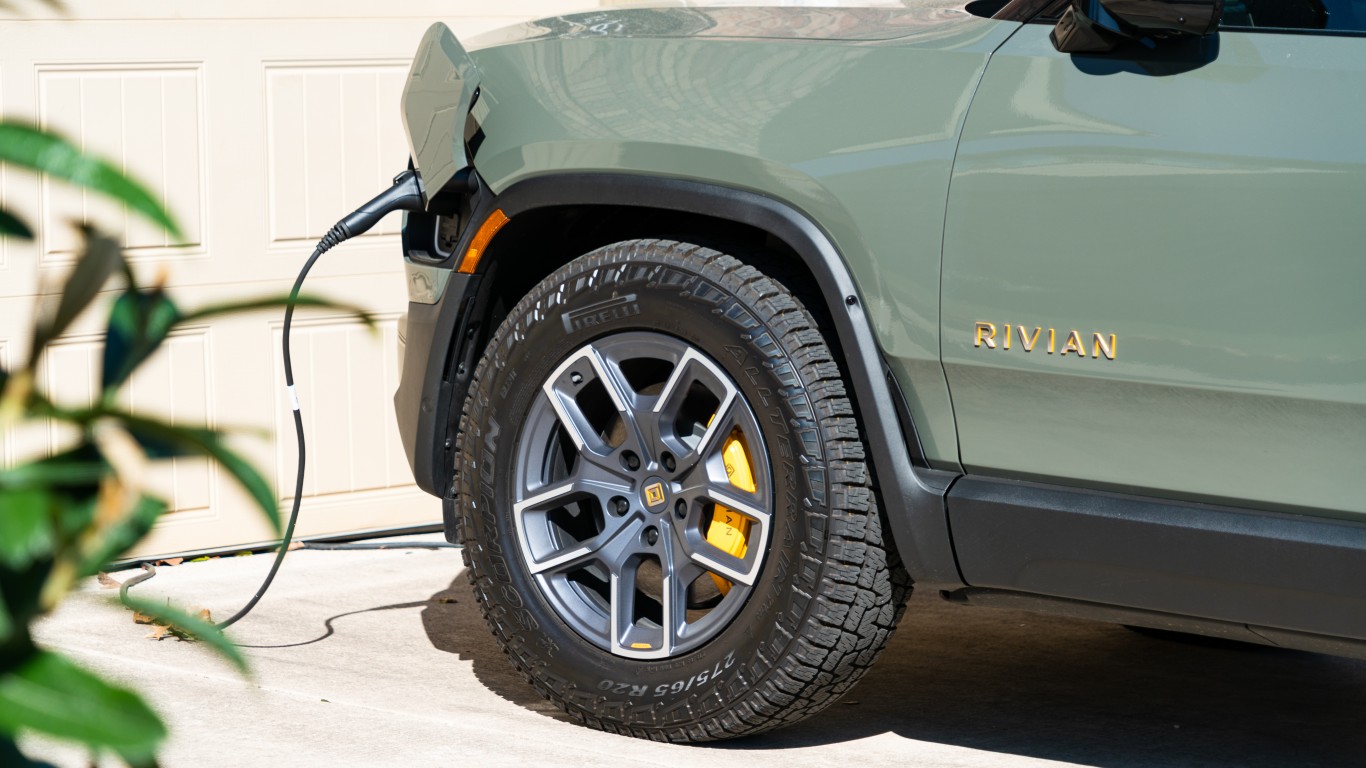
Finally, the EV market in the US is dying. Total EV sales in the US dropped 30% in the first three quarters of the year compared to the same period a year ago. New EV sales are only about 6% of all new car sales in the US. Range continues to be a drawback. So is the number of charging stations. So is tire wear. So is the fact that EVs do not take a full charge in very cold weather.
When Rivian’s share gets back to where it was at the start of 2026, perhaps there is some modest reason for optimism. The stock price tells all that needs to be told.
Contact [email protected] for any questions or corrections.
Douglas A. McIntyre is the co-founder, chief executive officer and editor in chief of 24/7 Wall St. and 24/7 Tempo. He has held these jobs since 2006.
McIntyre has written thousands of articles for 24/7 Wall St. He is an expert on corporate finance, the automotive industry, media companies and international finance. He has edited articles on national demographics, sports, personal income and travel.
His work has been quoted or mentioned in The New York Times, The Wall Street Journal, Los Angeles Times, The Washington Post, NBC News, Time, The New Yorker, HuffPost USA Today, Business Insider, Yahoo, AOL, MarketWatch, The Atlantic, Bloomberg, New York Post, Chicago Tribune, Forbes, The Guardian and many other major publications. McIntyre has been a guest on CNBC, the BBC and television and radio stations across the country.
A magna cum laude graduate of Harvard College, McIntyre also was president of The Harvard Advocate. Founded in 1866, the Advocate is the oldest college publication in the United States.
TheStreet.com, Comps.com and Edgar Online are some of the public companies for which McIntyre served on the board of directors. He was a Vicinity Corporation board member when the company was sold to Microsoft in 2002. He served on the audit committees of some of these companies.
McIntyre has been the CEO of FutureSource, a provider of trading terminals and news to commodities and futures traders. He was president of Switchboard, the online phone directory company. He served as chairman and CEO of On2 Technologies, the video compression company that provided video compression software for Adobe’s Flash. Google bought On2 in 2009.