66% of Retirees Say Social Security Is a Major Source of Income. Only 36% of Workers Expect It to Be
Most workers picture Social Security as a bonus on top of their savings, but retirees who actually depend on it tell a very different story about where their monthly income really comes from.

This post may contain links from our sponsors and affiliates, and Flywheel Publishing may receive compensation for actions taken through them.
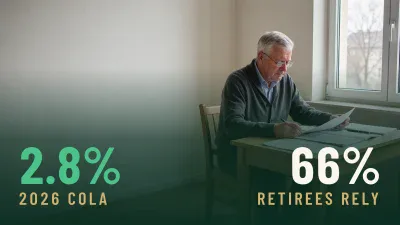
There’s a gap in how Americans see Social Security before and after they stop working. A worker in their 40s might picture it as a nice extra on top of a 401(k). A retiree who’s been collecting for a few years usually describes it differently. In the EBRI and Greenwald 2025 Retirement Confidence Survey, 66% of retirees say Social Security is a major source of income, while only 36% of workers expect it to be.
Almost Everyone Expects a Check, but Few Expect to Lean on It
Nearly everyone in the survey expects to get something from the program. According to the same 2025 survey, 87% of workers expect Social Security income, and 94% of retirees receive or expect it. So the split shows up in how much weight people think the check will carry.
Workers often expect their savings, like a 401(k) or an IRA, to do most of the work. For many retirees, Social Security becomes the foundation. It’s the income that shows up every month no matter what the markets are doing, and the rest of the budget gets built around it. That shift often happens once people see what their savings can produce each month.
What the Average Check Covers in a Typical Budget
The Social Security Administration estimates the average retired worker benefit at $2,071 a month in 2026, up from $2,015 before the 2.8% cost-of-living adjustment, or COLA. A COLA is the annual raise meant to keep benefits in step with inflation. Over a full year, the average annual check works out to $24,852.
Here’s a simple assumption to put that in context. Say a retiree spends $48,000 a year, which is $4,000 a month. The average check would cover about 52% of that budget. The remaining $23,148 would have to come from savings, a pension, part-time work, or lower spending.
Medicare premiums are typically deducted before the money arrives. Part B’s basic premium is $202.90 a month in 2026, and it’s generally deducted straight from the Social Security payment. That leaves roughly $1,868 of the average check actually landing in a bank account. The 2027 COLA has been set at 3.6%, which will raise benefits again next year.
Why Claiming Age Carries So Much Weight
If Social Security is the base of retirement income, the age someone starts collecting affects the size of that base. Full retirement age is 67 for people born in 1960 or later, even though benefits can start as early as 62, but the SSA cuts them by as much as 30% below the full amount. The SSA notes that these adjustments are permanent.
Waiting past full retirement age works the other way. For people born in 1943 or later, benefits grow 8% for each year of delay, and the increases stop at age 70. Waiting from 67 to 70 adds 24% to the monthly amount. Since COLAs are applied as a percentage, a larger starting check also gets larger dollar raises over time.
What the Trust Fund Worry Does and Doesn’t Mean
Concern about the program’s future runs high in both groups. In the 2025 survey, 79% of retirees and 71% of workers were concerned about changes to the retirement system, and among those concerned, 60% of workers and 80% of retirees worried that changes could reduce their Social Security benefit.
According to the 2026 Social Security Trustees Report, the combined retirement and disability trust funds will run out in the third quarter of 2034, which is unchanged from last year’s report. After that, incoming payroll taxes would still cover 83% of scheduled benefits.
The retirement fund alone is projected to be depleted in the fourth quarter of 2032, with 78% paid afterward.
Depletion means the reserve is used up, and the program would pay from ongoing taxes. Checks would keep going out, just at a smaller level under current law. Lawmakers could change that result. They could raise revenue, adjust benefits, or do some mix of both, so the projection reflects current law and could change. 24/7 Wall St. has covered how these projections have shifted over the years and what claiming at 62 can mean for retirees.
One Document That Puts Real Numbers on the Gap
The Social Security statement shows estimated monthly benefits. Available through a my Social Security account on SSA.gov, it shows benefits at 62, at full retirement age, and at 70, based on a person’s actual earnings record. It also lists each year of reported earnings, so you can spot and correct missing or incorrect years.
The statement shows a monthly figure. For a worker who expects Social Security to be a minor part of retirement, it’s the number that many current retirees ended up building their budgets around. That number can be set against expected spending and savings. This shows whether the program would be a side source of income or, as it is for 66% of retirees in the survey, a major one.
Contact [email protected] for any questions or corrections.
David Beren has been a Flywheel Publishing contributor since 2022. Writing for 24/7 Wall St. since 2023, David loves to write about topics of all shapes and sizes. As a technology expert, David focuses heavily on consumer electronics brands, automobiles, and general technology. He has previously written for LifeWire, formerly About.com. As a part-time freelance writer, David’s “day job” has been working on and leading social media for multiple Fortune 100 brands. David loves the flexibility of this field and its ability to reach customers exactly where they like to spend their time. Additionally, David previously published his own blog, TmoNews.com, which reached 3 million readers in its first year. In addition to freelance and social media work, David loves to spend time with his family and children and relive the glory days of video game consoles by playing any retro game console he can get his hands on.